

Kourion Archaeological Site, Limassol (must see)
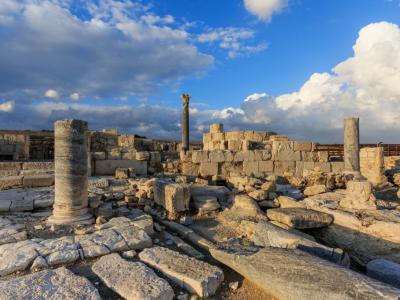
The Kourion Archaeological Site is one of Cyprus’ most significant ancient ruins, offering a glimpse into the island’s Greco-Roman past. Situated on a dramatic clifftop overlooking the Mediterranean Sea, Kourion was once a thriving city-kingdom, dating back to the Neolithic period. The site's most famous landmark is the theater, originally built in the 2nd century BCE and later expanded by the Romans. Capable of seating 3,500 spectators, it hosted gladiatorial battles and dramatic performances until its partial destruction by an earthquake in the 4th century CE. Fully restored today, the theater is a highlight of the site, offering breathtaking views and continuing to serve as a venue for modern performances.
Beyond the theater, Kourion boasts an array of well-preserved ruins that illustrate the city's flourishing public and private life. The House of Eustolios, originally a luxurious Roman villa, was later converted into a public recreation center and bathhouse during the Byzantine era. This structure is particularly famous for its intricate mosaic floors, including one depicting Achilles disguised as a woman and another featuring the god Ktisis alongside a partridge.
Other notable structures include the Roman Nymphaeum, an elaborate public fountain, and the Forum, which served as Kourion’s social and commercial hub. The presence of aqueducts, bathhouses, and sophisticated plumbing systems suggests that the city enjoyed an advanced water supply system in antiquity.
Kourion was also home to important religious sites, including the Sanctuary of Apollo Hylates, located just 1.7 kilometers west of the acropolis. This sanctuary was one of the most significant in ancient Cyprus, second only to those dedicated to Zeus in Salamis and Aphrodite in Paphos. Originally a place of worship for an unnamed deity, it was later associated with Apollo by the mid-3rd century BCE. In addition, visitors can explore the 5th-century Byzantine basilica, which features intricately carved columns and remnants of an ancient Christian place of worship.
The site also includes the House of the Gladiators, known for its mosaics depicting gladiatorial combat, hinting at Kourion’s rich and diverse cultural history. A visit to Kourion is not complete without stopping at the nearby Kourion Museum in Episkopi, where many of the site's smaller artifacts are housed, offering further insight into the daily life of this ancient city.
Beyond the theater, Kourion boasts an array of well-preserved ruins that illustrate the city's flourishing public and private life. The House of Eustolios, originally a luxurious Roman villa, was later converted into a public recreation center and bathhouse during the Byzantine era. This structure is particularly famous for its intricate mosaic floors, including one depicting Achilles disguised as a woman and another featuring the god Ktisis alongside a partridge.
Other notable structures include the Roman Nymphaeum, an elaborate public fountain, and the Forum, which served as Kourion’s social and commercial hub. The presence of aqueducts, bathhouses, and sophisticated plumbing systems suggests that the city enjoyed an advanced water supply system in antiquity.
Kourion was also home to important religious sites, including the Sanctuary of Apollo Hylates, located just 1.7 kilometers west of the acropolis. This sanctuary was one of the most significant in ancient Cyprus, second only to those dedicated to Zeus in Salamis and Aphrodite in Paphos. Originally a place of worship for an unnamed deity, it was later associated with Apollo by the mid-3rd century BCE. In addition, visitors can explore the 5th-century Byzantine basilica, which features intricately carved columns and remnants of an ancient Christian place of worship.
The site also includes the House of the Gladiators, known for its mosaics depicting gladiatorial combat, hinting at Kourion’s rich and diverse cultural history. A visit to Kourion is not complete without stopping at the nearby Kourion Museum in Episkopi, where many of the site's smaller artifacts are housed, offering further insight into the daily life of this ancient city.
Want to visit this sight? Check out these Self-Guided Walking Tours in Limassol. Alternatively, you can download the mobile app "GPSmyCity: Walks in 1K+ Cities" from Apple App Store or Google Play Store. The app turns your mobile device to a personal tour guide and it works offline, so no data plan is needed when traveling abroad.
Download The GPSmyCity App



Kourion Archaeological Site on Map
Sight Name: Kourion Archaeological Site
Sight Location: Limassol, Cyprus (See walking tours in Limassol)
Sight Type: Attraction/Landmark
Sight Location: Limassol, Cyprus (See walking tours in Limassol)
Sight Type: Attraction/Landmark
Nearby Sights


Walking Tours in Limassol, Cyprus

Create Your Own Walk in Limassol
Creating your own self-guided walk in Limassol is easy and fun. Choose the city attractions that you want to see and a walk route map will be created just for you. You can even set your hotel as the start point of the walk.
Limassol Introduction Walking Tour
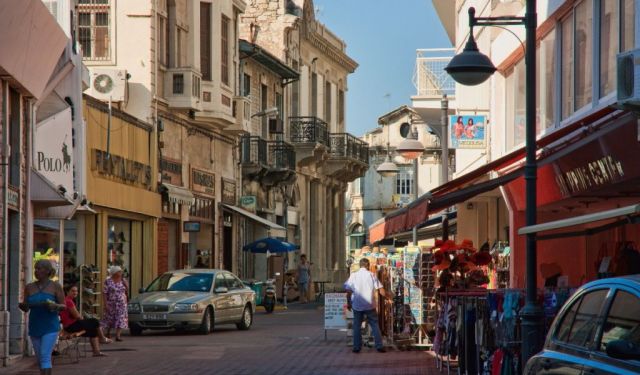
Perched on Cyprus’s southern coast, Limassol is one of the island’s oldest cities, with a history dating back thousands of years. The city gained prominence in the Byzantine era after its rival Amathus fell out of favor, and it made a dramatic entrance onto the European stage in 1191 when King Richard the Lionheart seized it during the Third Crusade and married Berengaria of Navarre there.... view more
Tour Duration: 1 Hour
Travel Distance: 2.6 Km or 1.6 Miles
Tour Duration: 1 Hour
Travel Distance: 2.6 Km or 1.6 Miles
City Walks Overview
