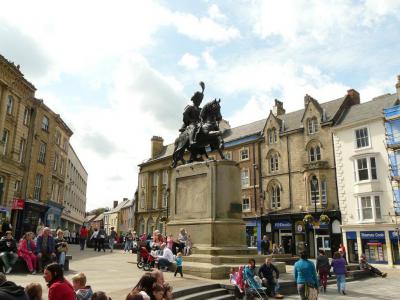


Marquess of Londonderry Statue, Durham
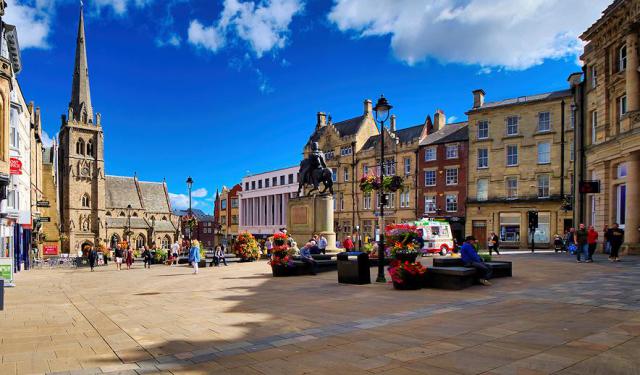
Towering over Durham’s Market Place, the Marquess of Londonderry Statue is one of the city’s most recognizable landmarks-though ask a local, and they’ll likely just call it “the horse.” Sculpted by Italian artist Raffaele Monti in 1854 and unveiled in 1861, this double life-sized equestrian figure depicts Charles William Vane Stewart, the 3rd Marquess of Londonderry. A celebrated cavalryman, Vane Stewart fought in both the French Revolutionary and Napoleonic wars.
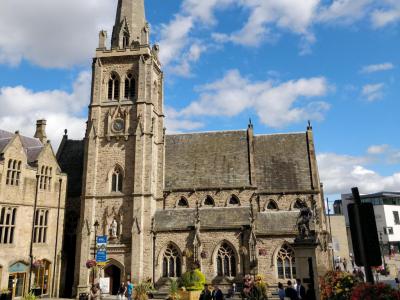
Commissioned by his wife, the statue was originally placed in front of St. Nicholas Church but was relocated in 2010 to ease foot traffic. Today, it stands at the southern entrance to the Market Place and continues to serve as a popular meeting point.
Made of copper and plaster, the statue presents the Marquess in full military uniform, seated firmly on horseback-reflecting the style and values of 19th-century commemorative sculpture.
A well-known local story is often told about the monument. According to the tale, the sculptor offered a reward to anyone who could identify a flaw in the piece. A blind man was said to have discovered that the horse had no tongue, which supposedly led the sculptor to take his own life out of shame. In fact, the horse does have a tongue, and the artist, Raffaele Monti, continued working until his death in 1881. Despite this, the story remains part of the monument’s local identity.
Now a Grade II National Heritage listed monument, the statue blends history, gossip, and urban folklore. Most passersby may not know the full backstory, but they’ll know exactly what you mean when you say, “I’ll meet you at the horse.”
Commissioned by his wife, the statue was originally placed in front of St. Nicholas Church but was relocated in 2010 to ease foot traffic. Today, it stands at the southern entrance to the Market Place and continues to serve as a popular meeting point.
Made of copper and plaster, the statue presents the Marquess in full military uniform, seated firmly on horseback-reflecting the style and values of 19th-century commemorative sculpture.
A well-known local story is often told about the monument. According to the tale, the sculptor offered a reward to anyone who could identify a flaw in the piece. A blind man was said to have discovered that the horse had no tongue, which supposedly led the sculptor to take his own life out of shame. In fact, the horse does have a tongue, and the artist, Raffaele Monti, continued working until his death in 1881. Despite this, the story remains part of the monument’s local identity.
Now a Grade II National Heritage listed monument, the statue blends history, gossip, and urban folklore. Most passersby may not know the full backstory, but they’ll know exactly what you mean when you say, “I’ll meet you at the horse.”
Want to visit this sight? Check out these Self-Guided Walking Tours in Durham. Alternatively, you can download the mobile app "GPSmyCity: Walks in 1K+ Cities" from Apple App Store or Google Play Store. The app turns your mobile device to a personal tour guide and it works offline, so no data plan is needed when traveling abroad.
Download The GPSmyCity App



Marquess of Londonderry Statue on Map
Sight Name: Marquess of Londonderry Statue
Sight Location: Durham, England (See walking tours in Durham)
Sight Type: Attraction/Landmark
Sight Location: Durham, England (See walking tours in Durham)
Sight Type: Attraction/Landmark
Nearby Sights
Walking Tours in Durham, England

Create Your Own Walk in Durham
Creating your own self-guided walk in Durham is easy and fun. Choose the city attractions that you want to see and a walk route map will be created just for you. You can even set your hotel as the start point of the walk.
Durham Introduction Walking Tour
According to the legend, it all started with a missing cow. Back in 995, a group of monks fleeing Viking raiders were hauling around the remains of Saint Cuthbert when their saintly cargo decided to stop moving. No matter how hard they tried, the bier wouldn’t budge-until a milkmaid chasing her lost dun cow wandered past. ("Dun" is a dull shade of brownish grey. ) The monks took the... view more
Tour Duration: 2 Hours
Travel Distance: 2.6 Km or 1.6 Miles
Tour Duration: 2 Hours
Travel Distance: 2.6 Km or 1.6 Miles
City Walks Overview
