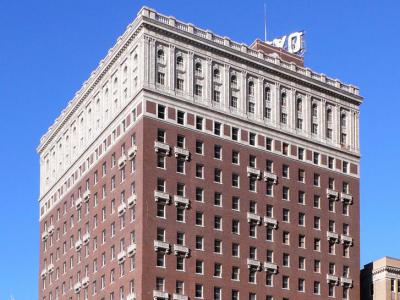


Mayo Hotel, Tulsa
The Mayo Hotel, a towering presence in downtown Tulsa since 1925, is one of Oklahoma’s most storied landmarks. Designed by architect George Winkler and financed by brothers John D. and Cass A. Mayo, the hotel was once the tallest building in the state. With grand Doric columns, decorative terracotta balconies, and a stately corniced crown, the 600-room hotel became an immediate magnet for celebrities, dignitaries, and oil barons.
From ceiling fans in every room to Tulsa’s first running ice water, the Mayo was the gold standard of hospitality in its heyday. It welcomed an impressive roster of 20th-century icons-including John F. Kennedy, Charlie Chaplin, Babe Ruth, Bob Hope, and Mae West-and even served as the residence of oil magnate J. Paul Getty. It also earned a cameo in William Inge’s Pulitzer Prize-winning play Picnic, where the lead character dreams of becoming a bellhop at the Mayo.
The hotel’s history is not without blemish. Though President Truman personally intervened in 1951 to ensure his daughter’s maid could stay at the segregated property, she was still required to use the service elevator. In 1955, a major interior remodel reduced the original two-story lobby to one level to make room for the Pompeian Court function hall.
After a series of ownership changes and a failed renovation in the early 1980s, the building stood stripped and empty for years-an elegant shell of its former self. Finally, in 2009, following a $42 million restoration, the Mayo reopened with 102 hotel rooms, 76 upscale residences, and glamorous event spaces that helped reignite downtown Tulsa’s revitalization.
Today, the Mayo Hotel stands once again as a symbol of the city’s opulent past and dynamic future-a landmark reborn.
From ceiling fans in every room to Tulsa’s first running ice water, the Mayo was the gold standard of hospitality in its heyday. It welcomed an impressive roster of 20th-century icons-including John F. Kennedy, Charlie Chaplin, Babe Ruth, Bob Hope, and Mae West-and even served as the residence of oil magnate J. Paul Getty. It also earned a cameo in William Inge’s Pulitzer Prize-winning play Picnic, where the lead character dreams of becoming a bellhop at the Mayo.
The hotel’s history is not without blemish. Though President Truman personally intervened in 1951 to ensure his daughter’s maid could stay at the segregated property, she was still required to use the service elevator. In 1955, a major interior remodel reduced the original two-story lobby to one level to make room for the Pompeian Court function hall.
After a series of ownership changes and a failed renovation in the early 1980s, the building stood stripped and empty for years-an elegant shell of its former self. Finally, in 2009, following a $42 million restoration, the Mayo reopened with 102 hotel rooms, 76 upscale residences, and glamorous event spaces that helped reignite downtown Tulsa’s revitalization.
Today, the Mayo Hotel stands once again as a symbol of the city’s opulent past and dynamic future-a landmark reborn.
Want to visit this sight? Check out these Self-Guided Walking Tours in Tulsa. Alternatively, you can download the mobile app "GPSmyCity: Walks in 1K+ Cities" from Apple App Store or Google Play Store. The app turns your mobile device to a personal tour guide and it works offline, so no data plan is needed when traveling abroad.
Download The GPSmyCity App



Mayo Hotel on Map
Sight Name: Mayo Hotel
Sight Location: Tulsa, USA (See walking tours in Tulsa)
Sight Type: Attraction/Landmark
Sight Location: Tulsa, USA (See walking tours in Tulsa)
Sight Type: Attraction/Landmark
Nearby Sights
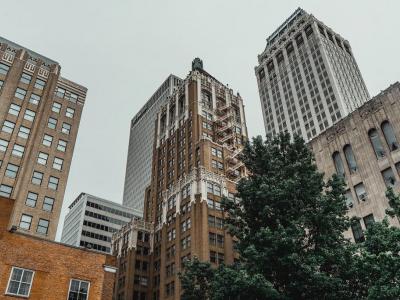
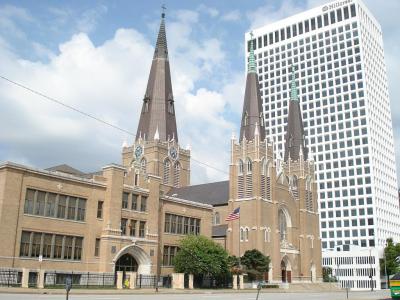
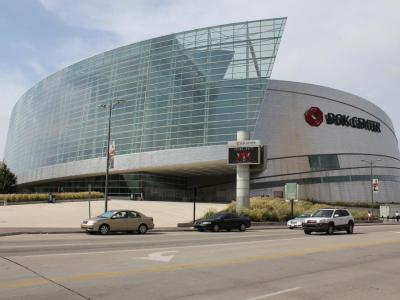
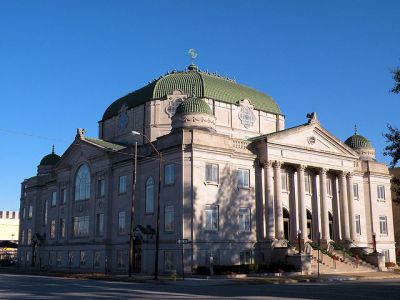
Walking Tours in Tulsa, Oklahoma

Create Your Own Walk in Tulsa
Creating your own self-guided walk in Tulsa is easy and fun. Choose the city attractions that you want to see and a walk route map will be created just for you. You can even set your hotel as the start point of the walk.
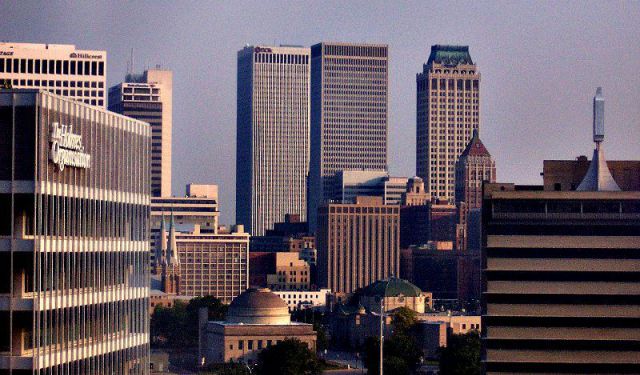
Tulsa Downtown Walking Tour
Straddling the Arkansas River in the U.S. state of Oklahoma, the city of Tulsa is deeply rooted in the Native American history and, more recently, in the oil industry too.
The area of modern Tulsa is considered an Indian Territory, and has been formally settled by Native Americans since 1836. The tribesmen named their settlement Tallasi, which means "old town" in the Creek language,... view more
Tour Duration: 2 Hour(s)
Travel Distance: 2.9 Km or 1.8 Miles
The area of modern Tulsa is considered an Indian Territory, and has been formally settled by Native Americans since 1836. The tribesmen named their settlement Tallasi, which means "old town" in the Creek language,... view more
Tour Duration: 2 Hour(s)
Travel Distance: 2.9 Km or 1.8 Miles
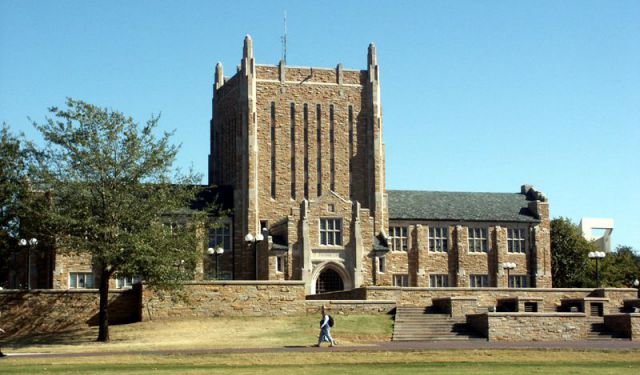
University of Tulsa Walking Tour
Located on the historic U.S. Route 66, America's "Mother Road", the University of Tulsa campus centers on a wide, grassy, quad-like space, known as Dietler Commons. Formerly called "The U", it is found not far from the downtown area and is dominated by English Gothic architecture.
At the top of Deitler Commons sits one of the campus' most notable landmarks, the... view more
Tour Duration: 1 Hour(s)
Travel Distance: 1.3 Km or 0.8 Miles
At the top of Deitler Commons sits one of the campus' most notable landmarks, the... view more
Tour Duration: 1 Hour(s)
Travel Distance: 1.3 Km or 0.8 Miles
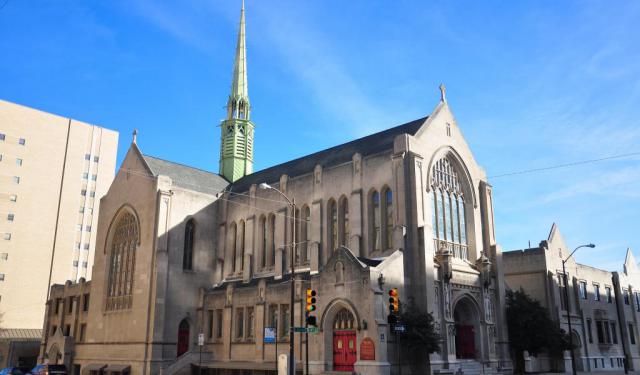
Tulsa's Historical Churches Tour
Tulsa, Oklahoma is home to an array of remarkable churches, cathedrals, chapels, and other religious sites collectively reflecting the city's diverse religious heritage. A good number of these sanctuaries are located downtown. By far more than just places of worship, they are also architectural marvels and cultural landmarks.
Boston Avenue United Methodist Church, with its striking Art... view more
Tour Duration: 1 Hour(s)
Travel Distance: 1.6 Km or 1 Miles
Boston Avenue United Methodist Church, with its striking Art... view more
Tour Duration: 1 Hour(s)
Travel Distance: 1.6 Km or 1 Miles