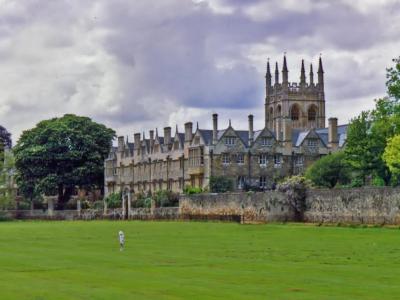


Merton College, Oxford (must see)
Merton College stands on Merton Street, close to the quieter south-eastern side of Oxford’s historic centre. It was founded in 1264 by Walter de Merton, who served as Lord Chancellor to Henry III and later to Edward I. Merton is often described as the first fully self-governing college in Oxford, and its statutes helped shape the model followed by later colleges.
The college offers a rich combination of architecture, enclosed courtyards, and scholarly history. Among its earliest buildings were the Hall and Chapel, both completed in 1297, though only the chapel survives today. Merton College Chapel is a fine example of Early English Gothic architecture, with an imposing scale unusual for a college chapel. The central highlight of the interior is the Great East Window, located at the far end of the choir. To find this feature, walk toward the high altar and look for the original 13th-century stained glass, which reveals an intricate wheel-like design and serves as a vibrant centrepiece of the sanctuary.
One of Merton’s most famous spaces is Mob Quad, built in stages between the late 13th and 14th centuries and often described as the oldest quadrangle in the university. To reach this highlight, walk through the passageway south of the chapel; once you find yourself in this small courtyard, look for the narrow medieval windows and irregular stone masonry that mark the very beginning of the college-quadrangle layout.
Around Mob Quad stands the Old Library, completed in the 1370s and regarded as one of the oldest continuously functioning libraries for university academics and students in Europe. Beneath the timbered ceilings of the library, the most notable details are the remnants of the medieval chained-book system. Once you find yourself inside the gallery, look for the iron rods and rings still attached to the wooden bookcases, which were once used to secure rare and valuable manuscripts from theft.
Merton’s history also reaches beyond academic life. After the dissolution of the monasteries, it acquired Saint Alban Hall from Littlemore Convent, though this remained a separate institution until 1881. During the English Civil War, the college served as a Royalist headquarters and hosted members of Charles I’s court, including Queen Henrietta Maria of France, who stayed in what is now called the Queen’s Room.
Over time, Merton expanded along Merton Street, incorporating the former parish church of Saint John and nearby houses into the Front Quad. Its alumni and academics include four Nobel laureates and writer J. R. R. Tolkien, who was Merton Professor of English Language and Literature from 1945 to 1959.
The college offers a rich combination of architecture, enclosed courtyards, and scholarly history. Among its earliest buildings were the Hall and Chapel, both completed in 1297, though only the chapel survives today. Merton College Chapel is a fine example of Early English Gothic architecture, with an imposing scale unusual for a college chapel. The central highlight of the interior is the Great East Window, located at the far end of the choir. To find this feature, walk toward the high altar and look for the original 13th-century stained glass, which reveals an intricate wheel-like design and serves as a vibrant centrepiece of the sanctuary.
One of Merton’s most famous spaces is Mob Quad, built in stages between the late 13th and 14th centuries and often described as the oldest quadrangle in the university. To reach this highlight, walk through the passageway south of the chapel; once you find yourself in this small courtyard, look for the narrow medieval windows and irregular stone masonry that mark the very beginning of the college-quadrangle layout.
Around Mob Quad stands the Old Library, completed in the 1370s and regarded as one of the oldest continuously functioning libraries for university academics and students in Europe. Beneath the timbered ceilings of the library, the most notable details are the remnants of the medieval chained-book system. Once you find yourself inside the gallery, look for the iron rods and rings still attached to the wooden bookcases, which were once used to secure rare and valuable manuscripts from theft.
Merton’s history also reaches beyond academic life. After the dissolution of the monasteries, it acquired Saint Alban Hall from Littlemore Convent, though this remained a separate institution until 1881. During the English Civil War, the college served as a Royalist headquarters and hosted members of Charles I’s court, including Queen Henrietta Maria of France, who stayed in what is now called the Queen’s Room.
Over time, Merton expanded along Merton Street, incorporating the former parish church of Saint John and nearby houses into the Front Quad. Its alumni and academics include four Nobel laureates and writer J. R. R. Tolkien, who was Merton Professor of English Language and Literature from 1945 to 1959.
Want to visit this sight? Check out these Self-Guided Walking Tours in Oxford. Alternatively, you can download the mobile app "GPSmyCity: Walks in 1K+ Cities" from Apple App Store or Google Play Store. The app turns your mobile device to a personal tour guide and it works offline, so no data plan is needed when traveling abroad.
Download The GPSmyCity App



Merton College on Map
Sight Name: Merton College
Sight Location: Oxford, England (See walking tours in Oxford)
Sight Type: Attraction/Landmark
Guide(s) Containing This Sight:
Sight Location: Oxford, England (See walking tours in Oxford)
Sight Type: Attraction/Landmark
Guide(s) Containing This Sight:
Nearby Sights


Walking Tours in Oxford, England

Create Your Own Walk in Oxford
Creating your own self-guided walk in Oxford is easy and fun. Choose the city attractions that you want to see and a walk route map will be created just for you. You can even set your hotel as the start point of the walk.
Harry Potter Walk in Oxford
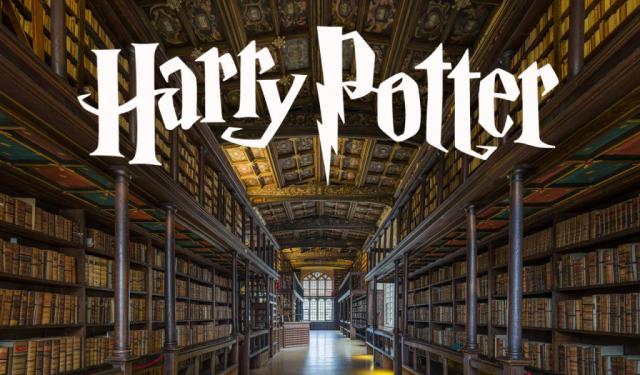
Oxford’s connection with Harry Potter rests on a simple fact: the city already looked like Hogwarts before the cameras arrived. Long before it became associated with wands, robes, and moving staircases, Oxford was known for its medieval colleges, vaulted halls, cloisters, libraries, and enclosed quadrangles. For the filmmakers, it offered a real academic setting that needed little alteration to... view more
Tour Duration: 1 Hour(s)
Travel Distance: 1.0 Km or 0.6 Miles
Tour Duration: 1 Hour(s)
Travel Distance: 1.0 Km or 0.6 Miles
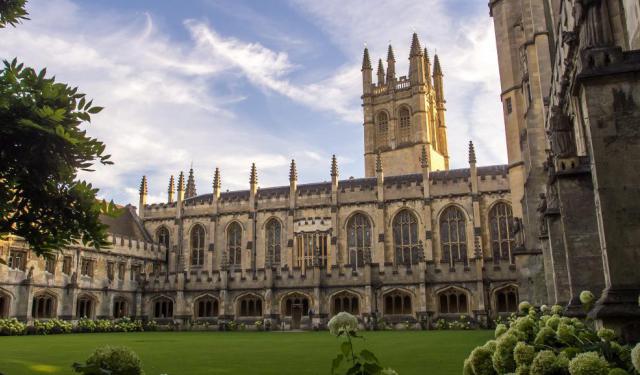
Colleges of Oxford University
During an 1862 summer boat ride along the River Thames, Oxford writer Lewis Carroll invented a fantastical story for Alice, the daughter of the dean of Christ Church, Oxford. That tale would later become Alice's Adventures in Wonderland.
Oxford’s colleges are the heart of the city’s identity, forming one of the oldest and most influential university communities in the world. Their... view more
Tour Duration: 1 Hour(s)
Travel Distance: 1.5 Km or 0.9 Miles
Oxford’s colleges are the heart of the city’s identity, forming one of the oldest and most influential university communities in the world. Their... view more
Tour Duration: 1 Hour(s)
Travel Distance: 1.5 Km or 0.9 Miles
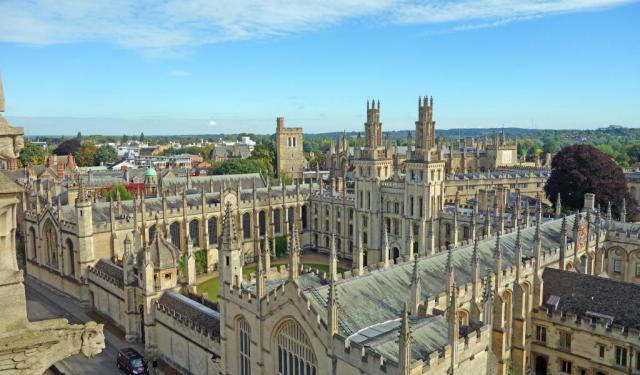
Oxford Downtown Walking Tour
Writer Oscar Wilde, who studied at Magdalen College, Oxford, once remarked that Oxford gave him “the most wonderful years” of his youth.
The city of Oxford has one of the longest and most layered histories in England. Its name comes from the Old English Oxenaforda, meaning “ford of the oxen,” referring to a shallow river crossing where cattle could pass through the water. This crossing... view more
Tour Duration: 2 Hour(s)
Travel Distance: 3.5 Km or 2.2 Miles
The city of Oxford has one of the longest and most layered histories in England. Its name comes from the Old English Oxenaforda, meaning “ford of the oxen,” referring to a shallow river crossing where cattle could pass through the water. This crossing... view more
Tour Duration: 2 Hour(s)
Travel Distance: 3.5 Km or 2.2 Miles