

Merton College Chapel, Oxford
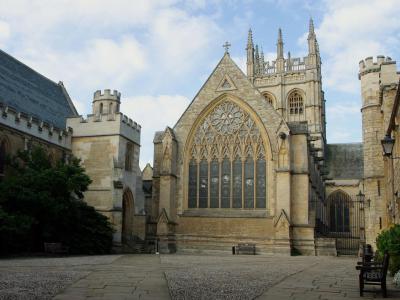
Of all the college chapels in Oxford University, Merton College Chapel is the largest and is one of the best examples of Early English Period architecture.
The first chapel built for the college in 1266, it wasn’t very sound and, by 1288, through bad upkeep, had almost fallen into ruin. The new church was started in 1290, with the Choir and the huge East Window finished in 1294.
Its Quire Walls have seven pairs of stained-glass windows, 12 of which, including the Annunciation Scene and heraldic glass in the East Window, were created in 1296. The other two windows date back to the 15th century; all of them survived the Reformation.
The Crossing and the South Transept were completed in the 14th century; the North Transept and the Great Tower were built in 1450. The Gothic roodscreen and the lectern, which was donated by John Martlock in 1504, were left untouched by King Henry VIII’s Suppression Acts.
In 1655, the roof of the South Transept collapsed and was rebuilt by Sir Christopher Wren in 1671; the medieval bells were recast at the same time. In 1802, the College Brewery was installed in the Sacristy, but was removed in 1886 when the chapel was restored, and the monuments in the Sanctuary were moved to the Ante Chapel. The beautiful chamber organ, built by Thomas Parker in 1762, was left in place and underwent restoration in 1999.
The chapel served for many years as the parish church of Saint John, as well as the college chapel, which explains its size. There is a door leading onto North Street, through which the parishioners entered, and two doors opening onto Merton College.
The first chapel built for the college in 1266, it wasn’t very sound and, by 1288, through bad upkeep, had almost fallen into ruin. The new church was started in 1290, with the Choir and the huge East Window finished in 1294.
Its Quire Walls have seven pairs of stained-glass windows, 12 of which, including the Annunciation Scene and heraldic glass in the East Window, were created in 1296. The other two windows date back to the 15th century; all of them survived the Reformation.
The Crossing and the South Transept were completed in the 14th century; the North Transept and the Great Tower were built in 1450. The Gothic roodscreen and the lectern, which was donated by John Martlock in 1504, were left untouched by King Henry VIII’s Suppression Acts.
In 1655, the roof of the South Transept collapsed and was rebuilt by Sir Christopher Wren in 1671; the medieval bells were recast at the same time. In 1802, the College Brewery was installed in the Sacristy, but was removed in 1886 when the chapel was restored, and the monuments in the Sanctuary were moved to the Ante Chapel. The beautiful chamber organ, built by Thomas Parker in 1762, was left in place and underwent restoration in 1999.
The chapel served for many years as the parish church of Saint John, as well as the college chapel, which explains its size. There is a door leading onto North Street, through which the parishioners entered, and two doors opening onto Merton College.
Want to visit this sight? Check out these Self-Guided Walking Tours in Oxford. Alternatively, you can download the mobile app "GPSmyCity: Walks in 1K+ Cities" from Apple App Store or Google Play Store. The app turns your mobile device to a personal tour guide and it works offline, so no data plan is needed when traveling abroad.
Download The GPSmyCity App



Merton College Chapel on Map
Sight Name: Merton College Chapel
Sight Location: Oxford, England (See walking tours in Oxford)
Sight Type: Religious
Sight Location: Oxford, England (See walking tours in Oxford)
Sight Type: Religious
Nearby Sights


Walking Tours in Oxford, England

Create Your Own Walk in Oxford
Creating your own self-guided walk in Oxford is easy and fun. Choose the city attractions that you want to see and a walk route map will be created just for you. You can even set your hotel as the start point of the walk.
Harry Potter Walk in Oxford
Oxford’s connection with Harry Potter rests on a simple fact: the city already looked like Hogwarts before the cameras arrived. Long before it became associated with wands, robes, and moving staircases, Oxford was known for its medieval colleges, vaulted halls, cloisters, libraries, and enclosed quadrangles. For the filmmakers, it offered a real academic setting that needed little alteration to... view more
Tour Duration: 1 Hour
Travel Distance: 1 Km or 0.6 Miles
Tour Duration: 1 Hour
Travel Distance: 1 Km or 0.6 Miles
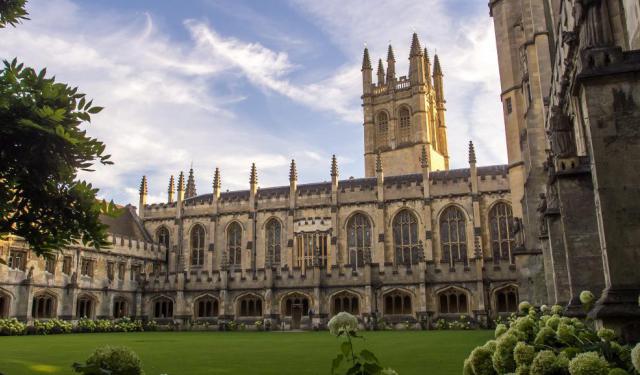
Colleges of Oxford University
During an 1862 summer boat ride along the River Thames, Oxford writer Lewis Carroll invented a fantastical story for Alice, the daughter of the dean of Christ Church, Oxford. That tale would later become Alice's Adventures in Wonderland.
Oxford’s colleges are the heart of the city’s identity, forming one of the oldest and most influential university communities in the world. Their... view more
Tour Duration: 1 Hour
Travel Distance: 1.5 Km or 0.9 Miles
Oxford’s colleges are the heart of the city’s identity, forming one of the oldest and most influential university communities in the world. Their... view more
Tour Duration: 1 Hour
Travel Distance: 1.5 Km or 0.9 Miles
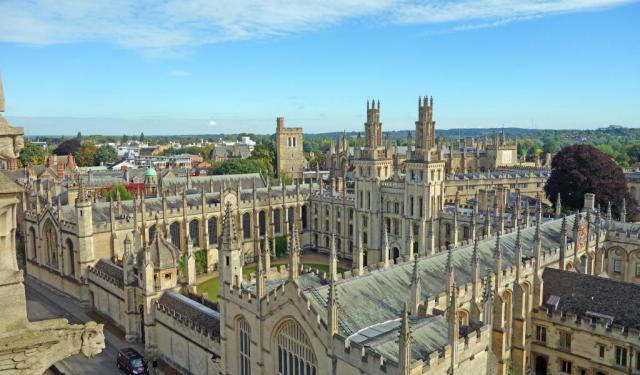
Oxford Downtown Walking Tour
Writer Oscar Wilde, who studied at Magdalen College, Oxford, once remarked that Oxford gave him “the most wonderful years” of his youth.
The city of Oxford has one of the longest and most layered histories in England. Its name comes from the Old English Oxenaforda, meaning “ford of the oxen,” referring to a shallow river crossing where cattle could pass through the water. This crossing... view more
Tour Duration: 2 Hours
Travel Distance: 3.5 Km or 2.2 Miles
The city of Oxford has one of the longest and most layered histories in England. Its name comes from the Old English Oxenaforda, meaning “ford of the oxen,” referring to a shallow river crossing where cattle could pass through the water. This crossing... view more
Tour Duration: 2 Hours
Travel Distance: 3.5 Km or 2.2 Miles
City Walks Overview
