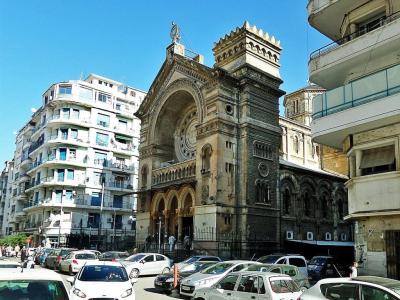


Mosquee Errahma (Errahma Mosque), Algiers
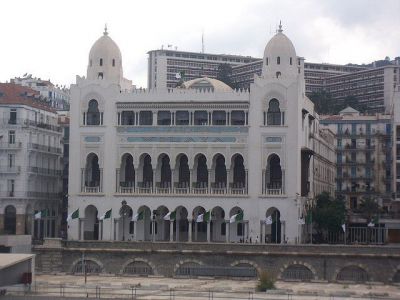
The Errahma Mosque in Algiers, also known as the Mosque of Mercy (Al-Rahma), is a striking symbol of Algeria's cultural and spiritual evolution. Located in the bustling district of Sidi M’Hamed, this mosque is one of the largest in the Algerian capital, capable of accommodating up to 5,000 worshippers across its expansive 1,000 square meters area.
Originally built as the Church of Sainte-Marie-Saint-Charles de l'Agha, construction began in 1897 under architects Stéphane Boulin and the Barbet brothers, completed in 1903 with intricate stained glass by Frères Tossut. Some sources suggest an earlier 1894 date, funded by a wealthy Belgian. In 1979, calls to convert the church into a mosque led to its transformation in 1981, when it was renamed Al-Rahma Mosque. Stained glass, altars, and pulpits were removed, and the interior was repainted white and yellow. Modern amenities like air conditioning were added in 2009 to improve comfort.
Beyond its religious significance, Errahma Mosque has also been a center of social and political activity. In 2019, it became a rallying point for the Hirak protest movement, symbolizing unity and resistance.
Today, the mosque is celebrated not only for its role in the community but also for its architectural beauty. Visitors are drawn to its elegant minarets, grand arches, and intricately detailed façades, which combine elements of Islamic and European architectural styles. Its serene courtyards, often filled with the sound of flowing water, provide a tranquil retreat amidst the city's hustle.
Whether for its spiritual importance or historical and architectural value, the Errahma Mosque remains a must-visit landmark in Algiers, embodying the city's rich cultural tapestry and enduring legacy.
Originally built as the Church of Sainte-Marie-Saint-Charles de l'Agha, construction began in 1897 under architects Stéphane Boulin and the Barbet brothers, completed in 1903 with intricate stained glass by Frères Tossut. Some sources suggest an earlier 1894 date, funded by a wealthy Belgian. In 1979, calls to convert the church into a mosque led to its transformation in 1981, when it was renamed Al-Rahma Mosque. Stained glass, altars, and pulpits were removed, and the interior was repainted white and yellow. Modern amenities like air conditioning were added in 2009 to improve comfort.
Beyond its religious significance, Errahma Mosque has also been a center of social and political activity. In 2019, it became a rallying point for the Hirak protest movement, symbolizing unity and resistance.
Today, the mosque is celebrated not only for its role in the community but also for its architectural beauty. Visitors are drawn to its elegant minarets, grand arches, and intricately detailed façades, which combine elements of Islamic and European architectural styles. Its serene courtyards, often filled with the sound of flowing water, provide a tranquil retreat amidst the city's hustle.
Whether for its spiritual importance or historical and architectural value, the Errahma Mosque remains a must-visit landmark in Algiers, embodying the city's rich cultural tapestry and enduring legacy.
Want to visit this sight? Check out these Self-Guided Walking Tours in Algiers. Alternatively, you can download the mobile app "GPSmyCity: Walks in 1K+ Cities" from Apple App Store or Google Play Store. The app turns your mobile device to a personal tour guide and it works offline, so no data plan is needed when traveling abroad.
Download The GPSmyCity App



Mosquee Errahma (Errahma Mosque) on Map
Sight Name: Mosquee Errahma (Errahma Mosque)
Sight Location: Algiers, Algeria (See walking tours in Algiers)
Sight Type: Religious
Sight Location: Algiers, Algeria (See walking tours in Algiers)
Sight Type: Religious
Nearby Sights
Walking Tours in Algiers, Algeria

Create Your Own Walk in Algiers
Creating your own self-guided walk in Algiers is easy and fun. Choose the city attractions that you want to see and a walk route map will be created just for you. You can even set your hotel as the start point of the walk.
Algiers City Center Walking Tour
The great Spanish writer Miguel de Cervantes spent five years in Algiers, from 1575 to 1580, as a prisoner of war. The stay left an an indelible mark on his work, from plays to the monumental work "Don Quixote."
Algiers, the capital of Algeria, also known as "The Joyous" (el-Behdja) or "Algiers the White" (Alger la Blanche) for its whitewashed buildings, is a city... view more
Tour Duration: 2 Hour(s)
Travel Distance: 3.9 Km or 2.4 Miles
Algiers, the capital of Algeria, also known as "The Joyous" (el-Behdja) or "Algiers the White" (Alger la Blanche) for its whitewashed buildings, is a city... view more
Tour Duration: 2 Hour(s)
Travel Distance: 3.9 Km or 2.4 Miles