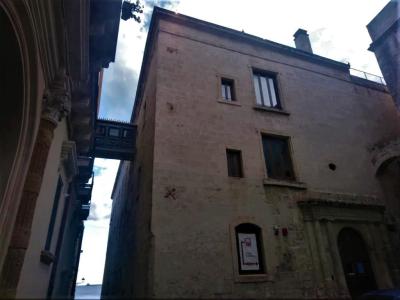


Museo Diocesano di Arte Sacra (Diocesan Museum of Sacred Art), Taranto
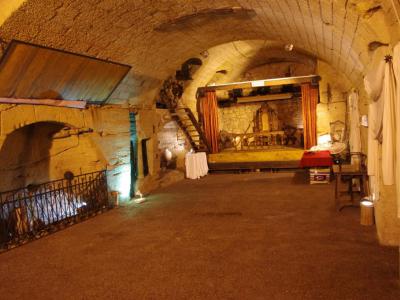
The Diocesan Museum or MuDi is set up in the rooms of the sixteenth-century Archbishop's Seminary of Taranto in the Old City. The MuDi is spread over 4 floors, with a basement, with the remains of an ancient Iapigio village, the ground floor which includes a 100-seat auditorium, a multipurpose room and the first and second floors, where the thematic sections are located: Liturgical, Christological, Marian, Saints, Religious Orders and Confraternities, Cathedral and Archbishops. The exhibition contains over 300 works spanning a time span from the 7th to the 20th century, including sacred furnishings, relics, paintings and sculptures of exceptional cultural value. These largely come from churches no longer open for worship, or from the "Treasure of San Cataldo" and from the heritage of the archdiocese. Among the main works preserved there is the treasure of San Cataldo with the golden cross found on the Saint 's chest during the excavations of the 11th century cathedral, the topaz of King Ferdinand II, a Brazilian topaz by Andrea Cariello, paintings of the Madonna della Salute by Nicola Porta, canvases of the Madonna of the Assumption by Serafino Elmo, The dream of San Giuseppe by Corrado Giaquinto, Ecce Homo by Paolo De Matteis and ancient reliquaries containing the tongue of San Cataldo and the blood of San Vito. Recently the MuDi it was enriched by contemporary art canvases with religious subjects donated by Archbishop Benigno Papa.
It appears to be a proposal of interest historical-artistic, cultural and architectural now emerging in the Taranto area, as it allows you to know a long piece of the history of the city, hosting testimonies of great historical, artistic and religious value starting from the seventh century. A.D. up to the present day. The permanent exhibition itinerary, divided into seven thematic sections, is developed on three levels and showcases over 400 works, including a fair amount of sculptural artefacts clearly referable to cultural areas of great interest, a rich pictorial documentation, precious sacred vestments, as well as a varied amount of liturgical furnishings with very precious materials. Of considerable value are the silvers and golds coming mainly from the so-called Treasury of San Cataldo, patron saint of the city. The museum collection hides extraordinary secrets, thanks to the presence of unique artifacts for the preciousness of the materials and their history. A very rare example of a fine linen tapestry is preserved, a yarn obtained from the Pinna nobilis, manufactured in Taranto. Extraordinary are the ivory crucifixes of the Flemish school, altar sets in ivory and mother of pearl, as well as in coral and lapis lazuli. Of great historical and religious value is the ancient golden cross from the 7th century AD. found, according to the most ancient hagiographic sources, on the chest of the patron saint of Taranto San Cataldo in 1071, at the time of the discovery of the body inside the marble sarcophagus. But the real flagship of MuDi is the largest artistic jewel in the world: a priceless tabernacle door made of a carved 1.5 kg topaz.
Inaugurated on 6 May 2011, the Diocesan Museum of Sacred Art of Taranto was born from the intuition of HE Mons. Benigno Papa, who, recognizing the importance of promoting the protection and valorisation of the historical and artistic heritage of the Diocese of Taranto, launches an accurate museographic project conducted by the Diocesan Office for Ecclesiastical Cultural Heritage. The MuDi appears to be a proposal of historical, artistic, religious and architectural interest now emerging in the Taranto area, as it allows us to complete the global vision of the history of the city, hosting testimonies of great historical and artistic value starting from the 7th century. AD to the present day. The permanent exhibition itinerary, divided into seven thematic sections and developed on three levels, displays over 350 explanatory works of the history of the Archdiocese of Taranto, including a fair quantity of sculptural artefacts clearly referable to cultural areas of great interest, a rich pictorial documentation testifying to the great southern schools, precious sacred vestments, a display of candlesticks with applications in coral and lapis lazuli made in Trapani, a very rare example of a byssus tapestry, ivory crucifixes from the Flemish school, altar kits in ivory and mother-of-pearl , as well as a varied quantity of liturgical furnishings. Furthermore, the silver and gold items coming mainly from the so-called Treasure of San Cataldo are of considerable value, including a tabernacle door of inestimable value in gold and carved topaz and the ancient golden cross found, according to the most ancient hagiographic sources, on the saint's chest in 1071 at the time of the discovery of the body inside the marble sarcophagus. ***PH***
It appears to be a proposal of interest historical-artistic, cultural and architectural now emerging in the Taranto area, as it allows you to know a long piece of the history of the city, hosting testimonies of great historical, artistic and religious value starting from the seventh century. A.D. up to the present day. The permanent exhibition itinerary, divided into seven thematic sections, is developed on three levels and showcases over 400 works, including a fair amount of sculptural artefacts clearly referable to cultural areas of great interest, a rich pictorial documentation, precious sacred vestments, as well as a varied amount of liturgical furnishings with very precious materials. Of considerable value are the silvers and golds coming mainly from the so-called Treasury of San Cataldo, patron saint of the city. The museum collection hides extraordinary secrets, thanks to the presence of unique artifacts for the preciousness of the materials and their history. A very rare example of a fine linen tapestry is preserved, a yarn obtained from the Pinna nobilis, manufactured in Taranto. Extraordinary are the ivory crucifixes of the Flemish school, altar sets in ivory and mother of pearl, as well as in coral and lapis lazuli. Of great historical and religious value is the ancient golden cross from the 7th century AD. found, according to the most ancient hagiographic sources, on the chest of the patron saint of Taranto San Cataldo in 1071, at the time of the discovery of the body inside the marble sarcophagus. But the real flagship of MuDi is the largest artistic jewel in the world: a priceless tabernacle door made of a carved 1.5 kg topaz.
Inaugurated on 6 May 2011, the Diocesan Museum of Sacred Art of Taranto was born from the intuition of HE Mons. Benigno Papa, who, recognizing the importance of promoting the protection and valorisation of the historical and artistic heritage of the Diocese of Taranto, launches an accurate museographic project conducted by the Diocesan Office for Ecclesiastical Cultural Heritage. The MuDi appears to be a proposal of historical, artistic, religious and architectural interest now emerging in the Taranto area, as it allows us to complete the global vision of the history of the city, hosting testimonies of great historical and artistic value starting from the 7th century. AD to the present day. The permanent exhibition itinerary, divided into seven thematic sections and developed on three levels, displays over 350 explanatory works of the history of the Archdiocese of Taranto, including a fair quantity of sculptural artefacts clearly referable to cultural areas of great interest, a rich pictorial documentation testifying to the great southern schools, precious sacred vestments, a display of candlesticks with applications in coral and lapis lazuli made in Trapani, a very rare example of a byssus tapestry, ivory crucifixes from the Flemish school, altar kits in ivory and mother-of-pearl , as well as a varied quantity of liturgical furnishings. Furthermore, the silver and gold items coming mainly from the so-called Treasure of San Cataldo are of considerable value, including a tabernacle door of inestimable value in gold and carved topaz and the ancient golden cross found, according to the most ancient hagiographic sources, on the saint's chest in 1071 at the time of the discovery of the body inside the marble sarcophagus. ***PH***
Want to visit this sight? Check out these Self-Guided Walking Tours in Taranto. Alternatively, you can download the mobile app "GPSmyCity: Walks in 1K+ Cities" from Apple App Store or Google Play Store. The app turns your mobile device to a personal tour guide and it works offline, so no data plan is needed when traveling abroad.
Download The GPSmyCity App



Museo Diocesano di Arte Sacra (Diocesan Museum of Sacred Art) on Map
Sight Name: Museo Diocesano di Arte Sacra (Diocesan Museum of Sacred Art)
Sight Location: Taranto, Italy (See walking tours in Taranto)
Sight Type: Museum/Gallery
Sight Location: Taranto, Italy (See walking tours in Taranto)
Sight Type: Museum/Gallery
Nearby Sights


Walking Tours in Taranto, Italy

Create Your Own Walk in Taranto
Creating your own self-guided walk in Taranto is easy and fun. Choose the city attractions that you want to see and a walk route map will be created just for you. You can even set your hotel as the start point of the walk.
Taranto Introduction Walking Tour
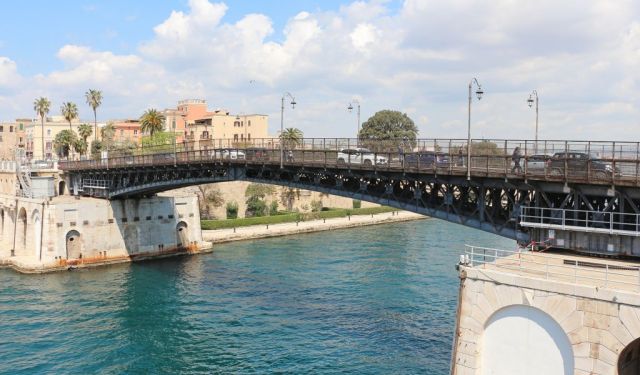
Taranto, the famed “city of the two seas,” sparkles on the Ionian coast of Puglia, framed by the glistening bays of Mar Grande and Mar Piccolo. This isn’t just a pretty port town-it’s a place where history, culture, and postcard-perfect views meet head-on. With its prime Mediterranean location, Taranto has been a hot spot for everyone from ancient Greeks to Roman generals, Byzantine... view more
Tour Duration: 2 Hours
Travel Distance: 2.9 Km or 1.8 Miles
Tour Duration: 2 Hours
Travel Distance: 2.9 Km or 1.8 Miles
City Walks Overview
