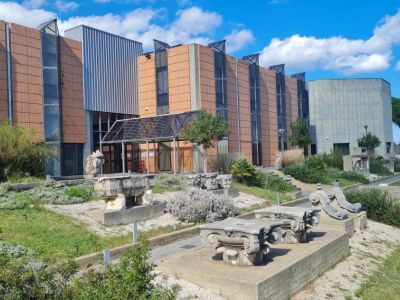


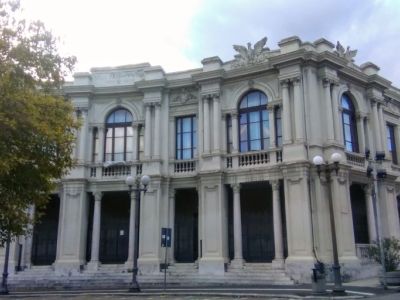
Museo Interdisciplinare Regionale (Regional Museum of Messina), Messina (must see)
The Regional Museum of Messina is an underrated gem, offering an extensive collection of art, archaeology, and historical artifacts that provide insight into the city’s rich past. Among its most remarkable pieces are the ram bow of an ancient Roman warship, a significant relic that speaks to Messina’s maritime history, and the San Gregorio polyptych by the famed Renaissance artist Antonello da Messina.
The museum also houses two masterpieces by Caravaggio-L'Adorazione dei pastori (Adoration of the Shepherds) and Risurrezione di Lazzaro (Resurrection of Lazarus)-which are among its most prized exhibits.
In addition to these Renaissance and Baroque treasures, the museum boasts several other exceptional works, including a 16th-century depiction of Christ at the Pillar and the dramatic Deposizione dalla Croce (Deposition from the Cross) by Colijn de Coter.
Visitors can also admire the original Neptune statue from Messina’s 16th-century Fontana del Nettuno and a navigational map of the Mediterranean crafted by Placido Caloiro e Oliva in 1646, offering a glimpse into historical cartography. A particularly eerie yet fascinating exhibit is the putridarium, the excavated remains of a crypt where monastic corpses were left to decompose before their bones were cleaned and stored in an ossuary.
The museum has undergone significant changes in its location over time. Originally housed in the Barbera-Mellinghoff silk mill, a late 19th-century structure repurposed after the devastating 1908 earthquake, it was later relocated in 2017 to a modern facility designed in the 1970s.
The museum also houses two masterpieces by Caravaggio-L'Adorazione dei pastori (Adoration of the Shepherds) and Risurrezione di Lazzaro (Resurrection of Lazarus)-which are among its most prized exhibits.
In addition to these Renaissance and Baroque treasures, the museum boasts several other exceptional works, including a 16th-century depiction of Christ at the Pillar and the dramatic Deposizione dalla Croce (Deposition from the Cross) by Colijn de Coter.
Visitors can also admire the original Neptune statue from Messina’s 16th-century Fontana del Nettuno and a navigational map of the Mediterranean crafted by Placido Caloiro e Oliva in 1646, offering a glimpse into historical cartography. A particularly eerie yet fascinating exhibit is the putridarium, the excavated remains of a crypt where monastic corpses were left to decompose before their bones were cleaned and stored in an ossuary.
The museum has undergone significant changes in its location over time. Originally housed in the Barbera-Mellinghoff silk mill, a late 19th-century structure repurposed after the devastating 1908 earthquake, it was later relocated in 2017 to a modern facility designed in the 1970s.
Want to visit this sight? Check out these Self-Guided Walking Tours in Messina. Alternatively, you can download the mobile app "GPSmyCity: Walks in 1K+ Cities" from Apple App Store or Google Play Store. The app turns your mobile device to a personal tour guide and it works offline, so no data plan is needed when traveling abroad.
Download The GPSmyCity App



Museo Interdisciplinare Regionale (Regional Museum of Messina) on Map
Sight Name: Museo Interdisciplinare Regionale (Regional Museum of Messina)
Sight Location: Messina, Italy (See walking tours in Messina)
Sight Type: Museum/Gallery
Sight Location: Messina, Italy (See walking tours in Messina)
Sight Type: Museum/Gallery
Nearby Sights
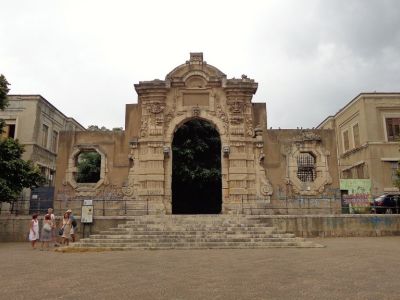
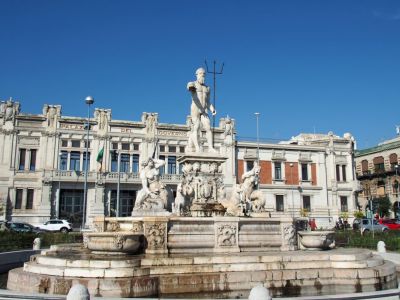
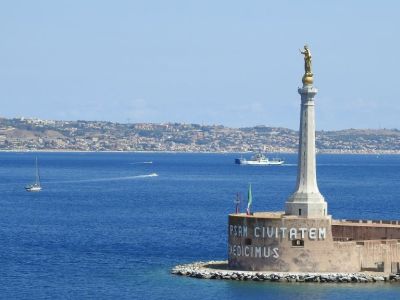
Walking Tours in Messina, Italy

Create Your Own Walk in Messina
Creating your own self-guided walk in Messina is easy and fun. Choose the city attractions that you want to see and a walk route map will be created just for you. You can even set your hotel as the start point of the walk.
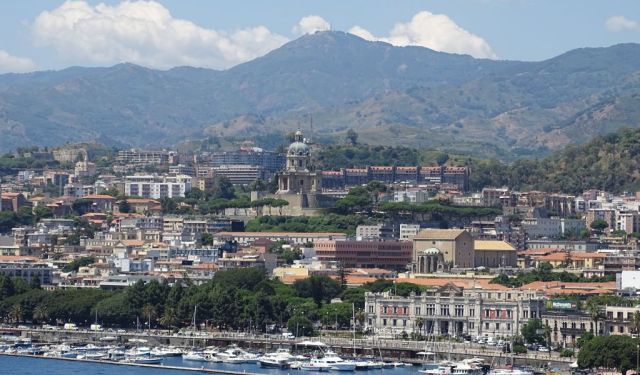
Messina Introduction Walking Tour
When German writer Johann Wolfgang von Goethe arrived in Messina in 1787, he traveled past “ruin after ruin” before reaching his inn. He encountered a city still scarred by a devastating earthquake four years earlier.
Messina, standing at the northeastern tip of Sicily beside the narrow strait separating the island from mainland Italy, has been shaped by the sea for nearly three thousand... view more
Tour Duration: 2 Hours
Travel Distance: 3.4 Km or 2.1 Miles
Messina, standing at the northeastern tip of Sicily beside the narrow strait separating the island from mainland Italy, has been shaped by the sea for nearly three thousand... view more
Tour Duration: 2 Hours
Travel Distance: 3.4 Km or 2.1 Miles
City Walks Overview
