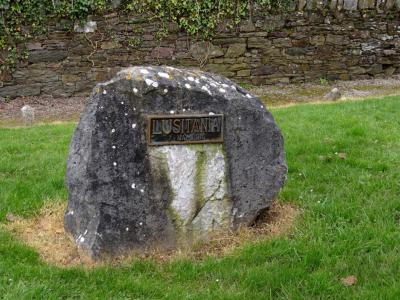


Old Church Cemetery, Cobh
The old church cemetery is an important historical site because it contains the graves of many individuals who were affected by the mass emigrations that occurred during the 19th and early 20th centuries in Ireland. Many of the people buried in the cemetery were passengers on ships that left Ireland during the Great Famine and other periods of economic hardship. The cemetery also contains 3 mass graves of victims of the sinking of the RMS Lusitania in 1915. The oldest grave at Old Church Cemetery is 400 years ago. And many are marked with beautiful, ornate Celtic crosses. The old church cemetery in Cobh is a reminder of the human toll of these historical events and serves as a poignant reminder of the struggles and sacrifices of the people who lived during these difficult times. The cemetery is a 1.2 km walk from Cobh.
The Old Church Cemetery (also known as Cobh Cemetery) is an ancient cemetery on the outskirts of the town of Cobh, County Cork, Ireland which contains a significant number of important burials, including a number 3 mass graves and several individual graves containing the remains of 193 victims of the passenger ship RMS Lusitania which was sunk by a German torpedo off the Old Head of Kinsale during the First World War in May 1915 with the loss of more than 1,100 lives. The Commonwealth War Graves Commission register and maintain the graves of 127 identified Commonwealth service personnel (including Lusitania victims) from the same war.
No one is sure when a church was erected on this site, however we can presume that it was part of the Celtic Church prior to the arrival of the Normans. It remained a place of catholic worship until the collapse of the rebellion of 1581 when Lord Ormond and his English army signalled their victory over the Earl of Desmond by burning down the church. In 1694 a protestant church was built on the walls of the old church. It remained a place of Protestant worship until 1815 when St. Mary’s Church was completed in the town (near Roches Row). The old church was then allowed to fall into ruins. Around the old church is one of the most cosmopolitan graveyards in Ireland with people of many races and creeds buried here. Very many are seafaring men who found their last resting place in this quiet corner of the Great Island. For centuries wealth was a pre-requisite for burial within a church’s walls or to erect a memorial. “Ordinary” people were buried in the churchyard with only mounds of grass or pieces of wood to mark their graves. However by the late 1600’s the merchant classes had assumed the tradition of erecting stone memorials to their dead. The oldest remaining headstone in this cemetery dates to 1698. Many headstones are now worn and difficult to read, but an examination of them can be rewarding as they form an astonishing demonstration of the stonemason’s craft.
This cemetery has a plot for those men from the "Lusitania" whose remains were washed ashore. There are now 127 Commonwealth burials of the 1914-1918 war commemorated here. There are also 14 non World War service burials and 1 Belgian Foreign National burial. ***PH***
The Old Church Cemetery (also known as Cobh Cemetery) is an ancient cemetery on the outskirts of the town of Cobh, County Cork, Ireland which contains a significant number of important burials, including a number 3 mass graves and several individual graves containing the remains of 193 victims of the passenger ship RMS Lusitania which was sunk by a German torpedo off the Old Head of Kinsale during the First World War in May 1915 with the loss of more than 1,100 lives. The Commonwealth War Graves Commission register and maintain the graves of 127 identified Commonwealth service personnel (including Lusitania victims) from the same war.
No one is sure when a church was erected on this site, however we can presume that it was part of the Celtic Church prior to the arrival of the Normans. It remained a place of catholic worship until the collapse of the rebellion of 1581 when Lord Ormond and his English army signalled their victory over the Earl of Desmond by burning down the church. In 1694 a protestant church was built on the walls of the old church. It remained a place of Protestant worship until 1815 when St. Mary’s Church was completed in the town (near Roches Row). The old church was then allowed to fall into ruins. Around the old church is one of the most cosmopolitan graveyards in Ireland with people of many races and creeds buried here. Very many are seafaring men who found their last resting place in this quiet corner of the Great Island. For centuries wealth was a pre-requisite for burial within a church’s walls or to erect a memorial. “Ordinary” people were buried in the churchyard with only mounds of grass or pieces of wood to mark their graves. However by the late 1600’s the merchant classes had assumed the tradition of erecting stone memorials to their dead. The oldest remaining headstone in this cemetery dates to 1698. Many headstones are now worn and difficult to read, but an examination of them can be rewarding as they form an astonishing demonstration of the stonemason’s craft.
This cemetery has a plot for those men from the "Lusitania" whose remains were washed ashore. There are now 127 Commonwealth burials of the 1914-1918 war commemorated here. There are also 14 non World War service burials and 1 Belgian Foreign National burial. ***PH***
Want to visit this sight? Check out these Self-Guided Walking Tours in Cobh. Alternatively, you can download the mobile app "GPSmyCity: Walks in 1K+ Cities" from Apple App Store or Google Play Store. The app turns your mobile device to a personal tour guide and it works offline, so no data plan is needed when traveling abroad.
Download The GPSmyCity App



Old Church Cemetery on Map
Sight Name: Old Church Cemetery
Sight Location: Cobh, Ireland (See walking tours in Cobh)
Sight Type: Attraction/Landmark
Sight Location: Cobh, Ireland (See walking tours in Cobh)
Sight Type: Attraction/Landmark
Nearby Sights
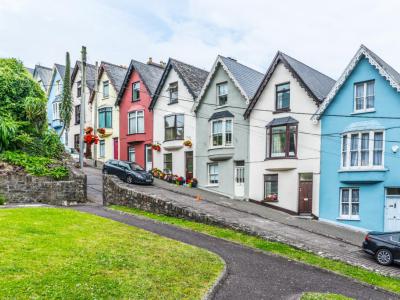
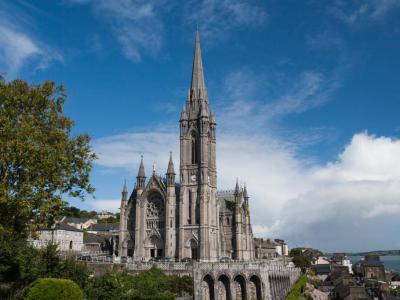
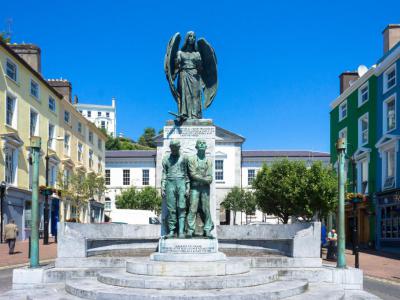
Walking Tours in Cobh, Ireland

Create Your Own Walk in Cobh
Creating your own self-guided walk in Cobh is easy and fun. Choose the city attractions that you want to see and a walk route map will be created just for you. You can even set your hotel as the start point of the walk.
Cobh Introduction Walking Tour
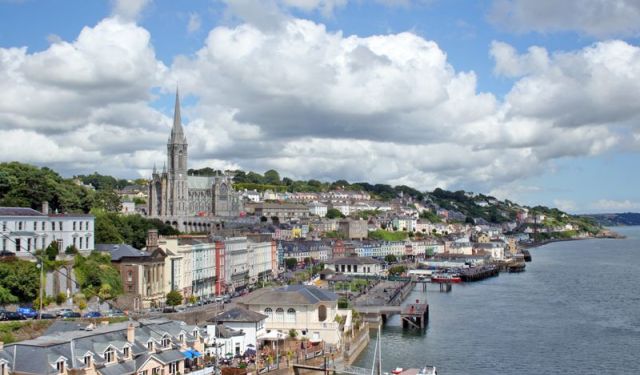
With its picture-perfect charm and unexpected global significance, Cobh invites you to explore Ireland’s storied past. This unassuming coastal gem, often ranked among Europe’s most picturesque towns, has been the setting for some of history’s most unforgettable voyages.
Once known as Queenstown, the city’s name (pronounced “cove”) means a “small harbor” or “place to moor... view more
Tour Duration: 1 Hour(s)
Travel Distance: 1.7 Km or 1.1 Miles
Once known as Queenstown, the city’s name (pronounced “cove”) means a “small harbor” or “place to moor... view more
Tour Duration: 1 Hour(s)
Travel Distance: 1.7 Km or 1.1 Miles