

Oxford University Museum of Natural History, Oxford (must see)
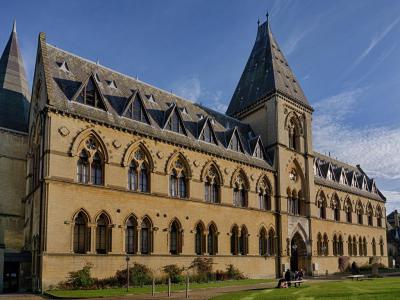
The Oxford University Museum of Natural History (OUMNH) is a museum that showcases a wide range of natural history specimens belonging to the University of Oxford. It is situated on Parks Road in Oxford. The museum was established in 1850, although initially, it didn't have its own dedicated building. Instead, the natural history specimens were scattered across various museums throughout the city. The construction of the museum's current building was undertaken in 1860, thanks to the efforts of Sir Henry Acland, who commissioned its creation, and the architects Benjamin Woodward and Thomas Dean.
The architecture of the museum is characterized by a Neo-Gothic style, and it is quite visually appealing. The main hall of the museum features a glass roof supported by cast iron pillars, dividing the space into three distinct aisles. Along the ground and first floors, you can find secluded arcades adorned with stone columns. These columns are intricately decorated with various natural motifs, such as branches and leaves. Within the museum, numerous statues pay homage to prominent scientists, including Aristotle, Darwin, Bacon, and Linnaeus.
The museum's collections encompass a wide variety of natural history disciplines, including zoology, entomology, paleontology, geology, and mineralogy. Visitors can explore a remarkable assortment of specimens, from crabs collected by Charles Darwin to fossils, dinosaurs, and fascinating insects. Notably, the museum's prized possession is the head and claw of the last known Dodo bird.
Shortly after its opening, the museum gained notoriety as the location for the "Great Debate" between the Bishop of Oxford and Thomas Huxley, a botanist and avid supporter of Darwin's theory of evolution by natural selection. This historic debate revolved around the clash between evolutionary science and religious beliefs, making it one of the most renowned debates in history.
The architecture of the museum is characterized by a Neo-Gothic style, and it is quite visually appealing. The main hall of the museum features a glass roof supported by cast iron pillars, dividing the space into three distinct aisles. Along the ground and first floors, you can find secluded arcades adorned with stone columns. These columns are intricately decorated with various natural motifs, such as branches and leaves. Within the museum, numerous statues pay homage to prominent scientists, including Aristotle, Darwin, Bacon, and Linnaeus.
The museum's collections encompass a wide variety of natural history disciplines, including zoology, entomology, paleontology, geology, and mineralogy. Visitors can explore a remarkable assortment of specimens, from crabs collected by Charles Darwin to fossils, dinosaurs, and fascinating insects. Notably, the museum's prized possession is the head and claw of the last known Dodo bird.
Shortly after its opening, the museum gained notoriety as the location for the "Great Debate" between the Bishop of Oxford and Thomas Huxley, a botanist and avid supporter of Darwin's theory of evolution by natural selection. This historic debate revolved around the clash between evolutionary science and religious beliefs, making it one of the most renowned debates in history.
Want to visit this sight? Check out these Self-Guided Walking Tours in Oxford. Alternatively, you can download the mobile app "GPSmyCity: Walks in 1K+ Cities" from Apple App Store or Google Play Store. The app turns your mobile device to a personal tour guide and it works offline, so no data plan is needed when traveling abroad.
Download The GPSmyCity App



Oxford University Museum of Natural History on Map
Sight Name: Oxford University Museum of Natural History
Sight Location: Oxford, England (See walking tours in Oxford)
Sight Type: Museum/Gallery
Sight Location: Oxford, England (See walking tours in Oxford)
Sight Type: Museum/Gallery
Nearby Sights

Walking Tours in Oxford, England

Create Your Own Walk in Oxford
Creating your own self-guided walk in Oxford is easy and fun. Choose the city attractions that you want to see and a walk route map will be created just for you. You can even set your hotel as the start point of the walk.

Harry Potter Walk in Oxford
Oxford’s connection with Harry Potter rests on a simple fact: the city already looked like Hogwarts before the cameras arrived. Long before it became associated with wands, robes, and moving staircases, Oxford was known for its medieval colleges, vaulted halls, cloisters, libraries, and enclosed quadrangles. For the filmmakers, it offered a real academic setting that needed little alteration to... view more
Tour Duration: 1 Hour(s)
Travel Distance: 1.0 Km or 0.6 Miles
Tour Duration: 1 Hour(s)
Travel Distance: 1.0 Km or 0.6 Miles
Colleges of Oxford University
During an 1862 summer boat ride along the River Thames, Oxford writer Lewis Carroll invented a fantastical story for Alice, the daughter of the dean of Christ Church, Oxford. That tale would later become Alice's Adventures in Wonderland.
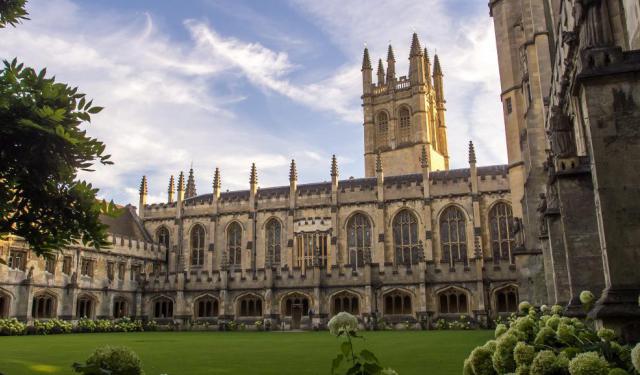
Oxford’s colleges are the heart of the city’s identity, forming one of the oldest and most influential university communities in the world. Their... view more
Tour Duration: 1 Hour(s)
Travel Distance: 1.5 Km or 0.9 Miles
Oxford’s colleges are the heart of the city’s identity, forming one of the oldest and most influential university communities in the world. Their... view more
Tour Duration: 1 Hour(s)
Travel Distance: 1.5 Km or 0.9 Miles
Oxford Downtown Walking Tour
Writer Oscar Wilde, who studied at Magdalen College, Oxford, once remarked that Oxford gave him “the most wonderful years” of his youth.
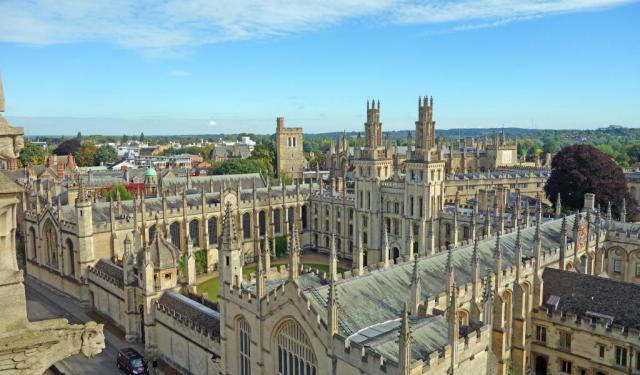
The city of Oxford has one of the longest and most layered histories in England. Its name comes from the Old English Oxenaforda, meaning “ford of the oxen,” referring to a shallow river crossing where cattle could pass through the water. This crossing... view more
Tour Duration: 2 Hour(s)
Travel Distance: 3.5 Km or 2.2 Miles
The city of Oxford has one of the longest and most layered histories in England. Its name comes from the Old English Oxenaforda, meaning “ford of the oxen,” referring to a shallow river crossing where cattle could pass through the water. This crossing... view more
Tour Duration: 2 Hour(s)
Travel Distance: 3.5 Km or 2.2 Miles