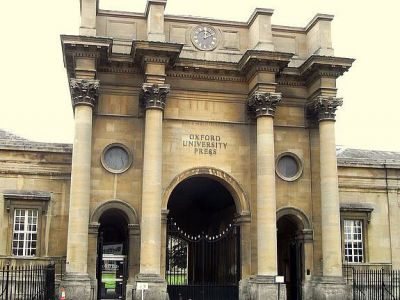


Oxford University Press, Oxford
The Oxford University Press (OUP) building is located at the intersection of Great Clarendon Street and Walton Street in the Jericho district of the city. If you're interested in visiting the OUP Museum, you can do so by scheduling an appointment.
OUP holds the distinction of being the largest university press in the world, with offices scattered across various locations worldwide. The origins of this institution trace back to the year 1480, just two years after Theodoric Rood brought his wooden printing press from Cologne and established it in the city. The first book produced using this press was a copy of "Exposito in symbolum apostolorum" by Rufinus.
Over time, the University became increasingly involved in the printing of Bibles and other theological and educational texts. In 1633, OUP's legal standing was formalized through the Great Charter obtained by Archbishop William Laud from King Charles I. This charter granted the university the authority to publish books beyond the theological realm.
In 1713, the Clarendon Building on Broad Street was erected specifically to accommodate OUP, serving as its headquarters until 1825. The present-day OUP building was constructed by Edward Blore and Daniel Robertson.
Notably, OUP played a pivotal role in editing and printing the first Oxford English Dictionary during the 19th century. In 1834, the press acquired its own paper mill, expanding its operations and establishing offices in both America and India.
For more than a century, OUP has been responsible for printing books across a wide spectrum of subjects, encompassing everything from children's stories to World Classics.
OUP holds the distinction of being the largest university press in the world, with offices scattered across various locations worldwide. The origins of this institution trace back to the year 1480, just two years after Theodoric Rood brought his wooden printing press from Cologne and established it in the city. The first book produced using this press was a copy of "Exposito in symbolum apostolorum" by Rufinus.
Over time, the University became increasingly involved in the printing of Bibles and other theological and educational texts. In 1633, OUP's legal standing was formalized through the Great Charter obtained by Archbishop William Laud from King Charles I. This charter granted the university the authority to publish books beyond the theological realm.
In 1713, the Clarendon Building on Broad Street was erected specifically to accommodate OUP, serving as its headquarters until 1825. The present-day OUP building was constructed by Edward Blore and Daniel Robertson.
Notably, OUP played a pivotal role in editing and printing the first Oxford English Dictionary during the 19th century. In 1834, the press acquired its own paper mill, expanding its operations and establishing offices in both America and India.
For more than a century, OUP has been responsible for printing books across a wide spectrum of subjects, encompassing everything from children's stories to World Classics.
Want to visit this sight? Check out these Self-Guided Walking Tours in Oxford. Alternatively, you can download the mobile app "GPSmyCity: Walks in 1K+ Cities" from Apple App Store or Google Play Store. The app turns your mobile device to a personal tour guide and it works offline, so no data plan is needed when traveling abroad.
Download The GPSmyCity App



Oxford University Press on Map
Sight Name: Oxford University Press
Sight Location: Oxford, England (See walking tours in Oxford)
Sight Type: Attraction/Landmark
Sight Location: Oxford, England (See walking tours in Oxford)
Sight Type: Attraction/Landmark
Nearby Sights


Walking Tours in Oxford, England

Create Your Own Walk in Oxford
Creating your own self-guided walk in Oxford is easy and fun. Choose the city attractions that you want to see and a walk route map will be created just for you. You can even set your hotel as the start point of the walk.
Harry Potter Walk in Oxford
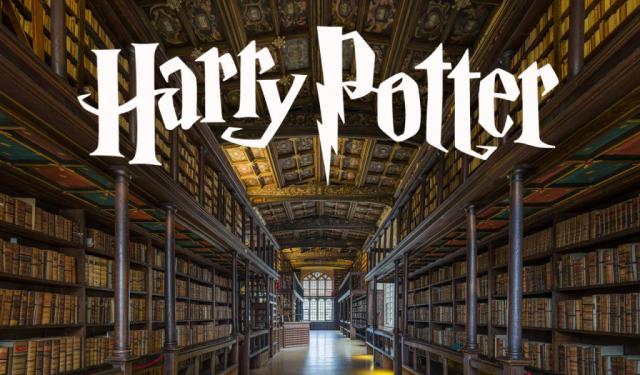
Oxford’s connection with Harry Potter rests on a simple fact: the city already looked like Hogwarts before the cameras arrived. Long before it became associated with wands, robes, and moving staircases, Oxford was known for its medieval colleges, vaulted halls, cloisters, libraries, and enclosed quadrangles. For the filmmakers, it offered a real academic setting that needed little alteration to... view more
Tour Duration: 1 Hour
Travel Distance: 1 Km or 0.6 Miles
Tour Duration: 1 Hour
Travel Distance: 1 Km or 0.6 Miles
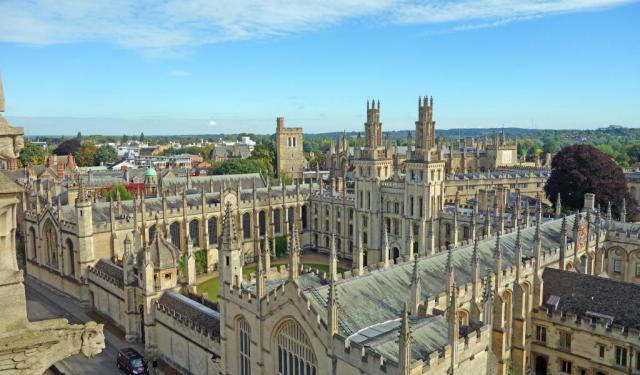
Oxford Downtown Walking Tour
Writer Oscar Wilde, who studied at Magdalen College, Oxford, once remarked that Oxford gave him “the most wonderful years” of his youth.
The city of Oxford has one of the longest and most layered histories in England. Its name comes from the Old English Oxenaforda, meaning “ford of the oxen,” referring to a shallow river crossing where cattle could pass through the water. This crossing... view more
Tour Duration: 2 Hours
Travel Distance: 3.5 Km or 2.2 Miles
The city of Oxford has one of the longest and most layered histories in England. Its name comes from the Old English Oxenaforda, meaning “ford of the oxen,” referring to a shallow river crossing where cattle could pass through the water. This crossing... view more
Tour Duration: 2 Hours
Travel Distance: 3.5 Km or 2.2 Miles
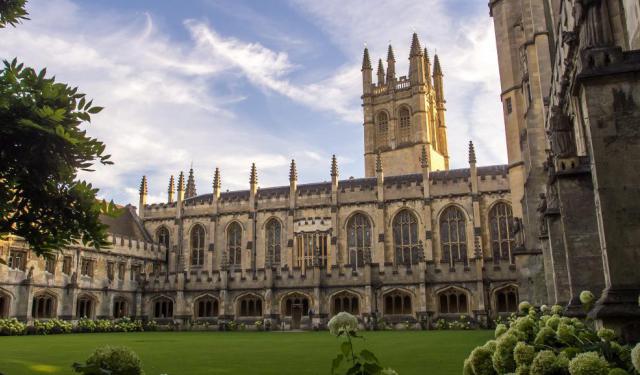
Colleges of Oxford University
During an 1862 summer boat ride along the River Thames, Oxford writer Lewis Carroll invented a fantastical story for Alice, the daughter of the dean of Christ Church, Oxford. That tale would later become Alice's Adventures in Wonderland.
Oxford’s colleges are the heart of the city’s identity, forming one of the oldest and most influential university communities in the world. Their... view more
Tour Duration: 1 Hour
Travel Distance: 1.5 Km or 0.9 Miles
Oxford’s colleges are the heart of the city’s identity, forming one of the oldest and most influential university communities in the world. Their... view more
Tour Duration: 1 Hour
Travel Distance: 1.5 Km or 0.9 Miles
City Walks Overview
