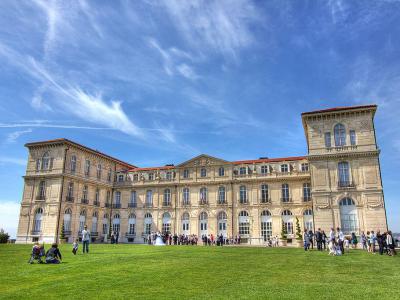


Palais du Pharo (Pharo Palace), Marseille
The Pharo Palace stands proudly on a rocky promontory at the entrance to Marseille’s Old Port. The site’s name comes from the nearby Pharo Bay, while the hill on which it was built was once known as “Moor’s Head”. The location was chosen for its strategic position, allowing an imperial residence to dominate both land and sea.
In 1852, Prince Louis-Napoleon, soon to become Napoleon III, commissioned architect Vaucher to design a grand seaside palace fit for imperial visits. The city of Marseille donated the land, and the project was later taken over by architect Lefuel, best known for his work on the Louvre Palace in Paris. Construction continued for two decades, but fate intervened: Napoleon III never stayed there, and after his death, Empress Eugénie generously gifted the Pharo Palace back to the city.
By 1904, the palace had found a new purpose as a medical school. Later, it was converted into a conference and cultural venue, and today the building regularly hosts international meetings, exhibitions, and fairs. Its restored halls and modern extensions can accommodate up to 2,500 people, blending historic architecture with contemporary function.
Architecturally, the Pharo Palace showcases the confident style of the Second Empire, with its symmetrical façade, grand terraces, and arched windows overlooking the sea. After the fall of the Empire in 1870, all imperial emblems were removed from the façade, leaving behind a dignified civic monument rather than a royal residence. The surrounding Pharo Garden is open to the public and offers one of the most breathtaking panoramic views.
In 1852, Prince Louis-Napoleon, soon to become Napoleon III, commissioned architect Vaucher to design a grand seaside palace fit for imperial visits. The city of Marseille donated the land, and the project was later taken over by architect Lefuel, best known for his work on the Louvre Palace in Paris. Construction continued for two decades, but fate intervened: Napoleon III never stayed there, and after his death, Empress Eugénie generously gifted the Pharo Palace back to the city.
By 1904, the palace had found a new purpose as a medical school. Later, it was converted into a conference and cultural venue, and today the building regularly hosts international meetings, exhibitions, and fairs. Its restored halls and modern extensions can accommodate up to 2,500 people, blending historic architecture with contemporary function.
Architecturally, the Pharo Palace showcases the confident style of the Second Empire, with its symmetrical façade, grand terraces, and arched windows overlooking the sea. After the fall of the Empire in 1870, all imperial emblems were removed from the façade, leaving behind a dignified civic monument rather than a royal residence. The surrounding Pharo Garden is open to the public and offers one of the most breathtaking panoramic views.
Want to visit this sight? Check out these Self-Guided Walking Tours in Marseille. Alternatively, you can download the mobile app "GPSmyCity: Walks in 1K+ Cities" from Apple App Store or Google Play Store. The app turns your mobile device to a personal tour guide and it works offline, so no data plan is needed when traveling abroad.
Download The GPSmyCity App



Palais du Pharo (Pharo Palace) on Map
Sight Name: Palais du Pharo (Pharo Palace)
Sight Location: Marseille, France (See walking tours in Marseille)
Sight Type: Attraction/Landmark
Guide(s) Containing This Sight:
Sight Location: Marseille, France (See walking tours in Marseille)
Sight Type: Attraction/Landmark
Guide(s) Containing This Sight:
Nearby Sights
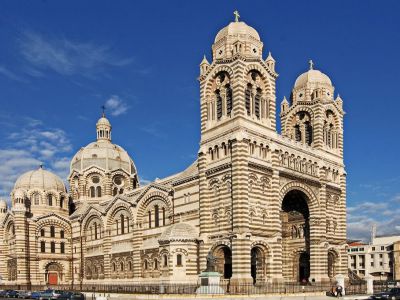
Walking Tours in Marseille, France

Create Your Own Walk in Marseille
Creating your own self-guided walk in Marseille is easy and fun. Choose the city attractions that you want to see and a walk route map will be created just for you. You can even set your hotel as the start point of the walk.
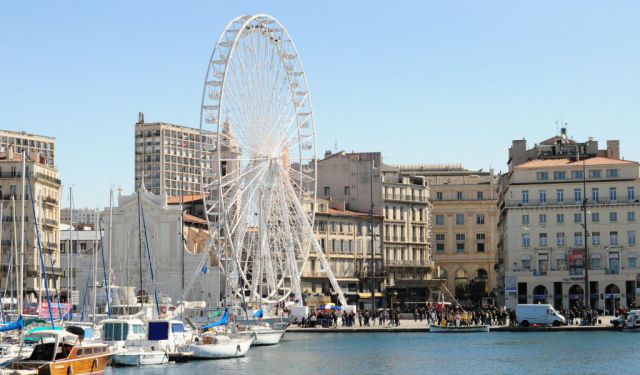
Marseille Old Town Walking Tour
Marseille’s Old Town, known as Le Panier-which means “the Basket” in French-is the historic heart of the city and one of the oldest urban settlements in France. Its name likely derives from an old inn called “The Inn of the Basket,” which existed in the 17th century, though the district itself traces its origins back more than 2,600 years.
Rising above the Old Port, this hillside... view more
Tour Duration: 2 Hours
Travel Distance: 2.9 Km or 1.8 Miles
Rising above the Old Port, this hillside... view more
Tour Duration: 2 Hours
Travel Distance: 2.9 Km or 1.8 Miles
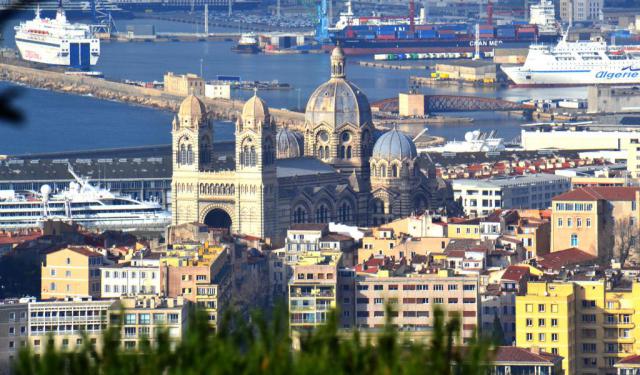
Marseille Top Attractions Walking Tour
Alexandre Dumas, the celebrated French novelist, once wrote: “It was in Marseille that I learned the sea can lead anywhere”.
Marseille, set along the sparkling Mediterranean, has been continuously inhabited for over 2,600 years. Its story began around 600 BC, when Greek sailors from Phocaea founded a trading post they called Massalia-a name likely rooted in a local Ligurian term with... view more
Tour Duration: 2 Hours
Travel Distance: 3.8 Km or 2.4 Miles
Marseille, set along the sparkling Mediterranean, has been continuously inhabited for over 2,600 years. Its story began around 600 BC, when Greek sailors from Phocaea founded a trading post they called Massalia-a name likely rooted in a local Ligurian term with... view more
Tour Duration: 2 Hours
Travel Distance: 3.8 Km or 2.4 Miles
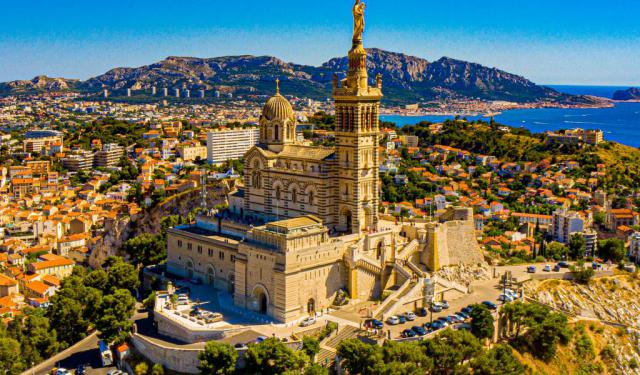
Historical Churches Walking Tour
Marseille's religious scene, albeit diverse, is dominated by Christianity. The Christian presence in the city dates back to ancient times, making it an integral part of local identity. The vibrant Mediterranean port city also has been a significant pilgrimage destination.
The majority of Christians in Marseille are Roman Catholics, whose prevalence is manifested in the form of multiple... view more
Tour Duration: 2 Hours
Travel Distance: 3.6 Km or 2.2 Miles
The majority of Christians in Marseille are Roman Catholics, whose prevalence is manifested in the form of multiple... view more
Tour Duration: 2 Hours
Travel Distance: 3.6 Km or 2.2 Miles
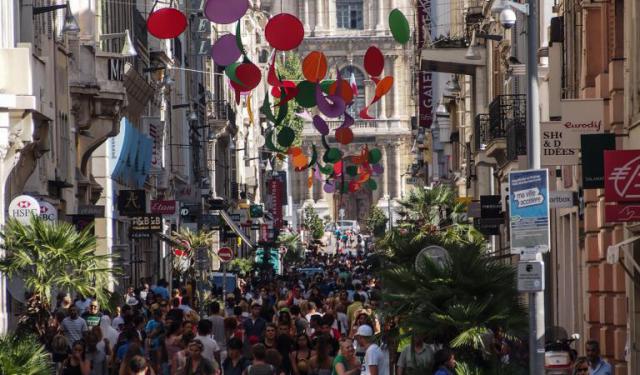
Food and Shopping Walk
Shopping in Marseille is a great way to mingle with the locals and immerse in new tastes, scents and customs. As with so much else in this melting-pot of a city, the top-of-the-range stores here rub shoulders with the funky little boutiques, high-street chains with scruffy discount outlets or traditional family groceries and bakeries.
Marseille doesn't have a flagship thoroughfare as such,... view more
Tour Duration: 1 Hour
Travel Distance: 1.8 Km or 1.1 Miles
Marseille doesn't have a flagship thoroughfare as such,... view more
Tour Duration: 1 Hour
Travel Distance: 1.8 Km or 1.1 Miles