

Philbrook Museum of Art, Tulsa (must see)
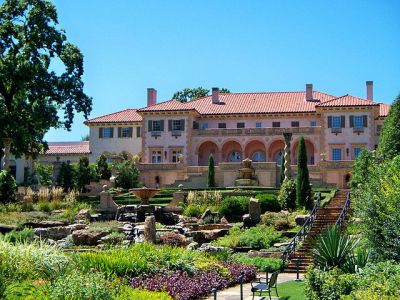
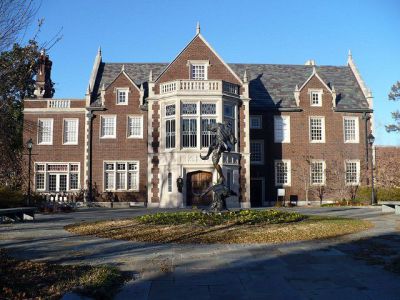
The Philbrook Museum of Art in Tulsa is a unique blend of art, history, and architecture, nestled within 25 acres of formal and informal gardens. Opened in 1939, the museum occupies the opulent former residence of oil magnate Waite Phillips and his wife Genevieve-an Italian Renaissance-style villa known as Villa Philbrook, completed in 1927. Designed by architect Edward Buehler Delk, the mansion features ornate stucco exteriors embedded with white marble, and Kasota limestone details, and interiors showcasing teak, walnut, and oak floors, Renaissance-inspired ceilings, and a double staircase that leads to exquisitely decorated rooms including music room, library, and dining hall.
The Philbrook’s permanent collection includes over nine categories of art from around the world, with a special emphasis on Native American works-basketry, pottery, jewelry, and painting. Other notable holdings span European, American, African, Asian, and Classical antiquities. Key contributions over the years have included Italian Renaissance paintings from the Samuel H. Kress Foundation, as well as modern and contemporary pieces by the likes of Picasso, Kehinde Wiley, Rachel Whiteread, and Maria Martinez. The museum is also home to the Eugene B. Adkins Collection, shared with the Fred Jones Jr. Museum of Art, which features Native American paintings, pottery, and jewelry.
Philbrook has undergone several major expansions. In 1990, the 70,000-square-foot Kravis Wing was added, incorporating new galleries, classrooms, a library, and a performance hall. In 2013, it launched Philbrook Downtown in Tulsa’s Brady Arts District, a satellite venue for contemporary art, though this space was later repurposed as the Bob Dylan Center in 2020.
The museum’s lush gardens, originally designed by Hare & Hare and inspired by the 16th-century Villa Lante in Italy, are a highlight. Classical fountains, water rills, diagonal walkways, and sculptures like Barry Flanagan’s Thinker on a Rock add to the tranquil setting. With its rich collections, architectural splendor, and dedication to education and cultural outreach, Philbrook remains one of Tulsa’s most iconic cultural institutions.
The Philbrook’s permanent collection includes over nine categories of art from around the world, with a special emphasis on Native American works-basketry, pottery, jewelry, and painting. Other notable holdings span European, American, African, Asian, and Classical antiquities. Key contributions over the years have included Italian Renaissance paintings from the Samuel H. Kress Foundation, as well as modern and contemporary pieces by the likes of Picasso, Kehinde Wiley, Rachel Whiteread, and Maria Martinez. The museum is also home to the Eugene B. Adkins Collection, shared with the Fred Jones Jr. Museum of Art, which features Native American paintings, pottery, and jewelry.
Philbrook has undergone several major expansions. In 1990, the 70,000-square-foot Kravis Wing was added, incorporating new galleries, classrooms, a library, and a performance hall. In 2013, it launched Philbrook Downtown in Tulsa’s Brady Arts District, a satellite venue for contemporary art, though this space was later repurposed as the Bob Dylan Center in 2020.
The museum’s lush gardens, originally designed by Hare & Hare and inspired by the 16th-century Villa Lante in Italy, are a highlight. Classical fountains, water rills, diagonal walkways, and sculptures like Barry Flanagan’s Thinker on a Rock add to the tranquil setting. With its rich collections, architectural splendor, and dedication to education and cultural outreach, Philbrook remains one of Tulsa’s most iconic cultural institutions.
Want to visit this sight? Check out these Self-Guided Walking Tours in Tulsa. Alternatively, you can download the mobile app "GPSmyCity: Walks in 1K+ Cities" from Apple App Store or Google Play Store. The app turns your mobile device to a personal tour guide and it works offline, so no data plan is needed when traveling abroad.
Download The GPSmyCity App



Philbrook Museum of Art on Map
Sight Name: Philbrook Museum of Art
Sight Location: Tulsa, USA (See walking tours in Tulsa)
Sight Type: Museum/Gallery
Sight Location: Tulsa, USA (See walking tours in Tulsa)
Sight Type: Museum/Gallery
Nearby Sights



Walking Tours in Tulsa, Oklahoma

Create Your Own Walk in Tulsa
Creating your own self-guided walk in Tulsa is easy and fun. Choose the city attractions that you want to see and a walk route map will be created just for you. You can even set your hotel as the start point of the walk.
University of Tulsa Walking Tour
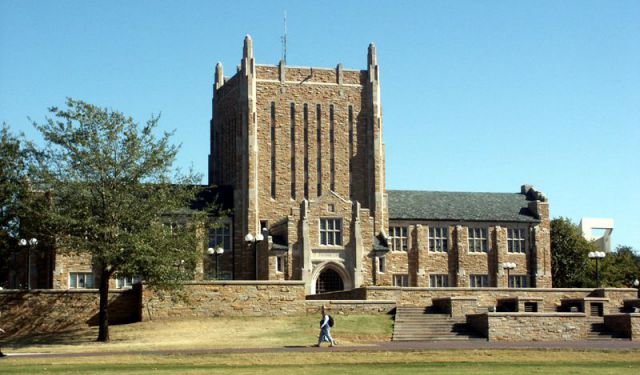
Located on the historic U.S. Route 66, America's "Mother Road", the University of Tulsa campus centers on a wide, grassy, quad-like space, known as Dietler Commons. Formerly called "The U", it is found not far from the downtown area and is dominated by English Gothic architecture.
At the top of Deitler Commons sits one of the campus' most notable landmarks, the... view more
Tour Duration: 1 Hour
Travel Distance: 1.3 Km or 0.8 Miles
At the top of Deitler Commons sits one of the campus' most notable landmarks, the... view more
Tour Duration: 1 Hour
Travel Distance: 1.3 Km or 0.8 Miles
Tulsa's Historical Churches Tour
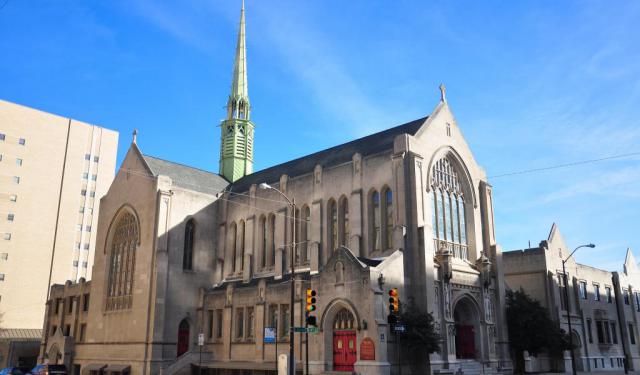
Tulsa, Oklahoma is home to an array of remarkable churches, cathedrals, chapels, and other religious sites collectively reflecting the city's diverse religious heritage. A good number of these sanctuaries are located downtown. By far more than just places of worship, they are also architectural marvels and cultural landmarks.
Boston Avenue United Methodist Church, with its striking Art... view more
Tour Duration: 1 Hour
Travel Distance: 1.6 Km or 1 Miles
Boston Avenue United Methodist Church, with its striking Art... view more
Tour Duration: 1 Hour
Travel Distance: 1.6 Km or 1 Miles

Tulsa Downtown Walking Tour
Straddling the Arkansas River in the U.S. state of Oklahoma, the city of Tulsa is deeply rooted in the Native American history and, more recently, in the oil industry too.
The area of modern Tulsa is considered an Indian Territory, and has been formally settled by Native Americans since 1836. The tribesmen named their settlement Tallasi, which means "old town" in the Creek language,... view more
Tour Duration: 2 Hours
Travel Distance: 2.9 Km or 1.8 Miles
The area of modern Tulsa is considered an Indian Territory, and has been formally settled by Native Americans since 1836. The tribesmen named their settlement Tallasi, which means "old town" in the Creek language,... view more
Tour Duration: 2 Hours
Travel Distance: 2.9 Km or 1.8 Miles
City Walks Overview
