

Poznan Cathedral, Poznan (must see)
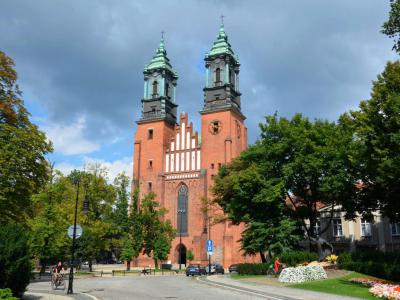
The Poznań Cathedral is dedicated to the apostles Saint Peter and Saint Paul and holds a deep-rooted history that dates back to the very origins of Christianity in Poland during the second half of the 10th century.
The site where the Poznań Cathedral now stands was initially home to a church dedicated to Saint Peter, serving as the residence of the first bishop in Poland. The Gothic structure that we see today was erected at the turn of the 14th and 15th centuries. It replaced a Roman temple that had been rebuilt several times over the centuries. Despite facing damage during World War II, the cathedral's enduring spirit and historical significance led to a comprehensive renovation in 1945, which successfully restored its original Gothic appearance.
A notable feature of the cathedral is its underground crypt, which holds a treasure trove of history. The tour of this subterranean space begins beneath the south tower, where visitors can explore the remains of the Romanesque cathedral, the baptistery, and the tombs of the first Polish kings. An impressive granite fragment of the Romanesque wall can also be seen incorporated into the south tower's wall. A gallery encircles the excavation, leading to the lapidary beneath the western part of the presbytery, where various stonework pieces, including tombstones and epitaph plaques, are displayed.
Another significant aspect of the Poznań Cathedral is its burial crypt, which serves as the final resting place for church dignitaries and notable figures from the region's history. This crypt provides a solemn and reflective space within the cathedral.
The site where the Poznań Cathedral now stands was initially home to a church dedicated to Saint Peter, serving as the residence of the first bishop in Poland. The Gothic structure that we see today was erected at the turn of the 14th and 15th centuries. It replaced a Roman temple that had been rebuilt several times over the centuries. Despite facing damage during World War II, the cathedral's enduring spirit and historical significance led to a comprehensive renovation in 1945, which successfully restored its original Gothic appearance.
A notable feature of the cathedral is its underground crypt, which holds a treasure trove of history. The tour of this subterranean space begins beneath the south tower, where visitors can explore the remains of the Romanesque cathedral, the baptistery, and the tombs of the first Polish kings. An impressive granite fragment of the Romanesque wall can also be seen incorporated into the south tower's wall. A gallery encircles the excavation, leading to the lapidary beneath the western part of the presbytery, where various stonework pieces, including tombstones and epitaph plaques, are displayed.
Another significant aspect of the Poznań Cathedral is its burial crypt, which serves as the final resting place for church dignitaries and notable figures from the region's history. This crypt provides a solemn and reflective space within the cathedral.
Want to visit this sight? Check out these Self-Guided Walking Tours in Poznan. Alternatively, you can download the mobile app "GPSmyCity: Walks in 1K+ Cities" from Apple App Store or Google Play Store. The app turns your mobile device to a personal tour guide and it works offline, so no data plan is needed when traveling abroad.
Download The GPSmyCity App



Poznan Cathedral on Map
Sight Name: Poznan Cathedral
Sight Location: Poznan, Poland (See walking tours in Poznan)
Sight Type: Religious
Sight Location: Poznan, Poland (See walking tours in Poznan)
Sight Type: Religious
Nearby Sights



Walking Tours in Poznan, Poland

Create Your Own Walk in Poznan
Creating your own self-guided walk in Poznan is easy and fun. Choose the city attractions that you want to see and a walk route map will be created just for you. You can even set your hotel as the start point of the walk.
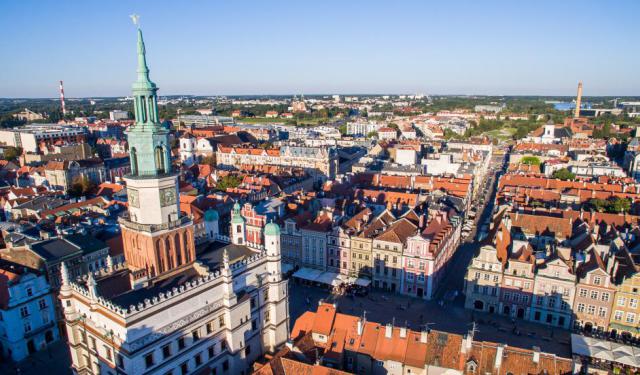
Poznan Introduction Walking Tour
Poznan, the capital of the Wielkopolska region of Poland, boasts a deep-rooted history reflected in a wealth of centuries-old landmarks. This city's allure, however, extends beyond its historical façade. While unassuming at first glance, Poznan has a lot going for it.
The name Poznan originates from the Polish word "poznac," which means "to get to know" or "to... view more
Tour Duration: 2 Hour(s)
Travel Distance: 3.6 Km or 2.2 Miles
The name Poznan originates from the Polish word "poznac," which means "to get to know" or "to... view more
Tour Duration: 2 Hour(s)
Travel Distance: 3.6 Km or 2.2 Miles