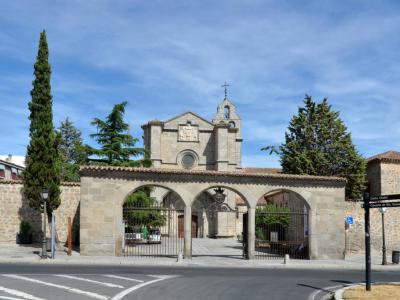


Real Monasterio de Santo Tomás (Royal Monastery of St. Thomas), Avila
The Royal Monastery of Saint Thomas has played a significant role in Spanish history and is known for its stunning architectural features and cultural significance. The Royal Monastery of Saint Thomas was founded in the 15th century under the patronage of Queen Isabella I of Castile and King Ferdinand II of Aragon, known as the Catholic Monarchs. It holds a central place in Spanish history as it was closely associated with these monarchs and the Catholic Monarchs' commitment to the Catholic faith.
The monastery is a remarkable example of Gothic and Plateresque architectural styles. Its exterior features intricate stone carvings, a grand entrance, and a stunning rose window. The Plateresque style is evident in the ornate facades and detailed decorations that adorn the building.
The monastery is particularly notable for its association with Tomás de Torquemada, a Dominican friar who was the first Grand Inquisitor of the Spanish Inquisition. Torquemada was closely connected to the Catholic Monarchs and played a key role in the monastery's history.
The renowned Spanish painter El Greco is believed to have created one of his most famous works, "The Burial of the Count of Orgaz," for the Monastery of Saint Thomas. This masterpiece can now be found in the nearby Church of Santo Tomé in Toledo.
The monastery's cloister is an exquisite example of Plateresque architecture. It features elegant arcades, intricate stonework, and a peaceful courtyard garden that provides a serene setting for reflection.
Within the complex, visitors can explore the Museo de Ávila, which houses a collection of religious art, artifacts, and historical documents. The museum provides insights into the religious and cultural heritage of Ávila.
Visitors to the monastery can explore its architectural beauty, learn about its history and role in the Spanish Inquisition, and appreciate the cultural and religious significance of this historical site.
The monastery is a remarkable example of Gothic and Plateresque architectural styles. Its exterior features intricate stone carvings, a grand entrance, and a stunning rose window. The Plateresque style is evident in the ornate facades and detailed decorations that adorn the building.
The monastery is particularly notable for its association with Tomás de Torquemada, a Dominican friar who was the first Grand Inquisitor of the Spanish Inquisition. Torquemada was closely connected to the Catholic Monarchs and played a key role in the monastery's history.
The renowned Spanish painter El Greco is believed to have created one of his most famous works, "The Burial of the Count of Orgaz," for the Monastery of Saint Thomas. This masterpiece can now be found in the nearby Church of Santo Tomé in Toledo.
The monastery's cloister is an exquisite example of Plateresque architecture. It features elegant arcades, intricate stonework, and a peaceful courtyard garden that provides a serene setting for reflection.
Within the complex, visitors can explore the Museo de Ávila, which houses a collection of religious art, artifacts, and historical documents. The museum provides insights into the religious and cultural heritage of Ávila.
Visitors to the monastery can explore its architectural beauty, learn about its history and role in the Spanish Inquisition, and appreciate the cultural and religious significance of this historical site.
Want to visit this sight? Check out these Self-Guided Walking Tours in Avila. Alternatively, you can download the mobile app "GPSmyCity: Walks in 1K+ Cities" from Apple App Store or Google Play Store. The app turns your mobile device to a personal tour guide and it works offline, so no data plan is needed when traveling abroad.
Download The GPSmyCity App



Real Monasterio de Santo Tomás (Royal Monastery of St. Thomas) on Map
Sight Name: Real Monasterio de Santo Tomás (Royal Monastery of St. Thomas)
Sight Location: Avila, Spain (See walking tours in Avila)
Sight Type: Religious
Sight Location: Avila, Spain (See walking tours in Avila)
Sight Type: Religious
Nearby Sights


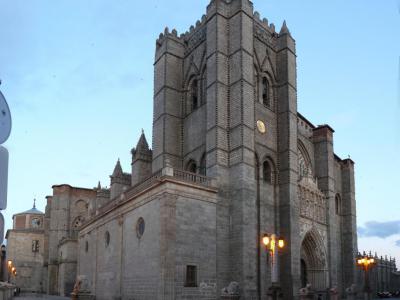


Walking Tours in Avila, Spain

Create Your Own Walk in Avila
Creating your own self-guided walk in Avila is easy and fun. Choose the city attractions that you want to see and a walk route map will be created just for you. You can even set your hotel as the start point of the walk.
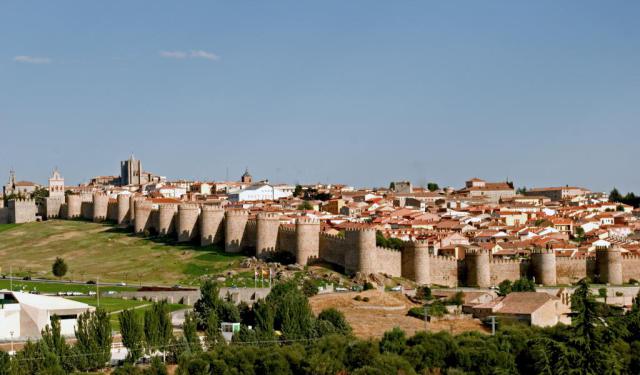
Avila Introduction Walking Tour
Perhaps the most 16th-century town in Spain, Ávila is the highest provincial capital in the country, perched over 1,130 meters above sea level on the right bank of the Adaja River. The altitude earned the city its name. Ávila's roots date back to pre-Roman times when the area was inhabited by the Vettones who built here a formidable fortress called Obila, meaning "High Mountain".... view more
Tour Duration: 2 Hour(s)
Travel Distance: 3.0 Km or 1.9 Miles
Tour Duration: 2 Hour(s)
Travel Distance: 3.0 Km or 1.9 Miles