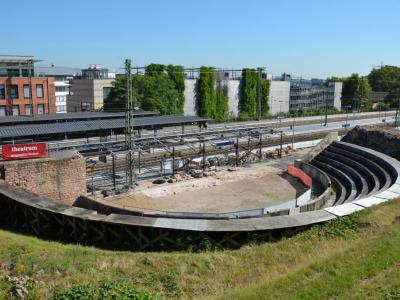


Roman Theatre (Römisches Theater), Mainz
The Roman Theatre (Römisches Theater) in Mainz was once the largest Roman theatre north of the Alps, reflecting the city's importance as a strategic and cultural hub in ancient times. Excavated in the late 1990s, the theatre sits next to the Mainz Roman Theater station. With a seating capacity of around 10,000 people, a diameter of 116 meters, and a stage width of 42 meters, it was a monumental structure built during the height of Roman influence in the region.
Mogontiacum, the Roman name for Mainz, owed its prominence to its position at the confluence of the Main and Rhine rivers. This made it an ideal location for defending the Roman Empire's borders and launching military campaigns against neighboring Germanic tribes. Established in 13/12 BC as a military base, the city evolved into a provincial capital of Germania Superior by AD 80. The Roman Theatre likely played a role in civic and military ceremonies, possibly hosting events related to Drusus, a Roman general honored with military parades at his nearby cenotaph, the Drususstein.
Over time, the theatre fell into disuse, with stones from its structure repurposed for the construction of the city wall in the mid-4th century AD. By the 6th century, the surviving vaults were used as catacombs for monastic burials. Despite references to the theatre as late as the 11th century, it was eventually buried and forgotten, particularly after the construction of the Mainz Citadel in the 17th century, which leveled the area.
Rediscovered during railway construction in 1884 and identified as a Roman theatre in 1914, major excavations didn't begin until 1999. Efforts to restore and integrate the theatre into modern cultural life are ongoing, with plans to host musical and theatrical performances, as well as extend excavations to nearby areas. Though evidence of an amphitheater in Mainz is limited, historical records suggest it may have existed near Zahlbach, though its precise location remains uncertain.
Mogontiacum, the Roman name for Mainz, owed its prominence to its position at the confluence of the Main and Rhine rivers. This made it an ideal location for defending the Roman Empire's borders and launching military campaigns against neighboring Germanic tribes. Established in 13/12 BC as a military base, the city evolved into a provincial capital of Germania Superior by AD 80. The Roman Theatre likely played a role in civic and military ceremonies, possibly hosting events related to Drusus, a Roman general honored with military parades at his nearby cenotaph, the Drususstein.
Over time, the theatre fell into disuse, with stones from its structure repurposed for the construction of the city wall in the mid-4th century AD. By the 6th century, the surviving vaults were used as catacombs for monastic burials. Despite references to the theatre as late as the 11th century, it was eventually buried and forgotten, particularly after the construction of the Mainz Citadel in the 17th century, which leveled the area.
Rediscovered during railway construction in 1884 and identified as a Roman theatre in 1914, major excavations didn't begin until 1999. Efforts to restore and integrate the theatre into modern cultural life are ongoing, with plans to host musical and theatrical performances, as well as extend excavations to nearby areas. Though evidence of an amphitheater in Mainz is limited, historical records suggest it may have existed near Zahlbach, though its precise location remains uncertain.
Want to visit this sight? Check out these Self-Guided Walking Tours in Mainz. Alternatively, you can download the mobile app "GPSmyCity: Walks in 1K+ Cities" from Apple App Store or Google Play Store. The app turns your mobile device to a personal tour guide and it works offline, so no data plan is needed when traveling abroad.
Download The GPSmyCity App



Roman Theatre (Römisches Theater) on Map
Sight Name: Roman Theatre (Römisches Theater)
Sight Location: Mainz, Germany (See walking tours in Mainz)
Sight Type: Attraction/Landmark
Sight Location: Mainz, Germany (See walking tours in Mainz)
Sight Type: Attraction/Landmark
Nearby Sights

Walking Tours in Mainz, Germany

Create Your Own Walk in Mainz
Creating your own self-guided walk in Mainz is easy and fun. Choose the city attractions that you want to see and a walk route map will be created just for you. You can even set your hotel as the start point of the walk.
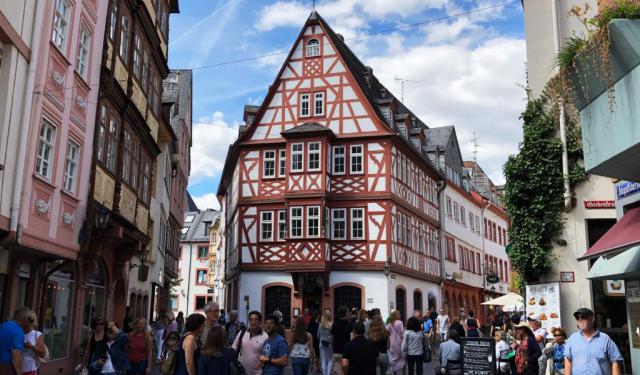
Mainz Introduction Walking Tour
Mainz is the Rhineland-Palatinate state capital and its largest city. It is located on the Rhine river, where the Main river joins the Rhine. Mainz has remained a prosperous city and is an important container port hub.
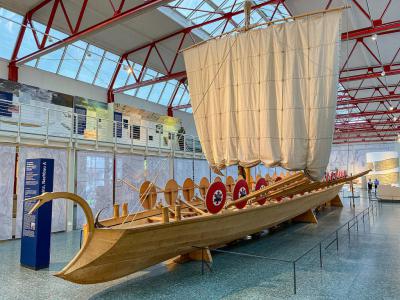
Mainz was founded as a Roman military fortress in the 1st century BC. The Roman stronghold was called Mogontiacum. Visitors can see several Roman shipwrecks and learn more about... view more
Tour Duration: 2 Hours
Travel Distance: 4.2 Km or 2.6 Miles
Mainz was founded as a Roman military fortress in the 1st century BC. The Roman stronghold was called Mogontiacum. Visitors can see several Roman shipwrecks and learn more about... view more
Tour Duration: 2 Hours
Travel Distance: 4.2 Km or 2.6 Miles
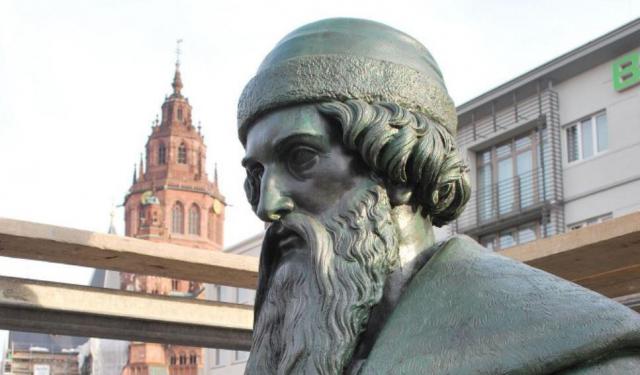
In the Footsteps of Gutenberg
The capital of Rhineland-Palatinate, Mainz has made a name throughout the world as Gutenberg's city, the birthplace of Johannes Gutenberg and his great invention, the first movable metal-type printing press. It is precisely for this important heritage that Mainz has retained its importance as a hub for some of Germany's oldest publishing houses.
Following in the footsteps of Gutenberg... view more
Tour Duration: 1 Hour
Travel Distance: 1.3 Km or 0.8 Miles
Following in the footsteps of Gutenberg... view more
Tour Duration: 1 Hour
Travel Distance: 1.3 Km or 0.8 Miles
City Walks Overview
