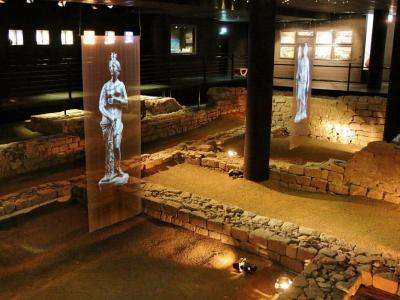


Sanctuary of Isis and the Magna Mater, Mainz
The Sanctuary of Isis and the Magna Mater in Mainz was a significant religious site from the Roman period, dedicated to the Egyptian goddess Isis and the Anatolian mother goddess Magna Mater (Kybele). The temple, founded in the 1st century, remained active until the 3rd century, reflecting the influence of the Roman Empire's expansion and its introduction of diverse cults to provincial cities.
Discovered in 1999 during the construction of the Römerpassage shopping arcade, the sanctuary's remains offer a glimpse into the religious life of Roman Mainz (then known as Mogontiacum). The sanctuary's structure, inscriptions, and artifacts suggest that it may have been founded under the Flavian dynasty, a period when the Roman Empire fostered various religious practices. The Flavian rulers, particularly Emperor Vespasian, had ties to Eastern cults, including those of Isis, likely reinforcing the significance of the site.
Isis, often revered as Panthea ("All-Goddess") and Regina ("Queen"), and Magna Mater, a deity introduced from Anatolia and later merged with Roman practices, were worshipped by the Roman military, who brought these cults to Mainz. The temple complex underwent several reconstructions over its 200-year existence, with its inclusion inside the city's protective walls around 250 AD.
By the late 3rd century, the sanctuary had been abandoned, though the reasons remain unclear. Its remains were later built over in the Middle Ages, first by monasteries like the Poor Clares and later by patrician courts. Today, visitors can explore the site in a small museum beneath the Römerpassage, where multimedia displays and select finds bring the ancient worship of these goddesses to life.
Discovered in 1999 during the construction of the Römerpassage shopping arcade, the sanctuary's remains offer a glimpse into the religious life of Roman Mainz (then known as Mogontiacum). The sanctuary's structure, inscriptions, and artifacts suggest that it may have been founded under the Flavian dynasty, a period when the Roman Empire fostered various religious practices. The Flavian rulers, particularly Emperor Vespasian, had ties to Eastern cults, including those of Isis, likely reinforcing the significance of the site.
Isis, often revered as Panthea ("All-Goddess") and Regina ("Queen"), and Magna Mater, a deity introduced from Anatolia and later merged with Roman practices, were worshipped by the Roman military, who brought these cults to Mainz. The temple complex underwent several reconstructions over its 200-year existence, with its inclusion inside the city's protective walls around 250 AD.
By the late 3rd century, the sanctuary had been abandoned, though the reasons remain unclear. Its remains were later built over in the Middle Ages, first by monasteries like the Poor Clares and later by patrician courts. Today, visitors can explore the site in a small museum beneath the Römerpassage, where multimedia displays and select finds bring the ancient worship of these goddesses to life.
Want to visit this sight? Check out these Self-Guided Walking Tours in Mainz. Alternatively, you can download the mobile app "GPSmyCity: Walks in 1K+ Cities" from Apple App Store or Google Play Store. The app turns your mobile device to a personal tour guide and it works offline, so no data plan is needed when traveling abroad.
Download The GPSmyCity App



Sanctuary of Isis and the Magna Mater on Map
Sight Name: Sanctuary of Isis and the Magna Mater
Sight Location: Mainz, Germany (See walking tours in Mainz)
Sight Type: Attraction/Landmark
Sight Location: Mainz, Germany (See walking tours in Mainz)
Sight Type: Attraction/Landmark
Nearby Sights



Walking Tours in Mainz, Germany

Create Your Own Walk in Mainz
Creating your own self-guided walk in Mainz is easy and fun. Choose the city attractions that you want to see and a walk route map will be created just for you. You can even set your hotel as the start point of the walk.
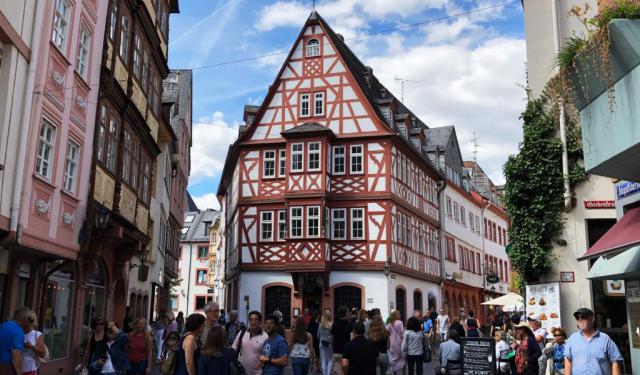
Mainz Introduction Walking Tour
Mainz is the Rhineland-Palatinate state capital and its largest city. It is located on the Rhine river, where the Main river joins the Rhine. Mainz has remained a prosperous city and is an important container port hub.
Mainz was founded as a Roman military fortress in the 1st century BC. The Roman stronghold was called Mogontiacum. Visitors can see several Roman shipwrecks and learn more about... view more
Tour Duration: 2 Hours
Travel Distance: 4.2 Km or 2.6 Miles
Mainz was founded as a Roman military fortress in the 1st century BC. The Roman stronghold was called Mogontiacum. Visitors can see several Roman shipwrecks and learn more about... view more
Tour Duration: 2 Hours
Travel Distance: 4.2 Km or 2.6 Miles
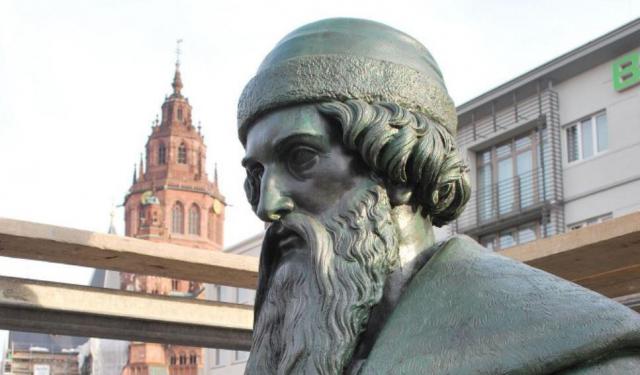
In the Footsteps of Gutenberg
The capital of Rhineland-Palatinate, Mainz has made a name throughout the world as Gutenberg's city, the birthplace of Johannes Gutenberg and his great invention, the first movable metal-type printing press. It is precisely for this important heritage that Mainz has retained its importance as a hub for some of Germany's oldest publishing houses.
Following in the footsteps of Gutenberg... view more
Tour Duration: 1 Hour
Travel Distance: 1.3 Km or 0.8 Miles
Following in the footsteps of Gutenberg... view more
Tour Duration: 1 Hour
Travel Distance: 1.3 Km or 0.8 Miles