

Sassi di Matera (Stones of Matera Districts), Matera
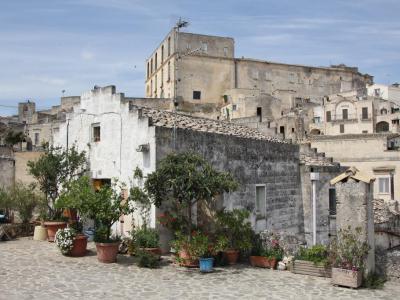
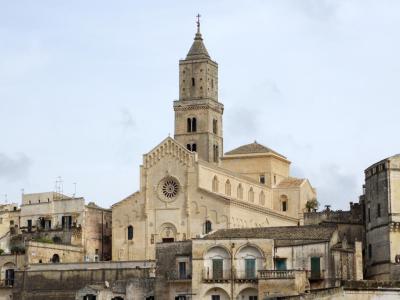
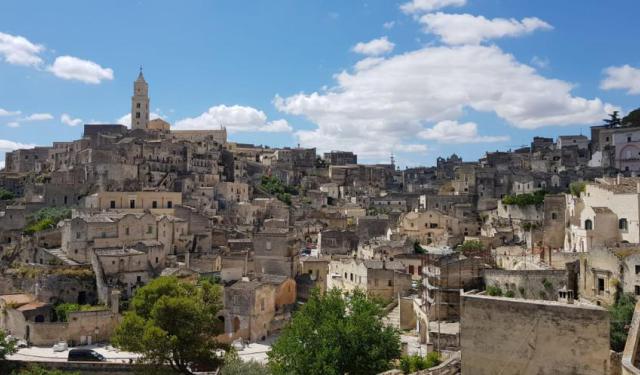
The Sassi di Matera, or “Stones of Matera,” form the most iconic and historic districts of the city, carved into the limestone cliffs of southern Italy’s Basilicata region. These ancient cave dwellings, some dating back to the Paleolithic period, are considered among the earliest examples of human settlement in Italy. Over the centuries, the caves evolved from simple shelters into a complex urban environment, complete with homes, chapels, cisterns, and even underground streets. Recognized as a UNESCO World Heritage Site in 1993, the Sassi stand today as a striking example of how humans adapted architecture to the natural landscape.
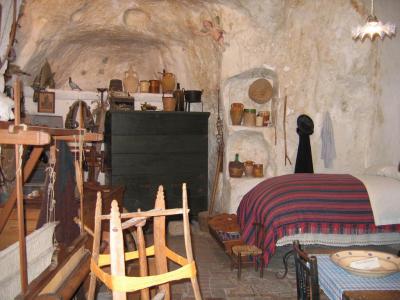
The Sassi are divided into two main areas: Sasso Caveoso and Sasso Barisano. Sasso Caveoso preserves the more traditional cave-dwelling structures, where visitors can see how families lived in rock-hewn houses until the mid-20th century. In contrast, Sasso Barisano developed into a district with more elaborate façades and palazzi built over the caves, reflecting centuries of social and architectural transformation. Both districts are interwoven with narrow stairways, winding alleys, and terraces that open to panoramic views of the Gravina canyon, creating a cityscape unlike any other in Europe.
Exploring the Sassi today offers a unique cultural experience. Many of the former cave homes have been restored and repurposed as museums, boutique hotels, artisan shops, and restaurants, allowing visitors to witness the balance between preservation and modern use. Walking through the labyrinthine streets, travelers encounter rock-hewn churches decorated with medieval frescoes, quiet courtyards, and striking viewpoints. The Sassi di Matera embody both history and resilience, offering an unforgettable journey into Italy’s ancient past while showcasing the city’s revival as a vibrant cultural destination.
The Sassi are divided into two main areas: Sasso Caveoso and Sasso Barisano. Sasso Caveoso preserves the more traditional cave-dwelling structures, where visitors can see how families lived in rock-hewn houses until the mid-20th century. In contrast, Sasso Barisano developed into a district with more elaborate façades and palazzi built over the caves, reflecting centuries of social and architectural transformation. Both districts are interwoven with narrow stairways, winding alleys, and terraces that open to panoramic views of the Gravina canyon, creating a cityscape unlike any other in Europe.
Exploring the Sassi today offers a unique cultural experience. Many of the former cave homes have been restored and repurposed as museums, boutique hotels, artisan shops, and restaurants, allowing visitors to witness the balance between preservation and modern use. Walking through the labyrinthine streets, travelers encounter rock-hewn churches decorated with medieval frescoes, quiet courtyards, and striking viewpoints. The Sassi di Matera embody both history and resilience, offering an unforgettable journey into Italy’s ancient past while showcasing the city’s revival as a vibrant cultural destination.
Want to visit this sight? Check out these Self-Guided Walking Tours in Matera. Alternatively, you can download the mobile app "GPSmyCity: Walks in 1K+ Cities" from Apple App Store or Google Play Store. The app turns your mobile device to a personal tour guide and it works offline, so no data plan is needed when traveling abroad.
Download The GPSmyCity App



Sassi di Matera (Stones of Matera Districts) on Map
Sight Name: Sassi di Matera (Stones of Matera Districts)
Sight Location: Matera, Italy (See walking tours in Matera)
Sight Type: Attraction/Landmark
Sight Location: Matera, Italy (See walking tours in Matera)
Sight Type: Attraction/Landmark
Nearby Sights


Walking Tours in Matera, Italy

Create Your Own Walk in Matera
Creating your own self-guided walk in Matera is easy and fun. Choose the city attractions that you want to see and a walk route map will be created just for you. You can even set your hotel as the start point of the walk.
Matera Introduction Walking Tour
Architectural historian Anne Parmly Toxey said the cave areas of Matera had been occupied for at least 3,000 years. Archaeological research shows people lived here since the Paleolithic era, shaping homes and communal spaces directly into the soft limestone. Over centuries, those modest caves expanded into an intricate neighborhood-stone dwellings, churches, and twisting passageways stacked upon... view more
Tour Duration: 2 Hour(s)
Travel Distance: 2.4 Km or 1.5 Miles
Tour Duration: 2 Hour(s)
Travel Distance: 2.4 Km or 1.5 Miles
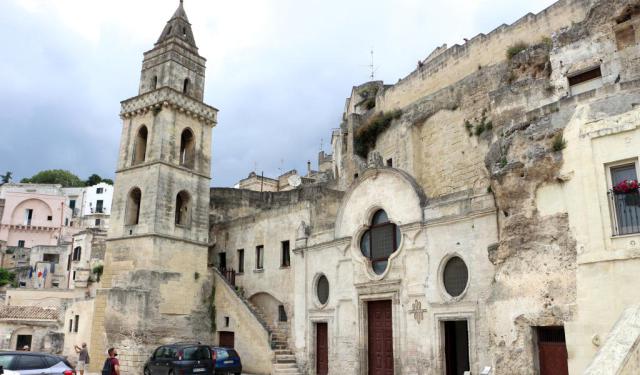
Matera's Ancient Cave Churches
Within the old city of Matera, there are more than 160 churches. Many of these are actually carved into the soft limestone cliffs lining the Gravina River. There are even some used for pagan rituals. The churches were carved from existing caves and tunnels. More than a few sanctified cave churches have been converted to storage and homes.
A good example to start with is the St. Anthony... view more
Tour Duration: 1 Hour(s)
Travel Distance: 1.7 Km or 1.1 Miles
A good example to start with is the St. Anthony... view more
Tour Duration: 1 Hour(s)
Travel Distance: 1.7 Km or 1.1 Miles