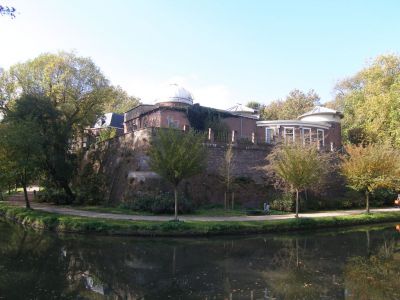


Sonnenborgh Museum en Sterrenwacht (Sonnenborgh Museum and Observatory), Utrecht
Perched atop the only surviving bastion of Utrecht’s 16th-century city walls, the Sonnenborgh Museum and Observatory is a unique blend of scientific exploration and historical depth. Originally built in the mid-1500s under the orders of Emperor Charles V, the bastion was designed to fortify the city against the latest military threat of the time: mobile cannons. The structure, with its meter-thick walls still bearing cannon holes, remains a testament to Utrecht’s military past.
By the 17th century, Sonnenborgh took on a more academic role when Utrecht University established its first botanical garden on the site in 1639. Over a century later, in 1724, the garden was relocated to what is now the Oude Hortus. Archaeological discoveries in the late 20th century further unveiled Sonnenborgh’s scientific heritage, revealing the remains of Utrecht’s first chemistry laboratory-one of the oldest in the world-led by Johann Conrad Barchusen.
Sonnenborgh became Utrecht University’s observatory in 1853 and housed the Royal Dutch Meteorological Institute (KNMI) from 1854 to 1897. It contributed to pioneering solar research, aiding the creation of one of the first solar atlases. Until the early 20th century, it also helped determine Utrecht’s official time with its Meridian viewer.
Today, Sonnenborgh is a public observatory and museum where visitors can engage with astronomy, meteorology, and the bastion’s rich history. Through interactive exhibits, guests can observe the sun using a specialized solar telescope, predict the weather like a 19th-century meteorologist, or explore the stars and planets through historic telescopes. The museum’s innovative approach includes a guided tablet tour that encourages hands-on experiments, making science accessible for all ages.
By the 17th century, Sonnenborgh took on a more academic role when Utrecht University established its first botanical garden on the site in 1639. Over a century later, in 1724, the garden was relocated to what is now the Oude Hortus. Archaeological discoveries in the late 20th century further unveiled Sonnenborgh’s scientific heritage, revealing the remains of Utrecht’s first chemistry laboratory-one of the oldest in the world-led by Johann Conrad Barchusen.
Sonnenborgh became Utrecht University’s observatory in 1853 and housed the Royal Dutch Meteorological Institute (KNMI) from 1854 to 1897. It contributed to pioneering solar research, aiding the creation of one of the first solar atlases. Until the early 20th century, it also helped determine Utrecht’s official time with its Meridian viewer.
Today, Sonnenborgh is a public observatory and museum where visitors can engage with astronomy, meteorology, and the bastion’s rich history. Through interactive exhibits, guests can observe the sun using a specialized solar telescope, predict the weather like a 19th-century meteorologist, or explore the stars and planets through historic telescopes. The museum’s innovative approach includes a guided tablet tour that encourages hands-on experiments, making science accessible for all ages.
Want to visit this sight? Check out these Self-Guided Walking Tours in Utrecht. Alternatively, you can download the mobile app "GPSmyCity: Walks in 1K+ Cities" from Apple App Store or Google Play Store. The app turns your mobile device to a personal tour guide and it works offline, so no data plan is needed when traveling abroad.
Download The GPSmyCity App



Sonnenborgh Museum en Sterrenwacht (Sonnenborgh Museum and Observatory) on Map
Sight Name: Sonnenborgh Museum en Sterrenwacht (Sonnenborgh Museum and Observatory)
Sight Location: Utrecht, Netherlands (See walking tours in Utrecht)
Sight Type: Museum/Gallery
Sight Location: Utrecht, Netherlands (See walking tours in Utrecht)
Sight Type: Museum/Gallery
Nearby Sights
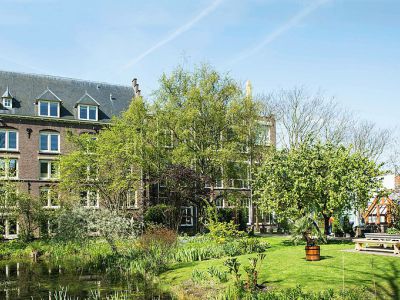
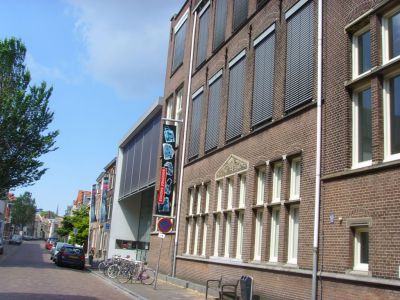
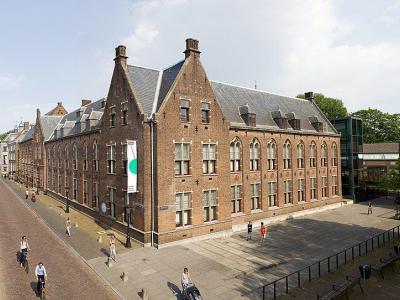
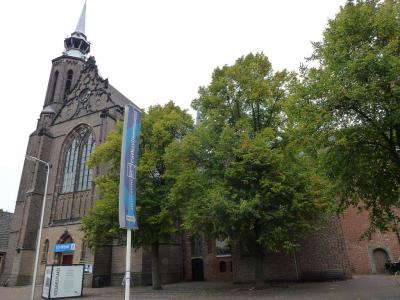
Walking Tours in Utrecht, Netherlands

Create Your Own Walk in Utrecht
Creating your own self-guided walk in Utrecht is easy and fun. Choose the city attractions that you want to see and a walk route map will be created just for you. You can even set your hotel as the start point of the walk.
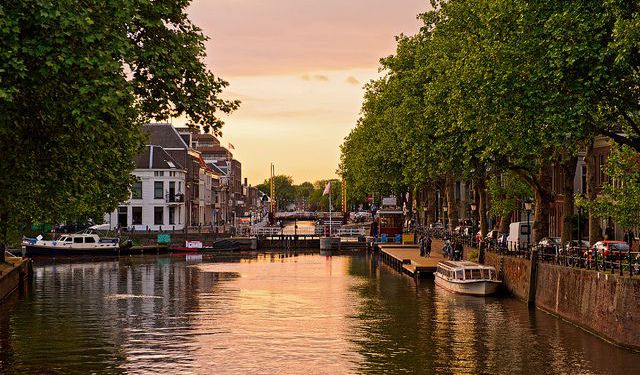
A Walking Guide To Utrecht's Medieval Old Town
The earliest settlers to the area now called Utrecht likely arrived millennia ago during the Stone Age. While there are also signs of inhabitation during the Bronze Age, scholars today credit the Romans with building what became the town.
They set up a castellum around the year 50 AD, a fort right at a crossing point on the river Rhine. The fortress marked Rome's northernmost point in... view more
Tour Duration: 1 Hour
Travel Distance: 1.6 Km or 1 Miles
They set up a castellum around the year 50 AD, a fort right at a crossing point on the river Rhine. The fortress marked Rome's northernmost point in... view more
Tour Duration: 1 Hour
Travel Distance: 1.6 Km or 1 Miles
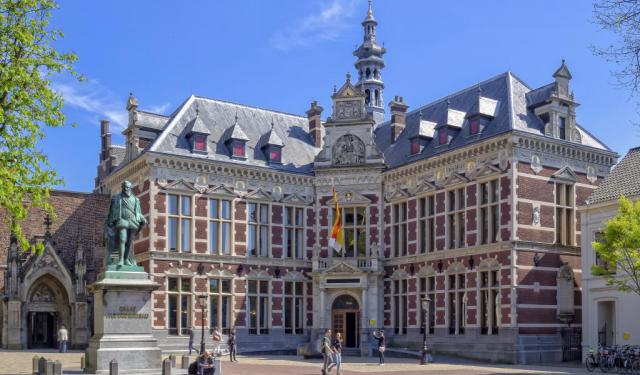
Utrecht's Historical Buildings Walking Tour
Originally founded by the Romans, and once the most important city in the Netherlands, Utrecht boasts a generous share of historically significant structures. The collection of its architectural masterpieces, one of the richest in the country, dates back to the early Middle Ages.
The amazingly well-preserved pieces of historic architecture in Utrecht showcase the trends and movements throughout... view more
Tour Duration: 2 Hours
Travel Distance: 3.8 Km or 2.4 Miles
The amazingly well-preserved pieces of historic architecture in Utrecht showcase the trends and movements throughout... view more
Tour Duration: 2 Hours
Travel Distance: 3.8 Km or 2.4 Miles
City Walks Overview
