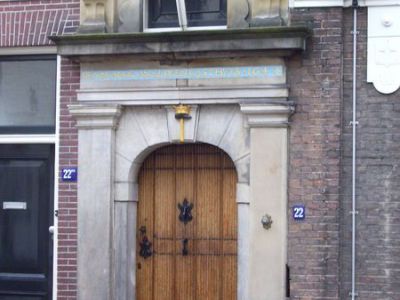


St. Eloyen Gasthuis (Saint Eloy's Hospice), Utrecht
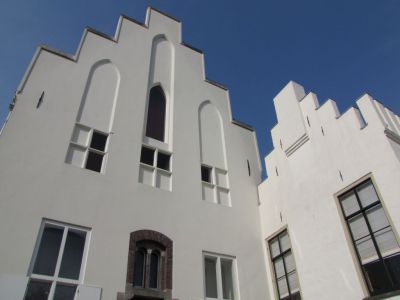
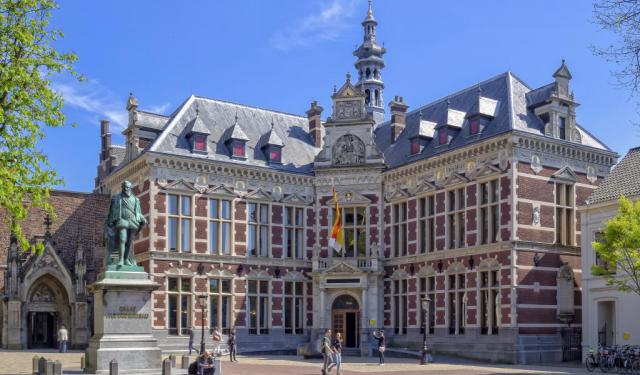
Nestled between the Dom Tower and Mariaplaats in Utrecht, the Saint Eloy's Hospice (Sint Eloyen Gasthuis) stands as a remarkable historical guildhall with a rich legacy. Since 1440, this unique building has been home to the Smedengilde, the guild of smiths, which traces its origins back to at least 1304, and possibly earlier.
Guilds, associations of craftsmen and tradesmen, began forming in the 11th century across the Netherlands, Northern France, and England. Utrecht’s blacksmith guild was particularly diverse, encompassing blacksmiths, gold and silversmiths, needlemakers, locksmiths, and weaponsmiths. These guilds not only ensured a stable livelihood for their members but also maintained high standards of craftsmanship through rigorous training and controlled career progression.
Utrecht's trade importance grew after a 1165 canal linked it to the River Vecht. Before Amsterdam's rise, it had a major sea harbor at Muiden. Guilds gained power after the 1302 Battle of the Golden Spurs, leading to the 1304 "guild letter," which reduced the bishop’s authority and established a guild-dominated city council. This governance lasted until Emperor Charles V centralized power.
The blacksmiths' guild stood out for its member support, founding a hospice here in 1440 for aging blacksmiths under Saint Eligius. It remained active even after guesthouses lost their medical role in 1817. Unlike most guilds abolished by Napoleon in 1798, it survived by reinventing itself as the Blacksmith Trade Organization, the only one of its kind in the Netherlands.
Today, the building operates as a private fraternity with a continued tradition of charitable work. Now a private fraternity, the building maintains its charitable tradition under the regent, who funds its upkeep, art, and archives. Members, including apprentices and regents, meet weekly for social activities like card games and kolf. Saint Eloy's Hospice remains a rare link to Utrecht’s guild heritage and medieval craftsmanship.
Visitors can catch a glimpse of this remarkable place during Open Monument Day, held annually on the second Saturday of September, when the house opens its doors to the public free of charge.
Guilds, associations of craftsmen and tradesmen, began forming in the 11th century across the Netherlands, Northern France, and England. Utrecht’s blacksmith guild was particularly diverse, encompassing blacksmiths, gold and silversmiths, needlemakers, locksmiths, and weaponsmiths. These guilds not only ensured a stable livelihood for their members but also maintained high standards of craftsmanship through rigorous training and controlled career progression.
Utrecht's trade importance grew after a 1165 canal linked it to the River Vecht. Before Amsterdam's rise, it had a major sea harbor at Muiden. Guilds gained power after the 1302 Battle of the Golden Spurs, leading to the 1304 "guild letter," which reduced the bishop’s authority and established a guild-dominated city council. This governance lasted until Emperor Charles V centralized power.
The blacksmiths' guild stood out for its member support, founding a hospice here in 1440 for aging blacksmiths under Saint Eligius. It remained active even after guesthouses lost their medical role in 1817. Unlike most guilds abolished by Napoleon in 1798, it survived by reinventing itself as the Blacksmith Trade Organization, the only one of its kind in the Netherlands.
Today, the building operates as a private fraternity with a continued tradition of charitable work. Now a private fraternity, the building maintains its charitable tradition under the regent, who funds its upkeep, art, and archives. Members, including apprentices and regents, meet weekly for social activities like card games and kolf. Saint Eloy's Hospice remains a rare link to Utrecht’s guild heritage and medieval craftsmanship.
Visitors can catch a glimpse of this remarkable place during Open Monument Day, held annually on the second Saturday of September, when the house opens its doors to the public free of charge.
Want to visit this sight? Check out these Self-Guided Walking Tours in Utrecht. Alternatively, you can download the mobile app "GPSmyCity: Walks in 1K+ Cities" from Apple App Store or Google Play Store. The app turns your mobile device to a personal tour guide and it works offline, so no data plan is needed when traveling abroad.
Download The GPSmyCity App



St. Eloyen Gasthuis (Saint Eloy's Hospice) on Map
Sight Name: St. Eloyen Gasthuis (Saint Eloy's Hospice)
Sight Location: Utrecht, Netherlands (See walking tours in Utrecht)
Sight Type: Attraction/Landmark
Sight Location: Utrecht, Netherlands (See walking tours in Utrecht)
Sight Type: Attraction/Landmark
Nearby Sights


Walking Tours in Utrecht, Netherlands

Create Your Own Walk in Utrecht
Creating your own self-guided walk in Utrecht is easy and fun. Choose the city attractions that you want to see and a walk route map will be created just for you. You can even set your hotel as the start point of the walk.
A Walking Guide To Utrecht's Medieval Old Town
The earliest settlers to the area now called Utrecht likely arrived millennia ago during the Stone Age. While there are also signs of inhabitation during the Bronze Age, scholars today credit the Romans with building what became the town.
They set up a castellum around the year 50 AD, a fort right at a crossing point on the river Rhine. The fortress marked Rome's northernmost point in... view more
Tour Duration: 1 Hour
Travel Distance: 1.6 Km or 1 Miles
They set up a castellum around the year 50 AD, a fort right at a crossing point on the river Rhine. The fortress marked Rome's northernmost point in... view more
Tour Duration: 1 Hour
Travel Distance: 1.6 Km or 1 Miles
Utrecht's Historical Buildings Walking Tour
Originally founded by the Romans, and once the most important city in the Netherlands, Utrecht boasts a generous share of historically significant structures. The collection of its architectural masterpieces, one of the richest in the country, dates back to the early Middle Ages.
The amazingly well-preserved pieces of historic architecture in Utrecht showcase the trends and movements throughout... view more
Tour Duration: 2 Hours
Travel Distance: 3.8 Km or 2.4 Miles
The amazingly well-preserved pieces of historic architecture in Utrecht showcase the trends and movements throughout... view more
Tour Duration: 2 Hours
Travel Distance: 3.8 Km or 2.4 Miles
City Walks Overview
