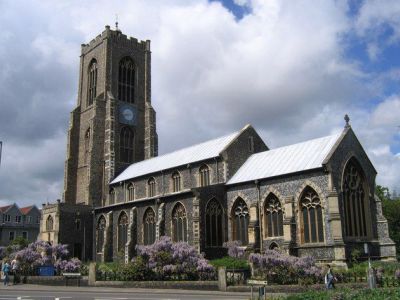


St. Giles Church, Norwich
Saint Giles Church in Norwich, a Grade I listed building, stands as a medieval landmark of significant historical and architectural importance. Documented in the Domesday Book of 1086, its origins trace back to 1386, sparked by a bequest for its construction. By 1430, the church was functional enough to host funerals, with its imposing tower completed by 1424. This tower, reaching a height of 120 feet, claims the title of the tallest church tower in Norwich.
Renowned as Saint Giles-on-the-Hill due to its elevated position within the old city walls, the church's late-decorated Gothic architecture predominantly dates back to the 14th century, although the porch and chancel are later additions. The significant restoration undertaken by Richard Phipson between 1866 and 1867 rejuvenated the church, especially the chancel, aligning it with the architectural style of the original structure.
Inside, the church is a Victorian creation within a medieval frame, largely due to Phipson's restoration efforts. The interior boasts fluted columns reminiscent of a grand forest and is bathed in light, thanks to the absence of much of the original colored glass. Notable features include medieval brasses from the 15th century and a significant 15th-century East Anglian latten lectern, rich in history and adorned with an inscription from 1493.
The church also plays a pivotal civic role, evidenced by numerous memorials and five sets of mayoral mace and sword rests, commemorating the parish's historical connection with Norwich's civic leadership. The church's tradition of ringing the curfew bell, a practice dating back to a bequest made in the late 15th century, continues to this day, underscoring its enduring community significance.
Renowned as Saint Giles-on-the-Hill due to its elevated position within the old city walls, the church's late-decorated Gothic architecture predominantly dates back to the 14th century, although the porch and chancel are later additions. The significant restoration undertaken by Richard Phipson between 1866 and 1867 rejuvenated the church, especially the chancel, aligning it with the architectural style of the original structure.
Inside, the church is a Victorian creation within a medieval frame, largely due to Phipson's restoration efforts. The interior boasts fluted columns reminiscent of a grand forest and is bathed in light, thanks to the absence of much of the original colored glass. Notable features include medieval brasses from the 15th century and a significant 15th-century East Anglian latten lectern, rich in history and adorned with an inscription from 1493.
The church also plays a pivotal civic role, evidenced by numerous memorials and five sets of mayoral mace and sword rests, commemorating the parish's historical connection with Norwich's civic leadership. The church's tradition of ringing the curfew bell, a practice dating back to a bequest made in the late 15th century, continues to this day, underscoring its enduring community significance.
Want to visit this sight? Check out these Self-Guided Walking Tours in Norwich. Alternatively, you can download the mobile app "GPSmyCity: Walks in 1K+ Cities" from Apple App Store or Google Play Store. The app turns your mobile device to a personal tour guide and it works offline, so no data plan is needed when traveling abroad.
Download The GPSmyCity App



St. Giles Church on Map
Sight Name: St. Giles Church
Sight Location: Norwich, England (See walking tours in Norwich)
Sight Type: Religious
Sight Location: Norwich, England (See walking tours in Norwich)
Sight Type: Religious
Nearby Sights


Walking Tours in Norwich, England

Create Your Own Walk in Norwich
Creating your own self-guided walk in Norwich is easy and fun. Choose the city attractions that you want to see and a walk route map will be created just for you. You can even set your hotel as the start point of the walk.
Explore Norwich's Haunted Buildings on Foot
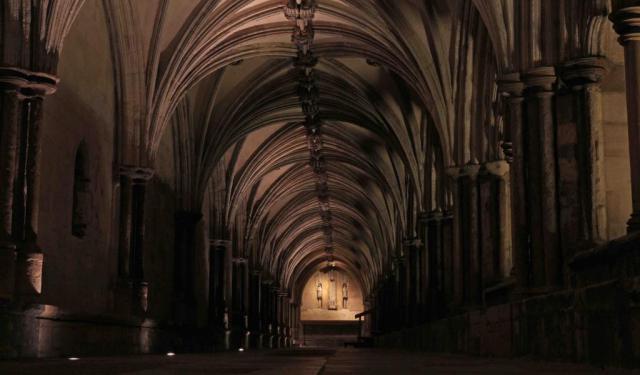
The long and sometimes bloody history of Norwich has left its mark on the city in the form of spooky happenings. Indeed, nearly half of the local population have reported experiencing throughout their life something paranormal. Add to this a mildly alarming number of UFOs spotted on the outskirts of Norwich, and you get one of, if not the most haunted area in the UK.
Needless to say that in a... view more
Tour Duration: 1 Hour
Travel Distance: 1.4 Km or 0.9 Miles
Needless to say that in a... view more
Tour Duration: 1 Hour
Travel Distance: 1.4 Km or 0.9 Miles
A Walking Guide To Norwich's Medieval Old Town
The Iceni tribe predated the Romans in the village of Caistor, near the area of present-day Norwich. In 60 AD an uprising led by Boudica had been put down and Caistor became the Roman capital of East Anglia. Anglo-Saxons settled the town of Northwic in the 4th century. By the 10th century Northwic became Norwich, a prosperous trading center.
William the Conqueror arrived with a bang in 1066.... view more
Tour Duration: 2 Hours
Travel Distance: 2.5 Km or 1.6 Miles
William the Conqueror arrived with a bang in 1066.... view more
Tour Duration: 2 Hours
Travel Distance: 2.5 Km or 1.6 Miles