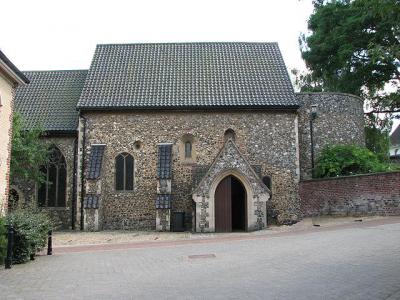


St. Julian's Church, Norwich
Saint Julian's Church, a historic round-tower church built in the 11th and 12th centuries, stands as one of Norwich's architectural treasures. Among the 31 surviving parish churches out of 58 originally constructed in the city following the Norman conquest, it retains a unique connection to one of the most influential figures in Christian mysticism, Julian of Norwich.
The church, dedicated to Saint Julian-either the Hospitaller or of Le Mans-is historically linked to Julian of Norwich, a 14th-century anchoress and theologian. From her cell in the churchyard, she wrote Revelations of Divine Love, the first known English book by a woman. The cell was overseen by Carrow Abbey, whose prioress, possibly Edith Wilton, supported Julian's work.
The anchorite tradition continued at Saint Julian's, with Julian(a) Lampet occupying the cell for 50 years starting in 1428, during the tenure of Margaret Pygot as prioress. This spiritual legacy connects the church to a profound period of contemplative devotion.
By the mid-19th century, the church suffered a structural collapse, including its east wall in 1845. Destroyed again in the 1942 Norwich Blitz, it was rebuilt by A.J. Chaplin and reopened in 1953 as a shrine to Julian of Norwich. The restoration retained its original style but included a shorter tower and a chapel in place of the anchorite cell.
Constructed from flint with stone and brick dressings and topped with a pantile roof, the building consists of a nave, a single-bay chancel, a south chapel with a vestry, and the distinctive circular west tower. The tower houses a bell from around 1500, rehung in 1992, while the church interior boasts an organ by Henry Jones, dating to 1860 and installed in 1966.
Today, Saint Julian’s is not only a place of worship but a center for reflection and pilgrimage. The Friends of Julian maintain a shop and lending library nearby, fostering the enduring legacy of this remarkable church and its connections to Julian of Norwich's spiritual insights.
The church, dedicated to Saint Julian-either the Hospitaller or of Le Mans-is historically linked to Julian of Norwich, a 14th-century anchoress and theologian. From her cell in the churchyard, she wrote Revelations of Divine Love, the first known English book by a woman. The cell was overseen by Carrow Abbey, whose prioress, possibly Edith Wilton, supported Julian's work.
The anchorite tradition continued at Saint Julian's, with Julian(a) Lampet occupying the cell for 50 years starting in 1428, during the tenure of Margaret Pygot as prioress. This spiritual legacy connects the church to a profound period of contemplative devotion.
By the mid-19th century, the church suffered a structural collapse, including its east wall in 1845. Destroyed again in the 1942 Norwich Blitz, it was rebuilt by A.J. Chaplin and reopened in 1953 as a shrine to Julian of Norwich. The restoration retained its original style but included a shorter tower and a chapel in place of the anchorite cell.
Constructed from flint with stone and brick dressings and topped with a pantile roof, the building consists of a nave, a single-bay chancel, a south chapel with a vestry, and the distinctive circular west tower. The tower houses a bell from around 1500, rehung in 1992, while the church interior boasts an organ by Henry Jones, dating to 1860 and installed in 1966.
Today, Saint Julian’s is not only a place of worship but a center for reflection and pilgrimage. The Friends of Julian maintain a shop and lending library nearby, fostering the enduring legacy of this remarkable church and its connections to Julian of Norwich's spiritual insights.
Want to visit this sight? Check out these Self-Guided Walking Tours in Norwich. Alternatively, you can download the mobile app "GPSmyCity: Walks in 1K+ Cities" from Apple App Store or Google Play Store. The app turns your mobile device to a personal tour guide and it works offline, so no data plan is needed when traveling abroad.
Download The GPSmyCity App



St. Julian's Church on Map
Sight Name: St. Julian's Church
Sight Location: Norwich, England (See walking tours in Norwich)
Sight Type: Religious
Sight Location: Norwich, England (See walking tours in Norwich)
Sight Type: Religious
Nearby Sights
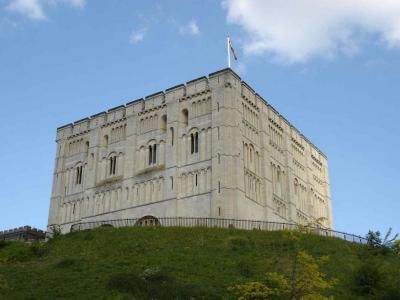
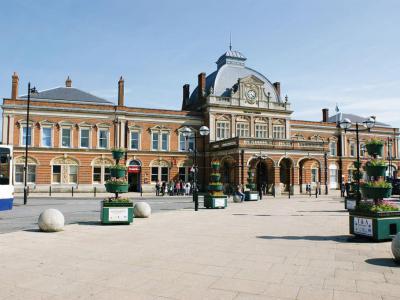
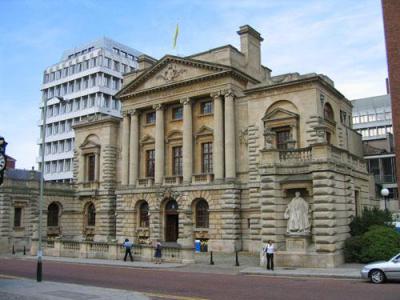
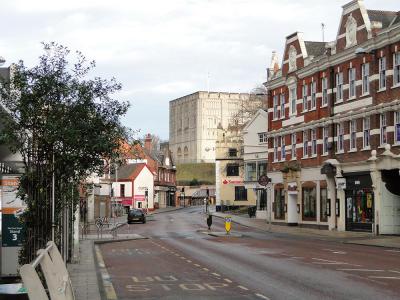
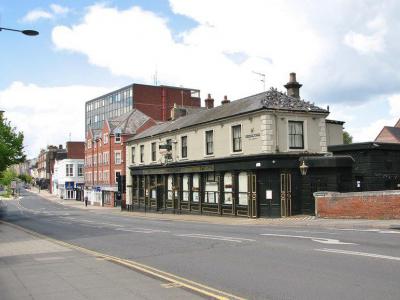
Walking Tours in Norwich, England

Create Your Own Walk in Norwich
Creating your own self-guided walk in Norwich is easy and fun. Choose the city attractions that you want to see and a walk route map will be created just for you. You can even set your hotel as the start point of the walk.
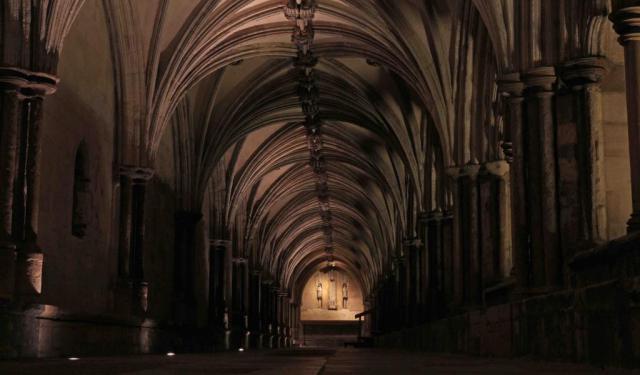
Explore Norwich's Haunted Buildings on Foot
The long and sometimes bloody history of Norwich has left its mark on the city in the form of spooky happenings. Indeed, nearly half of the local population have reported experiencing throughout their life something paranormal. Add to this a mildly alarming number of UFOs spotted on the outskirts of Norwich, and you get one of, if not the most haunted area in the UK.
Needless to say that in a... view more
Tour Duration: 1 Hour(s)
Travel Distance: 1.4 Km or 0.9 Miles
Needless to say that in a... view more
Tour Duration: 1 Hour(s)
Travel Distance: 1.4 Km or 0.9 Miles
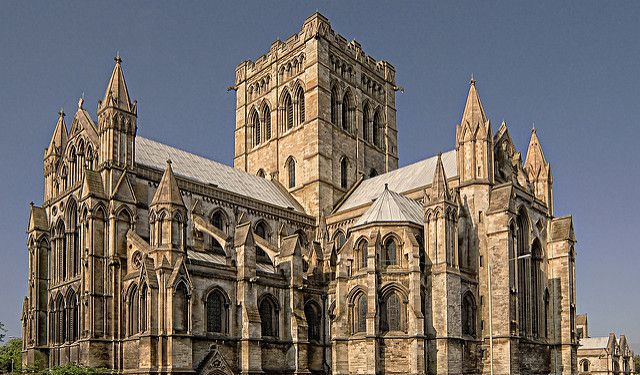
A Walking Guide To Norwich's Medieval Old Town
The Iceni tribe predated the Romans in the village of Caistor, near the area of present-day Norwich. In 60 AD an uprising led by Boudica had been put down and Caistor became the Roman capital of East Anglia. Anglo-Saxons settled the town of Northwic in the 4th century. By the 10th century Northwic became Norwich, a prosperous trading center.
William the Conqueror arrived with a bang in 1066.... view more
Tour Duration: 2 Hour(s)
Travel Distance: 2.5 Km or 1.6 Miles
William the Conqueror arrived with a bang in 1066.... view more
Tour Duration: 2 Hour(s)
Travel Distance: 2.5 Km or 1.6 Miles