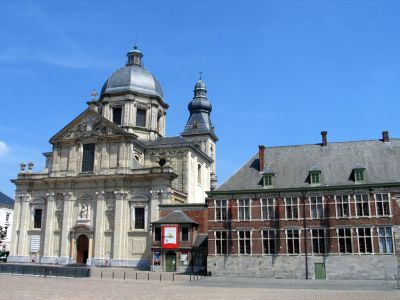


St. Peter Abbey, Ghent
Saint Peter’s Abbey (Sint-Pietersabdij) in Ghent is a former Benedictine monastery with a rich history dating back to the late 7th century. Founded by Saint Amandus to convert the local pagans, the abbey began as a spiritual center alongside Saint Bavo’s Abbey. After a rocky start, including a Norman raid in 879-80, it flourished in the 10th century as a favored burial site for Flemish nobility. The current Baroque building, with classical details, dates to the 17th century, reflecting its rich history.
Throughout the Middle Ages, Saint Peter’s Abbey became a major religious, economic, and political power, managing extensive lands and overseas properties. Damaged during the 16th-century wars of religion, it was later rebuilt in a grand style. After the French Revolution, the abbey's properties were seized, and it served various roles, including as a military barracks, until its restoration after World War II.
Today, Saint Peter’s Abbey functions as a museum, exhibition center, and an exceptional venue for meetings and events. It offers a variety of unique spaces, such as the Gothic Chapter Room, Romanesque crypt, and light-filled break-out rooms overlooking a tranquil enclosed garden. The abbey’s grounds include a romantic garden with an orchard, vineyard, and herb garden.
Beyond its role as a historical and cultural site, Saint Peter’s Abbey continues to be a vibrant part of Ghent’s city life. It hosts exhibitions, and cultural events, and has served as a venue for significant gatherings, such as the 88th meeting of the European Council in 2001. With its blend of historical grandeur and modern amenities, Saint Peter’s Abbey remains a symbol of Ghent’s enduring heritage and community spirit.
Throughout the Middle Ages, Saint Peter’s Abbey became a major religious, economic, and political power, managing extensive lands and overseas properties. Damaged during the 16th-century wars of religion, it was later rebuilt in a grand style. After the French Revolution, the abbey's properties were seized, and it served various roles, including as a military barracks, until its restoration after World War II.
Today, Saint Peter’s Abbey functions as a museum, exhibition center, and an exceptional venue for meetings and events. It offers a variety of unique spaces, such as the Gothic Chapter Room, Romanesque crypt, and light-filled break-out rooms overlooking a tranquil enclosed garden. The abbey’s grounds include a romantic garden with an orchard, vineyard, and herb garden.
Beyond its role as a historical and cultural site, Saint Peter’s Abbey continues to be a vibrant part of Ghent’s city life. It hosts exhibitions, and cultural events, and has served as a venue for significant gatherings, such as the 88th meeting of the European Council in 2001. With its blend of historical grandeur and modern amenities, Saint Peter’s Abbey remains a symbol of Ghent’s enduring heritage and community spirit.
Want to visit this sight? Check out these Self-Guided Walking Tours in Ghent. Alternatively, you can download the mobile app "GPSmyCity: Walks in 1K+ Cities" from Apple App Store or Google Play Store. The app turns your mobile device to a personal tour guide and it works offline, so no data plan is needed when traveling abroad.
Download The GPSmyCity App



St. Peter Abbey on Map
Sight Name: St. Peter Abbey
Sight Location: Ghent, Belgium (See walking tours in Ghent)
Sight Type: Religious
Sight Location: Ghent, Belgium (See walking tours in Ghent)
Sight Type: Religious
Nearby Sights

Walking Tours in Ghent, Belgium

Create Your Own Walk in Ghent
Creating your own self-guided walk in Ghent is easy and fun. Choose the city attractions that you want to see and a walk route map will be created just for you. You can even set your hotel as the start point of the walk.
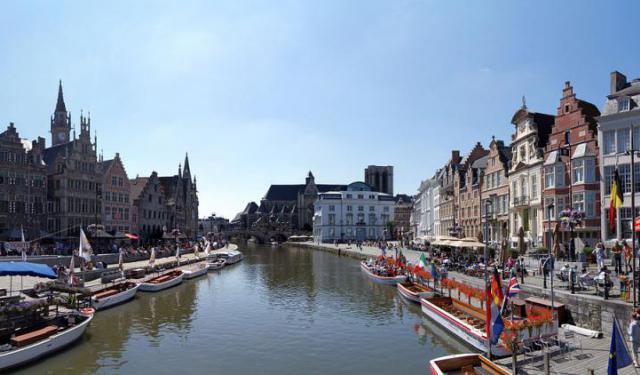
A Walk Through Ghent's Historic City Center
Some historians believe "Ghent" comes from the Celtic word, "ganda." "Ganda" meant a confluence, as with two rivers. There are traces of human settlements as far back as the stone age at the confluence of the rivers Scheldt and Leie in Belgium.
With the Frankish invasions at the end of the 4th century AD, the Celtic language was replaced by Old Dutch and this... view more
Tour Duration: 2 Hours
Travel Distance: 1.7 Km or 1.1 Miles
With the Frankish invasions at the end of the 4th century AD, the Celtic language was replaced by Old Dutch and this... view more
Tour Duration: 2 Hours
Travel Distance: 1.7 Km or 1.1 Miles
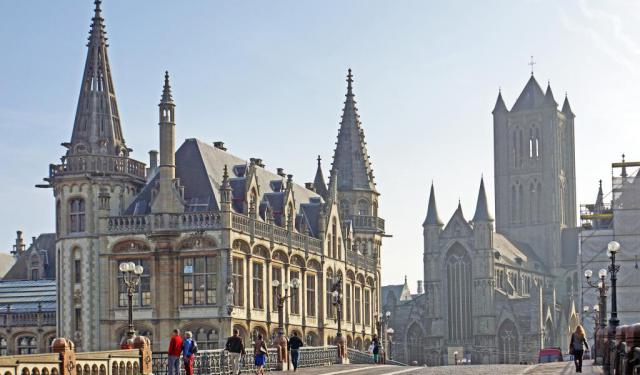
Discover Ghent's Historical Buildings on Foot
The medieval city of Ghent is full of wonderful old buildings, some dating back as far as the 12th-13th centuries. Medieval buildings are indeed everywhere here, and if you're interested in the heritage fit to capture you imagination, you will find plenty of it in Ghent’s historic downtown.
And you won’t have to look far for the World Heritage worthy of its name either. The Castle of... view more
Tour Duration: 2 Hours
Travel Distance: 2.8 Km or 1.7 Miles
And you won’t have to look far for the World Heritage worthy of its name either. The Castle of... view more
Tour Duration: 2 Hours
Travel Distance: 2.8 Km or 1.7 Miles
City Walks Overview
