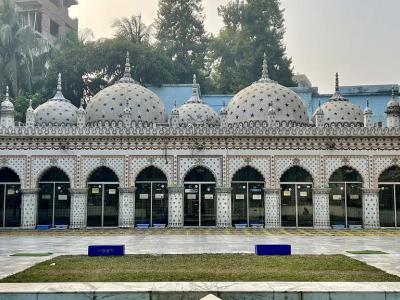
Star Mosque, Dhaka
Star Mosque, also known as Tara Masjid, boasts intricate designs and adorned with blue star motifs. Originally constructed in the first half of the 19th century by Mirza Golam Pir, also known as Mirza Ahmed Jan, the mosque underwent significant renovations later, particularly in 1926 when businessman Ali Jan Bepari added embellishments like stars and other motifs, thus earning its present name.
Initially built in the Mughal style by Mirza Ghulam in the late 18th century, the mosque was a modest rectangular structure with three doorways on the main façade and additional entrances on the north and south walls. It featured three domes, with the central one being the largest, and towers accenting the corners. In the early 20th century, Ali Jan Bepari sponsored a renovation project that included the addition of a front verandah and the application of 'Chini Tikri', a decorative technique involving broken china, particularly notable in the striking blue star mosaic that inspired the mosque's name.
Subsequent enhancements, such as the extension of the prayer hall by the Department of Architecture in 1987, further enriched the mosque's aesthetic. Imported china clay tiles adorned the interior, while assorted glazed tiles added texture and color variation. The mihrabs and doorways featured mosaic floral patterns, with recurring plant and vase motifs enhancing the decorative elements.
Initially built in the Mughal style by Mirza Ghulam in the late 18th century, the mosque was a modest rectangular structure with three doorways on the main façade and additional entrances on the north and south walls. It featured three domes, with the central one being the largest, and towers accenting the corners. In the early 20th century, Ali Jan Bepari sponsored a renovation project that included the addition of a front verandah and the application of 'Chini Tikri', a decorative technique involving broken china, particularly notable in the striking blue star mosaic that inspired the mosque's name.
Subsequent enhancements, such as the extension of the prayer hall by the Department of Architecture in 1987, further enriched the mosque's aesthetic. Imported china clay tiles adorned the interior, while assorted glazed tiles added texture and color variation. The mihrabs and doorways featured mosaic floral patterns, with recurring plant and vase motifs enhancing the decorative elements.
Star Mosque on Map
Sight Name: Star Mosque
Sight Location: Dhaka, Bangladesh (See walking tours in Dhaka)
Sight Type: Religious
Sight Location: Dhaka, Bangladesh (See walking tours in Dhaka)
Sight Type: Religious
Nearby Sights
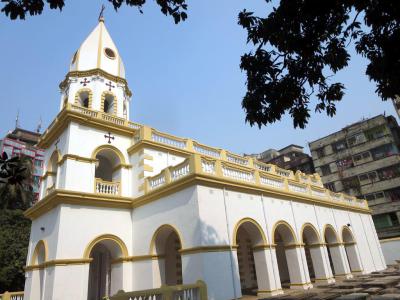
Armenian Church and Graveyard (must see)
Sight description based on Wikipedia.
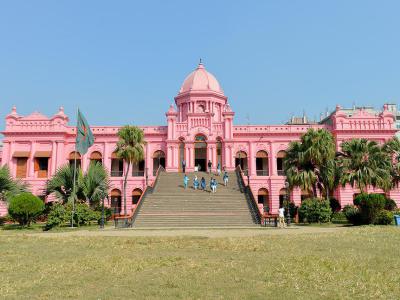
Ahsan Manzil (must see)
Sight description based on Wikipedia.

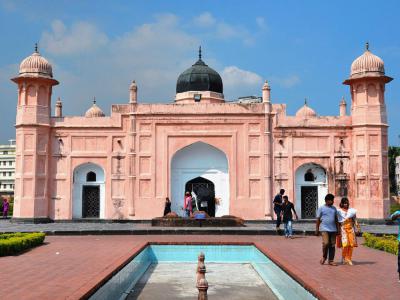
Lalbagh Fort (must see)
Sight description based on Wikipedia.
City Walks Overview
