

Temple de Diane (Temple of Diana), Nimes
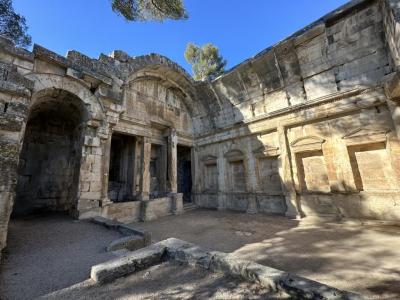
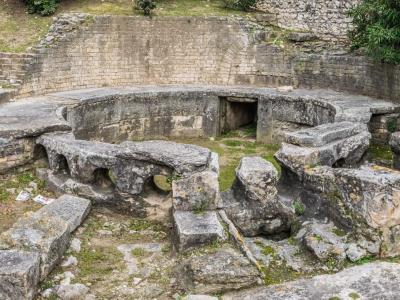
The Temple of Diana is one of the most intriguing Roman monuments in Nîmes. Located within the landscaped Fountain Gardens, the structure dates to the late 1st century CE.
Despite its traditional name, historians are not certain that the building was actually a temple dedicated to the goddess Diana. The designation was given during the Middle Ages, and the structure may instead have served as a library, meeting hall, or part of a sanctuary complex connected to the nearby spring that gave the gardens their name.
The surviving ruins reveal an impressive example of Roman engineering and architecture. Thick stone walls enclose a large vaulted hall once decorated with marble panels and niches that may have held statues or scrolls. Fragments of staircases and corridors suggest the building originally had several chambers and possibly an upper level.
Over the centuries, the structure was repurposed for various uses, including as a monastery during the medieval period, which helped preserve much of the building. Today, the Temple of Diana stands as one of the most atmospheric ancient sites in Nîmes, offering visitors a glimpse into the architectural sophistication and civic life of the Roman city.
Despite its traditional name, historians are not certain that the building was actually a temple dedicated to the goddess Diana. The designation was given during the Middle Ages, and the structure may instead have served as a library, meeting hall, or part of a sanctuary complex connected to the nearby spring that gave the gardens their name.
The surviving ruins reveal an impressive example of Roman engineering and architecture. Thick stone walls enclose a large vaulted hall once decorated with marble panels and niches that may have held statues or scrolls. Fragments of staircases and corridors suggest the building originally had several chambers and possibly an upper level.
Over the centuries, the structure was repurposed for various uses, including as a monastery during the medieval period, which helped preserve much of the building. Today, the Temple of Diana stands as one of the most atmospheric ancient sites in Nîmes, offering visitors a glimpse into the architectural sophistication and civic life of the Roman city.
Want to visit this sight? Check out these Self-Guided Walking Tours in Nimes. Alternatively, you can download the mobile app "GPSmyCity: Walks in 1K+ Cities" from Apple App Store or Google Play Store. The app turns your mobile device to a personal tour guide and it works offline, so no data plan is needed when traveling abroad.
Download The GPSmyCity App



Temple de Diane (Temple of Diana) on Map
Sight Name: Temple de Diane (Temple of Diana)
Sight Location: Nimes, France (See walking tours in Nimes)
Sight Type: Attraction/Landmark
Guide(s) Containing This Sight:
Sight Location: Nimes, France (See walking tours in Nimes)
Sight Type: Attraction/Landmark
Guide(s) Containing This Sight:
Nearby Sights



Walking Tours in Nimes, France

Create Your Own Walk in Nimes
Creating your own self-guided walk in Nimes is easy and fun. Choose the city attractions that you want to see and a walk route map will be created just for you. You can even set your hotel as the start point of the walk.
Nimes Introduction Walking Tour
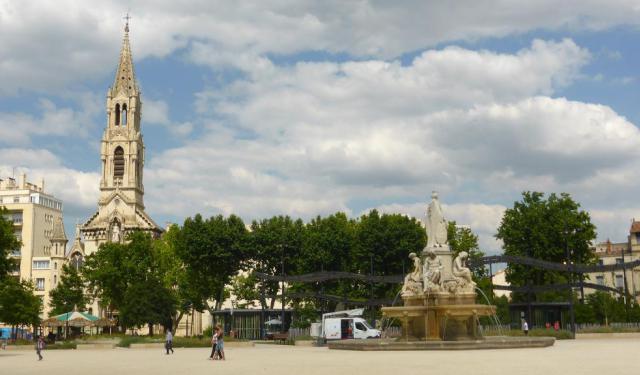
Dubbed the most Roman city outside Italy, Nîmes, a small city in Southern France, is steeped in history that harks back to the days of the mighty Roman Empire.
The name itself holds clues to the city's origin, reflecting Celtic roots and a connection with the local god Nemausus, associated with a healing spring.
The hill of Mount Cavalier, once an oppidum, served as the birthplace of... view more
Tour Duration: 1 Hour(s)
Travel Distance: 1.8 Km or 1.1 Miles
The name itself holds clues to the city's origin, reflecting Celtic roots and a connection with the local god Nemausus, associated with a healing spring.
The hill of Mount Cavalier, once an oppidum, served as the birthplace of... view more
Tour Duration: 1 Hour(s)
Travel Distance: 1.8 Km or 1.1 Miles
Ancient Roman Ruins in Nimes
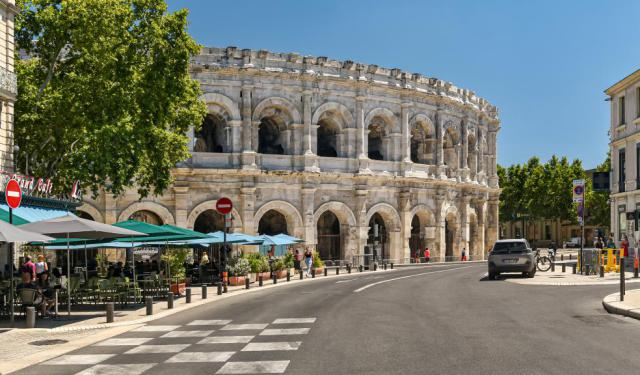
Nicknamed “the French Rome,” the southern French town of Nîmes is indeed the most Roman city outside of Italy. In large part, this is due to a wealth of architectural monuments that have remained here since the Roman era. Some ruined and some well preserved, they offer a captivating glimpse into the ancient history stretching back to the early days of Roman expansion.
A true testament to... view more
Tour Duration: 2 Hour(s)
Travel Distance: 3.7 Km or 2.3 Miles
A true testament to... view more
Tour Duration: 2 Hour(s)
Travel Distance: 3.7 Km or 2.3 Miles