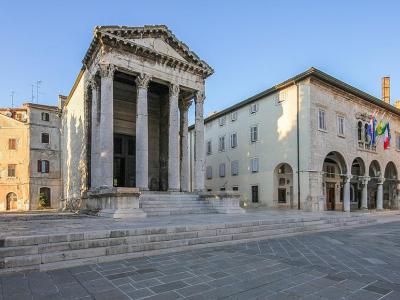


Temple of Augustus, Pula (must see)
The Temple of Augustus was built between 2 BC and AD 14, and it was dedicated jointly to Roma, the personification of the Roman state, and Emperor Augustus. Bronze letters once formed a dedicatory inscription across the front of the building. Although the letters have disappeared, their attachment holes remain visible and preserve the wording that helped archaeologists date the temple.
The limestone temple measures approximately 57.9 feet long, 27.9 feet wide, and 43.2 feet high. It consists of an enclosed sanctuary preceded by a smaller vestibule called the pronaos. Six Corinthian columns surround the porch, four of them standing across the façade. Above the columns, the frieze is carved with curling acanthus leaves, fruit, and birds, while the cornice contains projecting brackets and recessed panels. Round medallions once decorated the triangular pediments.
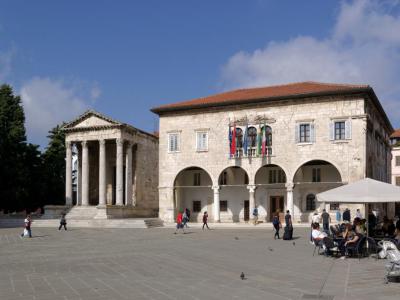
The temple originally formed part of a larger religious complex. A matching temple stood on the opposite side of the Forum, and part of its rear wall survives within the Communal Palace. Foundations belonging to an even earlier Roman temple can be identified by differently colored paving beside the Temple of Augustus. After pagan worship ended, the building became a church and was later connected to a neighboring medieval palace. It subsequently served as a warehouse, granary, and city archive before wartime bombing severely damaged it. The temple was reconstructed after World War II using surviving fragments and archaeological records.
Today, the interior contains an exhibition of ancient sculpture whose origins date to 1802. Displays include funerary and honorary monuments, architectural decorations, bronze figurines, marble reliefs, fountain elements, and fragments of imperial statues found around Pula. Among the more unusual objects are a gilded representation of the Egyptian goddess Hathor and a relief reproducing a ceremonial procession associated with Octavian’s monument at Actium.
The limestone temple measures approximately 57.9 feet long, 27.9 feet wide, and 43.2 feet high. It consists of an enclosed sanctuary preceded by a smaller vestibule called the pronaos. Six Corinthian columns surround the porch, four of them standing across the façade. Above the columns, the frieze is carved with curling acanthus leaves, fruit, and birds, while the cornice contains projecting brackets and recessed panels. Round medallions once decorated the triangular pediments.
The temple originally formed part of a larger religious complex. A matching temple stood on the opposite side of the Forum, and part of its rear wall survives within the Communal Palace. Foundations belonging to an even earlier Roman temple can be identified by differently colored paving beside the Temple of Augustus. After pagan worship ended, the building became a church and was later connected to a neighboring medieval palace. It subsequently served as a warehouse, granary, and city archive before wartime bombing severely damaged it. The temple was reconstructed after World War II using surviving fragments and archaeological records.
Today, the interior contains an exhibition of ancient sculpture whose origins date to 1802. Displays include funerary and honorary monuments, architectural decorations, bronze figurines, marble reliefs, fountain elements, and fragments of imperial statues found around Pula. Among the more unusual objects are a gilded representation of the Egyptian goddess Hathor and a relief reproducing a ceremonial procession associated with Octavian’s monument at Actium.
Want to visit this sight? Check out these Self-Guided Walking Tours in Pula. Alternatively, you can download the mobile app "GPSmyCity: Walks in 1K+ Cities" from Apple App Store or Google Play Store. The app turns your mobile device to a personal tour guide and it works offline, so no data plan is needed when traveling abroad.
Download The GPSmyCity App



Temple of Augustus on Map
Sight Name: Temple of Augustus
Sight Location: Pula, Croatia (See walking tours in Pula)
Sight Type: Attraction/Landmark
Guide(s) Containing This Sight:
Sight Location: Pula, Croatia (See walking tours in Pula)
Sight Type: Attraction/Landmark
Guide(s) Containing This Sight:
Nearby Sights
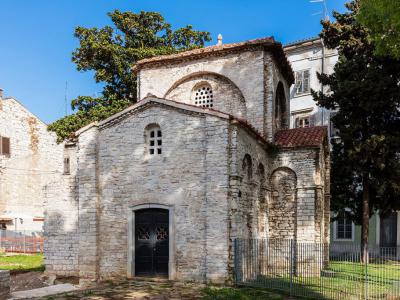
Walking Tours in Pula, Croatia

Create Your Own Walk in Pula
Creating your own self-guided walk in Pula is easy and fun. Choose the city attractions that you want to see and a walk route map will be created just for you. You can even set your hotel as the start point of the walk.
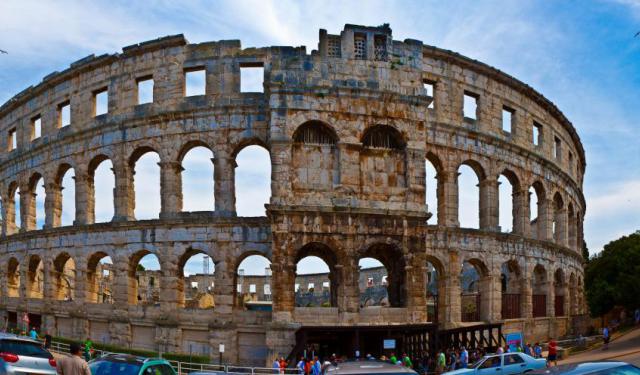
Walk Through Pula's Beautiful Old Town
According to Greek mythology, Pula was founded by a group of people from the ancient land of Colchis, on the eastern shore of the Black Sea. Their story is connected to Jason and the Golden Fleece. After Jason stole the Fleece and fled with Medea, a powerful sorceress from Colchis, her people pursued the couple across the seas. When they lost their trail and could not find their way home, they... view more
Tour Duration: 2 Hour(s)
Travel Distance: 2.7 Km or 1.7 Miles
Tour Duration: 2 Hour(s)
Travel Distance: 2.7 Km or 1.7 Miles
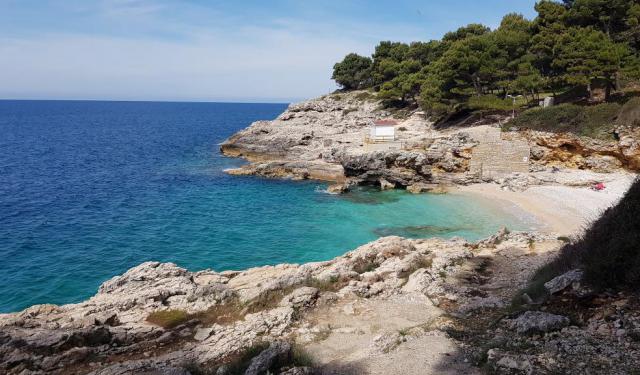
Pula's Seaside Walking Tour
If you crave for holidays by the sea, the Croatian coast is a good choice for family vacation, especially so if it includes the town of Pula. This charming port city is rich in tourist attractions, the most famous of which, undoubtedly, are the local beaches and bays.
Indeed, the dreamlike beaches of Pula are widely regarded among the most picturesque in Istria. Incredibly spectacular, these... view more
Tour Duration: 2 Hour(s)
Travel Distance: 4.7 Km or 2.9 Miles
Indeed, the dreamlike beaches of Pula are widely regarded among the most picturesque in Istria. Incredibly spectacular, these... view more
Tour Duration: 2 Hour(s)
Travel Distance: 4.7 Km or 2.9 Miles