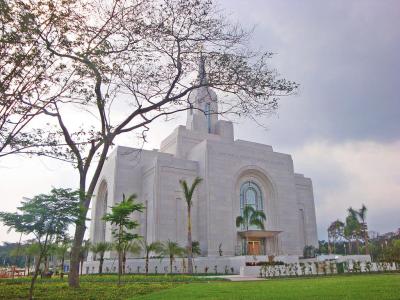


Templo Mormon (Mormon Temple), San Salvador
The San Salvador Mormon Temple, dedicated in 2011, holds the distinction of being the first of its kind in El Salvador and the 135th temple worldwide of The Church of Jesus Christ of Latter-day Saints. It serves Latter-day Saints across the region, including communities in Nicaragua, Honduras, and Belize, underscoring its role as a spiritual hub for Central America.
Plans for the temple were first announced in 2007, and the groundbreaking ceremony followed in September 2008. Before its dedication by LDS leader Henry B. Eyring on August 21, 2011, the temple opened its doors to the public, attracting more than 165,000 visitors in July of that year-an overwhelming response that reflected the country’s curiosity and respect for the new landmark.
Architecturally, the temple marries faith with artistry. Its exterior, clad in Brazilian Bianco Sienna granite, draws on the elegance of Spanish colonial design, with soft arches and shell-like motifs-known as conchas-that appear inside and out. The structure rises gracefully against the skyline, exuding both strength and serenity.
Inside, the temple honors Salvadoran identity through carefully chosen details. The yucca flower, El Salvador’s national flower, is worked into delicate stained glass windows, while interiors feature mahogany finishes and Honduran hardwood floors laid over limestone imported from Israel. The temple’s layout balances functionality and spirituality, containing two ordinance rooms, two sealing rooms, a baptistry, and a celestial room-each designed to serve specific sacred purposes.
Plans for the temple were first announced in 2007, and the groundbreaking ceremony followed in September 2008. Before its dedication by LDS leader Henry B. Eyring on August 21, 2011, the temple opened its doors to the public, attracting more than 165,000 visitors in July of that year-an overwhelming response that reflected the country’s curiosity and respect for the new landmark.
Architecturally, the temple marries faith with artistry. Its exterior, clad in Brazilian Bianco Sienna granite, draws on the elegance of Spanish colonial design, with soft arches and shell-like motifs-known as conchas-that appear inside and out. The structure rises gracefully against the skyline, exuding both strength and serenity.
Inside, the temple honors Salvadoran identity through carefully chosen details. The yucca flower, El Salvador’s national flower, is worked into delicate stained glass windows, while interiors feature mahogany finishes and Honduran hardwood floors laid over limestone imported from Israel. The temple’s layout balances functionality and spirituality, containing two ordinance rooms, two sealing rooms, a baptistry, and a celestial room-each designed to serve specific sacred purposes.
Want to visit this sight? Check out these Self-Guided Walking Tours in San Salvador. Alternatively, you can download the mobile app "GPSmyCity: Walks in 1K+ Cities" from Apple App Store or Google Play Store. The app turns your mobile device to a personal tour guide and it works offline, so no data plan is needed when traveling abroad.
Download The GPSmyCity App



Templo Mormon (Mormon Temple) on Map
Sight Name: Templo Mormon (Mormon Temple)
Sight Location: San Salvador, El Salvador (See walking tours in San Salvador)
Sight Type: Religious
Sight Location: San Salvador, El Salvador (See walking tours in San Salvador)
Sight Type: Religious
Nearby Sights


Walking Tours in San Salvador, El Salvador

Create Your Own Walk in San Salvador
Creating your own self-guided walk in San Salvador is easy and fun. Choose the city attractions that you want to see and a walk route map will be created just for you. You can even set your hotel as the start point of the walk.
San Salvador Downtown Walking Tour
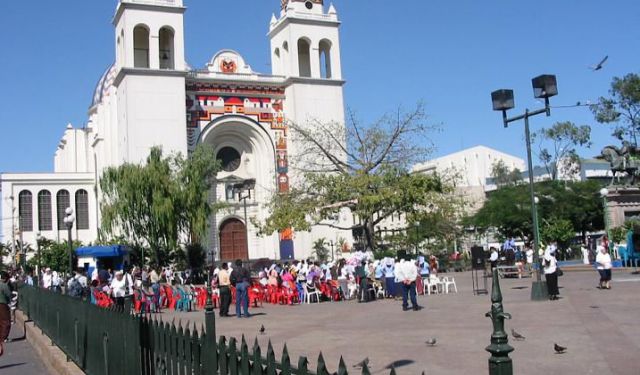
The vibrant capital of El Salvador, San Salvador, weaves a colorful tapestry of history and culture as a testament to resilience and rebirth amid natural adversities. The city's name, translating to 'Holy Savior,' traces its origins to the Spanish conquest, epitomizing the deep religious roots instilled by the colonizers.
The region's history, however, dates back to the... view more
Tour Duration: 2 Hour(s)
Travel Distance: 2.7 Km or 1.7 Miles
The region's history, however, dates back to the... view more
Tour Duration: 2 Hour(s)
Travel Distance: 2.7 Km or 1.7 Miles