

Vieux-Lille (Old Lille), Lille
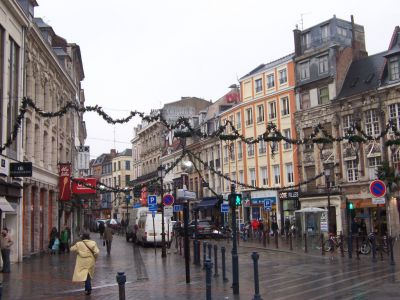
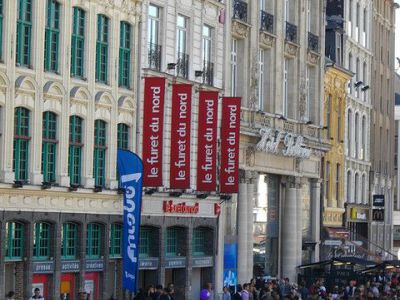
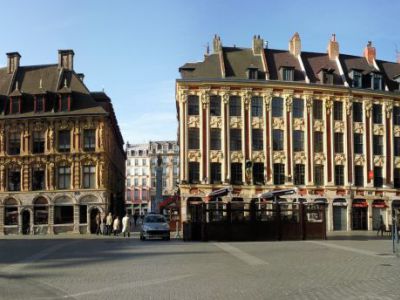
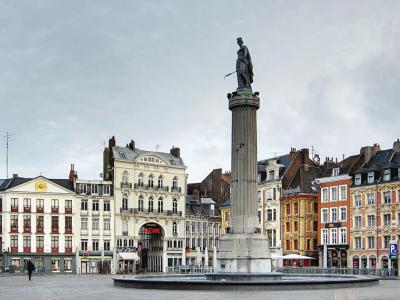
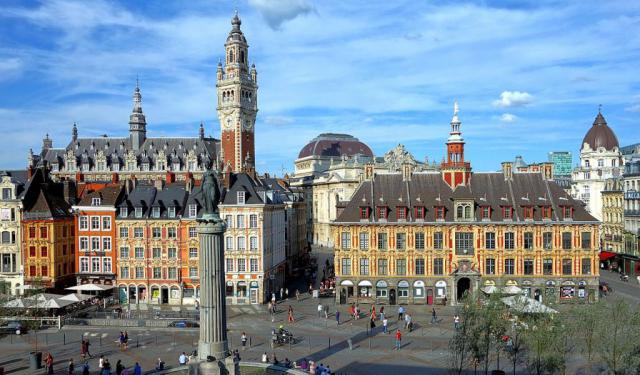
Old Lille (Vieux-Lille) is a historical district in the northern part of Lille, renowned for its extensive collection of pre-19th-century architecture. This area is characterized by its charming cobbled streets and remnants of ancient canals that once crisscrossed the city. Old Lille is home to approximately 20,000 residents and stands out as a quintessential representation of the city's architectural heritage.
Originally, until the First World War, the term "Vieux-Lille" designated the parts of the city predating its 1858 expansion. This was primarily the area west of Liberty Boulevard (Boulevard de la Liberté) and south of Louis XIV Boulevard. During the war, significant portions around Rue de Béthune, the railway station, and Rue du Molinel were destroyed. Notably, the Rihour Palace suffered considerable damage. The post-war reconstruction embraced the styles of the 1930s, with Art Deco and neo-regionalist influences evident around Rue du Molinel and Rue Faidherbe respectively.
The destruction of the Saint-Sauveur district in the 1960s and 1970s left Old Lille as one of the few areas retaining Lille's pre-industrial architecture. Initially neglected by wealthier residents until the 1980s, particularly around Place aux Oignons, this neglect preserved its charm and architectural integrity. Despite its history as a neighborhood for immigrants and economically disadvantaged families, it avoided major disruptions like the proposed expressway construction. Mayor Pierre Mauroy's restoration efforts transformed Old Lille into a bustling commercial hub with bars, restaurants, and luxury boutiques. This led to a surge in property values and rapid gentrification, altering the district's demographic and economic makeup significantly.
Lille has roots in the 11th century around Notre-Dame de la Treille cathedral and an ancient motte castle. However, Old Lille isn't the oldest part. The former Faubourg de Weppes and Château de Courtrai areas show medieval and early modern expansions. Annexed by France in the 17th century, Old Lille grew under Vauban's guidance, with a linear street plan. Streets like Rue de la Clef and Rue de la Grande-Chaussée showcase Flemish Renaissance buildings from the 17th and 18th centuries, preserving Lille's historical look.
Originally, until the First World War, the term "Vieux-Lille" designated the parts of the city predating its 1858 expansion. This was primarily the area west of Liberty Boulevard (Boulevard de la Liberté) and south of Louis XIV Boulevard. During the war, significant portions around Rue de Béthune, the railway station, and Rue du Molinel were destroyed. Notably, the Rihour Palace suffered considerable damage. The post-war reconstruction embraced the styles of the 1930s, with Art Deco and neo-regionalist influences evident around Rue du Molinel and Rue Faidherbe respectively.
The destruction of the Saint-Sauveur district in the 1960s and 1970s left Old Lille as one of the few areas retaining Lille's pre-industrial architecture. Initially neglected by wealthier residents until the 1980s, particularly around Place aux Oignons, this neglect preserved its charm and architectural integrity. Despite its history as a neighborhood for immigrants and economically disadvantaged families, it avoided major disruptions like the proposed expressway construction. Mayor Pierre Mauroy's restoration efforts transformed Old Lille into a bustling commercial hub with bars, restaurants, and luxury boutiques. This led to a surge in property values and rapid gentrification, altering the district's demographic and economic makeup significantly.
Lille has roots in the 11th century around Notre-Dame de la Treille cathedral and an ancient motte castle. However, Old Lille isn't the oldest part. The former Faubourg de Weppes and Château de Courtrai areas show medieval and early modern expansions. Annexed by France in the 17th century, Old Lille grew under Vauban's guidance, with a linear street plan. Streets like Rue de la Clef and Rue de la Grande-Chaussée showcase Flemish Renaissance buildings from the 17th and 18th centuries, preserving Lille's historical look.
Want to visit this sight? Check out these Self-Guided Walking Tours in Lille. Alternatively, you can download the mobile app "GPSmyCity: Walks in 1K+ Cities" from Apple App Store or Google Play Store. The app turns your mobile device to a personal tour guide and it works offline, so no data plan is needed when traveling abroad.
Download The GPSmyCity App



Vieux-Lille (Old Lille) on Map
Sight Name: Vieux-Lille (Old Lille)
Sight Location: Lille, France (See walking tours in Lille)
Sight Type: Attraction/Landmark
Sight Location: Lille, France (See walking tours in Lille)
Sight Type: Attraction/Landmark
Nearby Sights


Walking Tours in Lille, France

Create Your Own Walk in Lille
Creating your own self-guided walk in Lille is easy and fun. Choose the city attractions that you want to see and a walk route map will be created just for you. You can even set your hotel as the start point of the walk.
Lille's Historical Buildings Tour
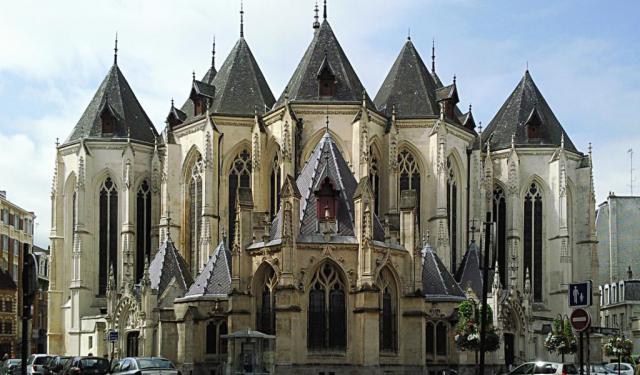
Historically, Lille's architecture differs from that of other French cities. Prior to being invaded by Louis XIV in 1667, Lille was Flemish, which is evident in its red-brick and other structures, quite uncommon for the rest of France.
Among many things, Lille is reputed for its fabulous historic center, abounding in time-honored buildings, palaces, and churches, offering a great deal of... view more
Tour Duration: 2 Hour(s)
Travel Distance: 3.7 Km or 2.3 Miles
Among many things, Lille is reputed for its fabulous historic center, abounding in time-honored buildings, palaces, and churches, offering a great deal of... view more
Tour Duration: 2 Hour(s)
Travel Distance: 3.7 Km or 2.3 Miles
Walking Through Lille's Old Town
Often called France’s “Capital of Flanders,” Lille and its surroundings belong to the historic region of Romance Flanders. Legend has it that, in AD 620, Salvaert, Prince of Dijon, was passing through the region with his pregnant wife when he was attacked and killed by Phinaert, a local lord known as the Giant. Years later, his son, Lydéric, avenged his father by killing Phinaert and is... view more
Tour Duration: 2 Hour(s)
Travel Distance: 4.0 Km or 2.5 Miles
Tour Duration: 2 Hour(s)
Travel Distance: 4.0 Km or 2.5 Miles