Custom Walk in Rotterdam, Netherlands by jane_collier_9dc33 created on 2024-09-17
Guide Location: Netherlands » Rotterdam
Guide Type: Custom Walk
# of Sights: 7
Tour Duration: 2 Hour(s)
Travel Distance: 5.5 Km or 3.4 Miles
Share Key: ZZRFK
Guide Type: Custom Walk
# of Sights: 7
Tour Duration: 2 Hour(s)
Travel Distance: 5.5 Km or 3.4 Miles
Share Key: ZZRFK
How It Works
Please retrieve this walk in the GPSmyCity app. Once done, the app will guide you from one tour stop to the next as if you had a personal tour guide. If you created the walk on this website or come to the page via a link, please follow the instructions below to retrieve the walk in the app.
Retrieve This Walk in App
Step 1. Download the app "GPSmyCity: Walks in 1K+ Cities" on Apple App Store or Google Play Store.



Step 2. In the GPSmyCity app, download(or launch) the guide "Rotterdam Map and Walking Tours".
Step 3. Tap the menu button located at upper right corner of the "Walks" screen and select "Retrieve custom walk". Enter the share key: ZZRFK
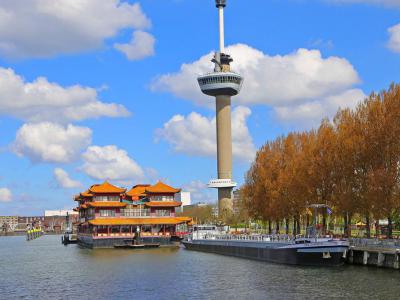
1) Euromast Tower (must see)
Euromast is an observation tower that was built for the 1960 Floriade International Garden Festival. The imposing structure was originally 101-meters (331-feet) tall and was Rotterdam's tallest building. In 1970, the Space Tower antennae was added, and the building is now 185-meters (606-feet) tall.
The tower is built on an underground 4,200,000-pound concrete block for stability. The crow's nest observation platform is 96 meters (315 feet) tall. The observation platform is home to a restaurant that serves brunch, lunch, and dinner.
Visitors can take an elevator to the Euroscoop at the top of the 185-meter-tall (606-foot-tall) tower. Adventurous travelers can even spend the night in the Euromast. There are several luxury suites.
Thrill-seekers can abseil or cable glide down the Euromast. Abseiling will allow you to walk down the outside wall in a climbing harness. Cable gliding is much more exciting. Guests hang from a cable track while zooming down at speeds up to 100 kilometers per hour (62 miles per hour).
The tower is built on an underground 4,200,000-pound concrete block for stability. The crow's nest observation platform is 96 meters (315 feet) tall. The observation platform is home to a restaurant that serves brunch, lunch, and dinner.
Visitors can take an elevator to the Euroscoop at the top of the 185-meter-tall (606-foot-tall) tower. Adventurous travelers can even spend the night in the Euromast. There are several luxury suites.
Thrill-seekers can abseil or cable glide down the Euromast. Abseiling will allow you to walk down the outside wall in a climbing harness. Cable gliding is much more exciting. Guests hang from a cable track while zooming down at speeds up to 100 kilometers per hour (62 miles per hour).
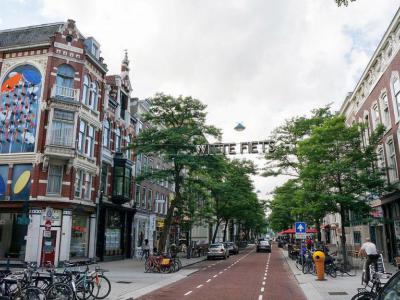
2) Witte de Withstraat Street (must see)
Witte de Withstraat Street, spanning approximately 320 meters, was named after Witte Cornelisz de With, a 17th-century Dutch naval officer. During the 1990s, its transformation into an "Art Axis" — a designated cultural and artistic district linking the Park Museum and the Maritime Museum — helped reshape its identity as one of the city’s cultural and nightlife centres.
Here, you'll find Rotterdam Bazar, a lively restaurant offering international dishes; Vivu, which serves delicious Vietnamese cuisine; and Oliva, known for its Italian fare. For a casual bite, Bagel Bakery is the perfect stop for a bagel and a quick coffee. The highly regarded burger spot Ter Marsch & Co serves some of the Netherlands’ best hamburgers. For a different vibe, the Nieuw Rotterdams Café, housed in a grand former newspaper building, offers a stylish setting for cocktails or dinner.
The shopping scene is as diverse as the food offerings. You'll discover independent boutiques like Betsy Palmer, a well-known shoe shop, and RSI The Attraction, which specializes in adventure gear such as skateboards, snowboards, and kites.
Artists and gallery-goers will feel right at home here, too. Kunstinstituut Melly hosts international exhibitions and educational programs. Other galleries in the area include Ecce Gallery and van Eijk Gallery, which features modern art, ceramics, and sculpture. Around the side streets, you’ll also encounter murals and street-art installations.
In earlier decades, the street had a rougher reputation, once home to less savory cafés and illegal gambling houses in the 1970s. However, its revival has helped shape Witte de Withstraat Street into a hub for art, design, and nightlife energy.
Here, you'll find Rotterdam Bazar, a lively restaurant offering international dishes; Vivu, which serves delicious Vietnamese cuisine; and Oliva, known for its Italian fare. For a casual bite, Bagel Bakery is the perfect stop for a bagel and a quick coffee. The highly regarded burger spot Ter Marsch & Co serves some of the Netherlands’ best hamburgers. For a different vibe, the Nieuw Rotterdams Café, housed in a grand former newspaper building, offers a stylish setting for cocktails or dinner.
The shopping scene is as diverse as the food offerings. You'll discover independent boutiques like Betsy Palmer, a well-known shoe shop, and RSI The Attraction, which specializes in adventure gear such as skateboards, snowboards, and kites.
Artists and gallery-goers will feel right at home here, too. Kunstinstituut Melly hosts international exhibitions and educational programs. Other galleries in the area include Ecce Gallery and van Eijk Gallery, which features modern art, ceramics, and sculpture. Around the side streets, you’ll also encounter murals and street-art installations.
In earlier decades, the street had a rougher reputation, once home to less savory cafés and illegal gambling houses in the 1970s. However, its revival has helped shape Witte de Withstraat Street into a hub for art, design, and nightlife energy.
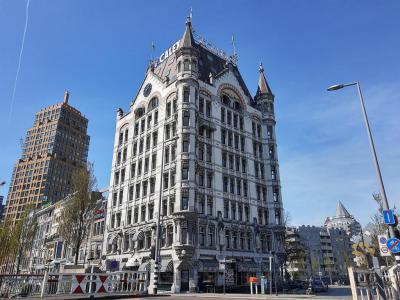
3) Witte Huis (White House)
The White House (Witte Huis) stands as a historic architectural marvel in Rotterdam. Erected in 1898, this edifice is a testament to the Art Nouveau style and holds the distinction of being a National Heritage Site. Rising to a height of 43 meters (141 feet) with an impressive 10 floors, it holds the distinction of being Europe's inaugural high-rise building. Recognized as a National Monument, its design was orchestrated by the visionary architect Willem Molenbroek.
This pioneering 10-story structure defied norms of its time, boasting an unprecedented elevation in Europe. Its location at Wijnhaven 3, merely 1 meter above sea level, raised doubts about the soft Rotterdam soil's ability to bear its weight. Addressing these concerns, 1000 piles were meticulously driven into the ground prior to commencing construction, ensuring the building's stability. Fabricated from a blend of iron, steel, and concrete, the White House incorporates two robust interior walls that enhance its structural integrity.
Notably, unlike contemporary buildings, the architects refrained from employing wood extensively due to fire-related apprehensions. The White House emerged as one of the rare structures in central Rotterdam to withstand the ravages of World War II's German bombing campaigns.
In the virtual realm, the White House assumes a role in the video game Battlefield V. Specifically, it becomes a pivotal element during the Battle of Rotterdam, a crucial chapter within the broader Battle of the Netherlands in May 1940. Within the game, the White House takes center stage on the "Rotterdam" map, set just prior to the catastrophic Rotterdam Blitz.
Why You Should Visit:
Way more impressive in reality than in the photos, and worth the stop to have a drink while appreciating the little channel & old boat-houses around.
Great for photographs – especially taken from across the Old Harbour, for a reflection in the water.
Tip:
You can also sit and enjoy the view of Witte Huis at one of the several nice cafés out front in the Old Harbour.
This pioneering 10-story structure defied norms of its time, boasting an unprecedented elevation in Europe. Its location at Wijnhaven 3, merely 1 meter above sea level, raised doubts about the soft Rotterdam soil's ability to bear its weight. Addressing these concerns, 1000 piles were meticulously driven into the ground prior to commencing construction, ensuring the building's stability. Fabricated from a blend of iron, steel, and concrete, the White House incorporates two robust interior walls that enhance its structural integrity.
Notably, unlike contemporary buildings, the architects refrained from employing wood extensively due to fire-related apprehensions. The White House emerged as one of the rare structures in central Rotterdam to withstand the ravages of World War II's German bombing campaigns.
In the virtual realm, the White House assumes a role in the video game Battlefield V. Specifically, it becomes a pivotal element during the Battle of Rotterdam, a crucial chapter within the broader Battle of the Netherlands in May 1940. Within the game, the White House takes center stage on the "Rotterdam" map, set just prior to the catastrophic Rotterdam Blitz.
Why You Should Visit:
Way more impressive in reality than in the photos, and worth the stop to have a drink while appreciating the little channel & old boat-houses around.
Great for photographs – especially taken from across the Old Harbour, for a reflection in the water.
Tip:
You can also sit and enjoy the view of Witte Huis at one of the several nice cafés out front in the Old Harbour.
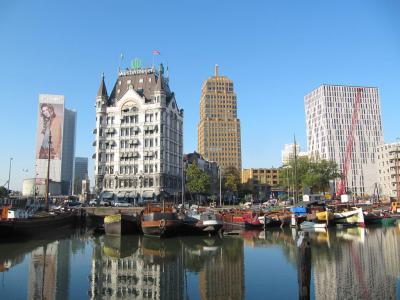
4) Oude Haven (Old Harbor)
The Old Harbor is one of Rotterdam's oldest port areas, with its origins dating back to the early 14th century. The first jetty was constructed around 1350, marking the beginning of the city’s development as a major maritime hub. Over the centuries, the harbor played a vital role in Rotterdam’s growth, facilitating trade and commerce. However, the devastation of World War II heavily damaged much of the area, leaving only a few historical structures standing.
The Old Harbor is one of Rotterdam's oldest areas, now the city's entertainment hub. With its cafés and restaurants lining the water, the area offers a perfect mix of historic charm and modern appeal. Many of the establishments feature outdoor terraces, allowing visitors to relax and watch the boats. As night falls, Old Harbor comes alive with a nightlife scene popular for the ones looking to enjoy a drink or dance along the water.
The harbor’s rich history is still visible today through the traditional sailing boats moored along the docks. One of the most prominent landmarks in Old Harbor is the White House—standing at 43 meters tall, it was once Europe’s tallest skyscraper when it was completed in 1898. The White House, one of the few buildings to survive the bombings of World War II, can be admired for its distinctive Art Nouveau architecture.
The Old Harbor is one of Rotterdam's oldest areas, now the city's entertainment hub. With its cafés and restaurants lining the water, the area offers a perfect mix of historic charm and modern appeal. Many of the establishments feature outdoor terraces, allowing visitors to relax and watch the boats. As night falls, Old Harbor comes alive with a nightlife scene popular for the ones looking to enjoy a drink or dance along the water.
The harbor’s rich history is still visible today through the traditional sailing boats moored along the docks. One of the most prominent landmarks in Old Harbor is the White House—standing at 43 meters tall, it was once Europe’s tallest skyscraper when it was completed in 1898. The White House, one of the few buildings to survive the bombings of World War II, can be admired for its distinctive Art Nouveau architecture.
5) Kubuswoningen (Cube Houses)
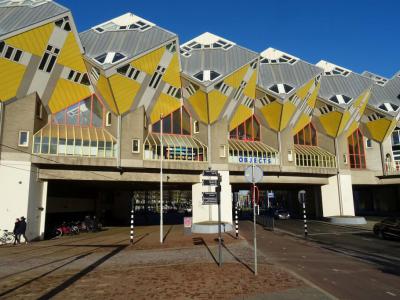
Few buildings capture Rotterdam’s spirit of creativity quite like the Cube Houses, the city’s most playful architectural experiment. Designed by Dutch architect Piet Blom, these yellow cubes seem to balance on their tips, tilted 45 degrees as if defying gravity. Blom’s goal was to create an “urban forest”, where each cube represents a tree and together they form a sculptural canopy above the streets below.
Built in the 1980s as part of a larger urban renewal project, the Cube Houses were conceived in collaboration with city planners who wanted to bring life and imagination back to Rotterdam. Each Cube House rises three stories high. The lower level contains a kitchen and living room, the middle floor holds two bedrooms and a bathroom, and the top level often serves as a small garden, workspace, or viewing area.
The complex also functions as a pedestrian bridge across a busy intersection, maintaining a car-free environment. Around the cubes, visitors will find a lively community of cafés, restaurants, small offices, studios, and even a playground.
Those curious about what life is like inside one of these tilted wonders can visit the Show Cube Museum, which offers a peek into their design and history. And for the truly adventurous, a few of the cubes have been converted into overnight accommodations—perfect for anyone eager to experience Rotterdam from a slightly different angle.
Built in the 1980s as part of a larger urban renewal project, the Cube Houses were conceived in collaboration with city planners who wanted to bring life and imagination back to Rotterdam. Each Cube House rises three stories high. The lower level contains a kitchen and living room, the middle floor holds two bedrooms and a bathroom, and the top level often serves as a small garden, workspace, or viewing area.
The complex also functions as a pedestrian bridge across a busy intersection, maintaining a car-free environment. Around the cubes, visitors will find a lively community of cafés, restaurants, small offices, studios, and even a playground.
Those curious about what life is like inside one of these tilted wonders can visit the Show Cube Museum, which offers a peek into their design and history. And for the truly adventurous, a few of the cubes have been converted into overnight accommodations—perfect for anyone eager to experience Rotterdam from a slightly different angle.
6) Markthal (Market Hall) (must see)
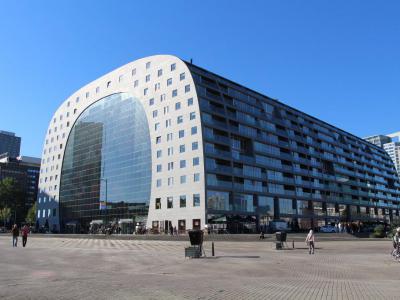
The Market Hall is a multi-use complex that combines apartments, offices, retail spaces, and one of Rotterdam’s most popular markets, all under a single monumental arch. Opened in 2014, the building is celebrated for its dramatic horseshoe-shaped arch and its massive glass facades composed of smaller window panels. A 34-metre high steel cable structure supports these glass walls, making it Europe’s largest cable-supported glass façade. Beneath it lies an extensive underground parking garage that adds to its functional design.
Inside, visitors are greeted by a space of vivid artwork covering the interior arch. Created by Dutch artists Arno Coenen and Iris Roskam, Horn of Plenty depicts giant fruits, vegetables, fish, flowers, and insects in dazzling colour. The digital artwork was so enormous that the artists had to borrow computing power from Pixar Studios. This spectacular mural has earned the Market Hall nicknames such as “The Largest Artwork in the World” and “The Sistine Chapel of Rotterdam”.
During the building’s construction, archaeologists unearthed the remains of a 10th-century farmstead, including a house with two stoves and several fireplaces. A small exhibition beside the central staircases displays these finds, offering visitors a glimpse of Rotterdam’s early settlement history.
Today, the Market Hall stands as the largest indoor market in the Netherlands. It hosts more than 100 produce stalls, 15 food shops, and eight restaurants. Shoppers can browse local cheeses, fresh fish, fruit and vegetables, poultry, flowers, and plants. For those eager to sample their purchases, plenty of indoor seating areas are available—making the Market Hall both a culinary destination and a modern architectural icon.
Inside, visitors are greeted by a space of vivid artwork covering the interior arch. Created by Dutch artists Arno Coenen and Iris Roskam, Horn of Plenty depicts giant fruits, vegetables, fish, flowers, and insects in dazzling colour. The digital artwork was so enormous that the artists had to borrow computing power from Pixar Studios. This spectacular mural has earned the Market Hall nicknames such as “The Largest Artwork in the World” and “The Sistine Chapel of Rotterdam”.
During the building’s construction, archaeologists unearthed the remains of a 10th-century farmstead, including a house with two stoves and several fireplaces. A small exhibition beside the central staircases displays these finds, offering visitors a glimpse of Rotterdam’s early settlement history.
Today, the Market Hall stands as the largest indoor market in the Netherlands. It hosts more than 100 produce stalls, 15 food shops, and eight restaurants. Shoppers can browse local cheeses, fresh fish, fruit and vegetables, poultry, flowers, and plants. For those eager to sample their purchases, plenty of indoor seating areas are available—making the Market Hall both a culinary destination and a modern architectural icon.
7) Rotterdam Centraal Station
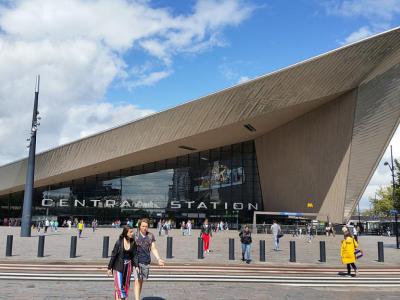
Rotterdam Centraal Station stands as the primary railway hub within Rotterdam, situated in the South Holland region. The contemporary station complex, situated at Station Square, gained official inauguration in March 2014.
Before World War II, Rotterdam had four separate railway stations spread across the city center. One of them, Delftse Poort, was badly damaged in the Rotterdam Blitz bombings. The new Centraal station was then built slightly west of the original location, designed by architect Sybold van Ravesteyn. It was completed on 13 March 1957 and officially opened on 21 May. This station operated until 2007 and was demolished the following year, making it the first major post-war Dutch railway station to be replaced. The new station was constructed and opened in 2014.
The station's full completion was on March 13, 2014, celebrated with a reopening attended by King Willem-Alexander. It was renamed Rotterdam Centraal Station as requested by the city's residents, echoing the original typography from Architect Van Ravensteyn's design. This name change holds significance, as the station's location on the international high-speed railway connecting to Belgium positions it for global recognition.
As one of the Netherlands' main railway hubs, it connects to cities all across the country, including Amsterdam, The Hague, Utrecht, and more. It's also a key international junction, with frequent connections to Antwerp, Brussels, Paris, and even Disneyland Paris.
Before World War II, Rotterdam had four separate railway stations spread across the city center. One of them, Delftse Poort, was badly damaged in the Rotterdam Blitz bombings. The new Centraal station was then built slightly west of the original location, designed by architect Sybold van Ravesteyn. It was completed on 13 March 1957 and officially opened on 21 May. This station operated until 2007 and was demolished the following year, making it the first major post-war Dutch railway station to be replaced. The new station was constructed and opened in 2014.
The station's full completion was on March 13, 2014, celebrated with a reopening attended by King Willem-Alexander. It was renamed Rotterdam Centraal Station as requested by the city's residents, echoing the original typography from Architect Van Ravensteyn's design. This name change holds significance, as the station's location on the international high-speed railway connecting to Belgium positions it for global recognition.
As one of the Netherlands' main railway hubs, it connects to cities all across the country, including Amsterdam, The Hague, Utrecht, and more. It's also a key international junction, with frequent connections to Antwerp, Brussels, Paris, and even Disneyland Paris.
