Custom Walk in Turin, Italy by gioper89_78bf7 created on 2025-03-25
Guide Location: Italy » Turin
Guide Type: Custom Walk
# of Sights: 14
Tour Duration: 3 Hour(s)
Travel Distance: 4.4 Km or 2.7 Miles
Share Key: KJMBF
Guide Type: Custom Walk
# of Sights: 14
Tour Duration: 3 Hour(s)
Travel Distance: 4.4 Km or 2.7 Miles
Share Key: KJMBF
How It Works
Please retrieve this walk in the GPSmyCity app. Once done, the app will guide you from one tour stop to the next as if you had a personal tour guide. If you created the walk on this website or come to the page via a link, please follow the instructions below to retrieve the walk in the app.
Retrieve This Walk in App
Step 1. Download the app "GPSmyCity: Walks in 1K+ Cities" on Apple App Store or Google Play Store.



Step 2. In the GPSmyCity app, download(or launch) the guide "Turin Map and Walking Tours".
Step 3. Tap the menu button located at upper right corner of the "Walks" screen and select "Retrieve custom walk". Enter the share key: KJMBF
1) Stazione di Torino Porta Nuova (Torino Porta Nuova Railway Station)
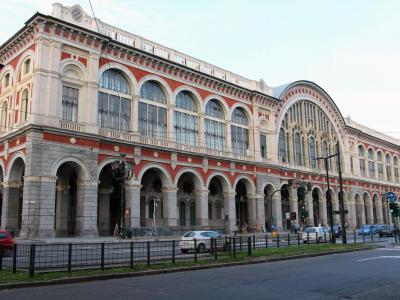
Torino Porta Nuova Railway Station is the main gateway to Turin, welcoming millions of travelers each year with its blend of history and modernity. Opened in 1864, it was designed by architect Alessandro Mazzucchetti, who gave the building a grand Neo-Classical façade inspired by the Renaissance style. Its name, “Porta Nuova,” recalls the city gate that once stood nearby, symbolizing Turin’s role as both a defensive stronghold and an open passage to the wider world. Today, it stands as Italy’s third busiest station, connecting Turin with Milan, Rome, Paris, and beyond through high-speed rail and international services.
The station’s architecture makes it a landmark in its own right. The exterior colonnades and arched windows set a stately tone, while the vast central hall creates a sense of openness and grandeur. Inside, the blend of historic charm and contemporary upgrades reflects Turin’s balance between tradition and innovation. Over the years, the station has undergone major restorations, particularly for the 2006 Winter Olympics, ensuring it could serve as both a functional transport hub and a welcoming space for visitors.
For tourists, Porta Nuova is not only a starting point but also an experience. The station is surrounded by some of Turin’s most vibrant streets, including Via Roma, lined with shops, cafés, and elegant arcades leading directly to Piazza San Carlo and Piazza Castello. Within the station itself, travelers will find modern amenities, shopping areas, and dining options, making it a convenient stop to relax before setting out to explore the city.
More than just a railway terminal, Torino Porta Nuova embodies the city’s spirit: a place where history meets progress, and where journeys begin into the cultural, architectural, and culinary riches of Turin and the Piedmont region. Its role as both a transport hub and an urban landmark makes it an essential part of any visit to the city.
The station’s architecture makes it a landmark in its own right. The exterior colonnades and arched windows set a stately tone, while the vast central hall creates a sense of openness and grandeur. Inside, the blend of historic charm and contemporary upgrades reflects Turin’s balance between tradition and innovation. Over the years, the station has undergone major restorations, particularly for the 2006 Winter Olympics, ensuring it could serve as both a functional transport hub and a welcoming space for visitors.
For tourists, Porta Nuova is not only a starting point but also an experience. The station is surrounded by some of Turin’s most vibrant streets, including Via Roma, lined with shops, cafés, and elegant arcades leading directly to Piazza San Carlo and Piazza Castello. Within the station itself, travelers will find modern amenities, shopping areas, and dining options, making it a convenient stop to relax before setting out to explore the city.
More than just a railway terminal, Torino Porta Nuova embodies the city’s spirit: a place where history meets progress, and where journeys begin into the cultural, architectural, and culinary riches of Turin and the Piedmont region. Its role as both a transport hub and an urban landmark makes it an essential part of any visit to the city.
2) Via Roma (Rome Street)
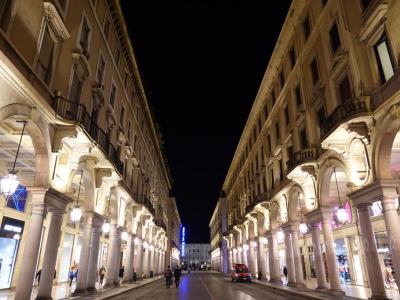
Rome Street is one of Turin’s grand thoroughfares, a place where the city’s changing rulers left their mark block by block. Its course still follows the cardo maximus, the north–south backbone of the Roman colony Julia Augusta Taurinorum, and while centuries have reshaped the façades, the axis has never lost its prominence.
In the 1600s the Savoy dynasty decided Turin needed the look of a capital, and Rome Street became their canvas. Baroque arcades lined the way, their arches offering rhythm as well as shelter, and soon the porticos filled with cafés, patisseries, and shops. The street’s geometry tied together Castle Square, Saint Charles Square, and Vittorio Veneto Square, giving the city an ordered stage for everyday life and royal ceremony alike.
Skipping forward to the 1930s and another wave of transformation arrived, this time under the Fascist regime. Between 1931 and 1937, architect Marcello Piacentini was tasked with remaking much of the street in Italian Rationalist style. The result was a blend of Novecento Italiano formality, neoclassical restraint, and modernist severity. The stretch between Charles Felix Square and Saint Charles Square gained monumental blocks, among them the Prince of Piedmont Hotel and the former National Hotel. Yet the first section nearer Castle Square was spared and retained its baroque façades, keeping a visual dialogue between past and present.
Today, Rome Street is as much about fashion as it is about history. Luxury boutiques, international brands, and historic cafés share the arcades, making the walk a lesson in architecture that doubles as an invitation to linger.
In the 1600s the Savoy dynasty decided Turin needed the look of a capital, and Rome Street became their canvas. Baroque arcades lined the way, their arches offering rhythm as well as shelter, and soon the porticos filled with cafés, patisseries, and shops. The street’s geometry tied together Castle Square, Saint Charles Square, and Vittorio Veneto Square, giving the city an ordered stage for everyday life and royal ceremony alike.
Skipping forward to the 1930s and another wave of transformation arrived, this time under the Fascist regime. Between 1931 and 1937, architect Marcello Piacentini was tasked with remaking much of the street in Italian Rationalist style. The result was a blend of Novecento Italiano formality, neoclassical restraint, and modernist severity. The stretch between Charles Felix Square and Saint Charles Square gained monumental blocks, among them the Prince of Piedmont Hotel and the former National Hotel. Yet the first section nearer Castle Square was spared and retained its baroque façades, keeping a visual dialogue between past and present.
Today, Rome Street is as much about fashion as it is about history. Luxury boutiques, international brands, and historic cafés share the arcades, making the walk a lesson in architecture that doubles as an invitation to linger.
3) Piazza San Carlo (San Carlo Square) (must see)
Saint Charles’ Square might look like an elegant stage set, but every detail has centuries of politics, culture, and coffee drinking written into it. First drawn out in the 17th century under the Savoy dynasty’s grand makeover of Turin, the square-once called Royal, later Napoleon-was given its symmetry and order by architect Carlo di Castellamonte. The dimensions, 168 by 76 meters, were calculated to impress without overwhelming, and the long arcades still stretch around it like carefully pressed cuffs on a baroque jacket.
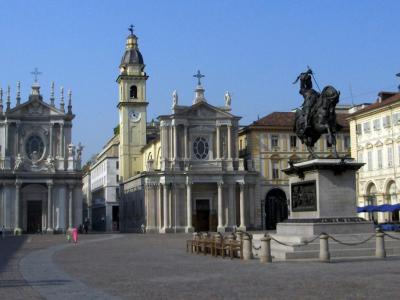
The southern end offers drama in stereo: two churches, Santa Cristina and San Carlo Borromeo, facing the square with almost identical façades. Around them stand noble palaces such as the Solaro dei Borgo, home to the Philharmonic Academy since 1839, and the Whist Society, where 19th-century Turin’s elite debated politics as seriously as they did card games. The arcades flow into Via Roma, sheltering shops, cafés, and patisseries where modern chatter continues the square’s long tradition as a meeting ground.
In the center, the equestrian statue of Emanuele Filiberto, Duke of Savoy, strikes a curious pose: sword sliding back into its sheath, a rare image of a general after the battle rather than during it. Sculptor Carlo Marochetti unveiled it in 1838, ensuring that even the square’s focal point mixes power with a hint of theatrical timing.
For nearly two centuries, San Carlo Square has also been Turin’s unofficial salon. At Caffè San Carlo, Caffè Torino, or the Stratta patisserie-famous for chocolates since 1836-politicians, artists, and writers sipped inspiration along with espresso. Since its 2004 redevelopment, the square belongs fully to pedestrians, making it an open-air living room where baroque elegance still frames Turin’s everyday life.
The southern end offers drama in stereo: two churches, Santa Cristina and San Carlo Borromeo, facing the square with almost identical façades. Around them stand noble palaces such as the Solaro dei Borgo, home to the Philharmonic Academy since 1839, and the Whist Society, where 19th-century Turin’s elite debated politics as seriously as they did card games. The arcades flow into Via Roma, sheltering shops, cafés, and patisseries where modern chatter continues the square’s long tradition as a meeting ground.
In the center, the equestrian statue of Emanuele Filiberto, Duke of Savoy, strikes a curious pose: sword sliding back into its sheath, a rare image of a general after the battle rather than during it. Sculptor Carlo Marochetti unveiled it in 1838, ensuring that even the square’s focal point mixes power with a hint of theatrical timing.
For nearly two centuries, San Carlo Square has also been Turin’s unofficial salon. At Caffè San Carlo, Caffè Torino, or the Stratta patisserie-famous for chocolates since 1836-politicians, artists, and writers sipped inspiration along with espresso. Since its 2004 redevelopment, the square belongs fully to pedestrians, making it an open-air living room where baroque elegance still frames Turin’s everyday life.
4) Duomo di Torino e Cappella della Sacra Sindone (Turin Cathedral and Chapel of the Holy Shroud)
The Shroud of Turin has stirred fascination for centuries, tied to the Savoy family since 1453 and still regarded as one of the city’s most famous treasures. These days it rests in a climate-controlled glass case inside the Baroque Chapel of the Holy Shroud, linked directly to both Turin Cathedral and the Royal Palace. The chapel itself was the brainchild of Guarino Guarini, a priest-architect who preferred geometry with a flair. In the late 17th century he designed a dome so intricate that light seems to bend into patterns of mystery, amplifying the aura of the relic it protects.
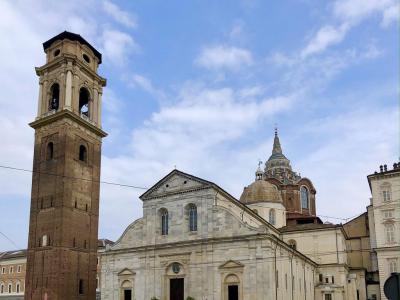
Turin Cathedral, built between 1491 and 1498, has its own layered story. It replaced three earlier churches-one tradition even credits a consecration by Lombard King Agilulf in the early 600s. Dedicated to Saint John the Baptist, the new structure became the city’s main cathedral and, somewhat unusually for Turin, remains its only pure Renaissance building. Its bright marble façade is a calm counterpoint to the surrounding swirl of baroque architecture. Later centuries added their own touches: Filippo Juvarra polished up the bell tower, and Guarini’s chapel gave the complex its most dramatic feature.
That chapel dome is a marvel in itself-six stacked levels rising in a hexagon, crowned by a lantern shaped as a twelve-pointed star with the dove of the Holy Spirit at its center. Step inside, and you’ll find a space that still manages to look both daring and devotional.
The cathedral and chapel together serve as a lesson in contrasts: Renaissance restraint, baroque bravado, and the enduring mystery of the Shroud that continues to draw pilgrims and skeptics alike.
Turin Cathedral, built between 1491 and 1498, has its own layered story. It replaced three earlier churches-one tradition even credits a consecration by Lombard King Agilulf in the early 600s. Dedicated to Saint John the Baptist, the new structure became the city’s main cathedral and, somewhat unusually for Turin, remains its only pure Renaissance building. Its bright marble façade is a calm counterpoint to the surrounding swirl of baroque architecture. Later centuries added their own touches: Filippo Juvarra polished up the bell tower, and Guarini’s chapel gave the complex its most dramatic feature.
That chapel dome is a marvel in itself-six stacked levels rising in a hexagon, crowned by a lantern shaped as a twelve-pointed star with the dove of the Holy Spirit at its center. Step inside, and you’ll find a space that still manages to look both daring and devotional.
The cathedral and chapel together serve as a lesson in contrasts: Renaissance restraint, baroque bravado, and the enduring mystery of the Shroud that continues to draw pilgrims and skeptics alike.
5) Royal Palace and Armory of Turin (must see)
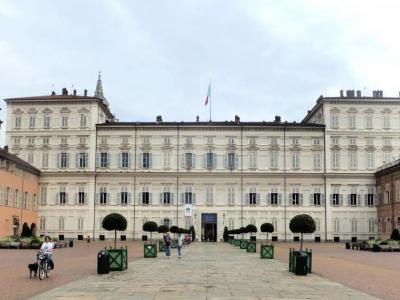
The Royal Palace of Turin was the command center of the House of Savoy, the dynasty that managed to turn a regional foothold into a European power. When the Savoys shifted their capital from Chambéry to Turin in the 16th century, they needed a residence to match their ambitions. Regent Christina Maria of France ordered a major expansion in 1645, choosing the site of the old Bishop’s Palace. Over the next centuries, architects like Filippo Juvarra and Benedetto Alfieri gave the complex its baroque polish, while additions such as the Chiablese Palace and the Chapel of the Holy Shroud broadened its reach-because what dynasty doesn’t want both more space and a sacred relic in the backyard?
From the outside, the palace looks dignified rather than ostentatious. Step inside, though, and restraint gives way to theater: gilded stucco, chandeliers that seem designed to outshine each other, walls hung with tapestries, and furniture carved to impress. For two centuries, this was the stage where the Savoys displayed their authority, before Italy’s monarchy bowed out after World War II. Since then, the palace has belonged to the state and has taken its place on UNESCO’s World Heritage list.
Linked directly to the palace is the Royal Armory, created in 1837 by Charles Albert of Savoy. Here the past is lined up on either side: medieval armor, ornate firearms, and even pieces tied to Napoleon. The collection sits in the Galleria Beaumont, an opulent hall where baroque decoration meets military might. Between the palace’s gilded salons and the armory’s glinting steel, visitors find Turin’s history laid out as both ceremony and spectacle.
From the outside, the palace looks dignified rather than ostentatious. Step inside, though, and restraint gives way to theater: gilded stucco, chandeliers that seem designed to outshine each other, walls hung with tapestries, and furniture carved to impress. For two centuries, this was the stage where the Savoys displayed their authority, before Italy’s monarchy bowed out after World War II. Since then, the palace has belonged to the state and has taken its place on UNESCO’s World Heritage list.
Linked directly to the palace is the Royal Armory, created in 1837 by Charles Albert of Savoy. Here the past is lined up on either side: medieval armor, ornate firearms, and even pieces tied to Napoleon. The collection sits in the Galleria Beaumont, an opulent hall where baroque decoration meets military might. Between the palace’s gilded salons and the armory’s glinting steel, visitors find Turin’s history laid out as both ceremony and spectacle.
6) Piazza Castello (Castle Square) (must see)
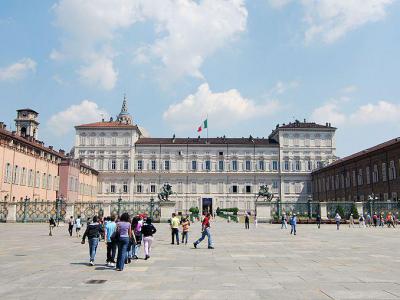
Castle Square has been at the heart of Turin since 1584, when architect Ascanio Vitozzi drew it up for the House of Savoy, eager to make their new capital look the part. Think of it as urban planning with a touch of dynastic pride: a space designed for parades, ceremonies, and the occasional show of power.
At its center stands Madama Palace, a building with something of an identity crisis. The medieval towers speak of fortifications and sieges, while Filippo Juvarra’s baroque façade, added in the 18th century, looks ready for a royal ball. Today it houses the Civic Museum of Ancient Art, where you can walk from Roman artifacts to Renaissance paintings without ever leaving the building-time travel made easy.
The square’s borders are no less impressive. The Royal Palace, once the Savoy residence, radiates authority even without its kings. The Church of Saint Lawrence, designed by Guarino Guarini, takes baroque geometry to dizzying new heights, a reminder that architecture here was as much about spectacle as devotion. Meanwhile, the arcaded streets framing the square provide a steady rhythm of shops and cafés, where history meets espresso in the most Italian way possible.
For visitors, Castle Square delivers Turin in one glance: Roman echoes, Savoy ambition, baroque elegance, and modern bustle layered together. It’s a space that doesn’t just tell the city’s story-it performs it, day after day, under the same open sky.
At its center stands Madama Palace, a building with something of an identity crisis. The medieval towers speak of fortifications and sieges, while Filippo Juvarra’s baroque façade, added in the 18th century, looks ready for a royal ball. Today it houses the Civic Museum of Ancient Art, where you can walk from Roman artifacts to Renaissance paintings without ever leaving the building-time travel made easy.
The square’s borders are no less impressive. The Royal Palace, once the Savoy residence, radiates authority even without its kings. The Church of Saint Lawrence, designed by Guarino Guarini, takes baroque geometry to dizzying new heights, a reminder that architecture here was as much about spectacle as devotion. Meanwhile, the arcaded streets framing the square provide a steady rhythm of shops and cafés, where history meets espresso in the most Italian way possible.
For visitors, Castle Square delivers Turin in one glance: Roman echoes, Savoy ambition, baroque elegance, and modern bustle layered together. It’s a space that doesn’t just tell the city’s story-it performs it, day after day, under the same open sky.
7) Madame Palace and Civic Museum of Ancient Art
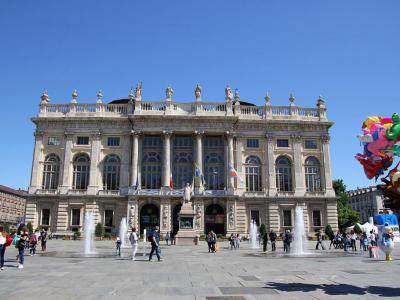
Madama Palace, planted in the middle of Castle Square, is a building with a split personality-and that’s what makes it fascinating. Its story begins in Roman Taurinorum, where two towers flanked a gate on the Decumanus Maximus, the city’s main east–west street. After Rome’s collapse, the gate did not retire quietly; it became part of the medieval defenses, proving that even ruins can find second careers.
By the 14th century, the property belonged to the Savoia-Acaja, a junior branch of the ruling dynasty. Prince Ludovico of Acaia rebuilt it into a square complex with a courtyard and four corner towers, details you can still spot today if you step around to the back.
In the 17th century, Christine Marie of France claimed the palace, enclosing the courtyard and upgrading the apartments to suit a royal widow. A few decades later, Marie Jeanne Baptiste of Savoy-Nemours moved in, and the nickname “Madama” stuck. The early 1700s brought in architect Filippo Juvarra, who gave the building its baroque white-stone façade. His grand project stopped midway in 1721, leaving the palace in its current form: part fortress, part theatre set.
The palace later moonlighted as the home of the Subalpine Senate before settling into its modern role. Since 1934, it has housed the Civic Museum of Ancient Art, with 35 rooms spanning Roman archaeology, medieval sculpture, Renaissance paintings, and decorative arts ranging from ivories to textiles.
For visitors, Madama Palace is more than a monument-it’s Turin’s history edited into one eccentric, unforgettable volume.
By the 14th century, the property belonged to the Savoia-Acaja, a junior branch of the ruling dynasty. Prince Ludovico of Acaia rebuilt it into a square complex with a courtyard and four corner towers, details you can still spot today if you step around to the back.
In the 17th century, Christine Marie of France claimed the palace, enclosing the courtyard and upgrading the apartments to suit a royal widow. A few decades later, Marie Jeanne Baptiste of Savoy-Nemours moved in, and the nickname “Madama” stuck. The early 1700s brought in architect Filippo Juvarra, who gave the building its baroque white-stone façade. His grand project stopped midway in 1721, leaving the palace in its current form: part fortress, part theatre set.
The palace later moonlighted as the home of the Subalpine Senate before settling into its modern role. Since 1934, it has housed the Civic Museum of Ancient Art, with 35 rooms spanning Roman archaeology, medieval sculpture, Renaissance paintings, and decorative arts ranging from ivories to textiles.
For visitors, Madama Palace is more than a monument-it’s Turin’s history edited into one eccentric, unforgettable volume.
8) Piazza Carignano (Carignano Square)
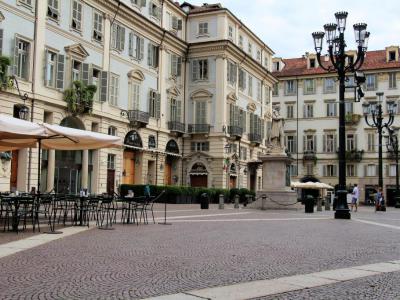
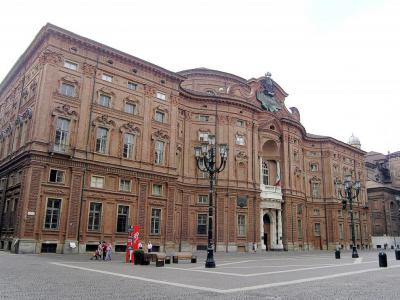
Carignano Square may measure only 289 by 108 feet, but its footprint on Italian history is far larger. Laid out in the 17th century during Savoy urban expansion under Duke Vittorio Amedeo I, it became a showcase for baroque ambition. The star of the square is the Carignano Palace, commissioned in 1679 by Prince Emanuele Filiberto di Savoia-Carignano and finished in 1685 to Guarino Guarini’s design. Its undulating brick façade is a baroque statement piece, proving that curves can make just as bold a point as straight lines.
The palace is also where national politics found a stage. It was the birthplace of Vittorio Emanuele II, later crowned Italy’s first king, and the balcony from which King Charles Albert declared the Albertine Statute in 1848, giving the Kingdom of Sardinia its constitution. In the 1860s, the same halls hosted Italy’s first parliament, turning the square into a symbol of the Risorgimento. Today, the palace is home to the National Museum of the Italian Risorgimento, where artifacts and documents retell the drama of unification.
The square doesn’t stop at politics. Across the way is the Carignano Theatre, while Del Cambio Restaurant and Gelateria Pepino add a culinary subplot with menus that have outlasted centuries. A statue of philosopher Vincenzo Gioberti keeps watch from the center, as if still debating ideas with passersby.
For visitors, Carignano Square manages to condense elegance, rebellion, and gelato into one setting-a rare combination even by Turin standards.
The palace is also where national politics found a stage. It was the birthplace of Vittorio Emanuele II, later crowned Italy’s first king, and the balcony from which King Charles Albert declared the Albertine Statute in 1848, giving the Kingdom of Sardinia its constitution. In the 1860s, the same halls hosted Italy’s first parliament, turning the square into a symbol of the Risorgimento. Today, the palace is home to the National Museum of the Italian Risorgimento, where artifacts and documents retell the drama of unification.
The square doesn’t stop at politics. Across the way is the Carignano Theatre, while Del Cambio Restaurant and Gelateria Pepino add a culinary subplot with menus that have outlasted centuries. A statue of philosopher Vincenzo Gioberti keeps watch from the center, as if still debating ideas with passersby.
For visitors, Carignano Square manages to condense elegance, rebellion, and gelato into one setting-a rare combination even by Turin standards.
9) Palazzo Carignano (Carignano Palace)
Carignano Palace on Carignano Square is a baroque showpiece with a strong claim on Italy’s national memory. Commissioned in 1679 by Prince Emanuele Filiberto of Savoy-Carignano, who fancied himself something of an architecture critic, the palace was given form by Guarino Guarini. He turned brick into theater, bending the façade into an undulating sweep that still startles anyone expecting straight lines. Inside, stucco and frescoes covered the halls, while a forecourt and decorative windows doubled as a military brag sheet, commemorating the Carignan Regiment’s campaigns.
The palace, however, was not content with being merely handsome. It became a cradle of personalities who would ripple through European history. Marie-Louise of Savoy, later a confidant of Marie Antoinette, was born here, as was Prince Charles Emmanuel. Most famously, in 1820, the future King Vittorio Emanuele II-Italy’s first monarch after unification-entered the world under this roof. Fate seemed to enjoy dramatic timing, because only decades later the palace hosted the first Italian Parliament, from 1848 to 1861. Within its chambers, fiery debates shaped the new nation, proving the palace could serve as both royal nursery and republican stage without missing a beat.
Today, Carignano Palace holds the National Museum of the Italian Risorgimento. Visitors can sift through documents, weapons, uniforms, and art that tell the story of unification, all while standing inside a UNESCO-listed Savoy residence. It’s not every day you get to tour a building that doubled as both birthplace of a king and birthplace of a country.
The palace, however, was not content with being merely handsome. It became a cradle of personalities who would ripple through European history. Marie-Louise of Savoy, later a confidant of Marie Antoinette, was born here, as was Prince Charles Emmanuel. Most famously, in 1820, the future King Vittorio Emanuele II-Italy’s first monarch after unification-entered the world under this roof. Fate seemed to enjoy dramatic timing, because only decades later the palace hosted the first Italian Parliament, from 1848 to 1861. Within its chambers, fiery debates shaped the new nation, proving the palace could serve as both royal nursery and republican stage without missing a beat.
Today, Carignano Palace holds the National Museum of the Italian Risorgimento. Visitors can sift through documents, weapons, uniforms, and art that tell the story of unification, all while standing inside a UNESCO-listed Savoy residence. It’s not every day you get to tour a building that doubled as both birthplace of a king and birthplace of a country.
10) Museo Nazionale del Risorgimento Italiano (National Museum of the Italian Resurrection)
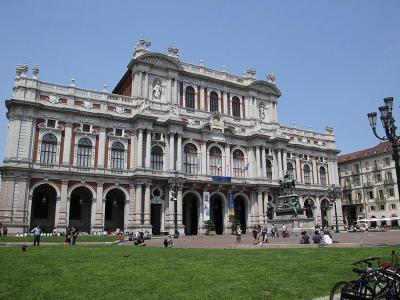
The National Museum of the Italian Risorgimento is one of Turin’s most important cultural institutions and the only museum in Italy dedicated entirely to the history of national unification. Founded in 1878, it preserves the memory of the Risorgimento, the 19th-century political and social movement that led to the creation of a united Italian state. Its location inside the Palazzo Carignano, a baroque masterpiece designed by Guarino Guarini, enhances its significance: this palace once hosted the first Italian Parliament, making it a fitting home for a museum celebrating the country’s birth.
The museum’s permanent collection offers visitors a detailed journey through the struggles, ideals, and achievements of the Risorgimento period. Spread across 30 rooms, it houses paintings, sculptures, documents, weapons, uniforms, and memorabilia that belonged to key figures such as Giuseppe Garibaldi, Count Camillo Benso di Cavour, and King Victor Emmanuel II. These objects not only highlight important battles and political events but also illustrate the cultural and social transformations of the time. The Parliament Chamber, preserved in its original state, is one of the highlights, giving visitors a chance to step inside the very room where crucial decisions about Italian unity were made.
Today, the museum combines its historical treasures with modern presentation methods. Multimedia installations and educational displays help explain complex events clearly and engagingly, making them accessible to both history enthusiasts and casual visitors. For those exploring Turin, the National Museum of the Italian Risorgimento offers not just an overview of Italy’s path to unification but also a chance to connect with the spirit of a nation built on ideals of independence and unity. It is a place where Italy’s 19th-century history comes vividly alive within walls that themselves shaped the nation’s destiny.
The museum’s permanent collection offers visitors a detailed journey through the struggles, ideals, and achievements of the Risorgimento period. Spread across 30 rooms, it houses paintings, sculptures, documents, weapons, uniforms, and memorabilia that belonged to key figures such as Giuseppe Garibaldi, Count Camillo Benso di Cavour, and King Victor Emmanuel II. These objects not only highlight important battles and political events but also illustrate the cultural and social transformations of the time. The Parliament Chamber, preserved in its original state, is one of the highlights, giving visitors a chance to step inside the very room where crucial decisions about Italian unity were made.
Today, the museum combines its historical treasures with modern presentation methods. Multimedia installations and educational displays help explain complex events clearly and engagingly, making them accessible to both history enthusiasts and casual visitors. For those exploring Turin, the National Museum of the Italian Risorgimento offers not just an overview of Italy’s path to unification but also a chance to connect with the spirit of a nation built on ideals of independence and unity. It is a place where Italy’s 19th-century history comes vividly alive within walls that themselves shaped the nation’s destiny.
11) Via Po (Po Street)
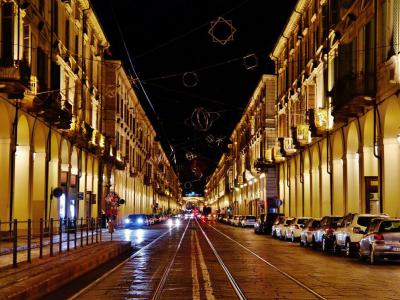
The Po Street (Via Po) is one of Turin’s most iconic streets, linking two of the city’s most important landmarks: Castello Square at its northern end and the grand Vittorio Veneto Square near the River Po. Built in the late 17th century under the rule of the House of Savoy, the street was designed with a uniform elegance that still defines its appearance today. Its long, straight layout and symmetrical arcades reflect the Baroque ideals of order and grandeur that shaped Turin’s urban development during this period.
The street is best known for its arcaded sidewalks, which stretch uninterrupted for nearly a kilometer. These covered walkways not only provide shade in the summer and shelter during rainy days but also create a distinctive rhythm of arches that is instantly recognizable. Beneath them, visitors find a lively mix of historic cafés, bookshops, boutiques, and pastry shops. Many of these establishments have been meeting places for intellectuals, artists, and students over the centuries, adding to the street’s cultural prestige.
The Po Street is also a cultural hub, lying just steps away from the University of Turin and several important institutions, including the National Cinema Museum and the Egyptian Museum nearby. Walking along the arcades, visitors encounter elegant façades, antique bookstores, and cafés where time seems to slow down. The street leads directly to Vittorio Veneto Square, one of Europe’s largest squares, opening up to views of the Po River and the Basilica di Superga on the hillside beyond.
For tourists, strolling the Po Street is both a journey through history and an immersion in Turin’s present-day lifestyle. Whether stopping for a coffee in one of its historic cafés, browsing old volumes in its bookshops, or simply enjoying the arcaded walkways, the street offers a quintessential experience of the city. It remains a place where history, architecture, and daily life blend seamlessly, making it a must-see for anyone exploring Turin.
The street is best known for its arcaded sidewalks, which stretch uninterrupted for nearly a kilometer. These covered walkways not only provide shade in the summer and shelter during rainy days but also create a distinctive rhythm of arches that is instantly recognizable. Beneath them, visitors find a lively mix of historic cafés, bookshops, boutiques, and pastry shops. Many of these establishments have been meeting places for intellectuals, artists, and students over the centuries, adding to the street’s cultural prestige.
The Po Street is also a cultural hub, lying just steps away from the University of Turin and several important institutions, including the National Cinema Museum and the Egyptian Museum nearby. Walking along the arcades, visitors encounter elegant façades, antique bookstores, and cafés where time seems to slow down. The street leads directly to Vittorio Veneto Square, one of Europe’s largest squares, opening up to views of the Po River and the Basilica di Superga on the hillside beyond.
For tourists, strolling the Po Street is both a journey through history and an immersion in Turin’s present-day lifestyle. Whether stopping for a coffee in one of its historic cafés, browsing old volumes in its bookshops, or simply enjoying the arcaded walkways, the street offers a quintessential experience of the city. It remains a place where history, architecture, and daily life blend seamlessly, making it a must-see for anyone exploring Turin.

12) Mole Antonelliana and National Museum of Cinema (must see)
The Mole Antonelliana and the National Museum of Cinema should be at the top of your list of must-see attractions. The Mole Antonelliana is one of the most iconic buildings in Turin, recognized as a symbol of the city. The tower, originally built in the 19th century as a synagogue, was later refashioned as a museum and cultural center.
Today, the Mole Antonelliana is home to the National Museum of Cinema. The museum's five levels boast an extensive collection of artifacts and exhibits, including historical documents, posters, cameras, costumes, and more. You can explore the history of cinema and its impact on society and discover the art and science of filmmaking.
The exhibition is so comprehensive that it is considered one of the most important film collections in the world. Its focus is mainly Italian cinema, but visitors can get a broad outline of cinema's history, as well. The interactive tour is fascinating as visitors can test and touch some sets. Start your journey at the bottom and take the twisting spiral ramp up toward the dome, where you'll find the temporary exhibits.
One of the most popular attractions at the National Museum of Cinema is the panoramic elevator that takes you to the top of the Mole Antonelliana. From the top, you can look through its transparent glass walls and enjoy breathtaking views of Turin and the surrounding Alps. You'll need a combined ticket to experience the elevator: one for the museum and one for the lift.
The National Museum of Cinema is also a hub for contemporary film culture. The museum hosts regular screenings of classic and modern films, film festivals, and special events. Try to visit in the morning as there is a queue by noon, and it sells out often.
Today, the Mole Antonelliana is home to the National Museum of Cinema. The museum's five levels boast an extensive collection of artifacts and exhibits, including historical documents, posters, cameras, costumes, and more. You can explore the history of cinema and its impact on society and discover the art and science of filmmaking.
The exhibition is so comprehensive that it is considered one of the most important film collections in the world. Its focus is mainly Italian cinema, but visitors can get a broad outline of cinema's history, as well. The interactive tour is fascinating as visitors can test and touch some sets. Start your journey at the bottom and take the twisting spiral ramp up toward the dome, where you'll find the temporary exhibits.
One of the most popular attractions at the National Museum of Cinema is the panoramic elevator that takes you to the top of the Mole Antonelliana. From the top, you can look through its transparent glass walls and enjoy breathtaking views of Turin and the surrounding Alps. You'll need a combined ticket to experience the elevator: one for the museum and one for the lift.
The National Museum of Cinema is also a hub for contemporary film culture. The museum hosts regular screenings of classic and modern films, film festivals, and special events. Try to visit in the morning as there is a queue by noon, and it sells out often.
13) Piazza Vittorio Veneto (Vittorio Veneto Square)
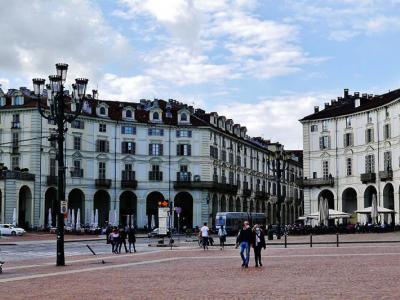
Vittorio Veneto Square, often called simply Vittorio Square (Piazza Vittorio), is one of Turin’s most iconic and lively squares. Located along the River Po and framed by elegant arcades, it was designed in the early 19th century by architect Giuseppe Frizzi during the reign of King Victor Emmanuel I. With its impressive dimensions, it is often described as one of the largest arcaded squares in Europe, creating a striking setting that connects the heart of the city with the riverside. The square takes its name from the Battle of Vittorio Veneto, the decisive victory that marked the end of World War I for Italy.
The architecture of the square reflects the neoclassical style typical of Turin’s urban expansion in the 1800s. Uniform facades, long porticoes, and carefully proportioned lines give it an elegant harmony that has remained largely unchanged for two centuries. At its center lies a wide open space that frequently hosts public gatherings, markets, and events, while at one end stands the majestic Church of Gran Madre di Dio across the Vittorio Emanuele I Bridge, creating one of the city’s most photogenic perspectives. The square is especially captivating at night, when its arcades and surrounding streets are illuminated, highlighting its grand symmetry.
Today, Vittorio Square is as much a social hub as it is a historical landmark. The arcades house numerous cafés, restaurants, and bars, making it a favorite meeting point for both locals and visitors. Its vibrant nightlife, especially popular with students, contrasts with the relaxed daytime atmosphere when people come to stroll, enjoy a coffee, or simply admire the views of the Po River and the hills beyond. Whether you are drawn by history, architecture, or the lively ambience, Vittorio Square offers a quintessential Turin experience.
The architecture of the square reflects the neoclassical style typical of Turin’s urban expansion in the 1800s. Uniform facades, long porticoes, and carefully proportioned lines give it an elegant harmony that has remained largely unchanged for two centuries. At its center lies a wide open space that frequently hosts public gatherings, markets, and events, while at one end stands the majestic Church of Gran Madre di Dio across the Vittorio Emanuele I Bridge, creating one of the city’s most photogenic perspectives. The square is especially captivating at night, when its arcades and surrounding streets are illuminated, highlighting its grand symmetry.
Today, Vittorio Square is as much a social hub as it is a historical landmark. The arcades house numerous cafés, restaurants, and bars, making it a favorite meeting point for both locals and visitors. Its vibrant nightlife, especially popular with students, contrasts with the relaxed daytime atmosphere when people come to stroll, enjoy a coffee, or simply admire the views of the Po River and the hills beyond. Whether you are drawn by history, architecture, or the lively ambience, Vittorio Square offers a quintessential Turin experience.
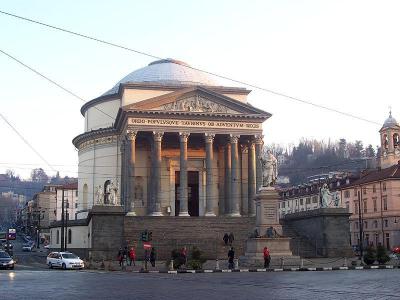
14) Chiesa della Gran Madre di Dio (Church of the Great Mother of God)
The Church of the Great Mother of God is one of Turin’s most striking landmarks, easily recognized by its neoclassical façade overlooking the River Po. Built between 1818 and 1831, the church was commissioned to celebrate the return of King Victor Emmanuel I to the throne of Sardinia after the fall of Napoleon. Its design, inspired by Rome’s Pantheon, features a massive portico supported by Corinthian columns, a grand staircase leading up from the riverbank, and a large central dome that dominates the skyline. Together, these elements give the church an air of solemn grandeur, fitting its symbolic role as both a place of worship and a national monument.
Inside, the church continues the theme of classical harmony with its circular layout and simple yet elegant décor. The high dome creates a bright, open space, while the altar is richly adorned and framed by classical columns. Visitors will notice statues and religious artworks that reflect the church’s dedication to the Virgin Mary, emphasizing its spiritual significance for the city. Despite its monumental exterior, the atmosphere inside feels serene, offering a quiet retreat from Turin’s bustling streets.
The church’s position at the eastern end of Piazza Vittorio Veneto adds to its dramatic presence. From its steps, visitors enjoy a direct view across the river toward Via Po and Piazza Castello, making it one of the most photographed perspectives in Turin. The location, combined with its historical symbolism and architectural beauty, has turned the Gran Madre di Dio into both a religious center and a cultural emblem of the city.
Today, the church remains active, hosting regular services and religious celebrations while also attracting tourists drawn to its history and design. For many, it is not only a monument of faith but also a starting point for exploring the surrounding riverside area, with its lively cafés and scenic walks. Its blend of classical architecture, historical significance, and prime location makes the Church of the Great Mother of God an unmissable highlight of Turin.
Inside, the church continues the theme of classical harmony with its circular layout and simple yet elegant décor. The high dome creates a bright, open space, while the altar is richly adorned and framed by classical columns. Visitors will notice statues and religious artworks that reflect the church’s dedication to the Virgin Mary, emphasizing its spiritual significance for the city. Despite its monumental exterior, the atmosphere inside feels serene, offering a quiet retreat from Turin’s bustling streets.
The church’s position at the eastern end of Piazza Vittorio Veneto adds to its dramatic presence. From its steps, visitors enjoy a direct view across the river toward Via Po and Piazza Castello, making it one of the most photographed perspectives in Turin. The location, combined with its historical symbolism and architectural beauty, has turned the Gran Madre di Dio into both a religious center and a cultural emblem of the city.
Today, the church remains active, hosting regular services and religious celebrations while also attracting tourists drawn to its history and design. For many, it is not only a monument of faith but also a starting point for exploring the surrounding riverside area, with its lively cafés and scenic walks. Its blend of classical architecture, historical significance, and prime location makes the Church of the Great Mother of God an unmissable highlight of Turin.
