Custom Walk in Ankara, Turkey by amrahsor_56e72 created on 2025-04-08
Guide Location: Turkey » Ankara
Guide Type: Custom Walk
# of Sights: 5
Tour Duration: 2 Hour(s)
Travel Distance: 5.8 Km or 3.6 Miles
Share Key: D2REE
Guide Type: Custom Walk
# of Sights: 5
Tour Duration: 2 Hour(s)
Travel Distance: 5.8 Km or 3.6 Miles
Share Key: D2REE
How It Works
Please retrieve this walk in the GPSmyCity app. Once done, the app will guide you from one tour stop to the next as if you had a personal tour guide. If you created the walk on this website or come to the page via a link, please follow the instructions below to retrieve the walk in the app.
Retrieve This Walk in App
Step 1. Download the app "GPSmyCity: Walks in 1K+ Cities" on Apple App Store or Google Play Store.



Step 2. In the GPSmyCity app, download(or launch) the guide "Ankara Map and Walking Tours".
Step 3. Tap the menu button located at upper right corner of the "Walks" screen and select "Retrieve custom walk". Enter the share key: D2REE
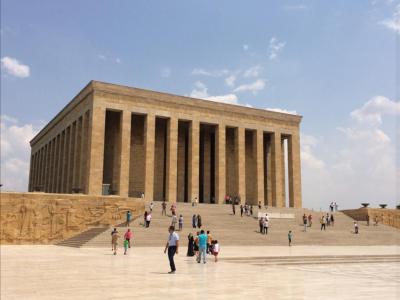
1) Anitkabir Mausoleum (must see)
Anıtkabir is a mausoleum located in Ankara that serves as the final resting place for Mustafa Kemal Atatürk, the leader of the Turkish War of Independence and the founder and first President of the Republic of Turkey. It was designed by architects Emin Onat and Ahmet Orhan Arda, whose design won a competition held by the Turkish Government in 1941. The mausoleum also contains the tomb of İsmet İnönü, the second President of Turkey, who was buried there in 1973.
The construction of Anıtkabir started in October 1944 and took nine years. The site consists of four main parts: the Road of Lions, the Ceremonial Plaza, the Hall of Honor (where Atatürk's tomb is located), and the Peace Park surrounding the monument. The monument is characterized by its immense, symmetrical, cut-stone-clad structures. The mausoleum also features Seljuq and Ottoman architectural and ornamentation styles.
The Anıtkabir project is considered a remarkable engineering project and was included in the Turkish Chamber of Civil Engineers' list of fifty civil engineering feats in Turkey. All the stones and marble used in the construction of the monument were brought in from various parts of Turkey. The ten towers situated within the Anıtkabir site symbolize the ideals that influenced the Turkish nation and the creation of the Republic of Turkey.
The construction of Anıtkabir started in October 1944 and took nine years. The site consists of four main parts: the Road of Lions, the Ceremonial Plaza, the Hall of Honor (where Atatürk's tomb is located), and the Peace Park surrounding the monument. The monument is characterized by its immense, symmetrical, cut-stone-clad structures. The mausoleum also features Seljuq and Ottoman architectural and ornamentation styles.
The Anıtkabir project is considered a remarkable engineering project and was included in the Turkish Chamber of Civil Engineers' list of fifty civil engineering feats in Turkey. All the stones and marble used in the construction of the monument were brought in from various parts of Turkey. The ten towers situated within the Anıtkabir site symbolize the ideals that influenced the Turkish nation and the creation of the Republic of Turkey.
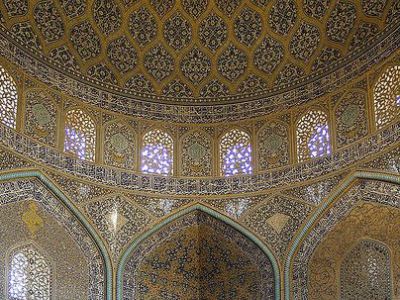
2) The Alaaddin Mosque
The Alâeddin Mosque stands as the main historical structure atop Alaaddin Hill, situated in the heart of Konya. It was an integral part of the hill's fortification complex, which also housed the Seljuk Palace. This mosque served as the primary prayer hall for the Seljuk Sultans of Rum, with the tombs of several sultans located within its courtyard. The mosque, the largest of the remaining Seljuk mosques in Konya, was built in multiple phases from the mid-12th to mid-13th century. It is named after Seljuk Sultan Alaaddin Keykubad I.
The initial groundwork for the mosque was laid by Seljuk Sultan Mesud I in 1155, although evidence suggests its existence as early as 1120. Elements like the polychrome ceramic mihrab frame and its domed structure might have originated during this earlier period. Notably, the eastern wing of the mosque, featuring columns and capitals borrowed from Byzantine sources, exhibits a unique openness and spaciousness.
Mesud I's successor Kılıçarslan II continued mosque construction. In 1219, Kaykaus I renovated it, moving the entrance north, adding a grand facade, and starting a marble tomb. Kaykaus passed away, and Alaaddin Keykubad I took over, making changes, and in 1235, he added a spacious chamber to the east of the mihrab, supported by 42 columns.
The mosque's courtyard features two quintessential Seljuk tombs, known as "kümbets," one of which was constructed by Kilicarslan II and still retains some of its original blue tiles on the roof. The base of the roof on one of these tombs bears an inscription from the Qur'an known as the "throne verse."
The initial groundwork for the mosque was laid by Seljuk Sultan Mesud I in 1155, although evidence suggests its existence as early as 1120. Elements like the polychrome ceramic mihrab frame and its domed structure might have originated during this earlier period. Notably, the eastern wing of the mosque, featuring columns and capitals borrowed from Byzantine sources, exhibits a unique openness and spaciousness.
Mesud I's successor Kılıçarslan II continued mosque construction. In 1219, Kaykaus I renovated it, moving the entrance north, adding a grand facade, and starting a marble tomb. Kaykaus passed away, and Alaaddin Keykubad I took over, making changes, and in 1235, he added a spacious chamber to the east of the mihrab, supported by 42 columns.
The mosque's courtyard features two quintessential Seljuk tombs, known as "kümbets," one of which was constructed by Kilicarslan II and still retains some of its original blue tiles on the roof. The base of the roof on one of these tombs bears an inscription from the Qur'an known as the "throne verse."
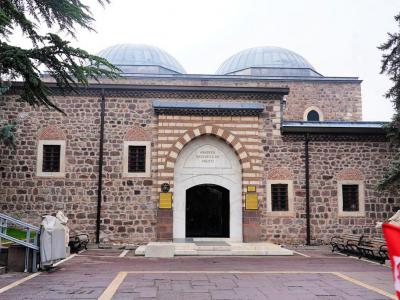
3) The Museum of Anatolian Civilizations (must see)
The Museum of Anatolian Civilizations is situated on the southern side of Ankara Castle, in the Atpazarı region of Ankara. The museum is comprised of the ancient Ottoman Mahmut Paşa bazaar storage building and the Kurşunlu Han. Following renovations and repairs (1938-1968), the museum opened its doors to the public as the Ankara Archaeological Museum.
Nowadays, the Kurşunlu Han functions as an administrative building and contains workrooms, a library, a conference hall, a laboratory, and a workshop. The old bazaar building showcases the exhibits. Inside this Ottoman structure, the museum displays a variety of Anatolian archaeological artifacts, ranging from the Paleolithic period to the Ottoman era, in chronological order. The museum also features a vast collection of items unearthed from numerous excavation sites, representing multiple historical periods.
The showcased gold, silver, glass, marble, and bronze works date back to the latter half of the first millennium BC. The coin collections, which include examples from the first minted coins to contemporary times, are considered the museum's unique cultural treasures.
On April 19, 1997, the Museum of Anatolian Civilizations was recognized as the first "European Museum of the Year" in Switzerland, thanks to its historical buildings and deep-rooted past.
Nowadays, the Kurşunlu Han functions as an administrative building and contains workrooms, a library, a conference hall, a laboratory, and a workshop. The old bazaar building showcases the exhibits. Inside this Ottoman structure, the museum displays a variety of Anatolian archaeological artifacts, ranging from the Paleolithic period to the Ottoman era, in chronological order. The museum also features a vast collection of items unearthed from numerous excavation sites, representing multiple historical periods.
The showcased gold, silver, glass, marble, and bronze works date back to the latter half of the first millennium BC. The coin collections, which include examples from the first minted coins to contemporary times, are considered the museum's unique cultural treasures.
On April 19, 1997, the Museum of Anatolian Civilizations was recognized as the first "European Museum of the Year" in Switzerland, thanks to its historical buildings and deep-rooted past.
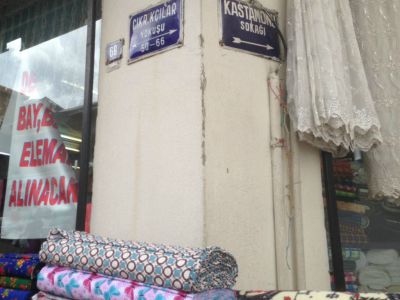
4) Çıkrıkçılar Yokuşu Street
Çıkrıkçılar Yokuşu Street stands as one of Ankara's prominent shopping destinations and a favored spot among tourists. It boasts a vibrant array of traditional Turkish stores, where you can discover authentic items like handwoven carpets, leather accessories, and various locally sourced goods, all available at competitive prices. Anything you acquire here can serve as a memorable keepsake from your visit to Ankara.
This street takes its name from the skilled artisans known as the "Makers of Spinning Wheels." It serves as an excellent starting point for your shopping expedition in the Ulus district. Along this lively thoroughfare, you'll encounter a seemingly endless line of stalls and shops vending handwoven textiles, gift items, and apparel. Furthermore, you can explore an assortment of decorations, leather goods, as well as household and culinary wares.
As you reach the street's conclusion, you'll find several stores specializing in spices and dried fruits, offering a delightful opportunity to infuse your shopping venture with some flavorful additions. Nearby, Saraçlar Street and Salman Street await your exploration. Salman Street, also known as "Bakırcılar Street" or the "Makers of Copper Street," derives its name from the long-standing copper industry that has thrived in the area for centuries. It is a street steeped in history and renowned for its craftsmanship and high-quality products.
This street takes its name from the skilled artisans known as the "Makers of Spinning Wheels." It serves as an excellent starting point for your shopping expedition in the Ulus district. Along this lively thoroughfare, you'll encounter a seemingly endless line of stalls and shops vending handwoven textiles, gift items, and apparel. Furthermore, you can explore an assortment of decorations, leather goods, as well as household and culinary wares.
As you reach the street's conclusion, you'll find several stores specializing in spices and dried fruits, offering a delightful opportunity to infuse your shopping venture with some flavorful additions. Nearby, Saraçlar Street and Salman Street await your exploration. Salman Street, also known as "Bakırcılar Street" or the "Makers of Copper Street," derives its name from the long-standing copper industry that has thrived in the area for centuries. It is a street steeped in history and renowned for its craftsmanship and high-quality products.
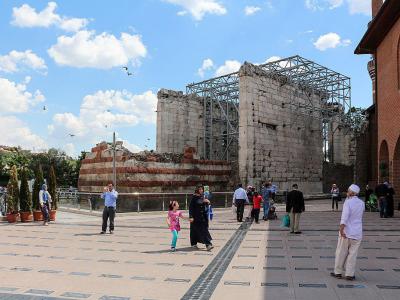
5) Temple of Augustus and Rome
Located in the Altındağ district of Ankara, the Temple of Augustus and Rome is an Augusteum believed to have been constructed around 25-20 AD, following the Roman Empire's conquest of central Anatolia and the establishment of the Galatia province. It is considered one of the most significant Roman-era ruins in the city and is famous for the Monumentum Ancyranum, an inscription detailing the accomplishments of Augustus, the first Roman emperor. This inscription is the most comprehensive surviving copy of Res Gestae Divi Augusti.
The Augusteum stands on the site of an earlier Phrygian temple, which was destroyed in the 2nd century BCE. Today, only the side walls and the ornate door frame remain, although the positions of the six columns are still recognizable.
In 1555, an ambassador of Ferdinand of Austria reintroduced the Monumentum Ancyranum to the Western world. He first read the inscription and identified its origins. Later, he published a copy of parts of it in his Turkish Letters. Following Augustus' death in AD 14, a copy of the Res Gestae Divi Augusti text was inscribed in Latin on both walls inside the pronaos, with a Greek translation on an exterior wall of the cella.
The inscriptions on the Augusteum's walls are the primary surviving source of the text, as the original bronze pillars' inscription in front of the Mausoleum of Augustus in Rome has long since disappeared.
The Temple of Augustus and Roma in Ankara is among the most endangered historical monuments, according to the World Monuments Fund (WMF). In 2016, the Hacı Bayram district, together with the Hacı Bayram Mosque and the Augustus temple, was added to the tentative list of UNESCO World Heritage.
The Augusteum stands on the site of an earlier Phrygian temple, which was destroyed in the 2nd century BCE. Today, only the side walls and the ornate door frame remain, although the positions of the six columns are still recognizable.
In 1555, an ambassador of Ferdinand of Austria reintroduced the Monumentum Ancyranum to the Western world. He first read the inscription and identified its origins. Later, he published a copy of parts of it in his Turkish Letters. Following Augustus' death in AD 14, a copy of the Res Gestae Divi Augusti text was inscribed in Latin on both walls inside the pronaos, with a Greek translation on an exterior wall of the cella.
The inscriptions on the Augusteum's walls are the primary surviving source of the text, as the original bronze pillars' inscription in front of the Mausoleum of Augustus in Rome has long since disappeared.
The Temple of Augustus and Roma in Ankara is among the most endangered historical monuments, according to the World Monuments Fund (WMF). In 2016, the Hacı Bayram district, together with the Hacı Bayram Mosque and the Augustus temple, was added to the tentative list of UNESCO World Heritage.
