Custom Walk in Barcelona, Spain by nicumunteanu82_33f22 created on 2025-04-18
Guide Location: Spain » Barcelona
Guide Type: Custom Walk
# of Sights: 6
Tour Duration: 4 Hour(s)
Travel Distance: 9.7 Km or 6 Miles
Share Key: WF3W4
Guide Type: Custom Walk
# of Sights: 6
Tour Duration: 4 Hour(s)
Travel Distance: 9.7 Km or 6 Miles
Share Key: WF3W4
How It Works
Please retrieve this walk in the GPSmyCity app. Once done, the app will guide you from one tour stop to the next as if you had a personal tour guide. If you created the walk on this website or come to the page via a link, please follow the instructions below to retrieve the walk in the app.
Retrieve This Walk in App
Step 1. Download the app "GPSmyCity: Walks in 1K+ Cities" on Apple App Store or Google Play Store.



Step 2. In the GPSmyCity app, download(or launch) the guide "Barcelona Map and Walking Tours".
Step 3. Tap the menu button located at upper right corner of the "Walks" screen and select "Retrieve custom walk". Enter the share key: WF3W4
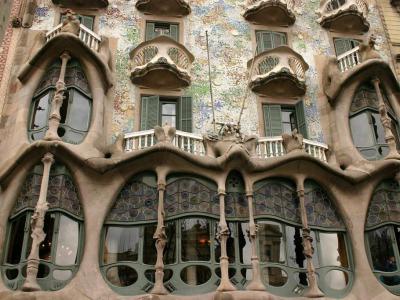
1) Casa Batllo (Batllo House) (must see)
Batlló House, located in the heart of Barcelona's prestigious Gràcia Boulevard, is one of Gaudí’s most celebrated architectural masterpieces. Originally built in 1877 by Lluís Sala Sánchez, the building underwent a radical transformation in 1904 when textile industrialist Josep Batlló hired Antoni Gaudí to renovate it. Gaudí expanded the structure, creating new floors and adding his signature audacious design, which turned this previously unremarkable building into a landmark of Modernist architecture.
Batlló House is often referred to as the "House of Bones" due to its skeletal-like balconies and organic forms. Another local name for it is the "House of the Dragon," as its arched roof, covered in colorful mosaic tiles, is said to resemble the spine of a dragon. This symbolism aligns with the legend of Saint George (Catalonia’s patron saint), whose lance is represented by the turret and cross atop the roof.
The building's façade is divided into three sections and adorned with vibrant broken ceramic tiles in shades transitioning from orange to greenish-blue. Gaudí’s use of curves, irregular windows, and sculpted stonework avoids straight lines, enhancing the structure’s flowing, dynamic feel. Inside, the loft space, with its catenary arches, imitates a ribcage, while the central atrium features blue tiles that create an underwater-like light distribution.
The rooftop is a highlight of Batlló House, with its chimneys resembling twisted, tiled sculptures. The entire structure integrates symbolism and decorative elements that showcase Gaudí’s innovative approach to form and function. After the Batlló family left in the 1950s, the house changed ownership several times and was refurbished before becoming a venue for events in 1995. In 2005, Batlló House was designated a UNESCO World Heritage Site, cementing its status as a masterpiece of modernist architecture.
Tip:
For a fee, you can have your photo taken on the small balcony at the front of the building (as you descend from the rooftop), receiving both a printed copy and an electronic version for a memorable keepsake.
Batlló House is often referred to as the "House of Bones" due to its skeletal-like balconies and organic forms. Another local name for it is the "House of the Dragon," as its arched roof, covered in colorful mosaic tiles, is said to resemble the spine of a dragon. This symbolism aligns with the legend of Saint George (Catalonia’s patron saint), whose lance is represented by the turret and cross atop the roof.
The building's façade is divided into three sections and adorned with vibrant broken ceramic tiles in shades transitioning from orange to greenish-blue. Gaudí’s use of curves, irregular windows, and sculpted stonework avoids straight lines, enhancing the structure’s flowing, dynamic feel. Inside, the loft space, with its catenary arches, imitates a ribcage, while the central atrium features blue tiles that create an underwater-like light distribution.
The rooftop is a highlight of Batlló House, with its chimneys resembling twisted, tiled sculptures. The entire structure integrates symbolism and decorative elements that showcase Gaudí’s innovative approach to form and function. After the Batlló family left in the 1950s, the house changed ownership several times and was refurbished before becoming a venue for events in 1995. In 2005, Batlló House was designated a UNESCO World Heritage Site, cementing its status as a masterpiece of modernist architecture.
Tip:
For a fee, you can have your photo taken on the small balcony at the front of the building (as you descend from the rooftop), receiving both a printed copy and an electronic version for a memorable keepsake.
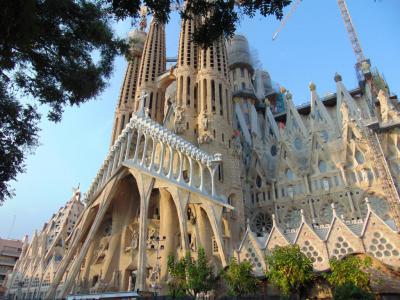
2) La Sagrada Familia (Basilica of the Holy Family) (must see)
The Basilica and Expiatory Temple of the Holy Family, commonly known as La Sagrada Família, is an iconic, unfinished church in Barcelona designed by Catalan Modernist architect Antoni Gaudí. Construction began in 1882 with architect Francisco de Paula del Villar, who envisioned a Gothic revival-style church. Upon taking over the project in 1883, Gaudí transformed the design into a unique blend of Gothic and Art Nouveau styles. Despite spending an impressive 43 years of his life designing this monument, by the time of Gaudí's death in 1926, only 15-25% of the basilica had been completed.
Relied on private donations, the construction has faced multiple interruptions like the Spanish Civil War in the 1930s. Modern technology has sped up the progress, however, and the church is now set to be finished by 2026, with further decorative work expected until 2034.
The Sagrada Família features eighteen planned spires symbolizing the Twelve Apostles, four Evangelists, the Virgin Mary, and Jesus Christ. Thirteen spires have been completed so far. The basilica’s three façades-the Nativity, Passion, and Glory-each represent different phases of Christ’s life and showcase a blend of naturalistic and minimalist styles.
The interior, designed as a Latin cross with five aisles, showcases Gaudí’s mastery of geometry and organic forms. The central nave vaults reach 45 meters, while the apse vault extends to 75 meters. The columns, which change shape as they rise, contribute to the basilica’s distinct look. Gaudí's use of hyperboloid structures and ruled surfaces enhances both the stability and aesthetic appeal of the building.
As of 2017, visitors can book tickets online to access various parts of the basilica, including the Nave, Crypt, and museum, as well as the Passion and Nativity steeples. A visit to the steeples includes a challenging descent through a narrow spiral staircase of over 300 steps. Also of note is the museum below, offering a wealth of information, including audiovisual presentations about the Sagrada Família project's history, plans, and Gaudí himself. You may also want to visit the small school built by Antoni Gaudí for the children of the construction workers right on the site.
Once completed, the Sagrada Família is to become the tallest church in the world and a lasting testament to Gaudí’s vision of blending architecture, nature, and spirituality.
Tip:
Please note that children under 6 are not permitted to ascend the towers; some adults may find the spiral staircase challenging too. If you decide to climb, ask the staff for directions to the "backside elevator", as it is usually less crowded.
Relied on private donations, the construction has faced multiple interruptions like the Spanish Civil War in the 1930s. Modern technology has sped up the progress, however, and the church is now set to be finished by 2026, with further decorative work expected until 2034.
The Sagrada Família features eighteen planned spires symbolizing the Twelve Apostles, four Evangelists, the Virgin Mary, and Jesus Christ. Thirteen spires have been completed so far. The basilica’s three façades-the Nativity, Passion, and Glory-each represent different phases of Christ’s life and showcase a blend of naturalistic and minimalist styles.
The interior, designed as a Latin cross with five aisles, showcases Gaudí’s mastery of geometry and organic forms. The central nave vaults reach 45 meters, while the apse vault extends to 75 meters. The columns, which change shape as they rise, contribute to the basilica’s distinct look. Gaudí's use of hyperboloid structures and ruled surfaces enhances both the stability and aesthetic appeal of the building.
As of 2017, visitors can book tickets online to access various parts of the basilica, including the Nave, Crypt, and museum, as well as the Passion and Nativity steeples. A visit to the steeples includes a challenging descent through a narrow spiral staircase of over 300 steps. Also of note is the museum below, offering a wealth of information, including audiovisual presentations about the Sagrada Família project's history, plans, and Gaudí himself. You may also want to visit the small school built by Antoni Gaudí for the children of the construction workers right on the site.
Once completed, the Sagrada Família is to become the tallest church in the world and a lasting testament to Gaudí’s vision of blending architecture, nature, and spirituality.
Tip:
Please note that children under 6 are not permitted to ascend the towers; some adults may find the spiral staircase challenging too. If you decide to climb, ask the staff for directions to the "backside elevator", as it is usually less crowded.
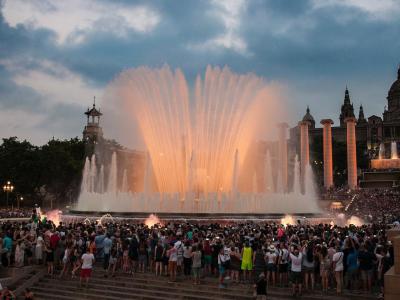
3) Font magica de Montjuic (Magic Fountain of Montjuic) (must see)
One of Barcelona's most spectacular attractions, this engineering marvel was constructed by Carles Buïgas (1898–1979) for the 1929 International Exhibition. The Art Deco fountain, a feat that required the efforts of 3000 individuals, enchants spectators with its synchronized water jets that dance to the rhythm of music, creating a symphony of light and sound. While the themes of the shows may vary, they often culminate in a captivating rendition of the popular duet "Barcelona" by Montserrat Caballé and Freddie Mercury, famously performed during the 1992 Olympics.
Standing behind the Magic Fountain are four columns originally erected by the Modernista architect Puig i Cadafalch at the turn of the 20th century. These columns, designed to symbolize the stripes on the Catalan coat-of-arms, were tragically destroyed in 1928 as part of a prohibition on Catalan symbols. However, they have been painstakingly rebuilt and now serve as a potent symbol of Catalan pride, reclaiming their significance.
The optimal time to visit is just before nightfall, prior to the commencement of the magical display. Each day, thousands of people gather around, finding a seat on the numerous steps that lead up to the MNAC museum, and relishing in the opportunity to witness the sunset from the vantage point of Montjuic mountain, beneath which the fountain resides. The show lasts approximately 10-15 minutes and is entirely free to enjoy, inviting visitors to immerse themselves in its ambiance.
Why You Should Visit:
Good (free) entertainment!
Tip:
Arrive at least 45 minutes in advance to secure a favorable spot, as the area tends to become quite congested. Feel free to bring along your favorite food and beverages to enjoy during the show.
Standing behind the Magic Fountain are four columns originally erected by the Modernista architect Puig i Cadafalch at the turn of the 20th century. These columns, designed to symbolize the stripes on the Catalan coat-of-arms, were tragically destroyed in 1928 as part of a prohibition on Catalan symbols. However, they have been painstakingly rebuilt and now serve as a potent symbol of Catalan pride, reclaiming their significance.
The optimal time to visit is just before nightfall, prior to the commencement of the magical display. Each day, thousands of people gather around, finding a seat on the numerous steps that lead up to the MNAC museum, and relishing in the opportunity to witness the sunset from the vantage point of Montjuic mountain, beneath which the fountain resides. The show lasts approximately 10-15 minutes and is entirely free to enjoy, inviting visitors to immerse themselves in its ambiance.
Why You Should Visit:
Good (free) entertainment!
Tip:
Arrive at least 45 minutes in advance to secure a favorable spot, as the area tends to become quite congested. Feel free to bring along your favorite food and beverages to enjoy during the show.
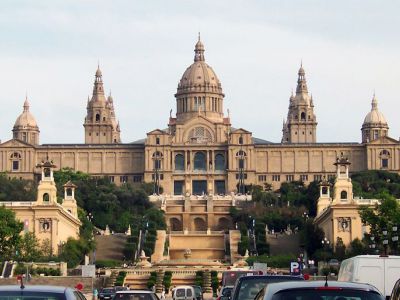
4) Museu Nacional d'Art de Catalunya / MNAC (National Art Museum of Catalonia) (must see)
An essential destination for visitors to Barcelona, offering a splendid setting that showcases a thousand years of Catalan art, the magnificent Palau Nacional, originally constructed for the 1929 International Exhibition, has been the home of the city's most significant art collection since 1934. For those unfamiliar with the museum, deciding where to begin can be challenging; however, if you have limited time, it is recommended to focus on the medieval collection, which is divided into two main sections: one dedicated to Romanesque art and the other to Gothic art. During these periods, Catalan artists were at the forefront of the art scene in Spain.
The museum takes great pride in its collection of Romanesque frescoes, which were carefully removed from churches in the Catalan Pyrenees and presented in a reconstructed version of their original settings. Additionally, the MNAC houses an unparalleled collection of 19th- and 20th-century Catalan art, with the exception of works from the 1950s onwards. The museum's collection excels in "modernista" and "noucentista" painting and sculpture, the two predominant artistic movements of that era. Moreover, visitors can explore intriguing exhibits on topics such as "modernista" interior design, avant-garde sculpture, and historical photography.
To fully appreciate the exhibits, it is advisable to plan for multiple visits as tickets are valid for 2 days. The museum's website offers a convenient "create your own itinerary" feature, helping you maximize your experience. Additionally, blockbuster exhibitions and special shows based on the MNAC's extensive archives are highly popular, although they may require separate ticket purchases.
Why You Should Visit:
An absolutely magnificent museum, newly updated and modernized for the contemporary tourist.
Reasonably priced; plenty of lifts/stair lifts/toilets, and comfortable leather sofas dotted here and there for when your feet ache.
Tip:
Not only does the on-site restaurant offer a breathtaking view of Montjuïc, but it also provides excellent value for the price.
Make sure not to miss the rooftop for an even more spectacular panorama.
The museum takes great pride in its collection of Romanesque frescoes, which were carefully removed from churches in the Catalan Pyrenees and presented in a reconstructed version of their original settings. Additionally, the MNAC houses an unparalleled collection of 19th- and 20th-century Catalan art, with the exception of works from the 1950s onwards. The museum's collection excels in "modernista" and "noucentista" painting and sculpture, the two predominant artistic movements of that era. Moreover, visitors can explore intriguing exhibits on topics such as "modernista" interior design, avant-garde sculpture, and historical photography.
To fully appreciate the exhibits, it is advisable to plan for multiple visits as tickets are valid for 2 days. The museum's website offers a convenient "create your own itinerary" feature, helping you maximize your experience. Additionally, blockbuster exhibitions and special shows based on the MNAC's extensive archives are highly popular, although they may require separate ticket purchases.
Why You Should Visit:
An absolutely magnificent museum, newly updated and modernized for the contemporary tourist.
Reasonably priced; plenty of lifts/stair lifts/toilets, and comfortable leather sofas dotted here and there for when your feet ache.
Tip:
Not only does the on-site restaurant offer a breathtaking view of Montjuïc, but it also provides excellent value for the price.
Make sure not to miss the rooftop for an even more spectacular panorama.
5) Jardi botanic de Barcelona (Barcelona Botanical Garden)
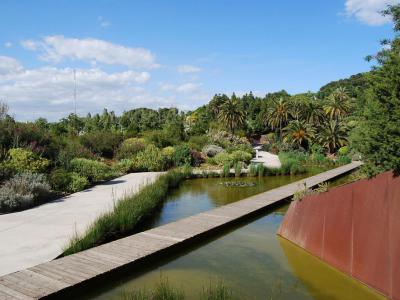
Among the many gardens found in Montjuïc, the city's notable 14-hectare (35-acre) Botanical Garden stands out. Established in 1999 and situated on terraced slopes, it offers magnificent vistas of the city. Positioned between the Olympic Stadium and Montjuïc Castle, this meticulously maintained modern garden features distinct landscaped sections that showcase the diverse flora of the Mediterranean, Canary Islands, California, Chile, South Africa, and Australia.
In a city renowned for its innovative architectural designs, the layout of this botanical garden is no exception. Departing from the traditional square-shaped botanical gardens commonly seen elsewhere, it takes on an unconventional form with a series of triangular areas designated for different botanical divisions. An additional fantastic aspect is that the garden offers various path options of different lengths, allowing visitors to customize their visit according to their preferred duration, whether they wish to stay for an extended period or just a short while. Just be mindful to avoid visiting during the peak heat of a summer day, as shade is quite limited.
In a city renowned for its innovative architectural designs, the layout of this botanical garden is no exception. Departing from the traditional square-shaped botanical gardens commonly seen elsewhere, it takes on an unconventional form with a series of triangular areas designated for different botanical divisions. An additional fantastic aspect is that the garden offers various path options of different lengths, allowing visitors to customize their visit according to their preferred duration, whether they wish to stay for an extended period or just a short while. Just be mindful to avoid visiting during the peak heat of a summer day, as shade is quite limited.
6) Castell de Montjuic (Montjuic Castle) (must see)
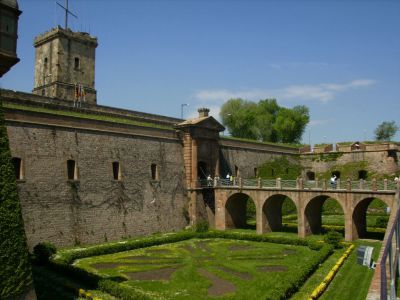
Perched at the very summit of Montjuïc, an 18th-century castle commands breathtaking views of the entire city and an expansive stretch of coastline. The initial fortress was constructed in 1640 and witnessed numerous battles during the War of the Spanish Succession in the early 1700s. Following the triumph of Felipe V, the Montjuïc fortress was reconstructed by the Bourbon rulers to maintain control over the local population. Infamous for its role as a prison and torture center, it continued to serve this purpose until after the Civil War, where notable Catalan leaders, including Lluís Companys, were imprisoned and executed.
While the castle once housed a military museum, the formal restoration of the castle to the Catalan authorities by the Spanish government in 2008 led to the transformation of the museum into a center dedicated to peace. Exhibits now chronicle the evolution of Montjuïc and the castle's tumultuous history. The castle's cable car ride and its dramatic location alone make it worth a visit. The views from the ramparts are truly magnificent, and below the castle walls, the panoramic Camí del Mar pathway stretches for one kilometer, leading to the Mirador del Migdia viewpoint. At this viewpoint, visitors can enjoy the pleasant outdoor bar named La Caseta, offering a great escape from the city and the added bonus of cool harbor views during the summer months.
Why You Should Visit:
Ideal for a lazy afternoon and quite fun to get to, taking the funicular railway first, then either the cable car (quite expensive but great views) or the bus (not so scenic but free on a T10 ticket).
Tip:
If you prefer to climb by foot, be prepared for a considerable amount of stair climbing, so please wear sturdy and comfortable shoes.
While the castle once housed a military museum, the formal restoration of the castle to the Catalan authorities by the Spanish government in 2008 led to the transformation of the museum into a center dedicated to peace. Exhibits now chronicle the evolution of Montjuïc and the castle's tumultuous history. The castle's cable car ride and its dramatic location alone make it worth a visit. The views from the ramparts are truly magnificent, and below the castle walls, the panoramic Camí del Mar pathway stretches for one kilometer, leading to the Mirador del Migdia viewpoint. At this viewpoint, visitors can enjoy the pleasant outdoor bar named La Caseta, offering a great escape from the city and the added bonus of cool harbor views during the summer months.
Why You Should Visit:
Ideal for a lazy afternoon and quite fun to get to, taking the funicular railway first, then either the cable car (quite expensive but great views) or the bus (not so scenic but free on a T10 ticket).
Tip:
If you prefer to climb by foot, be prepared for a considerable amount of stair climbing, so please wear sturdy and comfortable shoes.
