Custom Walk in Stuttgart, Germany by ersinenm9687 created on 2025-04-21
Guide Location: Germany » Stuttgart
Guide Type: Custom Walk
# of Sights: 10
Tour Duration: 1 Hour(s)
Travel Distance: 1 Km or 0.6 Miles
Share Key: KF6CS
Guide Type: Custom Walk
# of Sights: 10
Tour Duration: 1 Hour(s)
Travel Distance: 1 Km or 0.6 Miles
Share Key: KF6CS
How It Works
Please retrieve this walk in the GPSmyCity app. Once done, the app will guide you from one tour stop to the next as if you had a personal tour guide. If you created the walk on this website or come to the page via a link, please follow the instructions below to retrieve the walk in the app.
Retrieve This Walk in App
Step 1. Download the app "GPSmyCity: Walks in 1K+ Cities" on Apple App Store or Google Play Store.



Step 2. In the GPSmyCity app, download(or launch) the guide "Stuttgart Map and Walking Tours".
Step 3. Tap the menu button located at upper right corner of the "Walks" screen and select "Retrieve custom walk". Enter the share key: KF6CS
1) Königstrasse (King Street) (must see)
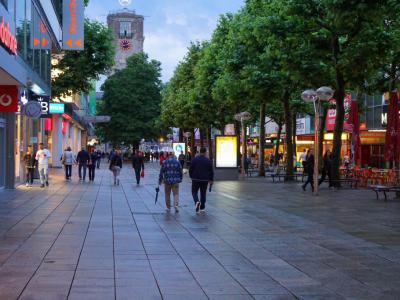
King Street (Königstrasse) in Stuttgart is a historic and vibrant shopping boulevard that traces its roots back to the early 19th century. Initially developed during the reign of Friedrich, the first king of Württemberg, this street has evolved from a strategic royal location to one of Germany's premier shopping destinations. The transformation began when King Friedrich relocated the royal stables and Saint Eberhard's Church from Solitude Palace to the lower part of King Street, up to the Schlossplatz (Palace Square). This area also once hosted the Königstor, or King's Gate, which stood until its demolition in 1922.
The street saw significant modernization in 1977 when approximately 400 meters of lower King Street were redesigned as a pedestrian precinct for the national gardening exhibition. This redesign, led by the Stuttgart architects' office Behnisch, included the addition of fountains, trees, kiosks, and playground equipment, enhancing the street's appeal as a leisure and shopping area.
Today, King Street extends for 1.2 kilometers, beginning opposite the main railway station and cutting through the city's heart. It boasts an array of specialist shops, department stores, cafés, restaurants, and relaxation areas, making it one of Germany's longest and most distinguished shopping streets. The thoroughfare is flanked by other charming streets such as Eberhardstrasse, Stiftstrasse, and the stylish Calwer Strasse, which are home to elegant shops and boutiques, further contributing to the area's reputation as a shopping haven.
The street saw significant modernization in 1977 when approximately 400 meters of lower King Street were redesigned as a pedestrian precinct for the national gardening exhibition. This redesign, led by the Stuttgart architects' office Behnisch, included the addition of fountains, trees, kiosks, and playground equipment, enhancing the street's appeal as a leisure and shopping area.
Today, King Street extends for 1.2 kilometers, beginning opposite the main railway station and cutting through the city's heart. It boasts an array of specialist shops, department stores, cafés, restaurants, and relaxation areas, making it one of Germany's longest and most distinguished shopping streets. The thoroughfare is flanked by other charming streets such as Eberhardstrasse, Stiftstrasse, and the stylish Calwer Strasse, which are home to elegant shops and boutiques, further contributing to the area's reputation as a shopping haven.
2) Domkirche St. Eberhard (St. Eberhard Cathedral)
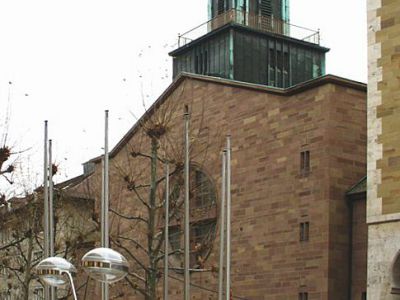
Saint Eberhard Cathedral is a Catholic Cathedral dedicated to Saint Eberhard of Salzburg. The cathedral was built between 1808 and 1811. The church was damaged by World War II bombs and rebuilt.
In 1978, the church was promoted to co-cathedral. The promotion coincided with the Roman Catholic Diocese of Rottenburg-Stuttgart's 150th anniversary. The main cathedral remains Rottenburg Cathedral.
For centuries, the existence of a Catholic church has been based on the religious views of the House of Württemberg. The Württemberg family converted to Protestantism and banned Catholicism from 1535 to 1555. The Holy Roman Empire won against Protestant forces in the Battle of Nördlingen, and Stuttgart became Catholic again. The Jesuits then took control, and Catholicism returned. However, when the Treaty of Westphalia was signed, Catholicism was again banned. When the Kingdom of Württemberg became secular, Catholicism was permitted again.
The cathedral features a famous organ, built by Winfried Albiez in 1982. The organ has 56 stops and 3700 pipes and is one of the largest and most important organs in Germany.
In 1978, the church was promoted to co-cathedral. The promotion coincided with the Roman Catholic Diocese of Rottenburg-Stuttgart's 150th anniversary. The main cathedral remains Rottenburg Cathedral.
For centuries, the existence of a Catholic church has been based on the religious views of the House of Württemberg. The Württemberg family converted to Protestantism and banned Catholicism from 1535 to 1555. The Holy Roman Empire won against Protestant forces in the Battle of Nördlingen, and Stuttgart became Catholic again. The Jesuits then took control, and Catholicism returned. However, when the Treaty of Westphalia was signed, Catholicism was again banned. When the Kingdom of Württemberg became secular, Catholicism was permitted again.
The cathedral features a famous organ, built by Winfried Albiez in 1982. The organ has 56 stops and 3700 pipes and is one of the largest and most important organs in Germany.
3) Königsbau (King’s Building)
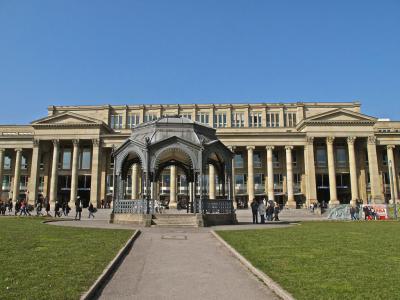
The King’s Building (Königsbau) is a significant historical structure located in Stuttgart, at the northwest end of Schlossplatz. This grand building was constructed between 1856 and 1860 under the commission of King Wilhelm I. Designed in a late classicist style by royal court architect Christian Friedrich von Leins and Johann Michael Knapp, the Königsbau was initially intended to serve as a business, concert, and ballroom venue. However, after Knapp's retirement due to health reasons in 1857, Leins completed the project, with the official inauguration taking place in September 1860. The building's facade is distinguished by a 135-meter-long colonnade featuring 34 columns, creating a striking counterpoint to the adjacent New Palace.
During World War II, the King’s Building sustained severe damage. It was subsequently rebuilt between 1958 and 1959, with the restoration costing the equivalent of €4 million. The building later served as the home of the Stuttgart Stock Exchange from 1991 to 2002. In April 2006, the Royal Building passage was added to the rear of the building. This modern extension covers 45,000 square meters and includes retail and commercial spaces, as well as a Food Lounge with over 30 culinary options.
Today, the King’s Building remains an important cultural and commercial hub, housing shops, cafés, and various businesses. It is a landmark of Stuttgart, embodying both historical significance and contemporary commercial vitality.
During World War II, the King’s Building sustained severe damage. It was subsequently rebuilt between 1958 and 1959, with the restoration costing the equivalent of €4 million. The building later served as the home of the Stuttgart Stock Exchange from 1991 to 2002. In April 2006, the Royal Building passage was added to the rear of the building. This modern extension covers 45,000 square meters and includes retail and commercial spaces, as well as a Food Lounge with over 30 culinary options.
Today, the King’s Building remains an important cultural and commercial hub, housing shops, cafés, and various businesses. It is a landmark of Stuttgart, embodying both historical significance and contemporary commercial vitality.
4) Schlossplatz (Palace Square) (must see)
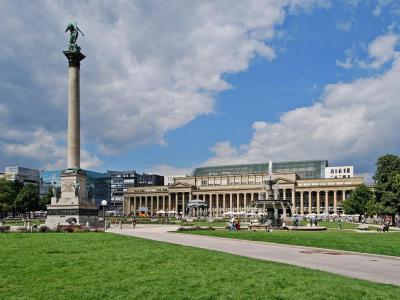
Palace Square (Schlossplatz), the largest square in Stuttgart Mitte, is a prominent cultural and historical landmark. Dominating the square is the New Palace (Neues Schloss), constructed between 1746 and 1807. Originally a military parade ground, the square was not accessible to the public until the mid-1800s. The area around Palace Square is characterized by its proximity to other significant squares, with Karlsplatz to the south and Schillerplatz to the southwest. The Königstraße (King Street) runs through the square from north to south, creating a central thoroughfare.
The New Palace and its grounds became public property in 1918. However, during World War II, the palace and much of Stuttgart Mitte suffered heavy damage from Allied bombings. A restoration project took place from 1958 to 1964, resulting in a modernized interior that now houses the ministries of Culture and the Treasury for the Baden-Württemberg government.
In the past, the King Street that bisects the plaza accommodated vehicular traffic, but the construction of an underground station and tunnels in the 1960s redirected traffic away from the square. The most recent comprehensive renovation of Palace Square occurred in 1977, coinciding with the Bundesgartenschau (Federal Garden Show) in Stuttgart. The lawns and flowerbeds were further refreshed in 2006 for the World Cup Finals.
Palace Square is a hub for various public events, including open-air concerts, children's fairs, and the annual Weihnachten market, which features an outdoor ice rink. During the 2006 World Cup Finals, the square became a gathering point for over 40,000 spectators, who watched matches on large screens. In 2008, Palace Square hosted the United Buddy Bears exhibition, displaying 144 two-meter-high sculptures representing cultural understanding and tolerance.
The New Palace and its grounds became public property in 1918. However, during World War II, the palace and much of Stuttgart Mitte suffered heavy damage from Allied bombings. A restoration project took place from 1958 to 1964, resulting in a modernized interior that now houses the ministries of Culture and the Treasury for the Baden-Württemberg government.
In the past, the King Street that bisects the plaza accommodated vehicular traffic, but the construction of an underground station and tunnels in the 1960s redirected traffic away from the square. The most recent comprehensive renovation of Palace Square occurred in 1977, coinciding with the Bundesgartenschau (Federal Garden Show) in Stuttgart. The lawns and flowerbeds were further refreshed in 2006 for the World Cup Finals.
Palace Square is a hub for various public events, including open-air concerts, children's fairs, and the annual Weihnachten market, which features an outdoor ice rink. During the 2006 World Cup Finals, the square became a gathering point for over 40,000 spectators, who watched matches on large screens. In 2008, Palace Square hosted the United Buddy Bears exhibition, displaying 144 two-meter-high sculptures representing cultural understanding and tolerance.
5) Neues Schloss (New Castle)
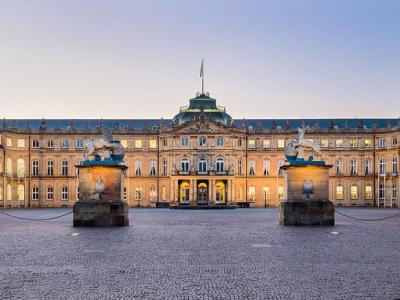
Construction on the New Castle began in 1746, and work continued until 1807. The castle was built to provide a royal residence for 16 yr old Duke Charles Eugene of Württemberg. The Duke wanted an impressive palace that would rival Versailles and threatened to move to Ludwigsburg if a suitable palace wasn't built.
Unfortunately, the construction faced many delays, including the death of the master builder and a fire during construction. As a result, the palace wasn't completed until after Duke Charles Eugene's death.
The palace is one of the last large palaces built in the area. It is mostly in Baroque style and features three main wings. Because of the lengthy construction time, the Baroque style was complemented by Rococo and Classicism styles. The facade features sculptures on the balustrades.
Duke Friedrich II became King in 1806 and redecorated the interior in the Imperial Style. The palace continued to house the kings of Wuerttemberg until King Wilhelm II abdicated in 1918. Former Federal President Richard von Weizsäcker was born in an attic apartment in the palace in 1920.
World War II bombs heavily damaged the palace, which was reconstructed from 1958 to 1964. Today the castle houses government offices.
Unfortunately, the construction faced many delays, including the death of the master builder and a fire during construction. As a result, the palace wasn't completed until after Duke Charles Eugene's death.
The palace is one of the last large palaces built in the area. It is mostly in Baroque style and features three main wings. Because of the lengthy construction time, the Baroque style was complemented by Rococo and Classicism styles. The facade features sculptures on the balustrades.
Duke Friedrich II became King in 1806 and redecorated the interior in the Imperial Style. The palace continued to house the kings of Wuerttemberg until King Wilhelm II abdicated in 1918. Former Federal President Richard von Weizsäcker was born in an attic apartment in the palace in 1920.
World War II bombs heavily damaged the palace, which was reconstructed from 1958 to 1964. Today the castle houses government offices.
6) Altes Schloss (Old Castle) (must see)
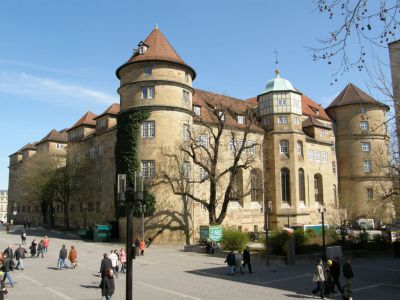
The Old Castle dates back to the 10th century. This impressive structure served as a residence for the Counts and Dukes of Württemberg. In 1325, the Dürnitz building was built. In the mid-16th century, Dukes Christoph and Louis III made various additions. The additions included an equestrian staircase, the church, and the conference room. During this renovation, the castle was redecorated and became a renaissance palace. In addition, the moat was filled during the 18th century.
The castle's arcaded courtyard features beautiful Italian Renaissance motifs. A memorial to Eberhard I stands in the inner courtyard. King Charles I of Wurttemberg is buried underneath the castle church.
A fire damaged the castle in 1931, and a World War II bomb caused further damage. Reconstruction was completed in 1962.
The Old Castle is home to a memorial exhibition commemorating Claus von Stauffenberg, a Stuttgart resident who attempted to assassinate Hitler.
The Wuerttemberg State Museum is located in the Old Castle. King Wilhelm I founded an art chamber in the 16th century, and the ducal interest in collecting priceless items continued throughout the centuries. Today, visitors can find royal diamond jewelry, the royal crown, and scepter on display. The museum portrays the area's history from the stone age to the Celts, Romans, middle ages, and more recent times.
The castle's arcaded courtyard features beautiful Italian Renaissance motifs. A memorial to Eberhard I stands in the inner courtyard. King Charles I of Wurttemberg is buried underneath the castle church.
A fire damaged the castle in 1931, and a World War II bomb caused further damage. Reconstruction was completed in 1962.
The Old Castle is home to a memorial exhibition commemorating Claus von Stauffenberg, a Stuttgart resident who attempted to assassinate Hitler.
The Wuerttemberg State Museum is located in the Old Castle. King Wilhelm I founded an art chamber in the 16th century, and the ducal interest in collecting priceless items continued throughout the centuries. Today, visitors can find royal diamond jewelry, the royal crown, and scepter on display. The museum portrays the area's history from the stone age to the Celts, Romans, middle ages, and more recent times.
7) The Schiller Memorial
The Schiller Memorial at Schiller Square (Schillerplatz) in Stuttgart stands as a significant cultural and historical landmark dedicated to Friedrich Schiller, a celebrated German poet, philosopher, historian, and dramatist. Schiller Square is situated in the old city center of Stuttgart, southwest of the main Castle Square (Schlossplatz), and features a cobblestone square that hosts the memorial.
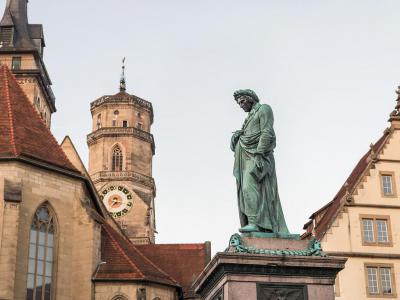
The centerpiece of Schiller Square is the Schiller Memorial, created by Danish sculptor Bertel Thorvaldsen and unveiled in 1839. This statue holds the distinction of being the first memorial dedicated to Schiller in Germany, cast from cannons in Munich and donated by the Stuttgart Liederkranz. The unveiling of this monument marked a significant shift in the square's use from a princely area used for representational purposes to a space of civic engagement and freedom.
Schiller's connection to Stuttgart is profound, having spent formative years there. He was educated at the Hohe Carlsschule and served as a regimental doctor in the legionary barracks. His literary work, particularly the drama "The Robbers," which criticized tyranny, eventually led to his estrangement from Duke Carl Eugene. This conflict prompted Schiller to flee Stuttgart in 1782 under a false name, accompanied by his friend Streicher.
Today, the Schiller Memorial not only commemorates the literary and philosophical contributions of Friedrich Schiller but also symbolizes the historical and cultural evolution of Stuttgart. The square is surrounded by historical buildings that add to the aesthetic and historical value of the site, making it a significant point of interest for both residents and visitors interested in the convergence of art, history, and civic life.
The centerpiece of Schiller Square is the Schiller Memorial, created by Danish sculptor Bertel Thorvaldsen and unveiled in 1839. This statue holds the distinction of being the first memorial dedicated to Schiller in Germany, cast from cannons in Munich and donated by the Stuttgart Liederkranz. The unveiling of this monument marked a significant shift in the square's use from a princely area used for representational purposes to a space of civic engagement and freedom.
Schiller's connection to Stuttgart is profound, having spent formative years there. He was educated at the Hohe Carlsschule and served as a regimental doctor in the legionary barracks. His literary work, particularly the drama "The Robbers," which criticized tyranny, eventually led to his estrangement from Duke Carl Eugene. This conflict prompted Schiller to flee Stuttgart in 1782 under a false name, accompanied by his friend Streicher.
Today, the Schiller Memorial not only commemorates the literary and philosophical contributions of Friedrich Schiller but also symbolizes the historical and cultural evolution of Stuttgart. The square is surrounded by historical buildings that add to the aesthetic and historical value of the site, making it a significant point of interest for both residents and visitors interested in the convergence of art, history, and civic life.
8) Alte Kanzlei (Old Chancellery)
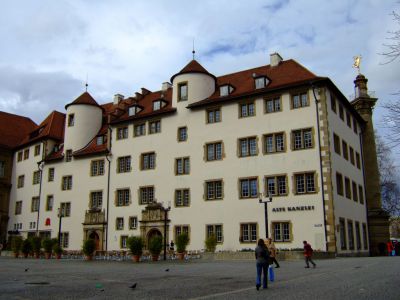
The original part of the Old Chancellery was built between 1544 and 1546. An additional story was built in 1566. The building was rebuilt after a fire in 1683. An extension was built in 1715, which connected the Old Chancellery to the Prince's Building. The Old Chancellery was designed in the Classical and Renaissance style. The facade features reed sandstone.
The building features five portals, including two main portals. Architect Alexander von Tritschler restored the two main portals in 1878. These restored portals each feature a double-leaf, wooden arched door. One of the main portals features The Württemberg coat of arms.
A water tank was attached to the building until 1862 when it was replaced with a statue of Mercury. The gold-plated Mercury statue represents the ancient god of trade and was based on a design by Giovanni di Bologna of Florence. The Old Chancellery was rebuilt again in the 1950s after World War II bomb damage.
The Old Chancellery served as the seat of administration and government of the Kingdom of Württemberg. Today, the Old Chancellery is home to a restaurant, a farm pharmacy, and Ministry of Justice offices.
The building features five portals, including two main portals. Architect Alexander von Tritschler restored the two main portals in 1878. These restored portals each feature a double-leaf, wooden arched door. One of the main portals features The Württemberg coat of arms.
A water tank was attached to the building until 1862 when it was replaced with a statue of Mercury. The gold-plated Mercury statue represents the ancient god of trade and was based on a design by Giovanni di Bologna of Florence. The Old Chancellery was rebuilt again in the 1950s after World War II bomb damage.
The Old Chancellery served as the seat of administration and government of the Kingdom of Württemberg. Today, the Old Chancellery is home to a restaurant, a farm pharmacy, and Ministry of Justice offices.
9) Prinzenbau (Prince’s Building)
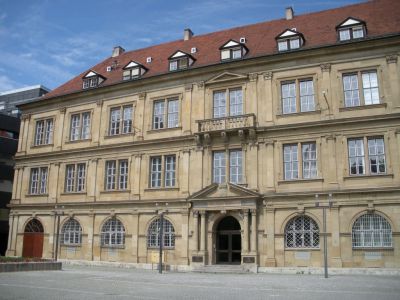
Several Württemberg dukes were responsible for the Prince's Building. First, during the early 1600s, a basement and three-story utility building were built. Next, an addition to the building closed off Schillerplatz (Shiller Square).
At the end of the 1600s, Matthias Weiß rebuilt the building in the classicist style. Philipp Joseph Jenisch and Johann Friedrich Nette added an extension to the building in 1722 and updated the building's facade to the Italian style.
The building was a residence for visiting ambassadors and housed an art chamber and drawing academy. Württemberg princes began living here in 1805, hence the Prince's Building name. Wilhelm I, the last king of Württemberg, was born in Prince's Building in 1848. A plaque on the building commemorates this event.
The Prince's Building was rebuilt after damage from Word War II bombs. Today, the Prince's Building is home to the Ministry of Justice.
At the end of the 1600s, Matthias Weiß rebuilt the building in the classicist style. Philipp Joseph Jenisch and Johann Friedrich Nette added an extension to the building in 1722 and updated the building's facade to the Italian style.
The building was a residence for visiting ambassadors and housed an art chamber and drawing academy. Württemberg princes began living here in 1805, hence the Prince's Building name. Wilhelm I, the last king of Württemberg, was born in Prince's Building in 1848. A plaque on the building commemorates this event.
The Prince's Building was rebuilt after damage from Word War II bombs. Today, the Prince's Building is home to the Ministry of Justice.
10) Stiftskirche (Collegiate Church)
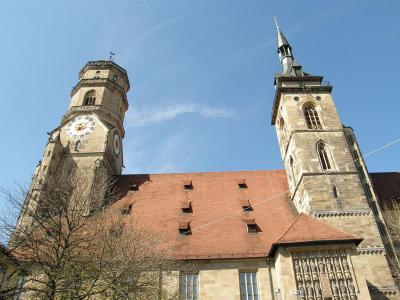
Research shows that a church has stood on this site since the 10th century. The current church was originally constructed between 1276-1293 and underwent additional construction from 1471-1493. Collegiate Church was Württemberg's first Gothic-style church.
Ulrich I, Count of Württemberg, and his wife were buried in the south chapel in 1265.
The interior contains several significant features. The baptismal font dates to 1472. Master Hanselmann created the stone pulpit in 1504. Heinrich Schickhardt designed the gorgeous carvings in the choirstalls in 1517. The church also features the oldest rose window in the region.
After the Lutheran Protestant Reformation in 1534, pictures and altars were removed from the church. Church leaders added pews and a gallery. In 1574, the church began adding statues of all the Counts of Württemberg to the chancel's north wall. A burial vault was added in 1608, and Württemberg's rulers were buried here. The Baroque onion dome replaced Gothic towers in 1749.
The church underwent renovations during the 1800s. Collegiate Church sustained damage during World War II bombs and was rebuilt in the 1950s.
Today, Collegiate Church is Württemberg's main Evangelical Luthern Chruch.
Collegiate Church is home to the Herrenberg Bell Museum. Visitors can climb the medieval spiral staircase and examine an extensive collection of bells. The museum features 30 bells whose ages span across 12 centuries.
Ulrich I, Count of Württemberg, and his wife were buried in the south chapel in 1265.
The interior contains several significant features. The baptismal font dates to 1472. Master Hanselmann created the stone pulpit in 1504. Heinrich Schickhardt designed the gorgeous carvings in the choirstalls in 1517. The church also features the oldest rose window in the region.
After the Lutheran Protestant Reformation in 1534, pictures and altars were removed from the church. Church leaders added pews and a gallery. In 1574, the church began adding statues of all the Counts of Württemberg to the chancel's north wall. A burial vault was added in 1608, and Württemberg's rulers were buried here. The Baroque onion dome replaced Gothic towers in 1749.
The church underwent renovations during the 1800s. Collegiate Church sustained damage during World War II bombs and was rebuilt in the 1950s.
Today, Collegiate Church is Württemberg's main Evangelical Luthern Chruch.
Collegiate Church is home to the Herrenberg Bell Museum. Visitors can climb the medieval spiral staircase and examine an extensive collection of bells. The museum features 30 bells whose ages span across 12 centuries.
