Custom Walk in Hanoi, Vietnam by emurphy_74f69 created on 2025-05-09
Guide Location: Vietnam » Hanoi
Guide Type: Custom Walk
# of Sights: 5
Tour Duration: 1 Hour(s)
Travel Distance: 2.3 Km or 1.4 Miles
Share Key: 7BNZV
Guide Type: Custom Walk
# of Sights: 5
Tour Duration: 1 Hour(s)
Travel Distance: 2.3 Km or 1.4 Miles
Share Key: 7BNZV
How It Works
Please retrieve this walk in the GPSmyCity app. Once done, the app will guide you from one tour stop to the next as if you had a personal tour guide. If you created the walk on this website or come to the page via a link, please follow the instructions below to retrieve the walk in the app.
Retrieve This Walk in App
Step 1. Download the app "GPSmyCity: Walks in 1K+ Cities" on Apple App Store or Google Play Store.



Step 2. In the GPSmyCity app, download(or launch) the guide "Hanoi Map and Walking Tours".
Step 3. Tap the menu button located at upper right corner of the "Walks" screen and select "Retrieve custom walk". Enter the share key: 7BNZV
1) National Museum of Fine Arts
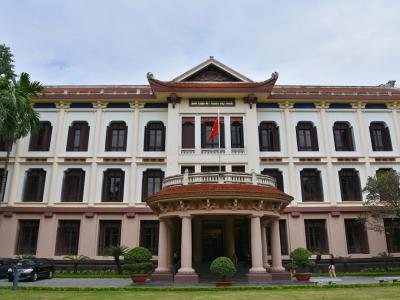
The Hanoi Fine Arts museum is a repository of the art and cultural heritage of Vietnam. It has exhibits from the Bronze Age to contemporary works by modern artists. Many of the exhibits are reproductions of artifacts lost during the Indochina Wars.
The Hanoi Museum of Fine Arts is housed in a beautiful colonial building. The architecture of the building is a combination of classical European style with native Vietnamese details. At first the building was a school for girls belonging to families of high ranking officers in the colonial government. Later the building was used by the French Ministry of Information.
The ground floor of the museum has ancient artifacts. There are many sandstone sculptures from the Champa and the Funan Kingdoms. The evolution of the art of lacquer in Vietnam is beautifully depicted at the museum. The second floor has twentieth century paintings by Vietnamese artists including unique lacquer based paintings. The new wing of the museum has Chinese watercolors on the first floor and the second floor has costumes and decorative arts of the different Vietnamese ethnic groups. The most fascinating exhibit is the, ‘One Thousand Eye, One Thousand Arm Guan Yin’, a sculpture of a Hindu Goddess backed by a disk into which one thousand arms are carved.
There are souvenir shops selling paintings and other gift articles in the elevated walkway from the old museum to the new wing.
The Hanoi Museum of Fine Arts is housed in a beautiful colonial building. The architecture of the building is a combination of classical European style with native Vietnamese details. At first the building was a school for girls belonging to families of high ranking officers in the colonial government. Later the building was used by the French Ministry of Information.
The ground floor of the museum has ancient artifacts. There are many sandstone sculptures from the Champa and the Funan Kingdoms. The evolution of the art of lacquer in Vietnam is beautifully depicted at the museum. The second floor has twentieth century paintings by Vietnamese artists including unique lacquer based paintings. The new wing of the museum has Chinese watercolors on the first floor and the second floor has costumes and decorative arts of the different Vietnamese ethnic groups. The most fascinating exhibit is the, ‘One Thousand Eye, One Thousand Arm Guan Yin’, a sculpture of a Hindu Goddess backed by a disk into which one thousand arms are carved.
There are souvenir shops selling paintings and other gift articles in the elevated walkway from the old museum to the new wing.
2) Lenin Monument
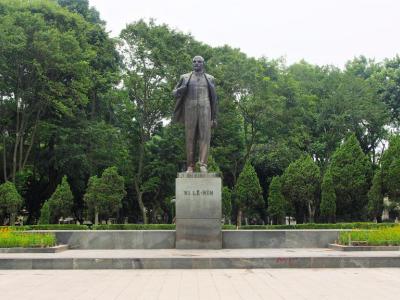
The Lenin Monument or Lenin Statue is a stone sculpture of the Bolshevik Russian revolutionary, Vladimir Ilyich Ulyanov, popularly known as Lenin. The statue is located on a playground in Duong Dien Bien Phu Street in Hanoi called Lenin Park.
The Lenin statue was erected in Thong Nhat Park in 1980 to commemorate the 110th anniversary of Lenin. It was a gift from the USSR to the Vietnamese people. The statue was later placed at the location that was renamed Lenin Park. It now faces Hanoi’s Military History Museum.
The present Lenin Park is a playground frequented by locals. In the morning synchronized Tai Chi exercises are performed here. Aerobics classes are held in the mornings for people of all ages. In the evening the park becomes crowded because it is a popular playground for children. Badminton players and soccer teams also practice here.
The Lenin statue stands in the triangular Lenin Park amidst palm trees. It is one of the few statues of Lenin left in the world and is a reminder of the impact the USSR had in its heyday on world politics including that of Vietnam and the support it provided for revolutionary movements all over the world.
The Lenin statue was erected in Thong Nhat Park in 1980 to commemorate the 110th anniversary of Lenin. It was a gift from the USSR to the Vietnamese people. The statue was later placed at the location that was renamed Lenin Park. It now faces Hanoi’s Military History Museum.
The present Lenin Park is a playground frequented by locals. In the morning synchronized Tai Chi exercises are performed here. Aerobics classes are held in the mornings for people of all ages. In the evening the park becomes crowded because it is a popular playground for children. Badminton players and soccer teams also practice here.
The Lenin statue stands in the triangular Lenin Park amidst palm trees. It is one of the few statues of Lenin left in the world and is a reminder of the impact the USSR had in its heyday on world politics including that of Vietnam and the support it provided for revolutionary movements all over the world.
3) Military History Museum
One of the oldest museums in Hanoi, the Army Museum, also called the Military History Museum is a tribute to the Vietnamese army that fought to preserve the unity, integrity and independence of Vietnam against the French and during the U.S. offensive.
The Military History Museum is located at the center of Hanoi near the statue of V.I. Lenin. The Cot Co Hanoi Flag Tower, one of the city’s monuments stands on the grounds of the museum. The 31 meter high tower was built between 1805 and 1812 and offers a panoramic view of the surroundings. It is also the last remaining structure from the citadel built by the Vietnamese emperor Gia Long.
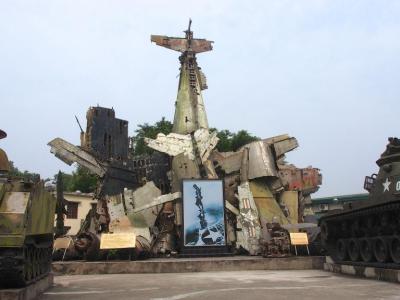
Visitors are greeted outside the museum by an artistic arrangement of wrecked American B-52s. The main exhibition hall in the Military History Museum has photographs, scale models and maps showing the struggle for independence against the French colonial rulers, from the 1930 uprising to the victory at Dien Bien Phu in 1954. In another exhibition hall, the victory in the Vietnam War by the Vietnamese Army is described. The unique weaponry used by the Vietnamese including bamboo spikes, crude firearms, buffalo horns and indigenous torpedoes to defeat enemies who fought with more sophisticated arsenal, make interesting exhibits at the museum.
The Military History Museum is located at the center of Hanoi near the statue of V.I. Lenin. The Cot Co Hanoi Flag Tower, one of the city’s monuments stands on the grounds of the museum. The 31 meter high tower was built between 1805 and 1812 and offers a panoramic view of the surroundings. It is also the last remaining structure from the citadel built by the Vietnamese emperor Gia Long.
Visitors are greeted outside the museum by an artistic arrangement of wrecked American B-52s. The main exhibition hall in the Military History Museum has photographs, scale models and maps showing the struggle for independence against the French colonial rulers, from the 1930 uprising to the victory at Dien Bien Phu in 1954. In another exhibition hall, the victory in the Vietnam War by the Vietnamese Army is described. The unique weaponry used by the Vietnamese including bamboo spikes, crude firearms, buffalo horns and indigenous torpedoes to defeat enemies who fought with more sophisticated arsenal, make interesting exhibits at the museum.
4) Imperial Citadel of Thăng Long
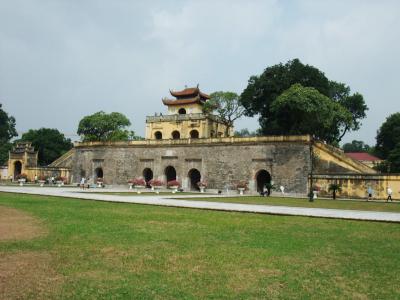
The Imperial Citadel of Thăng Long in Hanoi is a noteworthy historical site representing various eras of Vietnamese history. Originally constructed in 1011 by Emperor Lý Thái Tổ, the founder of the Lý dynasty, this imperial complex has witnessed the evolution of Vietnam's dynastic rule through the centuries. The Citadel, initially established in the early 11th century, served as the political center of the country for almost 800 years.
Over the years, the Citadel was expanded and modified by subsequent dynasties, including the Trần, Lê, and Nguyễn. Each dynasty contributed to its grandeur, reflecting the changing architectural and cultural tastes of the periods. However, by 1810, the Nguyễn dynasty moved the capital to Huế, which marked the beginning of the decline of the Thăng Long Citadel as the center of political power.
By the late 19th century, during the French conquest of Hanoi, the Citadel had fallen into disrepair. Many of its historic structures were severely damaged or destroyed in the subsequent decades. It wasn't until the 21st century that significant archaeological efforts began to systematically excavate and preserve the ruins of this once majestic imperial city.
A significant but grim chapter in the Citadel’s history occurred in mid-1945 when it was used by the Imperial Japanese Army to detain over 4,000 French colonial soldiers during the Japanese coup d'état in French Indochina.
Recognition of the site's historical and cultural significance came on July 31, 2010, when UNESCO designated the central sector of the Imperial Citadel of Thăng Long as a World Heritage Site. This honor highlights the importance of the site not just to Vietnamese heritage but to the world, acknowledging its rich historical layers that offer insight into the cultural and political developments in Vietnam over the millennia.
Over the years, the Citadel was expanded and modified by subsequent dynasties, including the Trần, Lê, and Nguyễn. Each dynasty contributed to its grandeur, reflecting the changing architectural and cultural tastes of the periods. However, by 1810, the Nguyễn dynasty moved the capital to Huế, which marked the beginning of the decline of the Thăng Long Citadel as the center of political power.
By the late 19th century, during the French conquest of Hanoi, the Citadel had fallen into disrepair. Many of its historic structures were severely damaged or destroyed in the subsequent decades. It wasn't until the 21st century that significant archaeological efforts began to systematically excavate and preserve the ruins of this once majestic imperial city.
A significant but grim chapter in the Citadel’s history occurred in mid-1945 when it was used by the Imperial Japanese Army to detain over 4,000 French colonial soldiers during the Japanese coup d'état in French Indochina.
Recognition of the site's historical and cultural significance came on July 31, 2010, when UNESCO designated the central sector of the Imperial Citadel of Thăng Long as a World Heritage Site. This honor highlights the importance of the site not just to Vietnamese heritage but to the world, acknowledging its rich historical layers that offer insight into the cultural and political developments in Vietnam over the millennia.
5) Temple of Literature (must see)
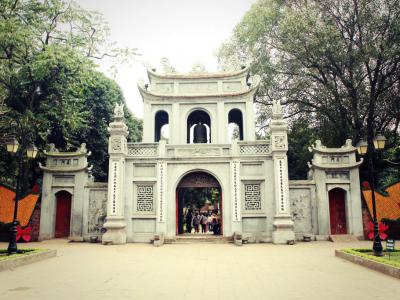
The Temple of Literature, dedicated to the Chinese Philosopher is one of Hanoi’s oldest structures. There are many temples of literature across Vietnam but the Hanoi temple is the oldest and the most important among them. It is also the venue of the country’s earliest university.
The Temple of Literature was founded by Emperor Ly Thanh Tong in 1070 a few years after the establishment of the city of Hanoi. The University established six years later admitted children from the royal family and students from the families of Mandarins. In 1484, Emperor Le Thanh Tong erected steles to record the achievements of students who were awarded doctorates by the university. It ceased to function in 1802 when it was shifted to a new venue.
The temple has five courtyards with boundary walls. Two courtyards have trees, some of which are over a hundred years old. One courtyard has a pond surrounded by sheltered pavilions and steles with details of students who earned doctorates at the university. The Courtyard of the Sage Sanctuary has a building called the Great House of Ceremonies. The house has a large red lacquer figure of Confucius. The last courtyard called the Thai Hoc has a two storey building honoring the founders of the university. There are two square structures on either side of the building to house a drum and a bell.
The Temple of Literature is open from Tuesdays to Sundays and visitors can find mementoes to take home at the souvenir and craft shops near the Great House of Ceremonies.
The Temple of Literature was founded by Emperor Ly Thanh Tong in 1070 a few years after the establishment of the city of Hanoi. The University established six years later admitted children from the royal family and students from the families of Mandarins. In 1484, Emperor Le Thanh Tong erected steles to record the achievements of students who were awarded doctorates by the university. It ceased to function in 1802 when it was shifted to a new venue.
The temple has five courtyards with boundary walls. Two courtyards have trees, some of which are over a hundred years old. One courtyard has a pond surrounded by sheltered pavilions and steles with details of students who earned doctorates at the university. The Courtyard of the Sage Sanctuary has a building called the Great House of Ceremonies. The house has a large red lacquer figure of Confucius. The last courtyard called the Thai Hoc has a two storey building honoring the founders of the university. There are two square structures on either side of the building to house a drum and a bell.
The Temple of Literature is open from Tuesdays to Sundays and visitors can find mementoes to take home at the souvenir and craft shops near the Great House of Ceremonies.
