Custom Walk in Aarhus, Denmark by marijke_janssens123_dca37 created on 2025-05-14
Guide Location: Denmark » Aarhus
Guide Type: Custom Walk
# of Sights: 11
Tour Duration: 2 Hour(s)
Travel Distance: 3.3 Km or 2.1 Miles
Share Key: 8QQ6C
Guide Type: Custom Walk
# of Sights: 11
Tour Duration: 2 Hour(s)
Travel Distance: 3.3 Km or 2.1 Miles
Share Key: 8QQ6C
How It Works
Please retrieve this walk in the GPSmyCity app. Once done, the app will guide you from one tour stop to the next as if you had a personal tour guide. If you created the walk on this website or come to the page via a link, please follow the instructions below to retrieve the walk in the app.
Retrieve This Walk in App
Step 1. Download the app "GPSmyCity: Walks in 1K+ Cities" on Apple App Store or Google Play Store.



Step 2. In the GPSmyCity app, download(or launch) the guide "Aarhus Map and Walking Tours".
Step 3. Tap the menu button located at upper right corner of the "Walks" screen and select "Retrieve custom walk". Enter the share key: 8QQ6C
1) Aarhus Central Station
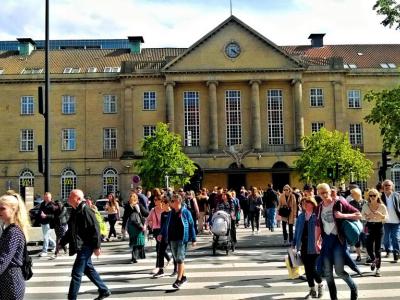
Aarhus Central Station is the principal railway station in Aarhus. This pivotal hub manages an impressive annual footfall of 6.3 million passengers, making it the busiest railway station outside the Copenhagen area. Strategically positioned in the city center, the station borders the Midtbyen and Frederiksbjerg districts, featuring access points from Banegård Square (Banegårdspladsen).
Designed as a through station, it contains four platforms and serves as a key node on the East Jutland railway line. It functions as the terminus for the Grenaa Line and Odder Line. The station offers a range of connections including international routes to Hamburg and Berlin, InterCity services to Aalborg/Frederikshavn and Copenhagen, regional routes throughout Jutland, and light rail services to Grenå and Odder.
The railway's history in Aarhus dates back to 1862 when the first line from Aarhus to Randers was inaugurated, and constructed by the British civil engineering firm Peto, Brassey, and Betts. This initial station, launched on September 2, 1862, was located near Ryesgade, incorporating administration buildings and railway works.
By 1884, due to increasing demand, a larger Neo-Renaissance-style station designed by Thomas Arboe and William August Thulstrup, possibly inspired by Bonn Central Station, was constructed. Continued growth necessitated a third construction phase, and in 1927, the current Aarhus Central Station was erected under the guidance of Danish State Railway architect K.T. Seest as part of a comprehensive area development plan.
Today, the station is not just a transit point but a commercial center as well. It houses a large ticket kiosk, public amenities, a McDonald's, two 7-Elevens, and several other retail outlets. The attached three-story Bruun's Galleri shopping center enriches the station's offering with 93 stores, eateries, cafés, and a substantial underground parking facility. The ground floor’s Bruuns Arkade adds more dining options and dual-level bicycle parking.
Designed as a through station, it contains four platforms and serves as a key node on the East Jutland railway line. It functions as the terminus for the Grenaa Line and Odder Line. The station offers a range of connections including international routes to Hamburg and Berlin, InterCity services to Aalborg/Frederikshavn and Copenhagen, regional routes throughout Jutland, and light rail services to Grenå and Odder.
The railway's history in Aarhus dates back to 1862 when the first line from Aarhus to Randers was inaugurated, and constructed by the British civil engineering firm Peto, Brassey, and Betts. This initial station, launched on September 2, 1862, was located near Ryesgade, incorporating administration buildings and railway works.
By 1884, due to increasing demand, a larger Neo-Renaissance-style station designed by Thomas Arboe and William August Thulstrup, possibly inspired by Bonn Central Station, was constructed. Continued growth necessitated a third construction phase, and in 1927, the current Aarhus Central Station was erected under the guidance of Danish State Railway architect K.T. Seest as part of a comprehensive area development plan.
Today, the station is not just a transit point but a commercial center as well. It houses a large ticket kiosk, public amenities, a McDonald's, two 7-Elevens, and several other retail outlets. The attached three-story Bruun's Galleri shopping center enriches the station's offering with 93 stores, eateries, cafés, and a substantial underground parking facility. The ground floor’s Bruuns Arkade adds more dining options and dual-level bicycle parking.
2) Aarhus City Hall
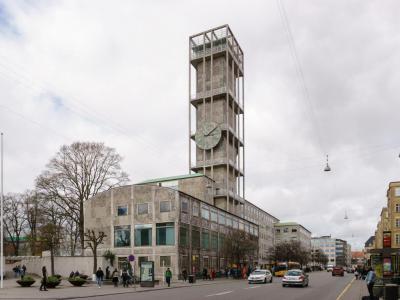
Aarhus City Hall was completed in 1941 from a design by architects Arne Jacobsen and Erik Moller. It was designed to replace the Old City Hall, built in 1857, which is now home to the Museum of Women's History.
The building includes a 196-foot tall tower and a tower clock with a face that is almost 23-feet wide. The city hall is made with concrete plated with grey marble imported from Porsgrunn in Norway. Architectural details are completed on the exterior in copper that has since been covered in verdigris.
The entrance of the Aarhus City Hall is in the City Hall Park. The park includes a cobbled plaza and an avenue lined in linden trees. City Hall Square offers a fountain and a sculpture known as Ceres Bronden.
The interior of the city hall has oak parquet floors, patterned ceramic tiles, glass walls and a large number of brass and bronze accents. Visitors can take guided tours inside the city hall on Tuesdays, Thursdays and Saturdays.
The building includes a 196-foot tall tower and a tower clock with a face that is almost 23-feet wide. The city hall is made with concrete plated with grey marble imported from Porsgrunn in Norway. Architectural details are completed on the exterior in copper that has since been covered in verdigris.
The entrance of the Aarhus City Hall is in the City Hall Park. The park includes a cobbled plaza and an avenue lined in linden trees. City Hall Square offers a fountain and a sculpture known as Ceres Bronden.
The interior of the city hall has oak parquet floors, patterned ceramic tiles, glass walls and a large number of brass and bronze accents. Visitors can take guided tours inside the city hall on Tuesdays, Thursdays and Saturdays.
3) ARos Aarhus Kunstmuseum (ARoS Aarhus Art Mseum) (must see)
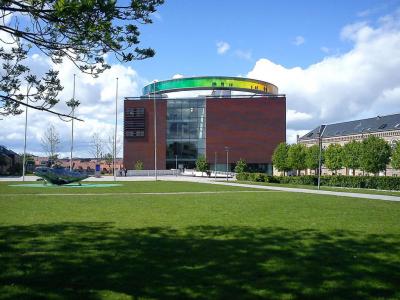
ARoS Aarhus Art Museum was first established in 1859. A new building was constructed in 2004 to provide space to the various exhibitions. The 10-story tall building was designed by architects Schmidt Hammer Lassen in a Modern architectural style. ARoS Aarhus Art Museum is now one of the largest art museums in Northern Europe.
The museum offers permanent and changing exhibitions. It also has a gift shop, a cafe and a restaurant. One of the most popular features of ARoS Aarhus Art Museum is the skywalk. Your Rainbow, crafted by Olafur Eliasson, offers a 360-degree view. It allows patrons to walk through the art installation and become part of the rainbow.
The permanent exhibit at ARoS Aarhus Art Museum includes art from the Danish Golden Age as well as from artists like Andy Warhol and Roy Lichtenstein. Revolving exhibits feature art, architecture and historical artifacts.
The museum offers permanent and changing exhibitions. It also has a gift shop, a cafe and a restaurant. One of the most popular features of ARoS Aarhus Art Museum is the skywalk. Your Rainbow, crafted by Olafur Eliasson, offers a 360-degree view. It allows patrons to walk through the art installation and become part of the rainbow.
The permanent exhibit at ARoS Aarhus Art Museum includes art from the Danish Golden Age as well as from artists like Andy Warhol and Roy Lichtenstein. Revolving exhibits feature art, architecture and historical artifacts.
4) Møllestien (The Mill Path) (must see)
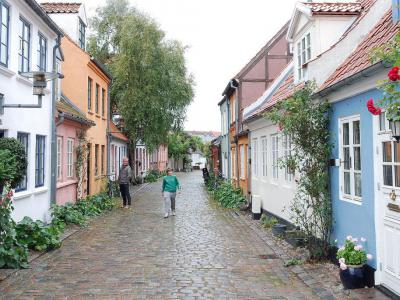
The Mill Path is a historic street in Aarhus. It is a cobblestone street with buildings constructed between 1870 and 1885. However, the street itself has been used in Aarhus since the 13th century.
The name "Mill Path" refers to the Aarhus Mill, which was first mentioned in 1289. The mill was located where the former Aarhus Main Library now stands at the western end of the street.
Sadly, the beautiful homes built in the late 19th century mostly fell into disrepair by 1925. The healthy soil that created an excellent basis for farmland because marshy and tenants were unable to maintain upkeep of the homes. Most of the street remained uninhabitable through 1960 when a renovation plan for the street was put together.
Students and artists moved into the neighborhood during the late 20th century. They painted many of the homes in bright colors, giving it the charm that is seen today. Renovations on the street led to many buildings being removed and replaced with modern structures. What is left is interesting architecture that is a favorite among the visitors to Aarhus.
The name "Mill Path" refers to the Aarhus Mill, which was first mentioned in 1289. The mill was located where the former Aarhus Main Library now stands at the western end of the street.
Sadly, the beautiful homes built in the late 19th century mostly fell into disrepair by 1925. The healthy soil that created an excellent basis for farmland because marshy and tenants were unable to maintain upkeep of the homes. Most of the street remained uninhabitable through 1960 when a renovation plan for the street was put together.
Students and artists moved into the neighborhood during the late 20th century. They painted many of the homes in bright colors, giving it the charm that is seen today. Renovations on the street led to many buildings being removed and replaced with modern structures. What is left is interesting architecture that is a favorite among the visitors to Aarhus.
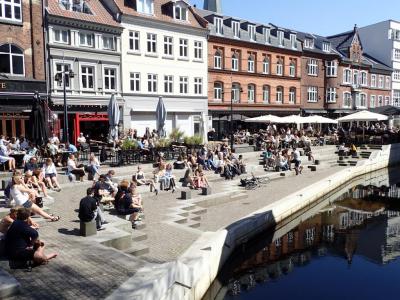
5) Åboulevarden (River Boulevard)
River Boulevard is both a street and a promenade that runs along the Aarhus River. The street runs east to west from Vester Alle to Europaplads. At 975 meters (nearly 3200 feet) long, it is a popular thoroughfare used by pedestrians.
The history of River Boulevard dates to 1477. King Christian I allowed the development of the area near the river. Homes were built and later, in 1674, the alley that ran along the street was widened. River Boulevard itself was built in stages from 1898 to 1934.
A portion of the Aarhus River was briefly paved to provide room for a wider street and parking. Work to uncover the river began in 2005 and was completed in 2015. A new recreational space was created to celebrate the reopening of the river.
The eastern area of River Boulevard is the most popular for locals and visitors. This section of River Boulevard has a large number of bars and cafes with outdoor seating.
The history of River Boulevard dates to 1477. King Christian I allowed the development of the area near the river. Homes were built and later, in 1674, the alley that ran along the street was widened. River Boulevard itself was built in stages from 1898 to 1934.
A portion of the Aarhus River was briefly paved to provide room for a wider street and parking. Work to uncover the river began in 2005 and was completed in 2015. A new recreational space was created to celebrate the reopening of the river.
The eastern area of River Boulevard is the most popular for locals and visitors. This section of River Boulevard has a large number of bars and cafes with outdoor seating.
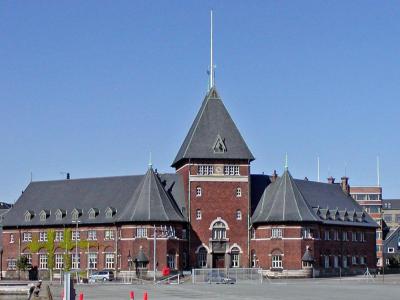
6) Toldboden (Aarhus Custom House)
The Aarhus Custom House stands as a notable architectural landmark on the harbor front of Aarhus. Completed in 1898 and designed by the esteemed royal building inspector Hack Kampmann, this building is often celebrated as one of his finest creations. Kampmann's influence on Aarhus is significant, with other notable designs in the city including the Marselisborg Palace and Aarhus Teater.
Originally built between 1895 and 1897 to serve the Danish state, the Aarhus Custom House is the fourth customs building in the city's history. Its predecessors included structures strategically placed along the Aarhus Å and near the city's port to facilitate maritime and customs activities. Kampmann's design marked a new era, situating the building in a prime location to oversee the bustling harbor area.
The architectural style of the Aarhus Custom House is predominantly National Romanticism, a style that emphasizes folk elements and national identity, which was quite popular in Scandinavia at the turn of the 20th century. After serving its initial purpose until the mid-1990s, the building saw various uses, including a period when it hosted the architecture school and served as a student hostel. In 2004, the Tækker Group acquired the building, undertaking extensive renovations in collaboration with cultural authorities to preserve the distinct Kampmann style. Today, it houses a restaurant, continuing to serve a communal role in Aarhus.
Located in the central part of the city, the Aarhus Custom House not only stands as a testament to the architectural heritage of Hack Kampmann but also symbolizes the historical evolution of civic and commercial life in Aarhus. The preservation and adaptive reuse of this historic building demonstrate a commitment to maintaining cultural heritage while adapting to contemporary uses.
Originally built between 1895 and 1897 to serve the Danish state, the Aarhus Custom House is the fourth customs building in the city's history. Its predecessors included structures strategically placed along the Aarhus Å and near the city's port to facilitate maritime and customs activities. Kampmann's design marked a new era, situating the building in a prime location to oversee the bustling harbor area.
The architectural style of the Aarhus Custom House is predominantly National Romanticism, a style that emphasizes folk elements and national identity, which was quite popular in Scandinavia at the turn of the 20th century. After serving its initial purpose until the mid-1990s, the building saw various uses, including a period when it hosted the architecture school and served as a student hostel. In 2004, the Tækker Group acquired the building, undertaking extensive renovations in collaboration with cultural authorities to preserve the distinct Kampmann style. Today, it houses a restaurant, continuing to serve a communal role in Aarhus.
Located in the central part of the city, the Aarhus Custom House not only stands as a testament to the architectural heritage of Hack Kampmann but also symbolizes the historical evolution of civic and commercial life in Aarhus. The preservation and adaptive reuse of this historic building demonstrate a commitment to maintaining cultural heritage while adapting to contemporary uses.
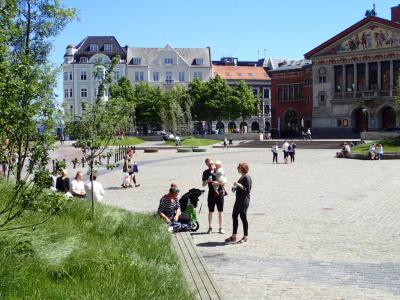
7) Bispetorv (Bishop's Square)
Bishop's Square is a city square near Aarhus Cathedral. It is also located near other well known attractions in Aarhus like the Aarhus Theatre, the Viking Museum and the Latin Quarter neighborhood. It is a wide, open square with plenty of room to roam on the cobbled ground or take advantage of shade from the trees along the southern wall.
The square was renovated in 2016 to create a public space that is used for concerts and gatherings. Prior to this, the square was used as a parking lot. However, it holds a much more important a place in the history of Aarhus.
In the late first century, Bishop's Square was a pagan burial site. Later, it was the seat of the Diocese of Aarhus. Aarhus Cathedral was built near the burial site, which turned the area into a spot that was largely dominated by the clergy. The land was purchased by the city of Aarhus in 1881.
An archaeological dig of the site in the 1960s uncovered many items from the Viking Age and they are now displayed in the Viking Museum near the square.
Bishop's Square is home to a statue of King Christian X atop a horse. During the German occupation of Denmark, Christian became a popular symbol of resistance. He used to ride daily through the streets of Copenhagen unaccompanied by guards and people stood and waved to him. The large statue is located in the grassy area northwest of the open square.
The square was renovated in 2016 to create a public space that is used for concerts and gatherings. Prior to this, the square was used as a parking lot. However, it holds a much more important a place in the history of Aarhus.
In the late first century, Bishop's Square was a pagan burial site. Later, it was the seat of the Diocese of Aarhus. Aarhus Cathedral was built near the burial site, which turned the area into a spot that was largely dominated by the clergy. The land was purchased by the city of Aarhus in 1881.
An archaeological dig of the site in the 1960s uncovered many items from the Viking Age and they are now displayed in the Viking Museum near the square.
Bishop's Square is home to a statue of King Christian X atop a horse. During the German occupation of Denmark, Christian became a popular symbol of resistance. He used to ride daily through the streets of Copenhagen unaccompanied by guards and people stood and waved to him. The large statue is located in the grassy area northwest of the open square.
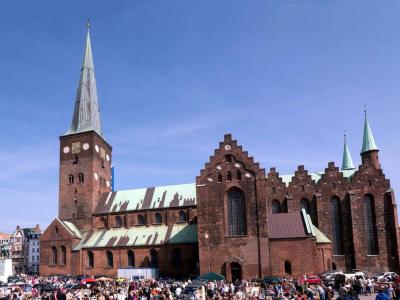
8) Aarhus Cathedral (must see)
Aarhus Cathedral is a Church of Denmark cathedral that was previously a part of the Roman Catholic church. The Gothic and Romanesque cathedral was completed in 1300 and dedicated to Saint Clement, the patron saint of sailors.
Construction of the church started around 1190. It was built around Saint Clement's church, a timber church built in 1102. The Romanesque architectural style included half-rounded arches, a flat timber ceiling and four chapels.
The cathedral suffered great damage in 1330 when a fire burned much of Aarhus. It was abandoned until 1449 when it was renovated and enlarged. The new design of the church used Gothic vaulting with high windows and a lengthened nave. It is now both the tallest and longest church in Denmark at 305 feet long and 315 feet high. The current, 314-foot tower was built in 1931.
There are more frescoes in Aarhus Cathedral than in any church in the country. They were painted between 1470 and 1520. Likewise, the painting of Saint Christopher and Saint Clement are the tallest in Denmark. The cathedral's one stained glass window was created by Emanuel Vigeland in 1926. At almost 46-feet tall, it is the largest stained glass window in Denmark.
Construction of the church started around 1190. It was built around Saint Clement's church, a timber church built in 1102. The Romanesque architectural style included half-rounded arches, a flat timber ceiling and four chapels.
The cathedral suffered great damage in 1330 when a fire burned much of Aarhus. It was abandoned until 1449 when it was renovated and enlarged. The new design of the church used Gothic vaulting with high windows and a lengthened nave. It is now both the tallest and longest church in Denmark at 305 feet long and 315 feet high. The current, 314-foot tower was built in 1931.
There are more frescoes in Aarhus Cathedral than in any church in the country. They were painted between 1470 and 1520. Likewise, the painting of Saint Christopher and Saint Clement are the tallest in Denmark. The cathedral's one stained glass window was created by Emanuel Vigeland in 1926. At almost 46-feet tall, it is the largest stained glass window in Denmark.
9) Viking Museum
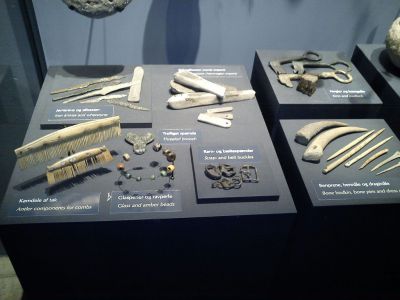
The Viking Museum in Aarhus offers a unique and intimate exploration of the Viking Age right in the heart of the city. Situated underground at Saint Clemens Square, beneath the Nordea bank building, this small museum is a treasure trove of history administered by the Moesgård Museum and supported financially by Aarhus Municipality and Nordea.
Founded in 1968 following archaeological digs from 1963-1964 during the construction of an office building, the museum showcases these excavations. These digs, conducted 3 meters below street level, unearthed Viking Age structures, artifacts, and even parts of a human skeleton. This provides a profound, in-situ experience for visitors, as they stand directly over the site of these historical findings.
The museum's exhibits extend beyond the archaeological finds to provide a broader view of Viking Age Aarhus. Through a mix of original and replicated items, the museum enriches visitors' understanding of the era.
A highlight is the detailed model city of Aarhus as it would have appeared around 980 AD during the reign of Harold Bluetooth, offering a vivid glimpse into the past. Alongside historical narratives, the museum also features newly discovered artifacts and a few replicas for security reasons, as the site is not under constant surveillance.
Moreover, the museum displays a copy of the 'Hørningstenen' runic stone, with the original housed at the Moesgaard Museum. This artifact, discovered in 1849, adds a significant cultural and historical narrative to the Viking Museum's collection, linking it to broader regional histories.
Founded in 1968 following archaeological digs from 1963-1964 during the construction of an office building, the museum showcases these excavations. These digs, conducted 3 meters below street level, unearthed Viking Age structures, artifacts, and even parts of a human skeleton. This provides a profound, in-situ experience for visitors, as they stand directly over the site of these historical findings.
The museum's exhibits extend beyond the archaeological finds to provide a broader view of Viking Age Aarhus. Through a mix of original and replicated items, the museum enriches visitors' understanding of the era.
A highlight is the detailed model city of Aarhus as it would have appeared around 980 AD during the reign of Harold Bluetooth, offering a vivid glimpse into the past. Alongside historical narratives, the museum also features newly discovered artifacts and a few replicas for security reasons, as the site is not under constant surveillance.
Moreover, the museum displays a copy of the 'Hørningstenen' runic stone, with the original housed at the Moesgaard Museum. This artifact, discovered in 1849, adds a significant cultural and historical narrative to the Viking Museum's collection, linking it to broader regional histories.
10) Sankt Clemens Bridge
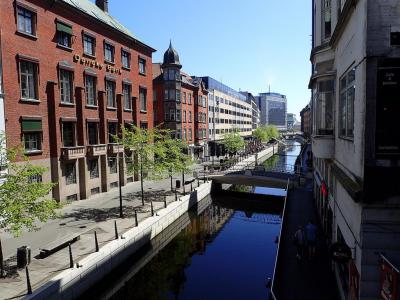
Saint Clement Bridge in Aarhus stands as an iconic pedestrian bridge that seamlessly combines history, architecture, and community spirit. Situated in the bustling heart of Aarhus, this bridge spans the serene Aarhus River at Saint Clement Square, linking the city's historic sector with newer developments near the railway station. The bridge's origins trace back over a century to 1881, when it was constructed through public fundraising and significant contributions from local businessman Hans Broge, amidst vigorous debates over costs.
Designed initially by Aarhus's harbor and town engineers, with additional ornamentations by royal building inspector Th. Walther, Saint Clement Bridge has undergone numerous transformations, the most recent being in 1982. This renovation aimed to replace outdated steel structures and brighten the previously dim and gloomy under-bridge area. The redesign was spearheaded by city architect Ole Oestergaard and engineering firm Carl Bro A/S, resulting in a bridge that doubles as a street, matching the breadth of nearby Soendergade. The bridge is supported by concrete columns, while steel columns designed to resemble trees support the adjacent side bridges.
Today, the area beneath Saint Clement Bridge has been revitalized into a vibrant public space. Enhanced lighting and accessibility via stairs or an elevator lead to an intermediate level beneath the main bridge, where visitors can enjoy amenities such as restaurants and bars. The bridge itself offers picturesque views of Aarhus's dynamic skyline and the charming riverside, making it a popular spot for both locals and tourists seeking a scenic and culturally immersive experience. With its unique architectural features and lively under-bridge area, Saint Clement Bridge remains a must-visit landmark in Aarhus.
Designed initially by Aarhus's harbor and town engineers, with additional ornamentations by royal building inspector Th. Walther, Saint Clement Bridge has undergone numerous transformations, the most recent being in 1982. This renovation aimed to replace outdated steel structures and brighten the previously dim and gloomy under-bridge area. The redesign was spearheaded by city architect Ole Oestergaard and engineering firm Carl Bro A/S, resulting in a bridge that doubles as a street, matching the breadth of nearby Soendergade. The bridge is supported by concrete columns, while steel columns designed to resemble trees support the adjacent side bridges.
Today, the area beneath Saint Clement Bridge has been revitalized into a vibrant public space. Enhanced lighting and accessibility via stairs or an elevator lead to an intermediate level beneath the main bridge, where visitors can enjoy amenities such as restaurants and bars. The bridge itself offers picturesque views of Aarhus's dynamic skyline and the charming riverside, making it a popular spot for both locals and tourists seeking a scenic and culturally immersive experience. With its unique architectural features and lively under-bridge area, Saint Clement Bridge remains a must-visit landmark in Aarhus.
11) Salling Rooftop
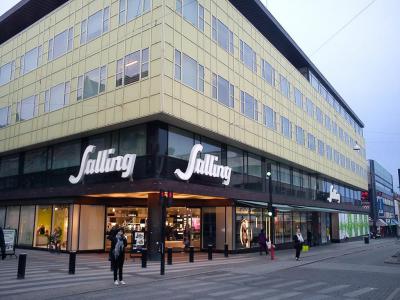
Salling is a department store in Aarhus. Customers can purchase clothing, household goods, beauty supplies, shoes, toys and more. However, many of the visitors to Salling arrive not to shop but to see the spectacular rooftop.
The Salling Rooftop is located atop the department store. It has a glass roof with a 360-degree, panoramic view of the city. The interior of the rooftop offers regular special events and entertainment. It is a popular dining spot and a place to get a cocktail or cup of coffee.
Along with the Salling Rooftop, Salling is now offering the Rooftop Garden. The garden is a combination of trees, plants and works of art.
The Salling Skywalk extends out from the Rooftop. It is a glass walkway that is 88 feet above street level. Both the Rooftop and the Skywalk are open from 10 AM to 6 PM on weekends and from 10 AM to 8 PM on weekends.
The Salling Rooftop is located atop the department store. It has a glass roof with a 360-degree, panoramic view of the city. The interior of the rooftop offers regular special events and entertainment. It is a popular dining spot and a place to get a cocktail or cup of coffee.
Along with the Salling Rooftop, Salling is now offering the Rooftop Garden. The garden is a combination of trees, plants and works of art.
The Salling Skywalk extends out from the Rooftop. It is a glass walkway that is 88 feet above street level. Both the Rooftop and the Skywalk are open from 10 AM to 6 PM on weekends and from 10 AM to 8 PM on weekends.
