Custom Walk in Oslo, Norway by barbcapron_86fa4 created on 2025-05-26
Guide Location: Norway » Oslo
Guide Type: Custom Walk
# of Sights: 6
Tour Duration: 2 Hour(s)
Travel Distance: 4.5 Km or 2.8 Miles
Share Key: DZSK5
Guide Type: Custom Walk
# of Sights: 6
Tour Duration: 2 Hour(s)
Travel Distance: 4.5 Km or 2.8 Miles
Share Key: DZSK5
How It Works
Please retrieve this walk in the GPSmyCity app. Once done, the app will guide you from one tour stop to the next as if you had a personal tour guide. If you created the walk on this website or come to the page via a link, please follow the instructions below to retrieve the walk in the app.
Retrieve This Walk in App
Step 1. Download the app "GPSmyCity: Walks in 1K+ Cities" on Apple App Store or Google Play Store.



Step 2. In the GPSmyCity app, download(or launch) the guide "Oslo Map and Walking Tours".
Step 3. Tap the menu button located at upper right corner of the "Walks" screen and select "Retrieve custom walk". Enter the share key: DZSK5
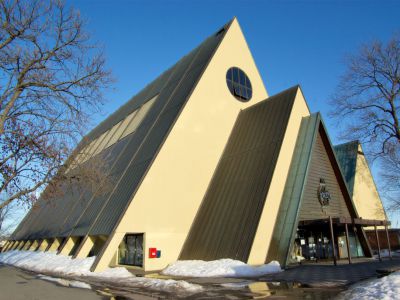
1) Fram Museum (must see)
The Fram Museum stands as a tribute to Norwegian polar exploration, recounting its history and tales. Situated on the Bygdøy peninsula in Oslo, it shares space with a cluster of other remarkable museums, including the Kon-Tiki Museum, the Norwegian Museum of Cultural History, the Viking Ship Museum, and the Norwegian Maritime Museum. Nearby, one can find the Bygdøy Royal Estate, the designated summer retreat for the King of Norway, and the historic Oscarshall.
Established on May 20, 1936, the Fram Museum commemorates the broader journey of Norwegian polar exploration, with a special focus on three renowned explorers – Fridtjof Nansen, Otto Sverdrup, and Roald Amundsen. Within its walls, visitors can also encounter captivating visuals of the polar region's wildlife, including polar bears and penguins.
Central to the Fram Museum is the original exploration vessel, also named Fram. Preserving its authentic interior, the museum invites visitors to step inside the ship and witness its history firsthand. The creation of Fram was overseen by Colin Archer, a shipbuilder of Scots-Norwegian origin, who designed the vessel based on the specifications outlined by Norwegian Arctic explorer Fridtjof Nansen. In 1891, Nansen secured funding from both the Norwegian government and private sources to bring this ship to life.
In May 2009, the Fram Museum and the Norwegian Maritime Museum entered into a collaborative agreement, granting the Fram Museum the responsibility of showcasing the Gjøa, the first ship to successfully navigate the Northwest Passage. In 1906, Roald Amundsen and his crew achieved this remarkable feat after a three-year expedition. Housed in its dedicated building within the museum complex, the Gjøa was made fully accessible to visitors in 2017.
Why You Should Visit:
This museum is the most comprehensive exhibit on polar exploration that you're likely to see.
The collection includes many photographs, maps, and equipment; the displays have timelines, journal entries, and historical contents.
There are also several specific rooms that simulate the conditions in the Arctic (and the Antarctic), like the one you go in freezing and windy conditions.
The facility offers lockers, snacks, and drinks so there's no need to rush out of it.
Tip:
Consider buying the museum pack that gets you into the 3 museums all right next to each other: Fram, Kon-Tiki, and the Marine Museum.
Established on May 20, 1936, the Fram Museum commemorates the broader journey of Norwegian polar exploration, with a special focus on three renowned explorers – Fridtjof Nansen, Otto Sverdrup, and Roald Amundsen. Within its walls, visitors can also encounter captivating visuals of the polar region's wildlife, including polar bears and penguins.
Central to the Fram Museum is the original exploration vessel, also named Fram. Preserving its authentic interior, the museum invites visitors to step inside the ship and witness its history firsthand. The creation of Fram was overseen by Colin Archer, a shipbuilder of Scots-Norwegian origin, who designed the vessel based on the specifications outlined by Norwegian Arctic explorer Fridtjof Nansen. In 1891, Nansen secured funding from both the Norwegian government and private sources to bring this ship to life.
In May 2009, the Fram Museum and the Norwegian Maritime Museum entered into a collaborative agreement, granting the Fram Museum the responsibility of showcasing the Gjøa, the first ship to successfully navigate the Northwest Passage. In 1906, Roald Amundsen and his crew achieved this remarkable feat after a three-year expedition. Housed in its dedicated building within the museum complex, the Gjøa was made fully accessible to visitors in 2017.
Why You Should Visit:
This museum is the most comprehensive exhibit on polar exploration that you're likely to see.
The collection includes many photographs, maps, and equipment; the displays have timelines, journal entries, and historical contents.
There are also several specific rooms that simulate the conditions in the Arctic (and the Antarctic), like the one you go in freezing and windy conditions.
The facility offers lockers, snacks, and drinks so there's no need to rush out of it.
Tip:
Consider buying the museum pack that gets you into the 3 museums all right next to each other: Fram, Kon-Tiki, and the Marine Museum.
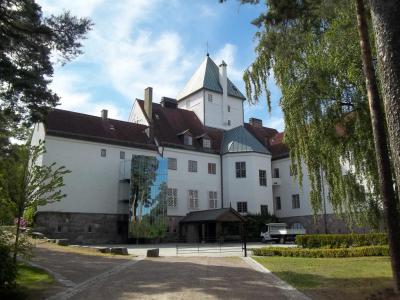
2) Holocaust Center
Situated on the Bygdøy Peninsula, the Holocaust Center finds its home within a structure recognized as Villa Grande. Erected in 1914, this edifice once served as the dwelling for Vidkun Quisling during the Second World War. Vidkun Quisling, an extremist right-wing figure, orchestrated a Nazi-supported uprising in occupied Norway. He actively aided Nazi Germany in orchestrating the Holocaust and subsequently faced trial in 1945 for his involvement in war crimes. Following his conviction for treason and murder, Quisling met his end through execution at Akershus Fortress.
The present-day establishment, nestled within Quisling's former abode, was established by the Norwegian government as a gesture of reparation to the country's Jewish community. Its primary mission revolves around enlightening the populace about the grievous atrocities of the Holocaust, offering a uniquely Norwegian vantage point. Moreover, the center features exhibitions that delve into the broader subjects of antisemitism and racism. Functioning as a museum, it additionally pays homage to the lifestyles and traditions of Norway's various ethnic and religious minorities.
Within the center's walls lie a repository of knowledge in the form of a library and research amenities. Furthermore, it plays host to discussions that pertain to the pertinent topics of ethnic diversity and cultural heritage.
The present-day establishment, nestled within Quisling's former abode, was established by the Norwegian government as a gesture of reparation to the country's Jewish community. Its primary mission revolves around enlightening the populace about the grievous atrocities of the Holocaust, offering a uniquely Norwegian vantage point. Moreover, the center features exhibitions that delve into the broader subjects of antisemitism and racism. Functioning as a museum, it additionally pays homage to the lifestyles and traditions of Norway's various ethnic and religious minorities.
Within the center's walls lie a repository of knowledge in the form of a library and research amenities. Furthermore, it plays host to discussions that pertain to the pertinent topics of ethnic diversity and cultural heritage.
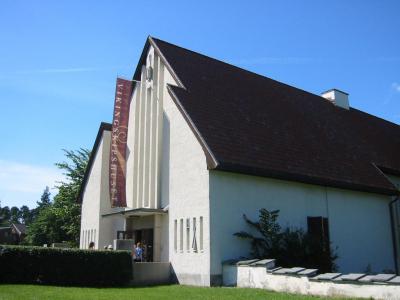
3) Viking Ship Museum (must see)
Situated on the Bygdøy peninsula in Oslo, the Viking Ship Museum forms an integral part of the Museum of Cultural History at the University of Oslo. Within its walls lie three burial ships from the Viking era, unearthed as significant archaeological discoveries from sites like Tune, Gokstad (Sandefjord), Oseberg (Tønsberg), and the Borre mound cemetery.
The museum gains its greatest renown for hosting the remarkably intact Oseberg ship, extracted from the world's largest documented ship burial. Alongside this, the Viking Ship Museum boasts the Gokstad ship and Tune ship as its main draws. Expanding the experience, the Viking Age exhibition presents an array of artifacts, encompassing sleds, beds, a horse cart, wood carvings, tent components, buckets, and various grave goods.
In 1913, Swedish scholar Gabriel Gustafson put forth a dedicated architectural concept aimed at housing Viking Age discoveries that had surfaced during the late 19th and early 20th centuries. The University of Oslo had previously offered temporary refuge to the Gokstad and Oseberg ships. An architectural competition was organized, ultimately won by Arnstein Arneberg.
The construction of the Oseberg ship hall received funding from the Norwegian Parliament, leading to the relocation of the ship from the university's provisional shelters in 1926. Subsequently, the halls for the Gokstad and Tune ships were finalized by 1932. Nonetheless, the completion of the last hall faced delays, partly due to World War II, reaching its conclusion in 1957. This final hall accommodates the majority of the other findings, primarily sourced from the Oseberg site.
Why You Should Visit:
The best place to see real Viking ships in a great conservation state and other pieces of Viking history.
The building is a wonderful setting for the ships. Pretty cheap entrance ticket as well.
Outside café and pleasant sitting out area, weather permitting.
Tip:
There's a locker you can use for free where you can put your bags, since they only allow small purses.
Your ticket also covers free entry to the Museum of Cultural History nearby within 48 hours.
The museum gains its greatest renown for hosting the remarkably intact Oseberg ship, extracted from the world's largest documented ship burial. Alongside this, the Viking Ship Museum boasts the Gokstad ship and Tune ship as its main draws. Expanding the experience, the Viking Age exhibition presents an array of artifacts, encompassing sleds, beds, a horse cart, wood carvings, tent components, buckets, and various grave goods.
In 1913, Swedish scholar Gabriel Gustafson put forth a dedicated architectural concept aimed at housing Viking Age discoveries that had surfaced during the late 19th and early 20th centuries. The University of Oslo had previously offered temporary refuge to the Gokstad and Oseberg ships. An architectural competition was organized, ultimately won by Arnstein Arneberg.
The construction of the Oseberg ship hall received funding from the Norwegian Parliament, leading to the relocation of the ship from the university's provisional shelters in 1926. Subsequently, the halls for the Gokstad and Tune ships were finalized by 1932. Nonetheless, the completion of the last hall faced delays, partly due to World War II, reaching its conclusion in 1957. This final hall accommodates the majority of the other findings, primarily sourced from the Oseberg site.
Why You Should Visit:
The best place to see real Viking ships in a great conservation state and other pieces of Viking history.
The building is a wonderful setting for the ships. Pretty cheap entrance ticket as well.
Outside café and pleasant sitting out area, weather permitting.
Tip:
There's a locker you can use for free where you can put your bags, since they only allow small purses.
Your ticket also covers free entry to the Museum of Cultural History nearby within 48 hours.
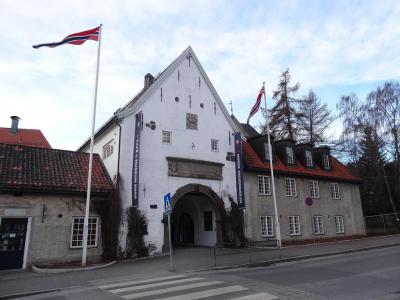
4) Norwegian Museum of Cultural History (must see)
Situated in Oslo, the Norwegian Museum of Cultural History (Norsk Folkemuseum) stands as a repository of cultural heritage. Its extensive assortment comprises artifacts from diverse societal segments and geographical regions within the country. A highlight of the museum is its expansive open-air section featuring over 150 structures sourced from urban and rural locales.
Nestled on the Bygdøy peninsula, the Norwegian Museum of Cultural History finds itself in close proximity to a cluster of fellow museums, including the Viking Ship Museum, the Fram Museum, the Kon-Tiki Museum, and the Norwegian Maritime Museum.
Originating in 1894 under the guidance of librarian and historian Hans Aall (1869–1946), the museum's inception saw the construction of temporary exhibition edifices and the relocation of numerous rural structures. The museum officially welcomed the public in 1901. In a significant development, the collections of King Oscar II, located nearby, were integrated into the museum in 1907. At its core stands a collection of five transplanted buildings, with the iconic Gol Stave Church leading the way. This ensemble is hailed as the world's inaugural open-air museum, established in 1881.
The museum features notable structures like the 13th-century Gol Stave Church, merged into Norsk Folkemuseum in 1907. Among five medieval buildings displayed, there's the 14th-century Rauland farmhouse, a tenement from 15 Wessels gate (1865) with seven flats showcasing 19th to 20th-century interiors. One flat mimics a 2002 Pakistani immigrant family's living space. In 1951, Norsk Folkemuseum acquired Sami collections from the University of Oslo's Ethnographic Museum.
Enriching its holdings, the museum boasts an expansive photographic archive, a substantial portion of which comprises works by the renowned photographer Anders Beer Wilse (1865–1949). Throughout its existence, the museum has been a hub of research, delving into areas such as architecture, furnishings, attire, textiles, technological and societal customs, agriculture, collective memory, and Sami culture.
Why You Should Visit:
To get a keen insight into Norwegian life across hundreds of years.
Tip:
Plan to spend at least 3-4 hours to give this skansen/museum justice.
It is worth taking the free guided tours (about 1h) for the interesting info about the buildings and cultural history.
Nestled on the Bygdøy peninsula, the Norwegian Museum of Cultural History finds itself in close proximity to a cluster of fellow museums, including the Viking Ship Museum, the Fram Museum, the Kon-Tiki Museum, and the Norwegian Maritime Museum.
Originating in 1894 under the guidance of librarian and historian Hans Aall (1869–1946), the museum's inception saw the construction of temporary exhibition edifices and the relocation of numerous rural structures. The museum officially welcomed the public in 1901. In a significant development, the collections of King Oscar II, located nearby, were integrated into the museum in 1907. At its core stands a collection of five transplanted buildings, with the iconic Gol Stave Church leading the way. This ensemble is hailed as the world's inaugural open-air museum, established in 1881.
The museum features notable structures like the 13th-century Gol Stave Church, merged into Norsk Folkemuseum in 1907. Among five medieval buildings displayed, there's the 14th-century Rauland farmhouse, a tenement from 15 Wessels gate (1865) with seven flats showcasing 19th to 20th-century interiors. One flat mimics a 2002 Pakistani immigrant family's living space. In 1951, Norsk Folkemuseum acquired Sami collections from the University of Oslo's Ethnographic Museum.
Enriching its holdings, the museum boasts an expansive photographic archive, a substantial portion of which comprises works by the renowned photographer Anders Beer Wilse (1865–1949). Throughout its existence, the museum has been a hub of research, delving into areas such as architecture, furnishings, attire, textiles, technological and societal customs, agriculture, collective memory, and Sami culture.
Why You Should Visit:
To get a keen insight into Norwegian life across hundreds of years.
Tip:
Plan to spend at least 3-4 hours to give this skansen/museum justice.
It is worth taking the free guided tours (about 1h) for the interesting info about the buildings and cultural history.
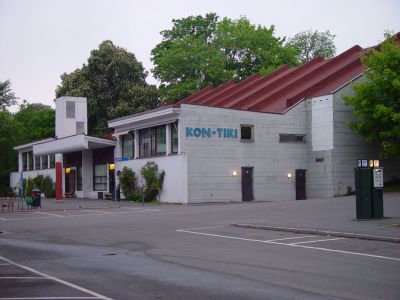
5) Kon-Tiki Museum (must see)
Situated on the picturesque Bygdøy peninsula, close to various other cultural landmarks and museums, is the Kon-Tiki Museum. Established in 1949 and subsequently relocated to its current site in 1957, this museum is a tribute to the life and exploits of the Norwegian adventurer Thor Heyerdahl. Born in 1914, Heyerdahl orchestrated a series of daring expeditions across the Pacific Ocean during the 1940s and 1950s. The museum draws visitors into the captivating narrative of his endeavors, particularly highlighting his renowned voyage to the South Pacific, from which the museum derives its name.
Heyerdahl possessed a profound fascination with the historical tapestry of the Pacific Islands and ardently held the conviction that pre-Columbian South American indigenous communities had established colonies in distant locales like Easter Island, well before the arrival of European explorers. Through his remarkable feat aboard the Kon-Tiki, an ingenious balsa wood raft christened after an Incan deity, Heyerdahl irrefutably demonstrated the viability of traversing the vast expanse of the Pacific. The Kon-Tiki raft, now the centerpiece of the museum's collection, symbolizes this audacious accomplishment.
The museum offers an array of captivating exhibits, including a dedicated showcase of deep-sea inhabitants, featuring the complete skeletal structure of a majestic whale shark. Additionally, an expansive library dedicated to Norwegian exploration enriches the museum's offerings, further illustrating the country's history of maritime discovery.
Why You Should Visit:
It is pretty unexpected and nice learning about something so far from Norway, but at the same time relevant to it.
The displays are interactive and well-organized and give a really good sense of the motivations and dangers behind the trip.
Tip:
Make sure you visit at midday for the daily screening of the Kon-Tiki film, which gives a better picture of what Heyerdahl and his crew achieved and definitely enhances the rest of the exhibition.
Note that there is no food available in this museum – just a coffee/tea station.
Heyerdahl possessed a profound fascination with the historical tapestry of the Pacific Islands and ardently held the conviction that pre-Columbian South American indigenous communities had established colonies in distant locales like Easter Island, well before the arrival of European explorers. Through his remarkable feat aboard the Kon-Tiki, an ingenious balsa wood raft christened after an Incan deity, Heyerdahl irrefutably demonstrated the viability of traversing the vast expanse of the Pacific. The Kon-Tiki raft, now the centerpiece of the museum's collection, symbolizes this audacious accomplishment.
The museum offers an array of captivating exhibits, including a dedicated showcase of deep-sea inhabitants, featuring the complete skeletal structure of a majestic whale shark. Additionally, an expansive library dedicated to Norwegian exploration enriches the museum's offerings, further illustrating the country's history of maritime discovery.
Why You Should Visit:
It is pretty unexpected and nice learning about something so far from Norway, but at the same time relevant to it.
The displays are interactive and well-organized and give a really good sense of the motivations and dangers behind the trip.
Tip:
Make sure you visit at midday for the daily screening of the Kon-Tiki film, which gives a better picture of what Heyerdahl and his crew achieved and definitely enhances the rest of the exhibition.
Note that there is no food available in this museum – just a coffee/tea station.
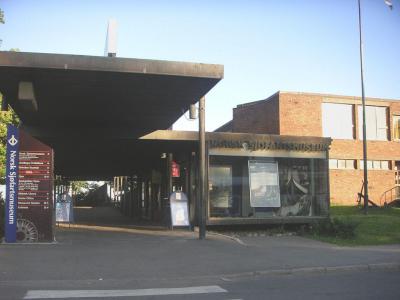
6) Norwegian Maritime Museum
The Norwegian Maritime Museum is situated on the Bygdøy peninsula, specifically along Bygdøynesveien on the western side of Oslo. It shares its location with various other museums, such as the Fram Museum, the Kon-Tiki Museum, the Norwegian Museum of Cultural History, and the Viking Ship Museum.
Established in 1914, the museum presents a diverse range of exhibits that delve into coastal culture and maritime history. These displays encompass a wide array of topics, including shipbuilding, boat models, fishing, marine archaeology, and shipping. Visitors can also engage with the multimedia presentation "Maritime Norway" created by Ivo Caprino, and have access to an on-site library that enhances their museum experience. The institution has a specialized marine archaeology department and displays 40+ maritime paintings by famous artists.
Among the notable vessels exhibited, the Stavanger and the Svanen take center stage. The Stavanger, designed by Colin Archer for the Norwegian Society for Sea Rescue, represents a significant contribution to maritime design. The three-masted schooner Svanen, constructed during the winter spanning 1915 to 1916, holds a history of service within the Norwegian merchant fleet.
A pivotal piece of the museum's collection is the Gjøa, which has been on display since 1972. The Gjøa holds historical importance as the vessel that successfully traversed the Northwest Passage during Roald Amundsen's Arctic expedition from 1903 to 1906. This historic ship now finds its home in a dedicated building at the Fram Museum.
Why You Should Visit:
There aren't necessarily many dazzling things to see here, but there are a lot of smaller very intricate boat models on display.
As you climb through the floors, the museum gets better and better until you reach the top where you can enjoy the interactive sailing opportunities.
There are also many informative panels that tell you all about Norwegian maritime history, world maritime trade, and world maritime customs.
Tip:
Walk about the banks of the Oslo Fjord located behind the museum.
Established in 1914, the museum presents a diverse range of exhibits that delve into coastal culture and maritime history. These displays encompass a wide array of topics, including shipbuilding, boat models, fishing, marine archaeology, and shipping. Visitors can also engage with the multimedia presentation "Maritime Norway" created by Ivo Caprino, and have access to an on-site library that enhances their museum experience. The institution has a specialized marine archaeology department and displays 40+ maritime paintings by famous artists.
Among the notable vessels exhibited, the Stavanger and the Svanen take center stage. The Stavanger, designed by Colin Archer for the Norwegian Society for Sea Rescue, represents a significant contribution to maritime design. The three-masted schooner Svanen, constructed during the winter spanning 1915 to 1916, holds a history of service within the Norwegian merchant fleet.
A pivotal piece of the museum's collection is the Gjøa, which has been on display since 1972. The Gjøa holds historical importance as the vessel that successfully traversed the Northwest Passage during Roald Amundsen's Arctic expedition from 1903 to 1906. This historic ship now finds its home in a dedicated building at the Fram Museum.
Why You Should Visit:
There aren't necessarily many dazzling things to see here, but there are a lot of smaller very intricate boat models on display.
As you climb through the floors, the museum gets better and better until you reach the top where you can enjoy the interactive sailing opportunities.
There are also many informative panels that tell you all about Norwegian maritime history, world maritime trade, and world maritime customs.
Tip:
Walk about the banks of the Oslo Fjord located behind the museum.
