Custom Walk in Montreal, Canada by sus00000_628d4 created on 2025-06-03
Guide Location: Canada » Montreal
Guide Type: Custom Walk
# of Sights: 11
Tour Duration: 8 Hour(s)
Travel Distance: 21.3 Km or 13.2 Miles
Share Key: 95MET
Guide Type: Custom Walk
# of Sights: 11
Tour Duration: 8 Hour(s)
Travel Distance: 21.3 Km or 13.2 Miles
Share Key: 95MET
How It Works
Please retrieve this walk in the GPSmyCity app. Once done, the app will guide you from one tour stop to the next as if you had a personal tour guide. If you created the walk on this website or come to the page via a link, please follow the instructions below to retrieve the walk in the app.
Retrieve This Walk in App
Step 1. Download the app "GPSmyCity: Walks in 1K+ Cities" on Apple App Store or Google Play Store.



Step 2. In the GPSmyCity app, download(or launch) the guide "Montreal Map and Walking Tours".
Step 3. Tap the menu button located at upper right corner of the "Walks" screen and select "Retrieve custom walk". Enter the share key: 95MET

1) Mile End
Mile End is a vibrant artistic neighborhood in Montreal, known for its culture and creative community. It has attracted renowned artists, musicians, writers, and filmmakers like Arcade Fire, Grimes, and Mac Demarco. The area is filled with art galleries, designer workshops, boutiques, and cafés, making it a cool and unique neighborhood recognized globally. Mile End is also home to Drawn & Quarterly, a famous comic book company, and the Mile End Library, housed in a converted church. Ubisoft, a prominent game developer, established its Montreal studios in the area.
Notable figures like Mordecai Richler and William Shatner have ties to Mile End. The neighborhood's independent music scene thrived in the 2000s, with venues like Casa del Popolo and La Sala Rossa. Mile End is also known for its bagel shops, popular vegetarian restaurants, and local breweries. The area's popularity as a filming location led to restrictions on new film and TV shoots in certain parts of Mile End.
Notable figures like Mordecai Richler and William Shatner have ties to Mile End. The neighborhood's independent music scene thrived in the 2000s, with venues like Casa del Popolo and La Sala Rossa. Mile End is also known for its bagel shops, popular vegetarian restaurants, and local breweries. The area's popularity as a filming location led to restrictions on new film and TV shoots in certain parts of Mile End.
2) Jean-Talon Market (must see)
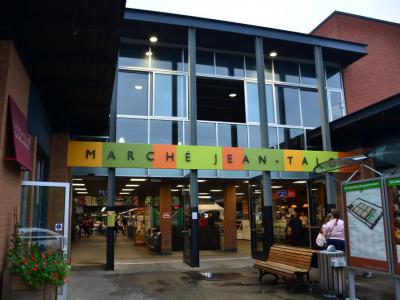
Jean-Talon Market, it's a fascinating food market located within the Little Italy neighborhood. Here you will find all kinds of vegetables, fruits, fish, cheese, bakeries, and other shops specializing in food. Everything is so fresh and yummy.
What to buy here: Canned Foods.
Who would think of buying canned food abroad when so few people eat them at home anyway? When in Montreal, think again. Quebeckers were not always prosperous - men worked draining hours in the cold and women had to find ingenious ways to use all of the food they got their hands on and cook substantial meals with it, so cans quickly became the most cost-effective option. While availability isn’t that much of an issue nowadays, the tradition of canned foods is still very much anchored in Quebec’s families.
Grandmothers and aunts take great pleasure in preparing the cans for the Christmas holidays, but if you don’t have a Quebecker relative, just pay a visit to the Jean-Talon Market and browse their numerous stalls for the perfect $7 love-made delicacy. From berry jams to fruity ketchup to meat sauce, you are guaranteed a wholesome and succulent meal back home, for a great taste of both Montreal’s culinary traditions but also its rich history.
What to buy here: Canned Foods.
Who would think of buying canned food abroad when so few people eat them at home anyway? When in Montreal, think again. Quebeckers were not always prosperous - men worked draining hours in the cold and women had to find ingenious ways to use all of the food they got their hands on and cook substantial meals with it, so cans quickly became the most cost-effective option. While availability isn’t that much of an issue nowadays, the tradition of canned foods is still very much anchored in Quebec’s families.
Grandmothers and aunts take great pleasure in preparing the cans for the Christmas holidays, but if you don’t have a Quebecker relative, just pay a visit to the Jean-Talon Market and browse their numerous stalls for the perfect $7 love-made delicacy. From berry jams to fruity ketchup to meat sauce, you are guaranteed a wholesome and succulent meal back home, for a great taste of both Montreal’s culinary traditions but also its rich history.
3) Little Italy
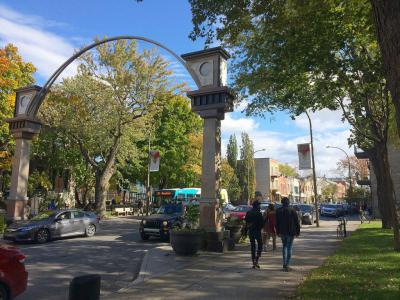
Little Italy in Montreal is a vibrant neighborhood that has become the home of a large population of Italian Canadians. Situated in the northeastern part of the city, it can be easily reached from downtown in just five minutes. Many families decided to settle in this area after World War II, during the nineteenth century.
When you visit Montreal, a trip to Little Italy is highly recommended as it offers a wealth of unique cultural treasures. One of the notable landmarks is La Difesa Church, which was built in 1919 and derived its name from a miracle that took place in La Difesa, Casacalenda, Italy. Inside the church, you will be captivated by the exquisite fresco decorations created by Guido Nincheri, a prominent artist of the sixties and seventies.
Make sure not to miss a visit to Dante Park, named after Dante Alighieri, the father of the Italian language. The park provides a serene and pleasant atmosphere for visitors to enjoy.
As you explore the neighborhood, take advantage of the charming line walkways where you can find an array of fresh produce, including delicacies like Calamari and Italian Parsley. Additionally, be sure to check out the fantastic selection of Italian shoes and clothing along Saint Laurent Blvd.
Of course, no visit to Little Italy would be complete without indulging in delicious Italian cuisine. Numerous restaurants in the area offer authentic traditional dishes. If you happen to be proficient in Italian, engaging in conversations with friendly locals can enhance your experience even further.
When you visit Montreal, a trip to Little Italy is highly recommended as it offers a wealth of unique cultural treasures. One of the notable landmarks is La Difesa Church, which was built in 1919 and derived its name from a miracle that took place in La Difesa, Casacalenda, Italy. Inside the church, you will be captivated by the exquisite fresco decorations created by Guido Nincheri, a prominent artist of the sixties and seventies.
Make sure not to miss a visit to Dante Park, named after Dante Alighieri, the father of the Italian language. The park provides a serene and pleasant atmosphere for visitors to enjoy.
As you explore the neighborhood, take advantage of the charming line walkways where you can find an array of fresh produce, including delicacies like Calamari and Italian Parsley. Additionally, be sure to check out the fantastic selection of Italian shoes and clothing along Saint Laurent Blvd.
Of course, no visit to Little Italy would be complete without indulging in delicious Italian cuisine. Numerous restaurants in the area offer authentic traditional dishes. If you happen to be proficient in Italian, engaging in conversations with friendly locals can enhance your experience even further.
4) Mount Royal Park (must see)
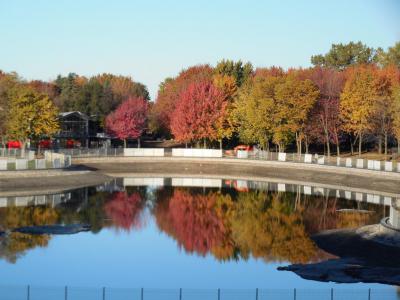
Mount Royal Park was opened in 1876. Fredrick Law Olmsted, a famous landscape architect designed this park. It is now one of the largest green spaces in Montreal that attracts more than 5 million visitors every year. If you are a passionate outdoor enthusiast, you will definitely enjoy the wide variety of plants and birds in this park. It also offers plenty of outdoor activities for all ages in all seasons.
Mount Royal Park offers some of the most mesmerizing skyline views of the city. Summit Park is a must-see spot in this park. You can see some rare wild plants here. The Georges Etienne Cartier monument is another important attraction that draws crowds. In recent times, the monument is the site for the popular TamTam’s festivities. The Beaver Lake in Mount Royal Park is an ideal picnic spot for locals and tourists.
Mount Royal Park also houses the Smith House, which is a major spot for those who want to obtain historical information about the park and the city. Mount Royal Cemetery is a pleasant place if you want to enjoy a relaxed walking or biking. It is a perfect place for picnicking too. The cemetery is more attractive in May when flowering trees bloom.
Why You Should Visit:
Great panoramic view of Montreal and the large area allows winter activities like cross-country skiing while summer and fall make a great place to hike, jog or walk.
Tip:
It takes about 20 to 30 minutes to get to the top of Mount Royal once you have reached the park. There is a gravel trail (mainly for bikes) and also a wooden staircase (for walkers) to the top. There is at least one lower vantage point that might make you think you're done, but keep going till you get to 'The Chalet'.
Mount Royal Park offers some of the most mesmerizing skyline views of the city. Summit Park is a must-see spot in this park. You can see some rare wild plants here. The Georges Etienne Cartier monument is another important attraction that draws crowds. In recent times, the monument is the site for the popular TamTam’s festivities. The Beaver Lake in Mount Royal Park is an ideal picnic spot for locals and tourists.
Mount Royal Park also houses the Smith House, which is a major spot for those who want to obtain historical information about the park and the city. Mount Royal Cemetery is a pleasant place if you want to enjoy a relaxed walking or biking. It is a perfect place for picnicking too. The cemetery is more attractive in May when flowering trees bloom.
Why You Should Visit:
Great panoramic view of Montreal and the large area allows winter activities like cross-country skiing while summer and fall make a great place to hike, jog or walk.
Tip:
It takes about 20 to 30 minutes to get to the top of Mount Royal once you have reached the park. There is a gravel trail (mainly for bikes) and also a wooden staircase (for walkers) to the top. There is at least one lower vantage point that might make you think you're done, but keep going till you get to 'The Chalet'.
5) Underground City. Place Bonaventure
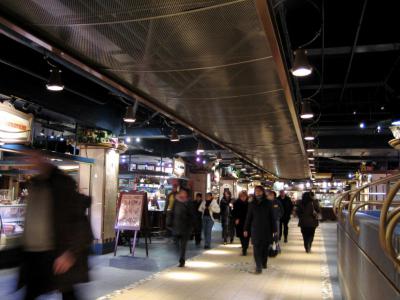
Montreal's Underground City, also known as La Ville Souterraine in French, attracts tourists from around the globe. It comprises a series of interconnected complexes beneath and above the ground in Downtown Montreal. Renowned as the Indoor City, it stands as the largest complex of its kind worldwide.
The creation of the Underground City was inspired by the vision of urbanist Vincent Ponte. In November 2006, a commemorative plaque was unveiled at Place Ville-Marie in his honor. As you explore this city, you'll discover that certain sections extend above ground as well.
These above-ground and underground areas are linked by tunnels, boasting exceptional lighting. Both spaces are air-conditioned, and the tunnels are spacious enough to accommodate shops on either side. Within the 32 kilometers of tunnels, spread across 12 square kilometers, you'll find banks, condominiums, hotels, apartment buildings, shopping malls, seven metro stations, universities, museums, the Bell Center amphitheater and arena, a regional bus terminal, and two commuter train stations.
With over 120 exterior access points, you can easily enter the Underground City. Located in Downtown Montreal, Place Bonaventure serves as an office, exhibition, and hotel complex. Its name derives from the nearby Bonaventure Station, a former railway station. Place Bonaventure is also connected to Montreal's underground city.
Why You Should Visit:
Shop, eat & drink and walk to another part of town, all out of the weather! Very clean, well lit/ventilated and dry (even when the rain is pouring above).
Tip:
There is a revolving restaurant on the top floor which is worth a visit for lunch as the views are fantastic.
The creation of the Underground City was inspired by the vision of urbanist Vincent Ponte. In November 2006, a commemorative plaque was unveiled at Place Ville-Marie in his honor. As you explore this city, you'll discover that certain sections extend above ground as well.
These above-ground and underground areas are linked by tunnels, boasting exceptional lighting. Both spaces are air-conditioned, and the tunnels are spacious enough to accommodate shops on either side. Within the 32 kilometers of tunnels, spread across 12 square kilometers, you'll find banks, condominiums, hotels, apartment buildings, shopping malls, seven metro stations, universities, museums, the Bell Center amphitheater and arena, a regional bus terminal, and two commuter train stations.
With over 120 exterior access points, you can easily enter the Underground City. Located in Downtown Montreal, Place Bonaventure serves as an office, exhibition, and hotel complex. Its name derives from the nearby Bonaventure Station, a former railway station. Place Bonaventure is also connected to Montreal's underground city.
Why You Should Visit:
Shop, eat & drink and walk to another part of town, all out of the weather! Very clean, well lit/ventilated and dry (even when the rain is pouring above).
Tip:
There is a revolving restaurant on the top floor which is worth a visit for lunch as the views are fantastic.
6) Old Montreal (must see)
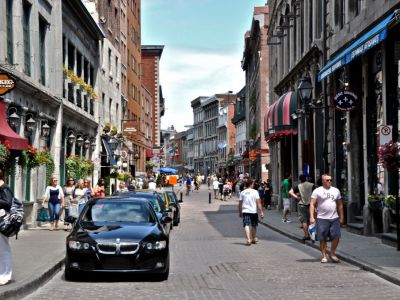
Transporting you back to the era of New France, Old Montreal stands as one of the most ancient districts frequented by tourists. Positioned ideally within Ville-Marie's borough, this neighborhood is bordered by Ruelle des Fortifications to the north, McGill Street to the west, the majestic Saint Lawrence River to the south, and Berri Street to the east.
Ville-Marie borough remains vibrant and dynamic, fueled by its perpetually lively neighborhoods, including the bustling downtown core, McGill Ghetto, Latin Quarter, Chinatown, Gay Village, and Old Montreal. Visitors revel in exploring this area using public transportation, indulging in shopping, dining at exquisite restaurants, and exploring renowned museums within Ville-Marie.
Should you find yourself in Old Montreal between July and October, an enthralling experience awaits you-the renowned Montreal Ghost Walks. Led by a local storyteller, this captivating journey uncovers the darker aspects of the area's history, guiding you through haunted locations that will send chills down your spine. You have the option to embark on either the west or east side walking tour. Undoubtedly, Old Montreal offers an unparalleled visitor experience, leaving a lasting impression.
Why You Should Visit:
A stroll through Old Montreal will give you a feel of European charm in North America. The cobblestone streets, the architecture, the restaurants and art galleries – all make an irresistible combination.
Tip:
You can walk from one end to the other of what is Old Montreal in 15-20 minutes, but there is a lot packed into that small section so you can easily spend 2 to 3 days exploring it.
Ville-Marie borough remains vibrant and dynamic, fueled by its perpetually lively neighborhoods, including the bustling downtown core, McGill Ghetto, Latin Quarter, Chinatown, Gay Village, and Old Montreal. Visitors revel in exploring this area using public transportation, indulging in shopping, dining at exquisite restaurants, and exploring renowned museums within Ville-Marie.
Should you find yourself in Old Montreal between July and October, an enthralling experience awaits you-the renowned Montreal Ghost Walks. Led by a local storyteller, this captivating journey uncovers the darker aspects of the area's history, guiding you through haunted locations that will send chills down your spine. You have the option to embark on either the west or east side walking tour. Undoubtedly, Old Montreal offers an unparalleled visitor experience, leaving a lasting impression.
Why You Should Visit:
A stroll through Old Montreal will give you a feel of European charm in North America. The cobblestone streets, the architecture, the restaurants and art galleries – all make an irresistible combination.
Tip:
You can walk from one end to the other of what is Old Montreal in 15-20 minutes, but there is a lot packed into that small section so you can easily spend 2 to 3 days exploring it.
7) Saint-Paul Street (Rue St-Paul) (must see)
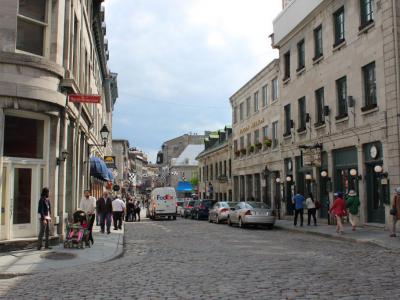
Saint-Paul (Rue Saint-Paul) is the oldest street in Montreal, laid out in 1673 according to a plan by François Dollier de Casson. It follows the path that once bordered the northern edge of the former Fort Ville-Marie and is named after Paul de Chomedey de Maisonneuve, founder of the fort and the first governor of Montreal, who built a home for himself in this area in 1650.
Unlike other – straight – streets drawn by Dollier de Casson, the cavernous cobblestone Saint-Paul is a bit winding. Centered on Royal Square (Place Royale), a major marketplace until 1803, it was destined to become, for many years, the city's main thoroughfare. In the 19th century, Old Montreal was the cradle of the local press, making Saint Paul home to a multitude of French- and English-language newspapers and journals. Busy day and night, the street was the first in the city to benefit from oil lighting.
There are several historic buildings lining Saint-Paul such as the Intendance Palace of 1698 and the Vaudreuil Castle (Château de Vaudreuil) of 1724. The street is also home to such prominent landmarks as the Bonsecours Market and the Chapel of Our Lady of Good Help (Notre-Dame-de-Bon-Secours). It also boasts perhaps the highest in the city concentration of tourist-themed souvenir shops, art galleries, boutique hotels, lively rooftop terraces, cafés, and eateries with international cuisine.
Tip:
In case you are budget-conscious, remember that the prices in this area are a bit higher than usual.
Unlike other – straight – streets drawn by Dollier de Casson, the cavernous cobblestone Saint-Paul is a bit winding. Centered on Royal Square (Place Royale), a major marketplace until 1803, it was destined to become, for many years, the city's main thoroughfare. In the 19th century, Old Montreal was the cradle of the local press, making Saint Paul home to a multitude of French- and English-language newspapers and journals. Busy day and night, the street was the first in the city to benefit from oil lighting.
There are several historic buildings lining Saint-Paul such as the Intendance Palace of 1698 and the Vaudreuil Castle (Château de Vaudreuil) of 1724. The street is also home to such prominent landmarks as the Bonsecours Market and the Chapel of Our Lady of Good Help (Notre-Dame-de-Bon-Secours). It also boasts perhaps the highest in the city concentration of tourist-themed souvenir shops, art galleries, boutique hotels, lively rooftop terraces, cafés, and eateries with international cuisine.
Tip:
In case you are budget-conscious, remember that the prices in this area are a bit higher than usual.
8) Old Port (Vieux-Port) (must see)
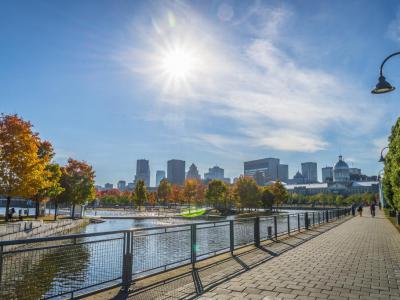
Located on the north bank of the Saint Lawrence River, the historic Old Port of Montreal (Vieux-Port de Montréal) stretches for over two kilometers (1.2 miles) south of Old Montreal, in a natural harbor that was once frequented by Amerindian canoes and then by barges and ships of French fur traders and others.
In service from as early as 1611, the port bore witness to the economic and cultural development of Montreal and remained in use until 1976, when the present Port of Montreal was launched further east. In the early 1990s, the territory was redeveloped and in 2005 changed its name to The Quays of the Old Port of Montreal. Today, it serves as a recreational and historical area, attracting annually over six million visitors.
A place for all seasons, there's always something happening here! Summer is great for all sorts of riverfront activities such as rollerblading, cycling, quadricycling, and pleasure boating. Taking a boat cruise on the Saint Lawrence river, or renting a pedal boat for a trip around Bonsecours Basin is also available. A thin park, running the entire length of the Old Port Promenade, offers tourists and locals an ideal spot to relax and catch a cool breeze off the water.
Winter is ideal for skating on the outdoor rink or just playing in the snow. At all times of the year, the Saint Lawrence river is awe-inspiring and powerful.
The on-site attractions include a "labyrinth" in Shed 16 (which is a maze of alleys and obstacles built inside an old waterfront warehouse), the Montreal Science Centre (complete with an IMAX Theatre) on King Edward Pier, and the Montreal Clock Tower.
One of the Port's gems is the Montreal-based Cirque du Soleil which approximately every two years, in spring, launches a new show from the Jacques Cartier Quay by setting up its signature blue-and-yellow-striped tents. In June 2012, an urban beach, called the Clock Tower Beach (Plage de l'Horloge), was opened adjacent to the Clock Tower.
Cultural events in the area include the Montreal High Lights Festival (Festival Montréal en lumière), Igloofest, and the Matsuri Japon festival.
If you have a couple of hours to kill in Montreal, wandering around the Old Port is worth considering.
In service from as early as 1611, the port bore witness to the economic and cultural development of Montreal and remained in use until 1976, when the present Port of Montreal was launched further east. In the early 1990s, the territory was redeveloped and in 2005 changed its name to The Quays of the Old Port of Montreal. Today, it serves as a recreational and historical area, attracting annually over six million visitors.
A place for all seasons, there's always something happening here! Summer is great for all sorts of riverfront activities such as rollerblading, cycling, quadricycling, and pleasure boating. Taking a boat cruise on the Saint Lawrence river, or renting a pedal boat for a trip around Bonsecours Basin is also available. A thin park, running the entire length of the Old Port Promenade, offers tourists and locals an ideal spot to relax and catch a cool breeze off the water.
Winter is ideal for skating on the outdoor rink or just playing in the snow. At all times of the year, the Saint Lawrence river is awe-inspiring and powerful.
The on-site attractions include a "labyrinth" in Shed 16 (which is a maze of alleys and obstacles built inside an old waterfront warehouse), the Montreal Science Centre (complete with an IMAX Theatre) on King Edward Pier, and the Montreal Clock Tower.
One of the Port's gems is the Montreal-based Cirque du Soleil which approximately every two years, in spring, launches a new show from the Jacques Cartier Quay by setting up its signature blue-and-yellow-striped tents. In June 2012, an urban beach, called the Clock Tower Beach (Plage de l'Horloge), was opened adjacent to the Clock Tower.
Cultural events in the area include the Montreal High Lights Festival (Festival Montréal en lumière), Igloofest, and the Matsuri Japon festival.
If you have a couple of hours to kill in Montreal, wandering around the Old Port is worth considering.
9) Plateau Mont-Royal (must see)
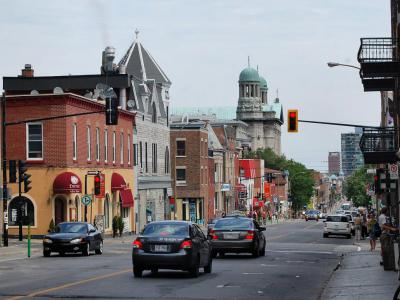
Situated east of Mont-Royal and north of downtown, Plateau Mont-Royal is a must-see destination when visiting Montreal. Its name stems from its location on the flat terrain of Sherbrooke Street.
Historically, the western part of the Plateau was inhabited by Jews, while the eastern part was predominantly occupied by Quebecois. It was primarily a working-class neighborhood and served as the residence for renowned Quebec writers like Mordecai Richler and Michel Tremblay. Their literary works often featured the Plateau during the 1950s and 1960s.
Prepare to be pleasantly enchanted by the lively ambiance of Plateau Mont-Royal, characterized by vibrant, colorful houses, cozy bookstores, delightful cafes, and a friendly demeanor. Don't miss the chance to explore popular attractions along Saint Laurent Boulevard.
A visit to Schwartz's Deli is a must to experience the origins of the delectable Montreal smoked meat. If you're there in the summer, you can immerse yourself in the bustling street fair that takes place on weekends. This neighborhood emanates a bohemian atmosphere and benefits from its proximity to the esteemed McGill University, which has attracted many residents to settle here.
Presently, the Saint-Denis and Saint-Laurent strip is lined with an array of nightclubs, upscale restaurants, and exclusive fashion stores, offering a diverse range of entertainment options.
Why You Should Visit:
This part of town has a unique architecture with many wrought iron staircases outside the homes. Really elegant area and a great place to walk.
It's worth a trip just to visit Parc de La Fontaine during the summer or fall.
Tip:
Nightlife is good: make sure you go by Saint Denis or Saint Laurent streets.
Historically, the western part of the Plateau was inhabited by Jews, while the eastern part was predominantly occupied by Quebecois. It was primarily a working-class neighborhood and served as the residence for renowned Quebec writers like Mordecai Richler and Michel Tremblay. Their literary works often featured the Plateau during the 1950s and 1960s.
Prepare to be pleasantly enchanted by the lively ambiance of Plateau Mont-Royal, characterized by vibrant, colorful houses, cozy bookstores, delightful cafes, and a friendly demeanor. Don't miss the chance to explore popular attractions along Saint Laurent Boulevard.
A visit to Schwartz's Deli is a must to experience the origins of the delectable Montreal smoked meat. If you're there in the summer, you can immerse yourself in the bustling street fair that takes place on weekends. This neighborhood emanates a bohemian atmosphere and benefits from its proximity to the esteemed McGill University, which has attracted many residents to settle here.
Presently, the Saint-Denis and Saint-Laurent strip is lined with an array of nightclubs, upscale restaurants, and exclusive fashion stores, offering a diverse range of entertainment options.
Why You Should Visit:
This part of town has a unique architecture with many wrought iron staircases outside the homes. Really elegant area and a great place to walk.
It's worth a trip just to visit Parc de La Fontaine during the summer or fall.
Tip:
Nightlife is good: make sure you go by Saint Denis or Saint Laurent streets.
10) La Fontaine Park
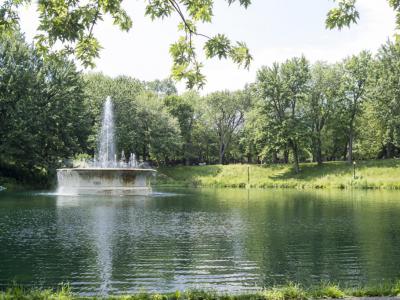
La Fontaine Park, situated in the Le Plateau-Mont-Royal borough of Montreal, is an urban park spanning 34 hectares (84 acres). It boasts various attractions, including interconnected ponds adorned with a beautiful fountain and cascades, the Théâtre de Verdure outdoor venue, the Calixa-Lavallée cultural center, a monument honoring Adam Dollard des Ormeaux, as well as sports fields and tennis courts.
During the scorching summers of Montreal, the park's ponds are a popular destination, while in winter, they transform into an ice skating haven. Along the park's western and northern edges, visitors can enjoy bike paths.
La Fontaine Park, originally Logan Park, was established in 1874 on the former Logan farm grounds in Montreal. In 1888, significant landscaping took place, including the creation of two basins separated by a bridge designed by Clovis Degrelle. The park was renamed La Fontaine Park in 1901 during the Saint-Jean-Baptiste Day parade to honor Louis-Hippolyte Lafontaine, the first Francophone Prime Minister of Canada, not because of its fountain as commonly believed.
In 1929, Léon Trépanier created an illuminated fountain for the park's northern basin, commissioned by Westinghouse Electric Company. The monument honoring Louis-Hippolyte Lafontaine was also installed. The Théâtre de Verdure, designed by Claude Robillard, opened on July 8, 1956. This venue, inspired by ancient amphitheaters, hosted famous singers like Clémence DesRochers, Raymond Lévesque, Pauline Julien, and Yvon Deschamps under Germaine Dugas' direction in 1965.
La Fontaine Park houses various buildings like École supérieure du Plateau and Calixa Lavallée pavilion. Currently, the park is home to Théâtre de Verdure and Espace La Fontaine cultural café.
During the scorching summers of Montreal, the park's ponds are a popular destination, while in winter, they transform into an ice skating haven. Along the park's western and northern edges, visitors can enjoy bike paths.
La Fontaine Park, originally Logan Park, was established in 1874 on the former Logan farm grounds in Montreal. In 1888, significant landscaping took place, including the creation of two basins separated by a bridge designed by Clovis Degrelle. The park was renamed La Fontaine Park in 1901 during the Saint-Jean-Baptiste Day parade to honor Louis-Hippolyte Lafontaine, the first Francophone Prime Minister of Canada, not because of its fountain as commonly believed.
In 1929, Léon Trépanier created an illuminated fountain for the park's northern basin, commissioned by Westinghouse Electric Company. The monument honoring Louis-Hippolyte Lafontaine was also installed. The Théâtre de Verdure, designed by Claude Robillard, opened on July 8, 1956. This venue, inspired by ancient amphitheaters, hosted famous singers like Clémence DesRochers, Raymond Lévesque, Pauline Julien, and Yvon Deschamps under Germaine Dugas' direction in 1965.
La Fontaine Park houses various buildings like École supérieure du Plateau and Calixa Lavallée pavilion. Currently, the park is home to Théâtre de Verdure and Espace La Fontaine cultural café.
11) Montreal Botanical Garden (must see)
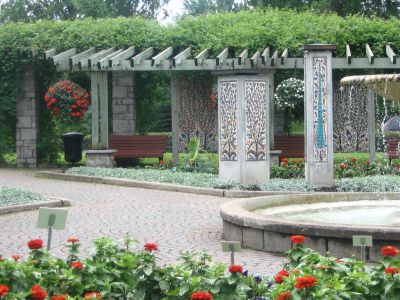
The Montreal Botanical Garden is a vast botanical garden located in Montreal. Encompassing 75 hectares (190 acres) of beautifully curated thematic gardens and greenhouses, it holds great significance as one of the world's most prominent botanical gardens. Recognized as a National Historic Site of Canada in 2008, its extensive collections and top-notch facilities contribute to its esteemed status.
Established in 1931 during the challenging times of the Great Depression, the garden was brought to life through the efforts of Mayor Camillien Houde and Brother Marie-Victorin, who tirelessly campaigned for its creation. The visionary design of the grounds was executed by Henry Teuscher, while the architect Lucien F. Kéroack skillfully crafted the Art Deco style administration building. Today, the garden nurtures around 20,000 plant species, showcasing a diverse range of alpine plants, ferns, bonsai, commercially important plants, medicinal herbs, woodland plants, cacti, succulents, begonias, aroids, bromeliads, and gesneriads. Additionally, it houses a herbarium with nearly 100,000 reference specimens.
The Montreal Botanical Garden serves as an educational hub, enlightening both the general public and horticulture students. It plays a crucial role in conserving endangered plant species. Moreover, within its grounds, you'll find a botanical research institution, the Société d'astronomie de Montréal, and the Montreal Insectarium. The Garden's dedicated staff also manages the Ferme Angrignon educational farm and petting zoo, even though it's located offsite.
While there is an admission fee, city residents have the privilege of obtaining a pass that grants them free access to the outdoor gardens. Consequently, many people visit regularly, drawn to the tranquil atmosphere and the chance to relax beneath the shade of the trees. Notably, during the summer season (May to September), the outdoor areas are open to everyone free of charge from 6 pm until nightfall.
Why You Should Visit:
An all-season place to go.
In the Winter you can stick to the glass house; in the Spring you start with the butterflies in the glass house then a quick tour of the gardens and Insectarium;
In Summer you also go to the gardens (Chinese & Japanese); in the Fall you go to see the pumpkins and the lanterns in the Chinese garden and the colors in the arboretum part.
Tip:
Leave time for a drink on the large patio outside the restaurant which features excellent local beers and ciders.
Established in 1931 during the challenging times of the Great Depression, the garden was brought to life through the efforts of Mayor Camillien Houde and Brother Marie-Victorin, who tirelessly campaigned for its creation. The visionary design of the grounds was executed by Henry Teuscher, while the architect Lucien F. Kéroack skillfully crafted the Art Deco style administration building. Today, the garden nurtures around 20,000 plant species, showcasing a diverse range of alpine plants, ferns, bonsai, commercially important plants, medicinal herbs, woodland plants, cacti, succulents, begonias, aroids, bromeliads, and gesneriads. Additionally, it houses a herbarium with nearly 100,000 reference specimens.
The Montreal Botanical Garden serves as an educational hub, enlightening both the general public and horticulture students. It plays a crucial role in conserving endangered plant species. Moreover, within its grounds, you'll find a botanical research institution, the Société d'astronomie de Montréal, and the Montreal Insectarium. The Garden's dedicated staff also manages the Ferme Angrignon educational farm and petting zoo, even though it's located offsite.
While there is an admission fee, city residents have the privilege of obtaining a pass that grants them free access to the outdoor gardens. Consequently, many people visit regularly, drawn to the tranquil atmosphere and the chance to relax beneath the shade of the trees. Notably, during the summer season (May to September), the outdoor areas are open to everyone free of charge from 6 pm until nightfall.
Why You Should Visit:
An all-season place to go.
In the Winter you can stick to the glass house; in the Spring you start with the butterflies in the glass house then a quick tour of the gardens and Insectarium;
In Summer you also go to the gardens (Chinese & Japanese); in the Fall you go to see the pumpkins and the lanterns in the Chinese garden and the colors in the arboretum part.
Tip:
Leave time for a drink on the large patio outside the restaurant which features excellent local beers and ciders.
