Custom Walk in Montreal, Canada by dsmills13_f26f2 created on 2025-06-05
Guide Location: Canada » Montreal
Guide Type: Custom Walk
# of Sights: 6
Tour Duration: 5 Hour(s)
Travel Distance: 14.2 Km or 8.8 Miles
Share Key: 4JWT2
Guide Type: Custom Walk
# of Sights: 6
Tour Duration: 5 Hour(s)
Travel Distance: 14.2 Km or 8.8 Miles
Share Key: 4JWT2
How It Works
Please retrieve this walk in the GPSmyCity app. Once done, the app will guide you from one tour stop to the next as if you had a personal tour guide. If you created the walk on this website or come to the page via a link, please follow the instructions below to retrieve the walk in the app.
Retrieve This Walk in App
Step 1. Download the app "GPSmyCity: Walks in 1K+ Cities" on Apple App Store or Google Play Store.



Step 2. In the GPSmyCity app, download(or launch) the guide "Montreal Map and Walking Tours".
Step 3. Tap the menu button located at upper right corner of the "Walks" screen and select "Retrieve custom walk". Enter the share key: 4JWT2
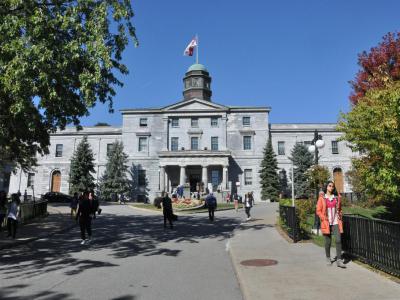
1) McGill University
McGill University, situated in Montreal, is a renowned public research institution. It was established in 1821 through a royal charter granted by King George IV. The university bears the name of James McGill, a Scottish merchant whose generous bequest in 1813 laid the foundation for the precursor of the university known as McGill College. In 1885, the institution officially became McGill University.
McGill University stands as one of two non-American universities affiliated with the Association of American Universities, with the University of Toronto being the other. Additionally, it holds the distinction of being the sole Canadian member of the Global University Leaders Forum (GULF) within the World Economic Forum.
McGill University offers a wide range of degrees in over 300 fields of study. The majority of students are enrolled in the university's five largest faculties: Arts, Science, Medicine, Engineering, and Management. It has high admission requirements and is known for its diverse international student population. McGill consistently ranks among the top universities globally and in Canada, holding the top spot in the Maclean's Canadian University Rankings for medical-doctoral universities for 15 years.
McGill University's alumni community is impressive, including 12 Nobel laureates, 145 Rhodes Scholars (the most among Canadian universities), 10 billionaires, current and former Canadian prime ministers, the current Governor General of Canada, eight foreign leaders, 28 foreign ambassadors, and over 100 national legislators. Its graduates also consist of nine Academy Award winners, 11 Grammy Award winners, 16 Emmy Award winners, four Pulitzer Prize winners, and 121 Olympians with over 35 Olympic medals. Additionally, McGill is proud to have alumni who invented basketball, modern ice hockey, and gridiron football, as well as the founders of major universities and colleges.
McGill has a strong research history, with notable contributions like Ernest Rutherford's atomic nucleus discovery and Nobel Prize-winning work on radioactivity. The university is also associated with important inventions such as the first artificial cell and web search engine. With a large endowment per student, McGill has substantial financial resources, including a record-breaking $200 million donation in 2019 to establish the McCall MacBain Scholarships program.
McGill University stands as one of two non-American universities affiliated with the Association of American Universities, with the University of Toronto being the other. Additionally, it holds the distinction of being the sole Canadian member of the Global University Leaders Forum (GULF) within the World Economic Forum.
McGill University offers a wide range of degrees in over 300 fields of study. The majority of students are enrolled in the university's five largest faculties: Arts, Science, Medicine, Engineering, and Management. It has high admission requirements and is known for its diverse international student population. McGill consistently ranks among the top universities globally and in Canada, holding the top spot in the Maclean's Canadian University Rankings for medical-doctoral universities for 15 years.
McGill University's alumni community is impressive, including 12 Nobel laureates, 145 Rhodes Scholars (the most among Canadian universities), 10 billionaires, current and former Canadian prime ministers, the current Governor General of Canada, eight foreign leaders, 28 foreign ambassadors, and over 100 national legislators. Its graduates also consist of nine Academy Award winners, 11 Grammy Award winners, 16 Emmy Award winners, four Pulitzer Prize winners, and 121 Olympians with over 35 Olympic medals. Additionally, McGill is proud to have alumni who invented basketball, modern ice hockey, and gridiron football, as well as the founders of major universities and colleges.
McGill has a strong research history, with notable contributions like Ernest Rutherford's atomic nucleus discovery and Nobel Prize-winning work on radioactivity. The university is also associated with important inventions such as the first artificial cell and web search engine. With a large endowment per student, McGill has substantial financial resources, including a record-breaking $200 million donation in 2019 to establish the McCall MacBain Scholarships program.
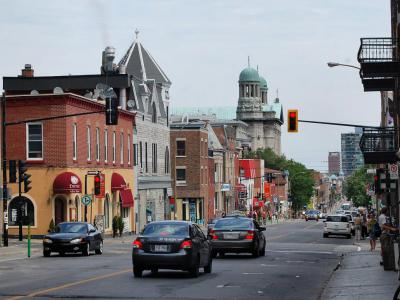
2) Plateau Mont-Royal (must see)
Situated east of Mont-Royal and north of downtown, Plateau Mont-Royal is a must-see destination when visiting Montreal. Its name stems from its location on the flat terrain of Sherbrooke Street.
Historically, the western part of the Plateau was inhabited by Jews, while the eastern part was predominantly occupied by Quebecois. It was primarily a working-class neighborhood and served as the residence for renowned Quebec writers like Mordecai Richler and Michel Tremblay. Their literary works often featured the Plateau during the 1950s and 1960s.
Prepare to be pleasantly enchanted by the lively ambiance of Plateau Mont-Royal, characterized by vibrant, colorful houses, cozy bookstores, delightful cafes, and a friendly demeanor. Don't miss the chance to explore popular attractions along Saint Laurent Boulevard.
A visit to Schwartz's Deli is a must to experience the origins of the delectable Montreal smoked meat. If you're there in the summer, you can immerse yourself in the bustling street fair that takes place on weekends. This neighborhood emanates a bohemian atmosphere and benefits from its proximity to the esteemed McGill University, which has attracted many residents to settle here.
Presently, the Saint-Denis and Saint-Laurent strip is lined with an array of nightclubs, upscale restaurants, and exclusive fashion stores, offering a diverse range of entertainment options.
Why You Should Visit:
This part of town has a unique architecture with many wrought iron staircases outside the homes. Really elegant area and a great place to walk.
It's worth a trip just to visit Parc de La Fontaine during the summer or fall.
Tip:
Nightlife is good: make sure you go by Saint Denis or Saint Laurent streets.
Historically, the western part of the Plateau was inhabited by Jews, while the eastern part was predominantly occupied by Quebecois. It was primarily a working-class neighborhood and served as the residence for renowned Quebec writers like Mordecai Richler and Michel Tremblay. Their literary works often featured the Plateau during the 1950s and 1960s.
Prepare to be pleasantly enchanted by the lively ambiance of Plateau Mont-Royal, characterized by vibrant, colorful houses, cozy bookstores, delightful cafes, and a friendly demeanor. Don't miss the chance to explore popular attractions along Saint Laurent Boulevard.
A visit to Schwartz's Deli is a must to experience the origins of the delectable Montreal smoked meat. If you're there in the summer, you can immerse yourself in the bustling street fair that takes place on weekends. This neighborhood emanates a bohemian atmosphere and benefits from its proximity to the esteemed McGill University, which has attracted many residents to settle here.
Presently, the Saint-Denis and Saint-Laurent strip is lined with an array of nightclubs, upscale restaurants, and exclusive fashion stores, offering a diverse range of entertainment options.
Why You Should Visit:
This part of town has a unique architecture with many wrought iron staircases outside the homes. Really elegant area and a great place to walk.
It's worth a trip just to visit Parc de La Fontaine during the summer or fall.
Tip:
Nightlife is good: make sure you go by Saint Denis or Saint Laurent streets.
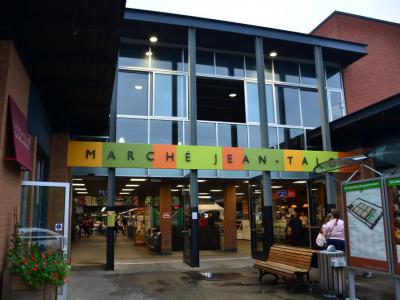
3) Jean-Talon Market (must see)
Jean-Talon Market, it's a fascinating food market located within the Little Italy neighborhood. Here you will find all kinds of vegetables, fruits, fish, cheese, bakeries, and other shops specializing in food. Everything is so fresh and yummy.
What to buy here: Canned Foods.
Who would think of buying canned food abroad when so few people eat them at home anyway? When in Montreal, think again. Quebeckers were not always prosperous - men worked draining hours in the cold and women had to find ingenious ways to use all of the food they got their hands on and cook substantial meals with it, so cans quickly became the most cost-effective option. While availability isn’t that much of an issue nowadays, the tradition of canned foods is still very much anchored in Quebec’s families.
Grandmothers and aunts take great pleasure in preparing the cans for the Christmas holidays, but if you don’t have a Quebecker relative, just pay a visit to the Jean-Talon Market and browse their numerous stalls for the perfect $7 love-made delicacy. From berry jams to fruity ketchup to meat sauce, you are guaranteed a wholesome and succulent meal back home, for a great taste of both Montreal’s culinary traditions but also its rich history.
What to buy here: Canned Foods.
Who would think of buying canned food abroad when so few people eat them at home anyway? When in Montreal, think again. Quebeckers were not always prosperous - men worked draining hours in the cold and women had to find ingenious ways to use all of the food they got their hands on and cook substantial meals with it, so cans quickly became the most cost-effective option. While availability isn’t that much of an issue nowadays, the tradition of canned foods is still very much anchored in Quebec’s families.
Grandmothers and aunts take great pleasure in preparing the cans for the Christmas holidays, but if you don’t have a Quebecker relative, just pay a visit to the Jean-Talon Market and browse their numerous stalls for the perfect $7 love-made delicacy. From berry jams to fruity ketchup to meat sauce, you are guaranteed a wholesome and succulent meal back home, for a great taste of both Montreal’s culinary traditions but also its rich history.
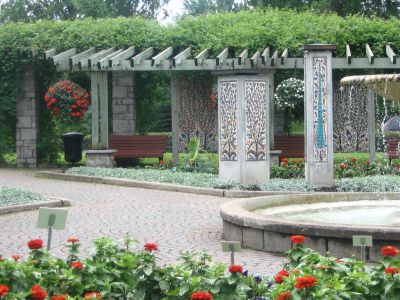
4) Montreal Botanical Garden (must see)
The Montreal Botanical Garden is a vast botanical garden located in Montreal. Encompassing 75 hectares (190 acres) of beautifully curated thematic gardens and greenhouses, it holds great significance as one of the world's most prominent botanical gardens. Recognized as a National Historic Site of Canada in 2008, its extensive collections and top-notch facilities contribute to its esteemed status.
Established in 1931 during the challenging times of the Great Depression, the garden was brought to life through the efforts of Mayor Camillien Houde and Brother Marie-Victorin, who tirelessly campaigned for its creation. The visionary design of the grounds was executed by Henry Teuscher, while the architect Lucien F. Kéroack skillfully crafted the Art Deco style administration building. Today, the garden nurtures around 20,000 plant species, showcasing a diverse range of alpine plants, ferns, bonsai, commercially important plants, medicinal herbs, woodland plants, cacti, succulents, begonias, aroids, bromeliads, and gesneriads. Additionally, it houses a herbarium with nearly 100,000 reference specimens.
The Montreal Botanical Garden serves as an educational hub, enlightening both the general public and horticulture students. It plays a crucial role in conserving endangered plant species. Moreover, within its grounds, you'll find a botanical research institution, the Société d'astronomie de Montréal, and the Montreal Insectarium. The Garden's dedicated staff also manages the Ferme Angrignon educational farm and petting zoo, even though it's located offsite.
While there is an admission fee, city residents have the privilege of obtaining a pass that grants them free access to the outdoor gardens. Consequently, many people visit regularly, drawn to the tranquil atmosphere and the chance to relax beneath the shade of the trees. Notably, during the summer season (May to September), the outdoor areas are open to everyone free of charge from 6 pm until nightfall.
Why You Should Visit:
An all-season place to go.
In the Winter you can stick to the glass house; in the Spring you start with the butterflies in the glass house then a quick tour of the gardens and Insectarium;
In Summer you also go to the gardens (Chinese & Japanese); in the Fall you go to see the pumpkins and the lanterns in the Chinese garden and the colors in the arboretum part.
Tip:
Leave time for a drink on the large patio outside the restaurant which features excellent local beers and ciders.
Established in 1931 during the challenging times of the Great Depression, the garden was brought to life through the efforts of Mayor Camillien Houde and Brother Marie-Victorin, who tirelessly campaigned for its creation. The visionary design of the grounds was executed by Henry Teuscher, while the architect Lucien F. Kéroack skillfully crafted the Art Deco style administration building. Today, the garden nurtures around 20,000 plant species, showcasing a diverse range of alpine plants, ferns, bonsai, commercially important plants, medicinal herbs, woodland plants, cacti, succulents, begonias, aroids, bromeliads, and gesneriads. Additionally, it houses a herbarium with nearly 100,000 reference specimens.
The Montreal Botanical Garden serves as an educational hub, enlightening both the general public and horticulture students. It plays a crucial role in conserving endangered plant species. Moreover, within its grounds, you'll find a botanical research institution, the Société d'astronomie de Montréal, and the Montreal Insectarium. The Garden's dedicated staff also manages the Ferme Angrignon educational farm and petting zoo, even though it's located offsite.
While there is an admission fee, city residents have the privilege of obtaining a pass that grants them free access to the outdoor gardens. Consequently, many people visit regularly, drawn to the tranquil atmosphere and the chance to relax beneath the shade of the trees. Notably, during the summer season (May to September), the outdoor areas are open to everyone free of charge from 6 pm until nightfall.
Why You Should Visit:
An all-season place to go.
In the Winter you can stick to the glass house; in the Spring you start with the butterflies in the glass house then a quick tour of the gardens and Insectarium;
In Summer you also go to the gardens (Chinese & Japanese); in the Fall you go to see the pumpkins and the lanterns in the Chinese garden and the colors in the arboretum part.
Tip:
Leave time for a drink on the large patio outside the restaurant which features excellent local beers and ciders.
5) Montreal Olympic Stadium
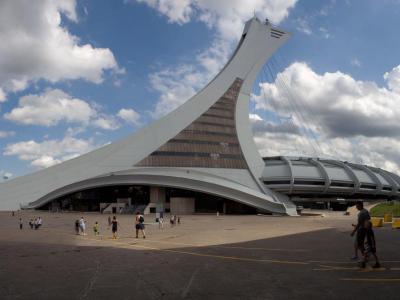
Montreal's Olympic Stadium, constructed in the mid-1970s as the primary location for the 1976 Summer Olympics, is a versatile facility. Famously known as "The Big O," it derives its nickname from both its name and the distinctive shape of its roof, resembling a doughnut. Additionally, it is sometimes referred to as "The Big Owe" due to the exorbitant cost associated with its construction and the entire 1976 Olympics.
This stadium is Canada's largest with seating capacity. After the Olympics, it was transformed into the home ground for Montreal's pro baseball and football teams. The Montreal Alouettes of the CFL moved to Molson Stadium in 1998 for regular season games but Olympic Stadium still hosted playoffs and the Grey Cup until 2014. In 2004, the Expos relocated to Washington, D.C. and became the Washington Nationals.
Presently, the stadium serves as a multipurpose venue for special events like concerts and trade shows. Its permanent seating capacity stands at 56,040, but it can be expanded using temporary seating. Occasionally, the Montreal Impact of Major League Soccer (MLS) utilizes the stadium when ticket demand justifies its large capacity or when inclement weather hampers outdoor play at nearby Saputo Stadium during the spring months.
Nestled within the northern base of the stadium is the Montreal Tower, an inclined tower that holds the distinction of being the world's tallest at a height of 175 meters (574 feet).
This stadium is Canada's largest with seating capacity. After the Olympics, it was transformed into the home ground for Montreal's pro baseball and football teams. The Montreal Alouettes of the CFL moved to Molson Stadium in 1998 for regular season games but Olympic Stadium still hosted playoffs and the Grey Cup until 2014. In 2004, the Expos relocated to Washington, D.C. and became the Washington Nationals.
Presently, the stadium serves as a multipurpose venue for special events like concerts and trade shows. Its permanent seating capacity stands at 56,040, but it can be expanded using temporary seating. Occasionally, the Montreal Impact of Major League Soccer (MLS) utilizes the stadium when ticket demand justifies its large capacity or when inclement weather hampers outdoor play at nearby Saputo Stadium during the spring months.
Nestled within the northern base of the stadium is the Montreal Tower, an inclined tower that holds the distinction of being the world's tallest at a height of 175 meters (574 feet).
6) Biodome de Montreal (must see)
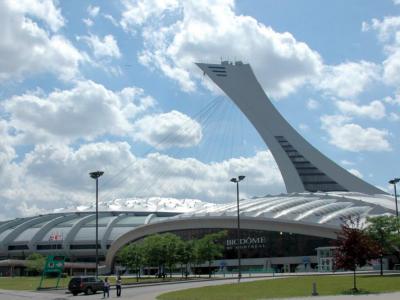
The Montreal Biodome, also known as Biodôme de Montréal, is a unique facility that offers visitors the opportunity to explore replicas of four distinct ecosystems found in the Americas. All of these ecosystems, each with its own climate, are housed under a single roof. The Biodome is part of the Montreal Nature Museum, which operates a total of four facilities, including the Montreal Insectarium, Montreal Botanical Garden, and Montreal Planetarium.
Functioning as a museum of the environment, the Biodome stands out due to its exceptional concept. Within its premises, visitors can encounter a diverse live collection comprising over 4,500 animals from 230 species, alongside more than 700 plant species. The architectural design of the building was envisioned by renowned French architect Roger Taillibert, as part of a larger plan for an Olympic park that also encompassed the Montreal Olympic Stadium and the Olympic pool. Originally, the venue served as a combined velodrome and Judo facility. However, in 1988, a feasibility study was conducted to transform the velodrome into a biodome. Construction commenced in 1989, and on 18 June 1992, the Montreal Biodome was officially opened to the public.
In 2003, the Biodome introduced an audio guide system, enabling visitors to receive information about the exhibits they are viewing. Additionally, the system collects data on the aspects that captivate visitors the most. Receivers programmed with French, Spanish, or English for adults, or French or English for children, can be rented by visitors.
Each simulated habitat within the Biodome houses a diverse array of animals. From vibrant macaws residing in the Tropical Forest to majestic lynx inhabiting the Laurentian Forest, from lively penguins in the Antarctic exhibit to the various fish species found in the waters of the Saint Lawrence River, the Biodome showcases a remarkable variety of wildlife. Furthermore, the Biodome has been the site of two significant discoveries: the acarian species Copidognathus biodomus in the simulated estuary in 1996, and the bacterium species Nitratireductor aquibiodomus in the water reprocessing system in 2003.
Functioning as a museum of the environment, the Biodome stands out due to its exceptional concept. Within its premises, visitors can encounter a diverse live collection comprising over 4,500 animals from 230 species, alongside more than 700 plant species. The architectural design of the building was envisioned by renowned French architect Roger Taillibert, as part of a larger plan for an Olympic park that also encompassed the Montreal Olympic Stadium and the Olympic pool. Originally, the venue served as a combined velodrome and Judo facility. However, in 1988, a feasibility study was conducted to transform the velodrome into a biodome. Construction commenced in 1989, and on 18 June 1992, the Montreal Biodome was officially opened to the public.
In 2003, the Biodome introduced an audio guide system, enabling visitors to receive information about the exhibits they are viewing. Additionally, the system collects data on the aspects that captivate visitors the most. Receivers programmed with French, Spanish, or English for adults, or French or English for children, can be rented by visitors.
Each simulated habitat within the Biodome houses a diverse array of animals. From vibrant macaws residing in the Tropical Forest to majestic lynx inhabiting the Laurentian Forest, from lively penguins in the Antarctic exhibit to the various fish species found in the waters of the Saint Lawrence River, the Biodome showcases a remarkable variety of wildlife. Furthermore, the Biodome has been the site of two significant discoveries: the acarian species Copidognathus biodomus in the simulated estuary in 1996, and the bacterium species Nitratireductor aquibiodomus in the water reprocessing system in 2003.
