Custom Walk in Warsaw, Poland by ilker-omac_c5593 created on 2025-06-10
Guide Location: Poland » Warsaw
Guide Type: Custom Walk
# of Sights: 10
Tour Duration: 4 Hour(s)
Travel Distance: 7.9 Km or 4.9 Miles
Share Key: L73FQ
Guide Type: Custom Walk
# of Sights: 10
Tour Duration: 4 Hour(s)
Travel Distance: 7.9 Km or 4.9 Miles
Share Key: L73FQ
How It Works
Please retrieve this walk in the GPSmyCity app. Once done, the app will guide you from one tour stop to the next as if you had a personal tour guide. If you created the walk on this website or come to the page via a link, please follow the instructions below to retrieve the walk in the app.
Retrieve This Walk in App
Step 1. Download the app "GPSmyCity: Walks in 1K+ Cities" on Apple App Store or Google Play Store.



Step 2. In the GPSmyCity app, download(or launch) the guide "Warsaw Map and Walking Tours".
Step 3. Tap the menu button located at upper right corner of the "Walks" screen and select "Retrieve custom walk". Enter the share key: L73FQ
1) Carrefour Supermarket
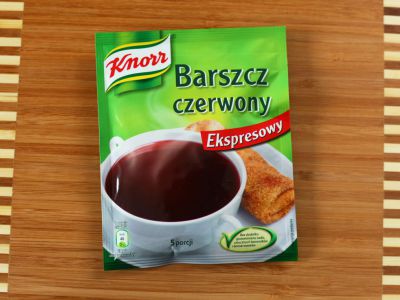
What to buy here: Barszcz (beetroot) | Krówki (fudge) | Polish beer | Polish mead | Ptasie mleczko (candy) | Żubrówka (vodka).
-Barszcz. Have you ever had beetroot soup? This vegetable is a rare ingredient in Western cuisine. You will be surprised how good it tastes. Get a jar or a packet of instant barszcz and surprise your friends back home.
Beetroot is a very modest vegetable. It’s not marketed too well outside Eastern Europe, so as a result it’s not that popular. Being a rich source of antioxidants and nutrients such as vitamin C, magnesium, sodium and potassium, it is proved to have beneficial effects on your health. For instance, it lowers the blood presure and prevents cardiovascular problems. Beetroot soup (Barszcz) is very common in Poland and generaly Eastern Europe. It tastes great with battered pancakes stuffed with ground mushrooms (krokiet). Barszcz is one of the 12 traditional dishes served at the Christmas Eve dinner in Poland.
Instant barszcz is available in any store, big or small with major brands being Winiary, Knorr or Amino. Preparation is easy, just add 2 teaspoons to a mug of hot water and enjoy the sweet and sour taste of Poland. Price: 1,5 PLN ($) (packet) – 6 PLN ($ 2) (jar).
-Barszcz. Have you ever had beetroot soup? This vegetable is a rare ingredient in Western cuisine. You will be surprised how good it tastes. Get a jar or a packet of instant barszcz and surprise your friends back home.
Beetroot is a very modest vegetable. It’s not marketed too well outside Eastern Europe, so as a result it’s not that popular. Being a rich source of antioxidants and nutrients such as vitamin C, magnesium, sodium and potassium, it is proved to have beneficial effects on your health. For instance, it lowers the blood presure and prevents cardiovascular problems. Beetroot soup (Barszcz) is very common in Poland and generaly Eastern Europe. It tastes great with battered pancakes stuffed with ground mushrooms (krokiet). Barszcz is one of the 12 traditional dishes served at the Christmas Eve dinner in Poland.
Instant barszcz is available in any store, big or small with major brands being Winiary, Knorr or Amino. Preparation is easy, just add 2 teaspoons to a mug of hot water and enjoy the sweet and sour taste of Poland. Price: 1,5 PLN ($) (packet) – 6 PLN ($ 2) (jar).
2) Warsaw Ghetto Walls
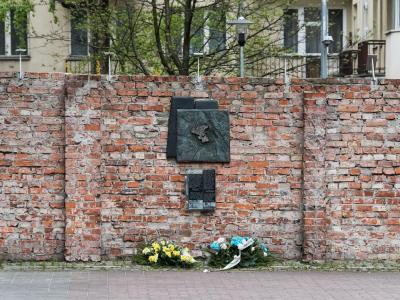
In the hard and terrible times of 1940, the Nazis created the Warsaw Ghetto, by building 18 kilomeres (11 miles) of brick walls around the Jewish quarter. The construction of the ghetto wall started on April 1, 1940. The wall was typically 3 meters (9.8 feet) high and topped with barbed wire. Escapees could be shot on site. The borders of the ghetto changed many times during the next few years.
After the end of World War II, the freestanding walls of the Jewish district, which survived the Ghetto Uprising and the Warsaw Uprising, were largely demolished. Fortunately, a few fragments of the walls running between the properties have been preserved so you still get a feeling for the hardship and suffering endured by the Jews, who were forced to live there.
Tip:
Go and find the few walls remaining between apartment blocks and, if you do, also find the only remaining synagogue that survived the war. Alternatively, consider visiting the POLIN Museum of the History of Polish Jews for more information.
After the end of World War II, the freestanding walls of the Jewish district, which survived the Ghetto Uprising and the Warsaw Uprising, were largely demolished. Fortunately, a few fragments of the walls running between the properties have been preserved so you still get a feeling for the hardship and suffering endured by the Jews, who were forced to live there.
Tip:
Go and find the few walls remaining between apartment blocks and, if you do, also find the only remaining synagogue that survived the war. Alternatively, consider visiting the POLIN Museum of the History of Polish Jews for more information.
3) Bolesławiec Pottery
What to buy here: Polish Ceramics.
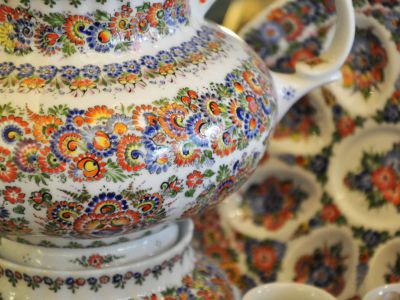
High-quality dishwasher-safe ceramics and tableware will come in handy in many households. Getting a hand-decorated patterns will be like bringing home a piece of Poland.
What you eat is just as important as what you eat from/on. Nice tableware can enhance your eating experience and may encourage you to pay more attention to the quality of food served on it. These intricately patterned hand-finished plates, cups, saucers, bowls and more will surely style up your kitchen and at the same time be something to remember Poland by. Large sets can be easily ordered online, whereas cute smaller pieces may make a perfect gift to bring home. Just wrap it up well.
The most famous brand is ceramics coming from a city called Bolesławiec. Bolesławiec Pottery has a lage network of distribution and ships products overseas as well. Each Warsaw folk store will have a lot of pieces to choose from and deciding on a particular design will not be easy. Price: 25 PLN ($ 8) – 350 PLN ($ 110).
High-quality dishwasher-safe ceramics and tableware will come in handy in many households. Getting a hand-decorated patterns will be like bringing home a piece of Poland.
What you eat is just as important as what you eat from/on. Nice tableware can enhance your eating experience and may encourage you to pay more attention to the quality of food served on it. These intricately patterned hand-finished plates, cups, saucers, bowls and more will surely style up your kitchen and at the same time be something to remember Poland by. Large sets can be easily ordered online, whereas cute smaller pieces may make a perfect gift to bring home. Just wrap it up well.
The most famous brand is ceramics coming from a city called Bolesławiec. Bolesławiec Pottery has a lage network of distribution and ships products overseas as well. Each Warsaw folk store will have a lot of pieces to choose from and deciding on a particular design will not be easy. Price: 25 PLN ($ 8) – 350 PLN ($ 110).
4) Warsaw Uprising Museum (must see)
The Warsaw Uprising Museum is dedicated entirely to the Warsaw Uprising of 1944. The museum, more commonly called the Warsaw Rising Museum, was established in 1983 but wasn't opened until 2004.
The Warsaw Uprising was led by the Polish underground resistance with the purpose to liberate the city from German occupation. The uprising, which lasted 63 days, was the largest resistance movement during the war.
Opened on the 60th anniversary of the fighting, the Warsaw Uprising Museum offers a variety of exhibits that cover each district of the city. Patrons can view both a Nazi and a Communist section to see the atrocities and mistreatment that the Polish people have faced. They can view footage shot by insurgents in the Kino Palladium or watch a 3D film showing the ruins of Warsaw.
Other exhibits include replicas of the sewers and an insurgent hospital, a hangar that contains a B-24 Liberator and the children's room, which shows the uprising from the youth perspective.
The Warsaw Uprising Museum offers an observation tower that has a panoramic view of the city. The tower is 32 meters, or roughly 105 feet tall.
The Warsaw Uprising was led by the Polish underground resistance with the purpose to liberate the city from German occupation. The uprising, which lasted 63 days, was the largest resistance movement during the war.
Opened on the 60th anniversary of the fighting, the Warsaw Uprising Museum offers a variety of exhibits that cover each district of the city. Patrons can view both a Nazi and a Communist section to see the atrocities and mistreatment that the Polish people have faced. They can view footage shot by insurgents in the Kino Palladium or watch a 3D film showing the ruins of Warsaw.
Other exhibits include replicas of the sewers and an insurgent hospital, a hangar that contains a B-24 Liberator and the children's room, which shows the uprising from the youth perspective.
The Warsaw Uprising Museum offers an observation tower that has a panoramic view of the city. The tower is 32 meters, or roughly 105 feet tall.
5) Nozyk Synagogue
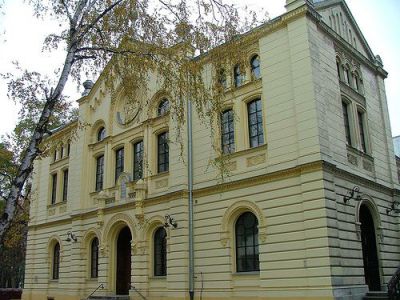
The Nożyk Synagogue, located in Warsaw, stands as a poignant historical monument and the sole prewar Jewish house of prayer in Warsaw to have survived the tumultuous events of World War II. Its establishment dates back to the late 19th century, a period when Warsaw's Jewish community, one of the largest globally, had over 400 houses of prayer. Among these, only two were independent structures, with the majority being smaller chapels integrated into schools, hospitals, or homes.
This synagogue's history began when the need for a temple for the orthodox Jewry of Warsaw became apparent. Responding to this need, Zalman Nożyk, a prominent Warsaw merchant, and his wife Ryfka financed the construction of this temple on Twarda street, near Grzybów and Grzybowski Square. The construction spanned from 1898 to 1902.
The architectural design of the Nożyk Synagogue was the work of Karol Kozłowski, a renowned Warsaw architect also credited with designing the Warsaw Philharmonic Orchestra Hall. The building's façade exhibits a neo-Romanticist style with distinct neo-Byzantine elements. The structure is rectangular, featuring an internal chamber divided into three aisles.
The synagogue's history is marked by World War II tragedies. In 1939, it was damaged in an air raid. During the war, it became part of the Small Ghetto, witnessing the Ghetto Uprising and later being repurposed as stables and a depot by the Nazis. After the war, it was restored and now serves as a place of worship, housing the Warsaw Jewish Commune and other Jewish organizations, a testament to the resilience of Warsaw's Jewish community.
This synagogue's history began when the need for a temple for the orthodox Jewry of Warsaw became apparent. Responding to this need, Zalman Nożyk, a prominent Warsaw merchant, and his wife Ryfka financed the construction of this temple on Twarda street, near Grzybów and Grzybowski Square. The construction spanned from 1898 to 1902.
The architectural design of the Nożyk Synagogue was the work of Karol Kozłowski, a renowned Warsaw architect also credited with designing the Warsaw Philharmonic Orchestra Hall. The building's façade exhibits a neo-Romanticist style with distinct neo-Byzantine elements. The structure is rectangular, featuring an internal chamber divided into three aisles.
The synagogue's history is marked by World War II tragedies. In 1939, it was damaged in an air raid. During the war, it became part of the Small Ghetto, witnessing the Ghetto Uprising and later being repurposed as stables and a depot by the Nazis. After the war, it was restored and now serves as a place of worship, housing the Warsaw Jewish Commune and other Jewish organizations, a testament to the resilience of Warsaw's Jewish community.
6) Janusz Korczak Monument
The Janusz Korczak Monument was erected in honor of educator and author, Janusz Korczak. Korczak was a well-known author of children's books who later took over as principal at an orphanage for Jewish children. During the Holocaust, Korczak was offered the opportunity to escape. However, he refused to leave the orphans behind and instead accompanied them to the Treblinka extermination camp and was not heard from again.
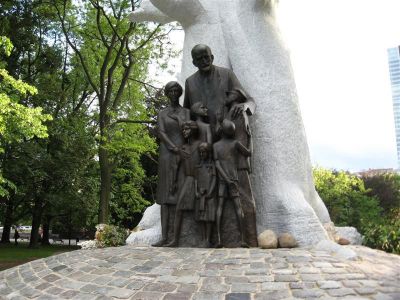
The monument shows Korczak with some of his pupils. It is erected at the site of the orphanage in what was formerly the Warsaw Ghetto. Though plans for the monument were underway in 1999, it wasn't completed and unveiled until 2006.
Visitors can find the monument in Świętokrzyski Park near the Palace of Culture and Science. Tourists who want to see other statues and monuments honoring Korczak can find them through Warsaw. A commemorative grave in the Jewish ceremony also holds important meaning to those wishing to honor Korczak's legacy.
The monument shows Korczak with some of his pupils. It is erected at the site of the orphanage in what was formerly the Warsaw Ghetto. Though plans for the monument were underway in 1999, it wasn't completed and unveiled until 2006.
Visitors can find the monument in Świętokrzyski Park near the Palace of Culture and Science. Tourists who want to see other statues and monuments honoring Korczak can find them through Warsaw. A commemorative grave in the Jewish ceremony also holds important meaning to those wishing to honor Korczak's legacy.

7) Palace of Culture and Science (must see)
The tallest building in Poland is Warsaw's Palace of Culture and Science. Standing at 778 feet and 42 floors, it ranks the fifth-tallest building in the European Union behind Commerzbank Tower and Messeturm, both in Frankfurt, and Madrid's Torre de Cristal and Torre Cepsa.
The Palace of Culture and Science was constructed between 1952 and 1955. Soviet architect Lev Rudnev designed the structure using Stalinest and Social Realism architecture with Art Deco and Renaissance influences. The prominent clock faces on the tower were not added until shortly before the turn of the century to celebrate the new millennium.
The building, a gift to Poland from the Soviet Union, was notable for more than its height. It was also the venue of the first performance of a major, international rock group behind the Iron Curtain. The Rolling Stones performed at the Palace of Culture and Science in 1967. It is now an exhibition center that contains two museums, multiple theatres, a university and a terrace that allows visitors to have a panoramic view of Warsaw.
Despite its cultural significance, the building has long been the subject of great controversy. Many citizens and political leaders have called for its demolition due to its ties to Joseph Stalin and the Soviet regime.
Tourists in Warsaw can easily spot the skyscraper due to its height and location in the city's center. The viewing terrace on the 30th floor is open daily from 10 AM to 8 PM.
The Palace of Culture and Science was constructed between 1952 and 1955. Soviet architect Lev Rudnev designed the structure using Stalinest and Social Realism architecture with Art Deco and Renaissance influences. The prominent clock faces on the tower were not added until shortly before the turn of the century to celebrate the new millennium.
The building, a gift to Poland from the Soviet Union, was notable for more than its height. It was also the venue of the first performance of a major, international rock group behind the Iron Curtain. The Rolling Stones performed at the Palace of Culture and Science in 1967. It is now an exhibition center that contains two museums, multiple theatres, a university and a terrace that allows visitors to have a panoramic view of Warsaw.
Despite its cultural significance, the building has long been the subject of great controversy. Many citizens and political leaders have called for its demolition due to its ties to Joseph Stalin and the Soviet regime.
Tourists in Warsaw can easily spot the skyscraper due to its height and location in the city's center. The viewing terrace on the 30th floor is open daily from 10 AM to 8 PM.
8) Museum of Evolution and Institute of Paleobiology
The Museum of Evolution of the Institute of Paleobiology, part of the Polish Academy of Sciences, is a prominent institution located in Warsaw. Situated in the iconic Palace of Culture and Science, the museum is dedicated to showcasing the wonders of evolution and the field of paleontology.
Central to the museum's mission is the exploration of key evolutionary questions, such as the origins of humanity, the spread of vertebrates across the globe, and the enigmatic extinction of dinosaurs. The exhibits are designed to provide insights into the general evolution of life on Earth, drawing from the rich findings of paleontological expeditions, particularly those in the Gobi Desert.
One of the museum's most fascinating aspects is its focus on the development of terrestrial vertebrates. Highlighting this theme are genuine dinosaur bones, a testament to the successful Polish-Mongolian expeditions to the Gobi Desert in the 1960s and 1970s. These remarkable finds are complemented by replicas of vertebrates from the unique Mesozoic burial ground of reptiles and amphibians in Krasiejów, in south-western Poland.
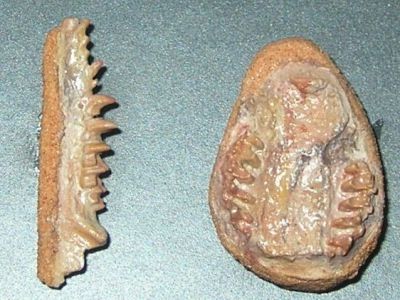
The museum’s latest exhibition delves into the world of predators and their prey from various global regions, illustrating the ongoing evolutionary arms race that has shaped life on our planet. Among its collection are fossilized dinosaur eggs and the small skulls of early mammals, providing a glimpse into the era when these mammals lived under the shadow of towering dinosaurs.
The museum also includes an impressive collection of flying reptile and flightless bird skeletons, showcasing the diversity of life forms and supporting the theory of evolution. A dedicated hall explores the evolution of mammals, featuring preserved insects, plants, and fish. Additionally, an upcoming exhibition, in collaboration with the Institute of Zoology, will focus on the evolution of marine life.
Central to the museum's mission is the exploration of key evolutionary questions, such as the origins of humanity, the spread of vertebrates across the globe, and the enigmatic extinction of dinosaurs. The exhibits are designed to provide insights into the general evolution of life on Earth, drawing from the rich findings of paleontological expeditions, particularly those in the Gobi Desert.
One of the museum's most fascinating aspects is its focus on the development of terrestrial vertebrates. Highlighting this theme are genuine dinosaur bones, a testament to the successful Polish-Mongolian expeditions to the Gobi Desert in the 1960s and 1970s. These remarkable finds are complemented by replicas of vertebrates from the unique Mesozoic burial ground of reptiles and amphibians in Krasiejów, in south-western Poland.
The museum’s latest exhibition delves into the world of predators and their prey from various global regions, illustrating the ongoing evolutionary arms race that has shaped life on our planet. Among its collection are fossilized dinosaur eggs and the small skulls of early mammals, providing a glimpse into the era when these mammals lived under the shadow of towering dinosaurs.
The museum also includes an impressive collection of flying reptile and flightless bird skeletons, showcasing the diversity of life forms and supporting the theory of evolution. A dedicated hall explores the evolution of mammals, featuring preserved insects, plants, and fish. Additionally, an upcoming exhibition, in collaboration with the Institute of Zoology, will focus on the evolution of marine life.
9) Galeria Artis
What to buy here: Angels, traditional folk sculptures | Polish Beer tankard | Polish Ceramics | Polish folk-dolls | Polish keepsake box.
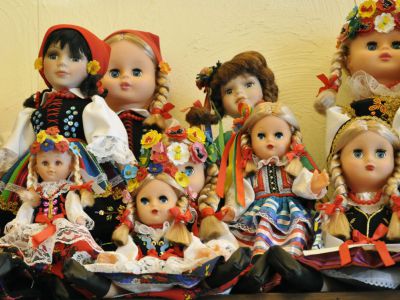
-Polish folk-dolls. If you’re looking for a unique toy for a child or a typical souvenir reminding you of Poland, pick up one of the popular brightly-coloured dolls in folk costumes representing different regions of the country.
A colorful Polish doll may be a lovely, ethnic alternative to Disney-themed mass-produced toys for children. It can also serve a decorative purpose if you like to bring home unique souvenirs, which give your house a touch of mystery and adventure. Each region of Poland has its own traditional folk costume, which are proudly represented by dolls such as Krakowianka, Łowiczanka, Ślązaczka, Góralka, Krupianka and Kaszubka. Just pick your favorite one.
These beauties are to be purchased in folk stores as well as souvenir shops, as they are number one world-famous Polish souvenirs. There are dolls with plastic or porcelain faces, however the difference in the price is not huge. Price: 25 PLN – 160 PLN.
-Polish folk-dolls. If you’re looking for a unique toy for a child or a typical souvenir reminding you of Poland, pick up one of the popular brightly-coloured dolls in folk costumes representing different regions of the country.
A colorful Polish doll may be a lovely, ethnic alternative to Disney-themed mass-produced toys for children. It can also serve a decorative purpose if you like to bring home unique souvenirs, which give your house a touch of mystery and adventure. Each region of Poland has its own traditional folk costume, which are proudly represented by dolls such as Krakowianka, Łowiczanka, Ślązaczka, Góralka, Krupianka and Kaszubka. Just pick your favorite one.
These beauties are to be purchased in folk stores as well as souvenir shops, as they are number one world-famous Polish souvenirs. There are dolls with plastic or porcelain faces, however the difference in the price is not huge. Price: 25 PLN – 160 PLN.
10) Koszyki Hall (must see)
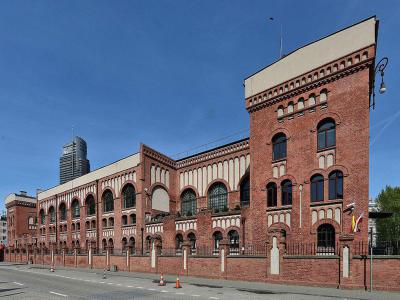
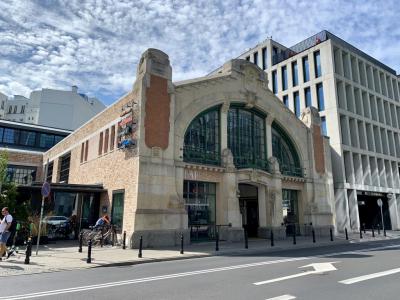
Koszyki Hall (Hala Koszyki) is a historic market and food hall situated in the southern-central part of Warsaw. It was originally established in 1909 and has since undergone redevelopment to become a multifunctional complex that houses retail spaces, offices, bookstores, upscale bars, and gourmet restaurants. This shopping arcade boasts an Art Nouveau architectural style.
The construction of Koszyki Hall took place over two years, from 1906 to 1908, and was completed in March 1909. The name of both the street and the new market can be translated as "shopping baskets." The building's exterior is adorned with sculptures and intricate carvings, featuring the mermaid, a symbol of Warsaw, as well as motifs related to animals and food. During its time, the structure was considered highly modern and equipped with all the necessary conveniences.
Unfortunately, the building suffered damage and fire during the Second World War, especially during the Warsaw Uprising. However, its steel frame prevented complete collapse, preserving the decorative architectural elements on the exterior of the side wings. The complex was subsequently restored to its original appearance in 1949 and was designated as a cultural heritage site in 1965.
In 2012, the building underwent another reconstruction, and the market hall reopened in October 2016. All of the original structural elements were incorporated into the new mixed-use building. Inside, you can find a variety of restaurants specializing in haute cuisine, bars, pubs, cafeterias, bookstores, and designer shops.
Today, Koszyki Hall is a paradise for food enthusiasts. If you have a hearty appetite, you're guaranteed to have a great time exploring the culinary delights it has to offer.
The construction of Koszyki Hall took place over two years, from 1906 to 1908, and was completed in March 1909. The name of both the street and the new market can be translated as "shopping baskets." The building's exterior is adorned with sculptures and intricate carvings, featuring the mermaid, a symbol of Warsaw, as well as motifs related to animals and food. During its time, the structure was considered highly modern and equipped with all the necessary conveniences.
Unfortunately, the building suffered damage and fire during the Second World War, especially during the Warsaw Uprising. However, its steel frame prevented complete collapse, preserving the decorative architectural elements on the exterior of the side wings. The complex was subsequently restored to its original appearance in 1949 and was designated as a cultural heritage site in 1965.
In 2012, the building underwent another reconstruction, and the market hall reopened in October 2016. All of the original structural elements were incorporated into the new mixed-use building. Inside, you can find a variety of restaurants specializing in haute cuisine, bars, pubs, cafeterias, bookstores, and designer shops.
Today, Koszyki Hall is a paradise for food enthusiasts. If you have a hearty appetite, you're guaranteed to have a great time exploring the culinary delights it has to offer.
