Custom Walk in Mostar, Bosnia-Herzegovina by ricksmith7583789 created on 2025-06-20
Guide Location: Bosnia-Herzegovina » Mostar
Guide Type: Custom Walk
# of Sights: 7
Tour Duration: 1 Hour(s)
Travel Distance: 1.6 Km or 1 Miles
Share Key: PNUY5
Guide Type: Custom Walk
# of Sights: 7
Tour Duration: 1 Hour(s)
Travel Distance: 1.6 Km or 1 Miles
Share Key: PNUY5
How It Works
Please retrieve this walk in the GPSmyCity app. Once done, the app will guide you from one tour stop to the next as if you had a personal tour guide. If you created the walk on this website or come to the page via a link, please follow the instructions below to retrieve the walk in the app.
Retrieve This Walk in App
Step 1. Download the app "GPSmyCity: Walks in 1K+ Cities" on Apple App Store or Google Play Store.



Step 2. In the GPSmyCity app, download(or launch) the guide "Mostar Map and Walking Tours".
Step 3. Tap the menu button located at upper right corner of the "Walks" screen and select "Retrieve custom walk". Enter the share key: PNUY5
1) Stari Most (Old Bridge) (must see)
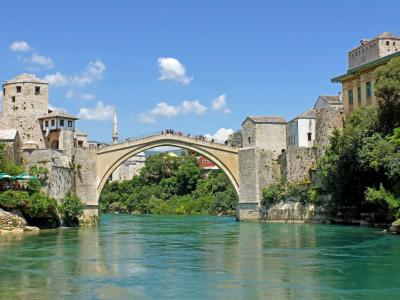
Derviş Mehmed Zilli, the great 17th-century Ottoman traveler, once described the Old Bridge as a rainbow arch soaring up to the skies, extending from one cliff to another. The bridge stretches gracefully over the emerald Neretva River, linking the two halves of the city’s historic core.
The Old Bridge was built in 1566 on the orders of Suleiman the Magnificent, replacing a rickety wooden suspension bridge. It was designed by Mimar Hayruddin, a student of the legendary Ottoman architect Mimar Sinan. As legend tells it, Suleiman demanded perfection, warning Hayruddin: “Build it, or die”. Fearing failure, Hayruddin is said to have prepared his own funeral on the day the scaffolding was removed. But the bridge held—and stood for more than four centuries, admired as one of the boldest feats of Ottoman engineering.
At the time, it was the widest man-made stone arch in the world. The structure measures 13 feet wide and 98 feet long, rising 78 feet above the Neretva. Framing each end are two fortified towers—the Helebija Tower to the west, which once contained a prison, and the Tara Tower to the east, now home to the Museum of the Old Bridge. Their pale limestone walls blend with the cliffs, reinforcing the bridge’s elegant silhouette.
After 427 years, the bridge was tragically destroyed during the Bosnian War in 1993. Its loss shocked the world. Yet hope followed: a meticulous UNESCO-led reconstruction, completed in 2004, used original materials and techniques, with stones quarried from the same site as in the 16th century.
Each summer, the bridge becomes a stage for bravery. Locals and professionals dive from its summit into the icy river below, continuing a 450-year tradition. It even hosts a stop on the Red Bull Cliff Diving World Series, where elite athletes take the plunge without ropes or harnesses.
So, as you stand here listening to the river echo beneath the arch, imagine the footsteps that have crossed this bridge over the past 450 years — merchants, soldiers, lovers, families, and now you. The Old Bridge has witnessed it all, and still rises proudly above the Neretva, ready for the next chapter.
The Old Bridge was built in 1566 on the orders of Suleiman the Magnificent, replacing a rickety wooden suspension bridge. It was designed by Mimar Hayruddin, a student of the legendary Ottoman architect Mimar Sinan. As legend tells it, Suleiman demanded perfection, warning Hayruddin: “Build it, or die”. Fearing failure, Hayruddin is said to have prepared his own funeral on the day the scaffolding was removed. But the bridge held—and stood for more than four centuries, admired as one of the boldest feats of Ottoman engineering.
At the time, it was the widest man-made stone arch in the world. The structure measures 13 feet wide and 98 feet long, rising 78 feet above the Neretva. Framing each end are two fortified towers—the Helebija Tower to the west, which once contained a prison, and the Tara Tower to the east, now home to the Museum of the Old Bridge. Their pale limestone walls blend with the cliffs, reinforcing the bridge’s elegant silhouette.
After 427 years, the bridge was tragically destroyed during the Bosnian War in 1993. Its loss shocked the world. Yet hope followed: a meticulous UNESCO-led reconstruction, completed in 2004, used original materials and techniques, with stones quarried from the same site as in the 16th century.
Each summer, the bridge becomes a stage for bravery. Locals and professionals dive from its summit into the icy river below, continuing a 450-year tradition. It even hosts a stop on the Red Bull Cliff Diving World Series, where elite athletes take the plunge without ropes or harnesses.
So, as you stand here listening to the river echo beneath the arch, imagine the footsteps that have crossed this bridge over the past 450 years — merchants, soldiers, lovers, families, and now you. The Old Bridge has witnessed it all, and still rises proudly above the Neretva, ready for the next chapter.
2) War Photo Exhibition (must see)
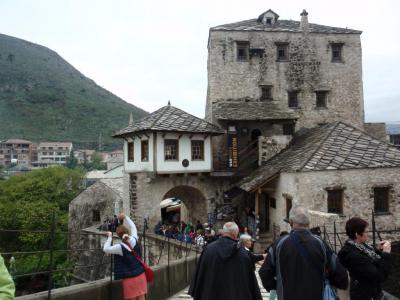
New Zealand photojournalist Wade Goddard has his exhibit of fifty powerful war photos on display in the Helebija Tower of Old Bridge, just above the Bridge Divers' Club. Goddard was in Bosnia-Herzegovina during the conflict with Croatia. The exhibit provides insights into the bloody happenings of 1993 and the struggle to survive.
There are visual records of the destruction and restoration of the world-famous the Old Bridge of Mostar. Bulevar Street, a frontline no man's land in the war, is transformed into Mostar's Main Street and the address of City Hall.
The exhibition space is small, but the photos and commentaries tell a vivid tale. It is recommended by some visitors that tourists should see the exhibit at least twice. The War Photo Exhibition hours are 9 am to 8:30 pm. There is a small admission charge. The time required to take in the experience is about two hours.
There are visual records of the destruction and restoration of the world-famous the Old Bridge of Mostar. Bulevar Street, a frontline no man's land in the war, is transformed into Mostar's Main Street and the address of City Hall.
The exhibition space is small, but the photos and commentaries tell a vivid tale. It is recommended by some visitors that tourists should see the exhibit at least twice. The War Photo Exhibition hours are 9 am to 8:30 pm. There is a small admission charge. The time required to take in the experience is about two hours.
3) Museum of War and Genocide Victims 1992-1995 (must see)
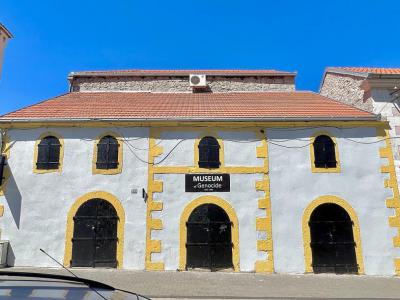
A short walk from the Old Bridge of Mostar is the Museum of War and Genocide Victims, the most important museum in Herzegovina. Behind the scenes of a city jammed with tourists, there are frightful wounds and horrors of the past. Ethnic "cleansing," concentration camps, and mass murders are remembered here; the story of the Balkans.
The number of items and artifacts exhibited in the museum grows endlessly. Each item comes with a story about it. Hours of reading are possible. The stories are in English and Bosnian. The staff consists of people who have suffered in different ways from the war. They tell stories that are difficult to listen to.
There are many testimonies of atrocities and photos taken by prisoners and soldiers never shown in the press. Witness accounts are available of United Nations peacekeepers who were unable to protect civilians. Summary executions are documented. Personal items exhumed from mass graves, statements of survivors, and documents attest to these evils.
Museum hours are from 9 am to 9 pm every day. The museum is without government support, so donations are welcome.
The number of items and artifacts exhibited in the museum grows endlessly. Each item comes with a story about it. Hours of reading are possible. The stories are in English and Bosnian. The staff consists of people who have suffered in different ways from the war. They tell stories that are difficult to listen to.
There are many testimonies of atrocities and photos taken by prisoners and soldiers never shown in the press. Witness accounts are available of United Nations peacekeepers who were unable to protect civilians. Summary executions are documented. Personal items exhumed from mass graves, statements of survivors, and documents attest to these evils.
Museum hours are from 9 am to 9 pm every day. The museum is without government support, so donations are welcome.
4) Biscevic House
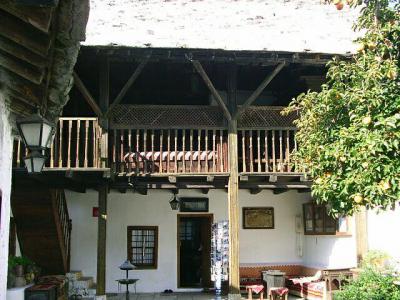
The Bišćević House is one of the finest surviving examples of traditional Ottoman residential architecture in the city, offering a rare glimpse into family life during the 17th century. Built in 1635 along the banks of the Neretva River, it reflects the layout and character of the old mahallas—neighbourhoods that developed rapidly during the Ottoman era. From the street, these houses appeared modest, often only one or two storeys high, yet inside they revealed refined craftsmanship, careful design, and a strong sense of privacy.
Ottoman homes were positioned with great care: each residence was oriented to capture the most scenic views, especially the river, without obstructing a neighbour’s view, as required by law. Entry from the street led into a walled courtyard, a transitional space protecting family life from the outside world. Separate rooms were designated for guests and for daily family living.
Inside the Bišćević House, the contrast between the plain exterior and the richly decorated interior becomes immediately clear. Visitors step through a simple entrance into a world of carved wooden ceilings, built-in cabinets, and a beautiful room with pointed arch windows dramatically cantilevered above the rushing Neretva. The high enclosing walls and shaded stone courtyard with its softly bubbling fountain create a peaceful, secluded atmosphere.
The house remains privately owned by the Bišćević family, who have converted it into a small museum. At the entrance, guests are provided with Turkish slippers to protect the carpets. Rooms are furnished with divans, oriental rugs, embroidered textiles, and framed Arabic calligraphy. Visitors are welcome to take photographs, and one of the charming touches is the opportunity to try on traditional clothing stored in antique chests—perfect for a memorable photo.
Ottoman homes were positioned with great care: each residence was oriented to capture the most scenic views, especially the river, without obstructing a neighbour’s view, as required by law. Entry from the street led into a walled courtyard, a transitional space protecting family life from the outside world. Separate rooms were designated for guests and for daily family living.
Inside the Bišćević House, the contrast between the plain exterior and the richly decorated interior becomes immediately clear. Visitors step through a simple entrance into a world of carved wooden ceilings, built-in cabinets, and a beautiful room with pointed arch windows dramatically cantilevered above the rushing Neretva. The high enclosing walls and shaded stone courtyard with its softly bubbling fountain create a peaceful, secluded atmosphere.
The house remains privately owned by the Bišćević family, who have converted it into a small museum. At the entrance, guests are provided with Turkish slippers to protect the carpets. Rooms are furnished with divans, oriental rugs, embroidered textiles, and framed Arabic calligraphy. Visitors are welcome to take photographs, and one of the charming touches is the opportunity to try on traditional clothing stored in antique chests—perfect for a memorable photo.
5) Old Bazar Kujundziluk (must see)
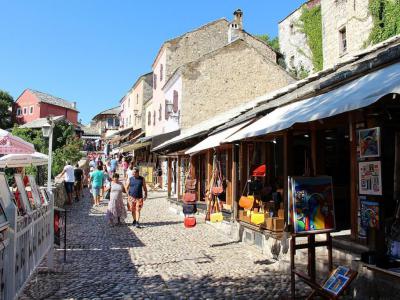
The Old Bazaar Kujundžiluk has been in business since the 16th century, dating back to the Ottoman era when it served as the bustling commercial heart of the city. At its peak, more than 500 workshops and tradespeople operated here, and the street still preserves much of its historic character and charm.
Just a few steps from the Old Bridge, Kujundžiluk winds its way through a car-free area of the Old Town. Traditional shops line the cobbled street, where artisans sell handcrafted items from small, one-room boutiques. Here, visitors can find copperware, carpets, scarves, jewellery, clothing, ceramics, and decorative hookahs, along with stalls offering spices and other local crafts. Lively cafés and restaurants add to the atmosphere, making it a bustling place to stroll, shop, and sample local flavours.
Beyond the classic souvenirs, the bazaar also features antique and curiosity stalls selling vintage photos, books, coins, and even military memorabilia such as helmets and cartridge casings. You may also spot local coppersmiths engraving designs by hand — a craft for which this market has long been known. Bargaining is common, and many vendors expect a bit of friendly haggling.
Just a few steps from the Old Bridge, Kujundžiluk winds its way through a car-free area of the Old Town. Traditional shops line the cobbled street, where artisans sell handcrafted items from small, one-room boutiques. Here, visitors can find copperware, carpets, scarves, jewellery, clothing, ceramics, and decorative hookahs, along with stalls offering spices and other local crafts. Lively cafés and restaurants add to the atmosphere, making it a bustling place to stroll, shop, and sample local flavours.
Beyond the classic souvenirs, the bazaar also features antique and curiosity stalls selling vintage photos, books, coins, and even military memorabilia such as helmets and cartridge casings. You may also spot local coppersmiths engraving designs by hand — a craft for which this market has long been known. Bargaining is common, and many vendors expect a bit of friendly haggling.
6) Crooked Bridge (must see)
Not far from the world-famous Old Bridge in Mostar stands its smaller, charming counterpart — the Crooked Bridge. Spanning the Radobolja Creek, a quiet tributary of the Neretva River, this graceful stone arch is believed to predate the Old Bridge by a few years. Many locals say it served as a prototype for its larger sibling, built to test both design and technique before the grand project over the Neretva began.
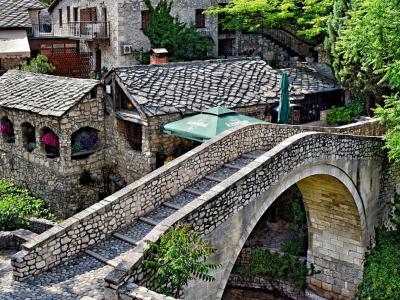
The Crooked Bridge is a beautiful example of Ottoman stone craftsmanship, with its single semicircular arch rising elegantly about 14 feet above the water and stretching 28 feet across the creek. The bridge is made of finely cut local stone, its smooth cubes fitted tightly together with crushed stone filling the gaps. A gentle flight of steps on both sides leads up to the crest, where the curved footpath is paved with rounded cobblestones, typical of Mostar’s old quarter.
In December 2000, devastating floods washed away the Crooked Bridge, but it was carefully rebuilt soon after with the support of UNESCO and the Duchy of Luxembourg. Unlike the Old Bridge, where daring divers leap into the Neretva below, this smaller span offers a quieter reward — the gentle murmur of the creek, a tranquil view of stone and water, and the feeling of stepping across centuries of Mostar’s living history.
The Crooked Bridge is a beautiful example of Ottoman stone craftsmanship, with its single semicircular arch rising elegantly about 14 feet above the water and stretching 28 feet across the creek. The bridge is made of finely cut local stone, its smooth cubes fitted tightly together with crushed stone filling the gaps. A gentle flight of steps on both sides leads up to the crest, where the curved footpath is paved with rounded cobblestones, typical of Mostar’s old quarter.
In December 2000, devastating floods washed away the Crooked Bridge, but it was carefully rebuilt soon after with the support of UNESCO and the Duchy of Luxembourg. Unlike the Old Bridge, where daring divers leap into the Neretva below, this smaller span offers a quieter reward — the gentle murmur of the creek, a tranquil view of stone and water, and the feeling of stepping across centuries of Mostar’s living history.
7) Catholic Church of St. Peter and St. Paul
The roots of the Catholic Church of Saint Peter and Saint Paul in Mostar trace back to the mid-19th century, when the Franciscan order—already active elsewhere in Bosnia for centuries—was finally allowed to establish a permanent presence in the city. In 1856, Sultan Abdulmejid I issued the Reform Edict, granting Christians greater religious freedom across the Ottoman Empire.
This decree paved the way for the Franciscans to return and begin building a new spiritual and cultural centre in Mostar. Construction of the church and monastery began in 1866. Local craftsmen erected its sturdy walls using traditional methods, and by 1875, the new Franciscan complex was completed.
The complex suffered severe damage during the Bosnian War in 1992, when the original 19th-century structure was destroyed. Following the conflict, the Franciscan community undertook a full reconstruction effort led by architect Davor Smoljan, who designed a contemporary interpretation of the historic site.
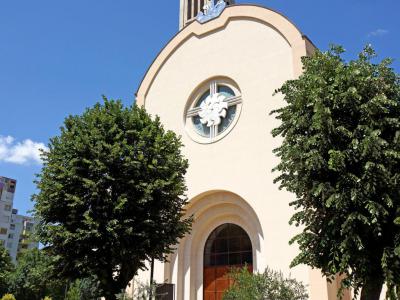
Today, the restored complex features a modern monastery, a spacious sanctuary, and the Peace Bell Tower—one of the tallest bell towers in southeastern Europe. Within the monastery, visitors can explore a library housing tens of thousands of volumes, reflecting the Franciscans’ enduring dedication to education and cultural preservation.
This decree paved the way for the Franciscans to return and begin building a new spiritual and cultural centre in Mostar. Construction of the church and monastery began in 1866. Local craftsmen erected its sturdy walls using traditional methods, and by 1875, the new Franciscan complex was completed.
The complex suffered severe damage during the Bosnian War in 1992, when the original 19th-century structure was destroyed. Following the conflict, the Franciscan community undertook a full reconstruction effort led by architect Davor Smoljan, who designed a contemporary interpretation of the historic site.
Today, the restored complex features a modern monastery, a spacious sanctuary, and the Peace Bell Tower—one of the tallest bell towers in southeastern Europe. Within the monastery, visitors can explore a library housing tens of thousands of volumes, reflecting the Franciscans’ enduring dedication to education and cultural preservation.
