Custom Walk in Paris, France by tdp12_7d5f7 created on 2025-09-01
Guide Location: France » Paris
Guide Type: Custom Walk
# of Sights: 4
Tour Duration: 2 Hour(s)
Travel Distance: 4.9 Km or 3 Miles
Share Key: 6RYDQ
Guide Type: Custom Walk
# of Sights: 4
Tour Duration: 2 Hour(s)
Travel Distance: 4.9 Km or 3 Miles
Share Key: 6RYDQ
How It Works
Please retrieve this walk in the GPSmyCity app. Once done, the app will guide you from one tour stop to the next as if you had a personal tour guide. If you created the walk on this website or come to the page via a link, please follow the instructions below to retrieve the walk in the app.
Retrieve This Walk in App
Step 1. Download the app "GPSmyCity: Walks in 1K+ Cities" on Apple App Store or Google Play Store.



Step 2. In the GPSmyCity app, download(or launch) the guide "Paris Map and Walking Tours".
Step 3. Tap the menu button located at upper right corner of the "Walks" screen and select "Retrieve custom walk". Enter the share key: 6RYDQ
1) Hotel de Ville (City Hall)
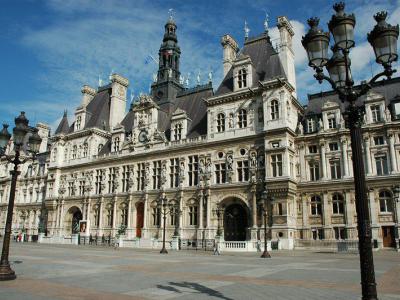
The City Hall of Paris, overlooking its namesake square, is the largest city hall building in Europe. Historically central to Parisian life, this location has been the city’s administrative hub since 1357 when the provost of merchants purchased the site intending to make it a public gathering space. Curiously enough, the early sessions of the Paris municipal council were held at the home of a city mayor – the practice continued until the 16th century when King Francis I ordered a purpose-built edifice for that. The Renaissance-style building's south wing was commissioned in 1535. Later, it was joined by the north wing, in 1605, under Henry IV and Louis XIII.
As the French Revolution headquarters, the City Hall accommodated Maximilien Robespierre and his supporters. Ironically, it was here that Robespierre himself was arrested in 1794, at the end of the infamous Rule of Terror period, during which anyone opposing the revolution was sent to the guillotine.
In 1835, the building was expanded to accommodate the growing city government. However, during the Franco-Prussian War and the Paris Commune, it once again became a stage for political upheaval, culminating in its near-total destruction. During the final days of the Paris Commune, when their defeat was imminent and the French army closed in on the building then used as the Paris Commune headquarters, the Communards set it ablaze, completely destroying everything inside, including the city archives.
Reconstruction between 1874 and 1882 adhered to the original Renaissance-style exterior, while the interior had to be created anew, including lavish ceremonial rooms decorated with murals by noted artists. The façade featured 108 statues by prominent sculptors, including Auguste Rodin, who created the likenesses of famous Parisians such as philosophers Voltaire and Jean-Jacques Rousseau, writer Charles Perrault (author of "The Sleeping Beauty", "Little Red Riding Hood", and "Cinderella"), sculptor Jean-Baptiste Pigalle, and many others. Another thirty statues here represent French cities. The clock at the central tower is also adorned with statues – several female sculptures depicting the river Seine, the city of Paris, the “Work,” and the “Education”.
In the 20th century, the City Hall witnessed Charles de Gaulle’s Liberation speech in 1944. In recent years, the Mayor of Paris opened the building to public events including the annual White Night festival. The City Hall also played a role in the 2024 Olympics, hosting the start of the marathon.
While public access to the City Hall is generally restricted, there are two rooms in the building constantly allocated to art exhibitions: one for photography, and one for art in general. Also, there are almost always some cultural events taking place outside, in the square in front of the building.
As the French Revolution headquarters, the City Hall accommodated Maximilien Robespierre and his supporters. Ironically, it was here that Robespierre himself was arrested in 1794, at the end of the infamous Rule of Terror period, during which anyone opposing the revolution was sent to the guillotine.
In 1835, the building was expanded to accommodate the growing city government. However, during the Franco-Prussian War and the Paris Commune, it once again became a stage for political upheaval, culminating in its near-total destruction. During the final days of the Paris Commune, when their defeat was imminent and the French army closed in on the building then used as the Paris Commune headquarters, the Communards set it ablaze, completely destroying everything inside, including the city archives.
Reconstruction between 1874 and 1882 adhered to the original Renaissance-style exterior, while the interior had to be created anew, including lavish ceremonial rooms decorated with murals by noted artists. The façade featured 108 statues by prominent sculptors, including Auguste Rodin, who created the likenesses of famous Parisians such as philosophers Voltaire and Jean-Jacques Rousseau, writer Charles Perrault (author of "The Sleeping Beauty", "Little Red Riding Hood", and "Cinderella"), sculptor Jean-Baptiste Pigalle, and many others. Another thirty statues here represent French cities. The clock at the central tower is also adorned with statues – several female sculptures depicting the river Seine, the city of Paris, the “Work,” and the “Education”.
In the 20th century, the City Hall witnessed Charles de Gaulle’s Liberation speech in 1944. In recent years, the Mayor of Paris opened the building to public events including the annual White Night festival. The City Hall also played a role in the 2024 Olympics, hosting the start of the marathon.
While public access to the City Hall is generally restricted, there are two rooms in the building constantly allocated to art exhibitions: one for photography, and one for art in general. Also, there are almost always some cultural events taking place outside, in the square in front of the building.
2) Place des Vosges (Vosges Square) (must see)
Vosges Square is the oldest planned square in Paris. Originally known as Royal Square, it was built from 1605 to 1612 under King Henri IV on the site of the complex of buildings demolished by Catherine de' Medici.
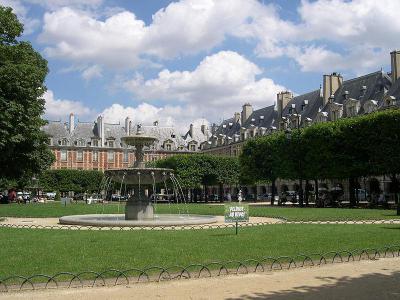
This 140-by-140-meter square was among Europe’s earliest examples of royal city planning, inspiring similar urban designs in cities across the continent. The square’s perfectly symmetrical layout features uniformly styled red brick facades with stone accents, vaulted arcades, and blue slate roofs with dormers. Of special note are the balconies, the first extended ones ever built in Paris. The northern and southern facades rise higher, with the so-called Pavilion of the King and Pavilion of the Queen marked by triple arches. Though no monarch resided there permanently, Anne of Austria briefly stayed in the Queen's Pavilion.
Originally celebrated with a grand event for the engagement of Louis XIII and Anne of Austria, Vosges Square became a prototype for aristocratic urban planning and was an elite address for Parisian nobility in the 17th and 18th centuries. Its reputation as a meeting place for the aristocracy continued until the French Revolution, after which the nobility largely relocated to the Faubourg Saint-Germain district.
The square’s name changed several times. During the French Revolution, it was briefly renamed “Weapons Manufacturing Square” and, in 1800, became Vosges Square in recognition of the Vosges department, the first to pay taxes supporting the Revolutionary army. Restoration of monarchs temporarily returned it to its original name, and in 1830 it briefly became “Republic Square”. Since 1870, the revolutionary name “Vosges Square” has remained.
Today, the square represents a well-manicured park with mature lindens and grass, surrounded by trimmed, shady trees, refreshing fountains, and sandy walkways. Boxed in by upscale properties, this elegant 17th-century garden is a bit of a hidden gem invisible to the outsiders. But locals know it all too well and gather here regularly on weekends, especially in summer.
Once home to notable figures like Victor Hugo, whose preserved residence is now a museum, the area’s allure is tied to its heritage. Ground floors house art shops, boutiques, and bohemian-style bars, offering a relaxed setting for a quick snack or drink. Diverse dining options, including kosher and ethnic cuisines, add to the charm, making it a favorite for history buffs, art enthusiasts, and casual visitors alike.
This 140-by-140-meter square was among Europe’s earliest examples of royal city planning, inspiring similar urban designs in cities across the continent. The square’s perfectly symmetrical layout features uniformly styled red brick facades with stone accents, vaulted arcades, and blue slate roofs with dormers. Of special note are the balconies, the first extended ones ever built in Paris. The northern and southern facades rise higher, with the so-called Pavilion of the King and Pavilion of the Queen marked by triple arches. Though no monarch resided there permanently, Anne of Austria briefly stayed in the Queen's Pavilion.
Originally celebrated with a grand event for the engagement of Louis XIII and Anne of Austria, Vosges Square became a prototype for aristocratic urban planning and was an elite address for Parisian nobility in the 17th and 18th centuries. Its reputation as a meeting place for the aristocracy continued until the French Revolution, after which the nobility largely relocated to the Faubourg Saint-Germain district.
The square’s name changed several times. During the French Revolution, it was briefly renamed “Weapons Manufacturing Square” and, in 1800, became Vosges Square in recognition of the Vosges department, the first to pay taxes supporting the Revolutionary army. Restoration of monarchs temporarily returned it to its original name, and in 1830 it briefly became “Republic Square”. Since 1870, the revolutionary name “Vosges Square” has remained.
Today, the square represents a well-manicured park with mature lindens and grass, surrounded by trimmed, shady trees, refreshing fountains, and sandy walkways. Boxed in by upscale properties, this elegant 17th-century garden is a bit of a hidden gem invisible to the outsiders. But locals know it all too well and gather here regularly on weekends, especially in summer.
Once home to notable figures like Victor Hugo, whose preserved residence is now a museum, the area’s allure is tied to its heritage. Ground floors house art shops, boutiques, and bohemian-style bars, offering a relaxed setting for a quick snack or drink. Diverse dining options, including kosher and ethnic cuisines, add to the charm, making it a favorite for history buffs, art enthusiasts, and casual visitors alike.
3) Rue de Rivoli (Rivoli Street)
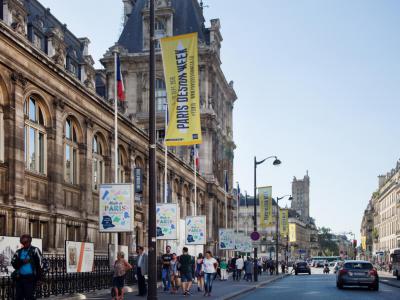
Rivoli Street, a prominent commercial artery in central Paris, replete with high-end fashion boutiques, carries a great deal of historical significance. It commemorates Napoleon Bonaparte's momentous triumph over the Austrian army at the Battle of Rivoli in January 1797. Initially developed by Napoleon, the novel street carved through the heart of Paris parallel to the north wing of the Louvre Palace and the Tuileries Gardens, marking a pivotal shift in urban planning.
Napoleon’s project created a wide, elegant street that showcased a blend of Paris's rich historical monuments and the emerging modern city layout. His original plan was later extended eastward by the restored Bourbon King Charles X, followed by his successor King Louis-Philippe. Lastly, Emperor Napoleon III incorporated it into the 17th-century district of Le Marais. Underneath Rivoli lies a significant part of Paris’s famed sewer system, which includes sidewalks for maintenance workers.
The area around Rivoli Street is home to major landmarks, such as the Opera Garnier, and nearby department stores like Galeries Lafayette and Printemps.
Further east, at Pyramids Square, a statue of Joan of Arc stands near the site where she was wounded in 1429. The street is also linked to other dark moments in French history. A plaque at No. 144 marks the spot where the Huguenot leader Admiral Gaspard de Coligny was assassinated during the Saint Bartholomew's Day massacre – a wave of Catholic mob violence against the Huguenots during the French Wars of Religion – in 1572.
While the Rivoli section near the Louvre is more commercial, offering a greater variety of shopping and dining options, its stretch in the Le Marais area is more tranquil and picturesque. It provides an authentic Parisian experience, with serene café-brasseries such as La Tartine – a local favorite with an extensive wine list. Either way, a leisurely walk on the Rivoli promises a worthwhile experience.
Napoleon’s project created a wide, elegant street that showcased a blend of Paris's rich historical monuments and the emerging modern city layout. His original plan was later extended eastward by the restored Bourbon King Charles X, followed by his successor King Louis-Philippe. Lastly, Emperor Napoleon III incorporated it into the 17th-century district of Le Marais. Underneath Rivoli lies a significant part of Paris’s famed sewer system, which includes sidewalks for maintenance workers.
The area around Rivoli Street is home to major landmarks, such as the Opera Garnier, and nearby department stores like Galeries Lafayette and Printemps.
Further east, at Pyramids Square, a statue of Joan of Arc stands near the site where she was wounded in 1429. The street is also linked to other dark moments in French history. A plaque at No. 144 marks the spot where the Huguenot leader Admiral Gaspard de Coligny was assassinated during the Saint Bartholomew's Day massacre – a wave of Catholic mob violence against the Huguenots during the French Wars of Religion – in 1572.
While the Rivoli section near the Louvre is more commercial, offering a greater variety of shopping and dining options, its stretch in the Le Marais area is more tranquil and picturesque. It provides an authentic Parisian experience, with serene café-brasseries such as La Tartine – a local favorite with an extensive wine list. Either way, a leisurely walk on the Rivoli promises a worthwhile experience.
4) Place de la Concorde (Concorde Square)
Concord Square is Paris's largest public square, spanning 7.6 hectares at the eastern end of the Champs-Élysées. It was created in the mid-18th century to honor King Louis XV’s recovery. The square's octagonal layout, surrounded by moats and stone bridges, originally featured the equestrian statue of Louis XV at its center.
During the French Revolution, the square gained historical significance as the site of numerous public executions including those of King Louis XVI, Queen Marie Antoinette, and Maximilien Robespierre, one of the most influential and controversial French revolutionary figures. The installed guillotine remained particularly busy throughout the so-called "Reign of Terror" in the summer of 1794 when in a single month more than 1,300 people were executed. Renamed Revolution Square during this period, it was rechristened Concord Square in 1795, symbolizing peace in post-revolutionary France.
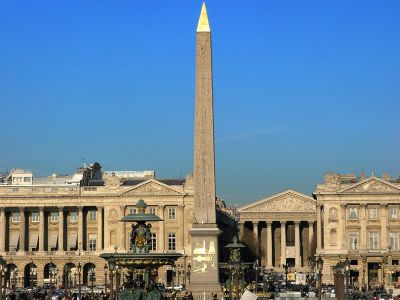
Today, the square is home to iconic landmarks. The Luxor Obelisk, a gift from Egypt, was raised there in 1836. In 1998, it was capped with a gold-leaf top. Aged over 3,000 years, this is by far the most ancient monument in Paris, originally standing at Luxor Temple’s entrance. The 230-ton obelisk is complemented by two fountains: the Maritime Fountain, symbolizing France’s seas, and the Fluvial Fountain, representing its rivers. The square’s Neoclassical buildings house important institutions like the former headquarters of the French Navy. In continuation of the nautical theme, there are 20 rostral columns throughout the square adorned with a ship prow which is part of the official Paris emblem.
On its eastern side, the Tuileries Garden connects with museums like the “Game of Palm” National Gallery (a former tennis court turned into an art gallery) and the Orangery, home to Monet’s Water Lilies painting.
Concord Square continues to host significant events, including Bastille Day parades and, more recently, Olympic celebrations. In 2021, plans were announced to make the square more pedestrian-friendly by reducing traffic, adding green spaces, and creating tree-lined areas around monuments.
Tip:
A big Ferris wheel in Concord Square is for those keen on getting a bird's eye view over the nearby river Seine, Louvre, Tuileries Garden, Champs-Élysées, Triumphal Arch, and the Eiffel Tower. This wheel turns three times faster than the London Eye and is much cheaper too!
During the French Revolution, the square gained historical significance as the site of numerous public executions including those of King Louis XVI, Queen Marie Antoinette, and Maximilien Robespierre, one of the most influential and controversial French revolutionary figures. The installed guillotine remained particularly busy throughout the so-called "Reign of Terror" in the summer of 1794 when in a single month more than 1,300 people were executed. Renamed Revolution Square during this period, it was rechristened Concord Square in 1795, symbolizing peace in post-revolutionary France.
Today, the square is home to iconic landmarks. The Luxor Obelisk, a gift from Egypt, was raised there in 1836. In 1998, it was capped with a gold-leaf top. Aged over 3,000 years, this is by far the most ancient monument in Paris, originally standing at Luxor Temple’s entrance. The 230-ton obelisk is complemented by two fountains: the Maritime Fountain, symbolizing France’s seas, and the Fluvial Fountain, representing its rivers. The square’s Neoclassical buildings house important institutions like the former headquarters of the French Navy. In continuation of the nautical theme, there are 20 rostral columns throughout the square adorned with a ship prow which is part of the official Paris emblem.
On its eastern side, the Tuileries Garden connects with museums like the “Game of Palm” National Gallery (a former tennis court turned into an art gallery) and the Orangery, home to Monet’s Water Lilies painting.
Concord Square continues to host significant events, including Bastille Day parades and, more recently, Olympic celebrations. In 2021, plans were announced to make the square more pedestrian-friendly by reducing traffic, adding green spaces, and creating tree-lined areas around monuments.
Tip:
A big Ferris wheel in Concord Square is for those keen on getting a bird's eye view over the nearby river Seine, Louvre, Tuileries Garden, Champs-Élysées, Triumphal Arch, and the Eiffel Tower. This wheel turns three times faster than the London Eye and is much cheaper too!
