Custom Walk in Bukhara, Uzbekistan by desiree_vandevyvere_d226b created on 2025-07-06
Guide Location: Uzbekistan » Bukhara
Guide Type: Custom Walk
# of Sights: 7
Tour Duration: 3 Hour(s)
Travel Distance: 5.9 Km or 3.7 Miles
Share Key: XYP7Q
Guide Type: Custom Walk
# of Sights: 7
Tour Duration: 3 Hour(s)
Travel Distance: 5.9 Km or 3.7 Miles
Share Key: XYP7Q
How It Works
Please retrieve this walk in the GPSmyCity app. Once done, the app will guide you from one tour stop to the next as if you had a personal tour guide. If you created the walk on this website or come to the page via a link, please follow the instructions below to retrieve the walk in the app.
Retrieve This Walk in App
Step 1. Download the app "GPSmyCity: Walks in 1K+ Cities" on Apple App Store or Google Play Store.



Step 2. In the GPSmyCity app, download(or launch) the guide "Bukhara Map and Walking Tours".
Step 3. Tap the menu button located at upper right corner of the "Walks" screen and select "Retrieve custom walk". Enter the share key: XYP7Q
1) Bolo-Khaouz Mosque
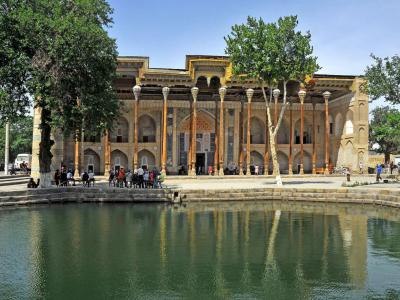
The Bolo-Khaouz Mosque is a significant historical mosque located in Bukhara. Constructed in 1712, it holds great cultural and architectural value and is recognized as a UNESCO World Heritage Site, along with other parts of the historic city of Bukhara. The mosque played a crucial role as a Friday mosque during the period when the emir of Bukhara was under the control of Bolshevik Russia in the 1920s.
The mosque features a rectangular shape and is characterized by its distinctive elements. In 1917, thin columns made of painted wood were added to the front part of the iwan (entrance) to provide additional support to the bulged roof of the summer prayer room. These columns are adorned with colored muqarnas, showcasing intricate geometric designs. The interior of the mosque follows the typical 18th-century Central Asian style, reflecting the artistic and architectural influences of the region.
The Bolo-Khaouz Mosque comprises two main prayer areas. During the winter season, worshippers gather in a room with four columns and several entrances. The summer prayer room, known as the iwan, stands 12 meters high and features a 20-pillared hall measuring 42 x 10 meters. This impressive space is bordered by bulged roofs sustained with twenty wooden columns, which rest on a concrete foundation. The iwan serves as a place of prayer during the summer months and is attached to three sides of the winter hall.
In front of the mosque, there is a howz, a traditional rectangular pool used for ritual ablutions before prayer. This howz enhances the spiritual ambiance of the mosque and adds to its overall architectural charm. Additionally, a small minaret, built in 1917, stands to the side of the mosque, further contributing to the visual appeal of the complex.
The mosque features a rectangular shape and is characterized by its distinctive elements. In 1917, thin columns made of painted wood were added to the front part of the iwan (entrance) to provide additional support to the bulged roof of the summer prayer room. These columns are adorned with colored muqarnas, showcasing intricate geometric designs. The interior of the mosque follows the typical 18th-century Central Asian style, reflecting the artistic and architectural influences of the region.
The Bolo-Khaouz Mosque comprises two main prayer areas. During the winter season, worshippers gather in a room with four columns and several entrances. The summer prayer room, known as the iwan, stands 12 meters high and features a 20-pillared hall measuring 42 x 10 meters. This impressive space is bordered by bulged roofs sustained with twenty wooden columns, which rest on a concrete foundation. The iwan serves as a place of prayer during the summer months and is attached to three sides of the winter hall.
In front of the mosque, there is a howz, a traditional rectangular pool used for ritual ablutions before prayer. This howz enhances the spiritual ambiance of the mosque and adds to its overall architectural charm. Additionally, a small minaret, built in 1917, stands to the side of the mosque, further contributing to the visual appeal of the complex.
2) Kolkhoznyy Rynok (Central Market)
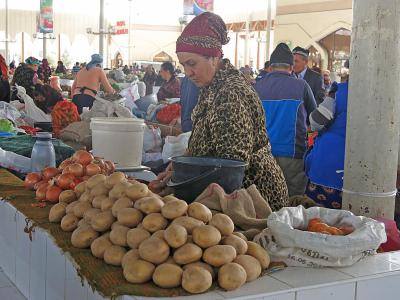
Kolkhoznyy Rynok, also known as the Central Market, is a bustling bazaar where locals and visitors alike can find an array of fresh food and everyday necessities. The market offers a vibrant and lively atmosphere, showcasing an abundance of colorful and enticing displays.
One of the highlights of Kolkhoznyy Rynok is the variety of fruits available, including an impressive selection of melons, watermelons, plums, figs, and other soft fruits. These displays demonstrate the region's agricultural richness and the importance of fresh produce in the local cuisine. It's a feast for the senses as the aroma and vibrant colors of the fruits beckon visitors to indulge in their flavors.
Kolkhoznyy Rynok provides a genuine experience of a local Uzbek market, allowing visitors to immerse themselves in the vibrant atmosphere and witness the daily life of the community. Exploring the market, you'll come across various sections dedicated to different types of produce and products. Of particular interest are the cheese and honey sections, where you can discover a range of local varieties and flavors. Additionally, the fruit and nut section offers a chance to indulge in these delicious and nutritious treats, often at more affordable prices compared to tourist areas or larger cities like Tashkent.
Located behind the market, you'll find Talipach Gate, which stands as the last remnants of Bukhara's defensive walls. This gate holds historical significance as it used to be a gathering point for caravans and the place where taxes were collected. The construction of the gate is reminiscent of the Ark Citadel, offering a glimpse into the imposing and impenetrable nature of the city's defensive walls during their prime.
One of the highlights of Kolkhoznyy Rynok is the variety of fruits available, including an impressive selection of melons, watermelons, plums, figs, and other soft fruits. These displays demonstrate the region's agricultural richness and the importance of fresh produce in the local cuisine. It's a feast for the senses as the aroma and vibrant colors of the fruits beckon visitors to indulge in their flavors.
Kolkhoznyy Rynok provides a genuine experience of a local Uzbek market, allowing visitors to immerse themselves in the vibrant atmosphere and witness the daily life of the community. Exploring the market, you'll come across various sections dedicated to different types of produce and products. Of particular interest are the cheese and honey sections, where you can discover a range of local varieties and flavors. Additionally, the fruit and nut section offers a chance to indulge in these delicious and nutritious treats, often at more affordable prices compared to tourist areas or larger cities like Tashkent.
Located behind the market, you'll find Talipach Gate, which stands as the last remnants of Bukhara's defensive walls. This gate holds historical significance as it used to be a gathering point for caravans and the place where taxes were collected. The construction of the gate is reminiscent of the Ark Citadel, offering a glimpse into the imposing and impenetrable nature of the city's defensive walls during their prime.
3) Samanid Mausoleum (must see)
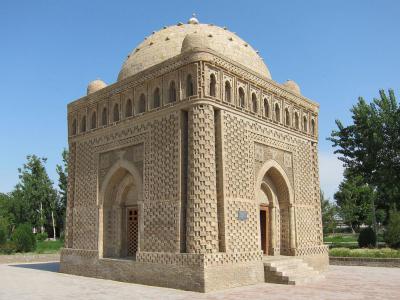
The Samanid Mausoleum is a revered architectural gem located in the historic core of Bukhara. Situated within a park that was once an ancient cemetery, this mausoleum stands as one of the most esteemed examples of Central Asian architecture. It was built in the 9th or 10th century, between 892 and 943, as the final resting place of Ismail Samani, a prominent and influential amir of the Samanid dynasty.
During the 9th and 10th centuries, the Samanids ruled over Bukhara and the surrounding regions as part of the Persian dynasty. While initially serving as governors under the Abbasid Caliphate, the Samanids gradually gained virtual independence from Baghdad. The Samanid Mausoleum stands as a testament to their power and influence during this period.
For many years, the lower part of the mausoleum remained buried beneath two meters of sediment. However, extensive restoration efforts have cleared the foundation of these obstacles, allowing the mausoleum to be observed from all sides, as originally intended by its builders. This restoration work has brought the monument back to its former glory, offering visitors an opportunity to appreciate its architectural splendor.
The construction of the Samanid Mausoleum marked a significant era in the evolution of Central Asian architecture. It signaled a revival of the region's architectural traditions after the Arab conquests. The mausoleum's architects followed the ancient tradition of baked brick construction, but executed it to an exceptionally high standard. The craftsmanship and artistic details of the brickwork are truly remarkable, showcasing traditional features that date back to pre-Islamic times.
The Samanid Mausoleum's influence extends beyond Bukhara. It has served as a source of inspiration for other architectural masterpieces, including the mausoleum of Muhammad Ali Jinnah, the founding father of Pakistan, known as Mazar-e-Quaid. The design of Mazar-e-Quaid draws inspiration from the Samanid Mausoleum, highlighting its enduring legacy and architectural significance.
During the 9th and 10th centuries, the Samanids ruled over Bukhara and the surrounding regions as part of the Persian dynasty. While initially serving as governors under the Abbasid Caliphate, the Samanids gradually gained virtual independence from Baghdad. The Samanid Mausoleum stands as a testament to their power and influence during this period.
For many years, the lower part of the mausoleum remained buried beneath two meters of sediment. However, extensive restoration efforts have cleared the foundation of these obstacles, allowing the mausoleum to be observed from all sides, as originally intended by its builders. This restoration work has brought the monument back to its former glory, offering visitors an opportunity to appreciate its architectural splendor.
The construction of the Samanid Mausoleum marked a significant era in the evolution of Central Asian architecture. It signaled a revival of the region's architectural traditions after the Arab conquests. The mausoleum's architects followed the ancient tradition of baked brick construction, but executed it to an exceptionally high standard. The craftsmanship and artistic details of the brickwork are truly remarkable, showcasing traditional features that date back to pre-Islamic times.
The Samanid Mausoleum's influence extends beyond Bukhara. It has served as a source of inspiration for other architectural masterpieces, including the mausoleum of Muhammad Ali Jinnah, the founding father of Pakistan, known as Mazar-e-Quaid. The design of Mazar-e-Quaid draws inspiration from the Samanid Mausoleum, highlighting its enduring legacy and architectural significance.
4) Bukhara Artisan Development Center
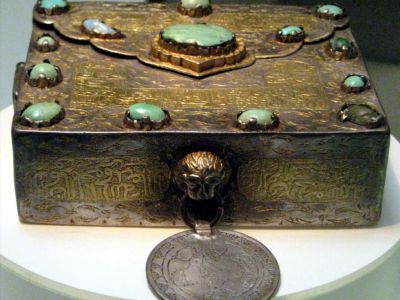
Located in the historical city of Bukhara, the Bukhara Artisan Development Center is a thriving hub that celebrates and preserves the rich cultural and artistic traditions of this Central Asian region. This center serves as a critical focal point for the exploration and revitalization of Bukhara's world-renowned crafts, such as carpet weaving, gold embroidery, ceramics, and wood carving.
The center offers immersive experiences for tourists and visitors who are keen to understand and appreciate the local art scene. Visitors can explore the vast array of handicrafts, observe artisans at work, or even participate in hands-on workshops to experience the making of these crafts first-hand.
Overall, the Bukhara Artisan Development Center serves not only as a hub for local artisans to showcase and sell their work, but it also plays a critical role in preserving and promoting the rich artistic and cultural heritage of Bukhara.
The center offers immersive experiences for tourists and visitors who are keen to understand and appreciate the local art scene. Visitors can explore the vast array of handicrafts, observe artisans at work, or even participate in hands-on workshops to experience the making of these crafts first-hand.
Overall, the Bukhara Artisan Development Center serves not only as a hub for local artisans to showcase and sell their work, but it also plays a critical role in preserving and promoting the rich artistic and cultural heritage of Bukhara.
5) Mir-i Arab Madrasa (must see)
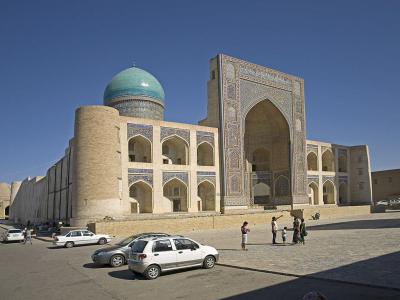
The Mir-i Arab Madrasa is an integral part of the Po-i-Kalyan ensemble located in the heart of Bukhara. This ensemble includes three significant structures: the 12th-century Kalyan Minaret, the 16th-century Kalyan Mosque, and the Mir-i Arab Madrasa.
The name "Mir-i Arab" translates to "Prince of the Arabs" and pays tribute to Sheikh Abdullah Yamani of Yemen. Sheikh Yamani gained prominence as the spiritual leader of Bukhara's Muslim community. He served as a pir (spiritual adviser) to several Khans and was ultimately laid to rest within the madrasa, which now bears his name.
The architects of the Mir-i Arab Madrasa would have been familiar with numerous contemporary examples in Central Asia, such as the Ulugh Beg Madrasa in Samarkand. The Mir-i Arab Madrasa adheres to similar design principles. Its two-story facade is adorned with glazed mosaic faience tiles, a decorative treatment popularized during the Timurid era. However, unlike the Ulugh Beg Madrasa, the Mir-i Arab Madrasa features squat and heavy corners, giving it a fortress-like appearance.
The interior of the madrasa consists of numerous small cells called hujras, which serve as student dormitories. Lecture halls and a large domed room in the northwest corner house the cenotaph of Sheikh Yamani and the graves of devotees and family members. A domed mosque occupies the same position on the south side. Both domes are raised on high drums and decorated with turquoise tiles and muqarnas-style vaulting, creating a captivating visual display.
The name "Mir-i Arab" translates to "Prince of the Arabs" and pays tribute to Sheikh Abdullah Yamani of Yemen. Sheikh Yamani gained prominence as the spiritual leader of Bukhara's Muslim community. He served as a pir (spiritual adviser) to several Khans and was ultimately laid to rest within the madrasa, which now bears his name.
The architects of the Mir-i Arab Madrasa would have been familiar with numerous contemporary examples in Central Asia, such as the Ulugh Beg Madrasa in Samarkand. The Mir-i Arab Madrasa adheres to similar design principles. Its two-story facade is adorned with glazed mosaic faience tiles, a decorative treatment popularized during the Timurid era. However, unlike the Ulugh Beg Madrasa, the Mir-i Arab Madrasa features squat and heavy corners, giving it a fortress-like appearance.
The interior of the madrasa consists of numerous small cells called hujras, which serve as student dormitories. Lecture halls and a large domed room in the northwest corner house the cenotaph of Sheikh Yamani and the graves of devotees and family members. A domed mosque occupies the same position on the south side. Both domes are raised on high drums and decorated with turquoise tiles and muqarnas-style vaulting, creating a captivating visual display.
6) Zindan, The Emir's Prison
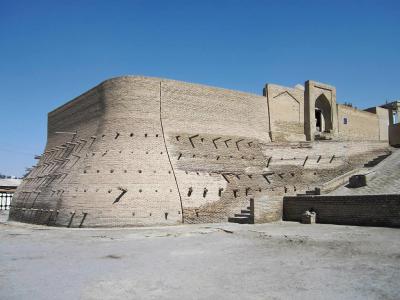
Zindan, The Emir's Prison in Bukhara, stands as a historically significant and enigmatic monument, reflecting the harsh realities of ancient Bukharan justice under Sharia law. Built in the 18th century, the term "Zindan" comes from the Persian words for "prison" or "well for detention." This underground detention facility was strategically constructed in the northwest corner of Shahristan, featuring several chambers including debtors’ cells and a central dungeon. The prison's main dungeon, approximately 5 meters in diameter and 6.5 meters deep, was capable of holding no more than 40 inmates at a time.
Historically, Zindan was reserved for serious offenders, ranging from dangerous criminals to violators of religious laws. In the strict legal environment of Bukhara, even minor infractions could result in severe penalties. Special officials, known as Rais and Darradast, enforced religious observance, particularly prayer attendance. Failing to attend prayer without a valid excuse could lead to flogging or imprisonment. Repeat offenders faced even harsher punishments, potentially being thrown into the Zindan, where the psychological impact of confinement was profound and often transformative.
With the collapse of the Bukhara Emirate in 1920, the prison ceased its original function. Today, Zindan serves as a museum, offering both locals and tourists a vivid glimpse into its grim past. Visitors can explore the depths of the dungeon, experiencing firsthand the daunting conditions that prisoners once endured. This transformation into a museum not only preserves the physical structure of Zindan but also serves as a cultural repository that illuminates the legal and social history of ancient Bukhara.
Historically, Zindan was reserved for serious offenders, ranging from dangerous criminals to violators of religious laws. In the strict legal environment of Bukhara, even minor infractions could result in severe penalties. Special officials, known as Rais and Darradast, enforced religious observance, particularly prayer attendance. Failing to attend prayer without a valid excuse could lead to flogging or imprisonment. Repeat offenders faced even harsher punishments, potentially being thrown into the Zindan, where the psychological impact of confinement was profound and often transformative.
With the collapse of the Bukhara Emirate in 1920, the prison ceased its original function. Today, Zindan serves as a museum, offering both locals and tourists a vivid glimpse into its grim past. Visitors can explore the depths of the dungeon, experiencing firsthand the daunting conditions that prisoners once endured. This transformation into a museum not only preserves the physical structure of Zindan but also serves as a cultural repository that illuminates the legal and social history of ancient Bukhara.
7) The Ark Citadel (must see)
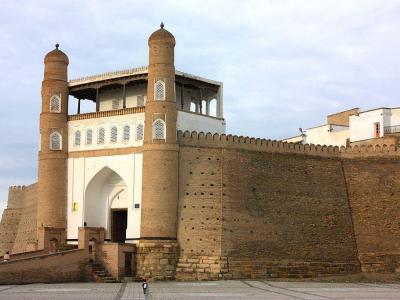
The Ark Citadel is a magnificent fortress with a history dating back to the 5th century AD. It served as both a military stronghold and a town, housing the royal courts that ruled over the surrounding region. While the Ark was a formidable fortress, it eventually succumbed to Russian forces in 1920 and is now a popular tourist destination, featuring museums that showcase its rich history.
The Ark houses various museums and restored areas that offer insights into its past. The archaeological museum presents artifacts and discoveries from the site, allowing visitors to delve into the ancient history of Bukhara. The throne room provides a glimpse into the opulent lifestyle of the ruling elites, while the reception and coronation court reflect the grandeur of ceremonial events that took place within the fortress. The local history museum sheds light on the cultural heritage of Bukhara and its significance in the region. Additionally, the court mosque stands as a testament to the religious practices that were central to the daily lives of the fortress inhabitants.
Built upon earlier structures, the Ark Citadel has layers of history buried deep beneath its foundations, indicating the presence of previous fortresses that were constructed and destroyed on the same site. The earliest reference to the Ark can be found in Narshakhi's "History of Bukhara," written between the 9th and 10th centuries. Legend attributes the creation of the Ark to the heroic figure Siyavusha, who built a palace within the boundaries of a bull's skin-an impossible task according to the ruler of Afrosiaba. However, Siyavusha ingeniously connected the ends of the bull's skin, allowing him to fulfill the condition and marry the ruler's daughter.
The Ark Citadel faced significant damage during the Russian Civil War, particularly during the Battle of Bukhara in 1920. Red Army troops, commanded by Mikhail Frunze, heavily bombarded the Ark, leaving a substantial portion of the fortress in ruins. Additionally, there is speculation that the last Emir, Mohammed Alim Khan, ordered the destruction of the Ark to prevent its sacred places, particularly the harem, from being desecrated by the Bolsheviks. These events have left their mark on the structure, but its historical and architectural significance remains intact.
Today, visitors can explore the Ark Citadel and immerse themselves in the storied past of Bukhara. The fortress stands as a symbol of the region's rich history and offers a glimpse into the lives of those who once resided within its walls.
The Ark houses various museums and restored areas that offer insights into its past. The archaeological museum presents artifacts and discoveries from the site, allowing visitors to delve into the ancient history of Bukhara. The throne room provides a glimpse into the opulent lifestyle of the ruling elites, while the reception and coronation court reflect the grandeur of ceremonial events that took place within the fortress. The local history museum sheds light on the cultural heritage of Bukhara and its significance in the region. Additionally, the court mosque stands as a testament to the religious practices that were central to the daily lives of the fortress inhabitants.
Built upon earlier structures, the Ark Citadel has layers of history buried deep beneath its foundations, indicating the presence of previous fortresses that were constructed and destroyed on the same site. The earliest reference to the Ark can be found in Narshakhi's "History of Bukhara," written between the 9th and 10th centuries. Legend attributes the creation of the Ark to the heroic figure Siyavusha, who built a palace within the boundaries of a bull's skin-an impossible task according to the ruler of Afrosiaba. However, Siyavusha ingeniously connected the ends of the bull's skin, allowing him to fulfill the condition and marry the ruler's daughter.
The Ark Citadel faced significant damage during the Russian Civil War, particularly during the Battle of Bukhara in 1920. Red Army troops, commanded by Mikhail Frunze, heavily bombarded the Ark, leaving a substantial portion of the fortress in ruins. Additionally, there is speculation that the last Emir, Mohammed Alim Khan, ordered the destruction of the Ark to prevent its sacred places, particularly the harem, from being desecrated by the Bolsheviks. These events have left their mark on the structure, but its historical and architectural significance remains intact.
Today, visitors can explore the Ark Citadel and immerse themselves in the storied past of Bukhara. The fortress stands as a symbol of the region's rich history and offers a glimpse into the lives of those who once resided within its walls.
