Custom Walk in Ottawa, Canada by sarahharper_e69df created on 2025-07-20
Guide Location: Canada » Ottawa
Guide Type: Custom Walk
# of Sights: 13
Tour Duration: 6 Hour(s)
Travel Distance: 13.6 Km or 8.5 Miles
Share Key: 8M8WQ
Guide Type: Custom Walk
# of Sights: 13
Tour Duration: 6 Hour(s)
Travel Distance: 13.6 Km or 8.5 Miles
Share Key: 8M8WQ
How It Works
Please retrieve this walk in the GPSmyCity app. Once done, the app will guide you from one tour stop to the next as if you had a personal tour guide. If you created the walk on this website or come to the page via a link, please follow the instructions below to retrieve the walk in the app.
Retrieve This Walk in App
Step 1. Download the app "GPSmyCity: Walks in 1K+ Cities" on Apple App Store or Google Play Store.



Step 2. In the GPSmyCity app, download(or launch) the guide "Ottawa Map and Walking Tours".
Step 3. Tap the menu button located at upper right corner of the "Walks" screen and select "Retrieve custom walk". Enter the share key: 8M8WQ
1) Parliament Hill and Buildings (must see)
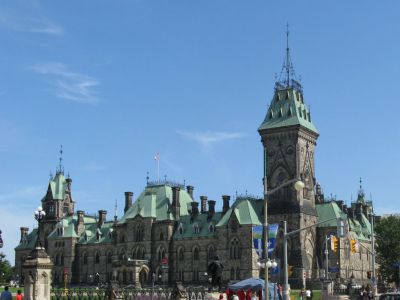
If Ottawa had a crown, Parliament Hill would be the jewel right at its center – perched high above the Ottawa River, framed by manicured lawns, and crowned with spires straight out of a Gothic Revival fairy tale. This is the political heart of Canada, where history, architecture, and democracy all meet under one very photogenic roofline.
The Parliament Buildings are made up of three main sections: the East Block, West Block, and Centre Block. The star attraction, Centre Block, is home to the House of Commons, the Senate Chamber, Confederation Hall, and the Hall of Honor. Inside, you’ll find soaring cathedral ceilings, intricate stone carvings, and stained-glass windows that tell Canada’s story in color and light. And then there’s the Peace Tower – Ottawa’s most recognizable landmark, offering panoramic views that are well worth the elevator ride.
But Parliament Hill isn’t just about politics – it’s also an open-air gallery. Wander the grounds and you’ll meet a cast of bronze characters: prime ministers like Sir John A. Macdonald and Wilfrid Laurier, monarchs from Queen Victoria to Queen Elizabeth II, and even a chivalrous Sir Galahad. Don’t miss the Centennial Flame, the War of 1812 Monument, and the solemn Canadian Police Memorial.
Tip: Guided tours are free but in high demand – book in advance on the Parliament of Canada website. And don’t be surprised if you find yourself lingering longer than planned. Ottawa politics may be polite, but the view from here is downright captivating.
The Parliament Buildings are made up of three main sections: the East Block, West Block, and Centre Block. The star attraction, Centre Block, is home to the House of Commons, the Senate Chamber, Confederation Hall, and the Hall of Honor. Inside, you’ll find soaring cathedral ceilings, intricate stone carvings, and stained-glass windows that tell Canada’s story in color and light. And then there’s the Peace Tower – Ottawa’s most recognizable landmark, offering panoramic views that are well worth the elevator ride.
But Parliament Hill isn’t just about politics – it’s also an open-air gallery. Wander the grounds and you’ll meet a cast of bronze characters: prime ministers like Sir John A. Macdonald and Wilfrid Laurier, monarchs from Queen Victoria to Queen Elizabeth II, and even a chivalrous Sir Galahad. Don’t miss the Centennial Flame, the War of 1812 Monument, and the solemn Canadian Police Memorial.
Tip: Guided tours are free but in high demand – book in advance on the Parliament of Canada website. And don’t be surprised if you find yourself lingering longer than planned. Ottawa politics may be polite, but the view from here is downright captivating.
2) Canadian Museum of Nature (must see)
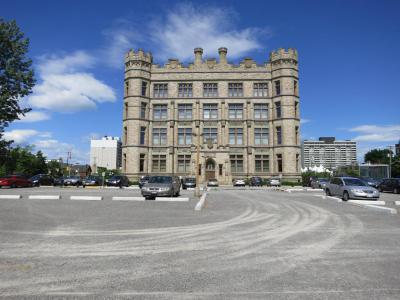
The Canadian Museum of Nature is a natural history museum in Ottawa. Built between 1905 and 1911, the museum is housed in a beautiful building that looks like a castle. Its collections highlight all aspects of the intersection between human society and nature, from gardening to gene-splicing.
Officially known as the Victoria Memorial Museum Building, the Canadian Museum of Nature stands on McLeod Street in Ottawa, and represents both a national monument and a landmark.
Throughout its history, the Museum's building has been a residing place of several notable tenants. In 1916, it served as an emergency headquarters for the Canadian government when the Parliament Buildings were destroyed by a great fire. From 1916 to 1919, the affairs of the government were run from this site until the new Parliament building was completed in 1922. In 1919, after the death of the former prime minister, Sir Wilfrid Laurier, his body was laid in the auditorium.
Three major museums stemmed from this castle. However, since 1988, it has been exclusively accommodating the Canadian Museum of Nature.
Designed by architect David Ewart, this enormous castle-like stone edifice represents a marvelous example of early 20th-century architecture in Ottawa. David Ewart created several similar buildings in the city. Three hundred skilled stonemasons were brought from Scotland specially for this project, the architectural style of which is sometimes described as Scottish baronial. Ewart, who went to Britain to study the architecture of Hampton Court and Windsor Castle, had incorporated their designs in this castle.
Unfortunately, the tall tower sited in front of the building had to be taken down in 1915 due to a concern that its foundation could not support the weight. A major renovation of the building commenced in 2004 and lasted until 2010. A lightweight glass "lantern" took the place of the heavy tower, removed in 1915. The entire building was closed on 26 April 2010 for final changes; the newly renovated museum re-opened its doors on 22 May 2010.
There are roughly ten million specimens of animals, plants and minerals displayed in the Museum of Nature, which are stored there not only for exhibition purposes but also as a sort of scientific yardstick against which all the country's biological and mineralogical research is measured.
In 1841, Queen Victoria issued a grant of £1500 for the "creation of the Geological and Natural History Survey of the Province of Canada." Since then, the institution has garnered a wide range of specimens on virtually every aspect of Canada's natural sciences.
The museum boasts a rich fossil gallery, featuring fossils of the early animals. Its main emphasis is laid upon the extinction of dinosaurs and the ensued emergence of mammals. There are a number of complete skeletons of dinosaurs on display.
Most galleries are fitted with small theatres that demonstrate short, 5 to 10 minute, films about the gallery so as to give visitors an idea what's inside.
Why You Should Visit:
Enjoyable and entertaining for all ages – there is something to stimulate every sense and keep everyone engaged.
A restaurant, cloakroom, gift shop, parking and picnic areas are also available.
Tip:
If you would prefer to only visit the special exhibition and not pay to see the permanent galleries, consider visiting on a Thursday evening.
General admission is free on Thursdays from 5-8 pm (the fee for the special exhibition would still apply).
Officially known as the Victoria Memorial Museum Building, the Canadian Museum of Nature stands on McLeod Street in Ottawa, and represents both a national monument and a landmark.
Throughout its history, the Museum's building has been a residing place of several notable tenants. In 1916, it served as an emergency headquarters for the Canadian government when the Parliament Buildings were destroyed by a great fire. From 1916 to 1919, the affairs of the government were run from this site until the new Parliament building was completed in 1922. In 1919, after the death of the former prime minister, Sir Wilfrid Laurier, his body was laid in the auditorium.
Three major museums stemmed from this castle. However, since 1988, it has been exclusively accommodating the Canadian Museum of Nature.
Designed by architect David Ewart, this enormous castle-like stone edifice represents a marvelous example of early 20th-century architecture in Ottawa. David Ewart created several similar buildings in the city. Three hundred skilled stonemasons were brought from Scotland specially for this project, the architectural style of which is sometimes described as Scottish baronial. Ewart, who went to Britain to study the architecture of Hampton Court and Windsor Castle, had incorporated their designs in this castle.
Unfortunately, the tall tower sited in front of the building had to be taken down in 1915 due to a concern that its foundation could not support the weight. A major renovation of the building commenced in 2004 and lasted until 2010. A lightweight glass "lantern" took the place of the heavy tower, removed in 1915. The entire building was closed on 26 April 2010 for final changes; the newly renovated museum re-opened its doors on 22 May 2010.
There are roughly ten million specimens of animals, plants and minerals displayed in the Museum of Nature, which are stored there not only for exhibition purposes but also as a sort of scientific yardstick against which all the country's biological and mineralogical research is measured.
In 1841, Queen Victoria issued a grant of £1500 for the "creation of the Geological and Natural History Survey of the Province of Canada." Since then, the institution has garnered a wide range of specimens on virtually every aspect of Canada's natural sciences.
The museum boasts a rich fossil gallery, featuring fossils of the early animals. Its main emphasis is laid upon the extinction of dinosaurs and the ensued emergence of mammals. There are a number of complete skeletons of dinosaurs on display.
Most galleries are fitted with small theatres that demonstrate short, 5 to 10 minute, films about the gallery so as to give visitors an idea what's inside.
Why You Should Visit:
Enjoyable and entertaining for all ages – there is something to stimulate every sense and keep everyone engaged.
A restaurant, cloakroom, gift shop, parking and picnic areas are also available.
Tip:
If you would prefer to only visit the special exhibition and not pay to see the permanent galleries, consider visiting on a Thursday evening.
General admission is free on Thursdays from 5-8 pm (the fee for the special exhibition would still apply).
3) Rideau Canal National Historic Site (must see)
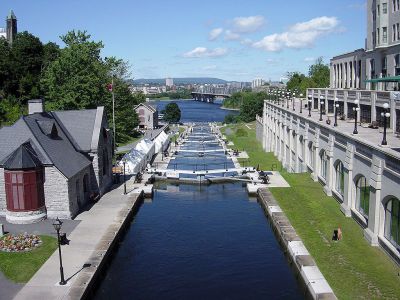
Picture this: a shimmering ribbon of water winding through the heart of the city, alive with summer paddleboards, cruise boats, and, come winter, buzzing with skaters gliding across its glassy surface. This is the Rideau Canal – a true clever multitasker: a UNESCO-listed engineering wonder, an atmospheric stage for each season, and the world’s largest skating rink by length.
Built between 1826 and 1832 as a strategic military supply route – just in case tensions flared with the United States, the canal was engineered to connect Ottawa to Kingston without relying on the vulnerable St. Lawrence River. Today, you can barely tell it was ever about defense. Instead, it whispers of leisurely cruises, historical tours, and serene afternoons spent watching locks rise and fall with surprisingly precise rhythm.
In summer, families stroll its stone-lined towpath, cyclists weave through leafy corridors, and boats drift beneath neat arched bridges. Head indoors to the lock-station visitor centers, which offer hands-on displays about 19th-century construction, interactive maps, and (bonus) refreshments with a view.
Then winter rolls in, and the canal pulls off its greatest trick: the center transforms into the Rideau Skateway, stretching close to 8 km between Downtown and Dows Lake. Lace up your skates, join the local buzz, maybe sip hot chocolate from a fire-pit stand, and feel like you’ve entered a snow-white postcard.
Why visit? Because it’s not just a canal, it’s a city-shaping waterway that doubles as a 24/7 stage for history, leisure, and community life.
Tip: Check the official Rideau Canal Skateway status before heading out – conditions change daily, and you’ll want the ice (or water) experience at its finest.
Built between 1826 and 1832 as a strategic military supply route – just in case tensions flared with the United States, the canal was engineered to connect Ottawa to Kingston without relying on the vulnerable St. Lawrence River. Today, you can barely tell it was ever about defense. Instead, it whispers of leisurely cruises, historical tours, and serene afternoons spent watching locks rise and fall with surprisingly precise rhythm.
In summer, families stroll its stone-lined towpath, cyclists weave through leafy corridors, and boats drift beneath neat arched bridges. Head indoors to the lock-station visitor centers, which offer hands-on displays about 19th-century construction, interactive maps, and (bonus) refreshments with a view.
Then winter rolls in, and the canal pulls off its greatest trick: the center transforms into the Rideau Skateway, stretching close to 8 km between Downtown and Dows Lake. Lace up your skates, join the local buzz, maybe sip hot chocolate from a fire-pit stand, and feel like you’ve entered a snow-white postcard.
Why visit? Because it’s not just a canal, it’s a city-shaping waterway that doubles as a 24/7 stage for history, leisure, and community life.
Tip: Check the official Rideau Canal Skateway status before heading out – conditions change daily, and you’ll want the ice (or water) experience at its finest.
4) Major's Hill Park (must see)
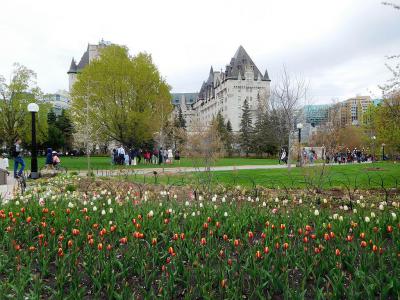
Major's Hill Park is one of Ottawa’s true downtown gems – a green oasis perched where the Rideau Canal meets the Ottawa River. This spot isn’t just about scenic beauty; it’s the heartbeat of many of the city’s liveliest events. Think Canada Day fireworks lighting up the sky, the colorful Tulip Festival each May, and the chilly fun of Winterlude every February. If there’s a celebration, chances are Major’s Hill Park is front and center.
The park’s name has an interesting backstory. It was first linked to Colonel John By, the engineer behind the Rideau Canal, who actually lived right here. After Major Daniel Bolton took over, the park was renamed in his honor back in 1832. Though Colonel By’s original house burned down in 1849, you can still spot its ruins if you know where to look – a little historical mystery right in the middle of the city!
Managed by the National Capital Commission, Major’s Hill Park is also a creative hotspot. Regularly, local artists set up their booths in “Artisans in the Park,” selling everything from paintings and pottery to jewelry and handcrafted clothing. During the Tulip Festival, the International Friendship Village pops up, celebrating countries like the Netherlands, Turkey, and Japan that have helped shape the tulip legacy in Ottawa. Food stalls and craft activities keep the energy buzzing, making it a perfect family-friendly spot.
When you want to catch a free daytime concert, enjoy ticketed evening shows, and soak up the peaceful atmosphere on one of the many benches, Major’s Hill Park has you covered. Its winding paths offer spectacular views of iconic landmarks like Parliament Hill, the National Gallery, and Sussex Drive - there are postcard-perfect spots at every turn. Oh, and don’t forget to grab some ice cream from the street vendors. It’s practically a park tradition.
The park’s name has an interesting backstory. It was first linked to Colonel John By, the engineer behind the Rideau Canal, who actually lived right here. After Major Daniel Bolton took over, the park was renamed in his honor back in 1832. Though Colonel By’s original house burned down in 1849, you can still spot its ruins if you know where to look – a little historical mystery right in the middle of the city!
Managed by the National Capital Commission, Major’s Hill Park is also a creative hotspot. Regularly, local artists set up their booths in “Artisans in the Park,” selling everything from paintings and pottery to jewelry and handcrafted clothing. During the Tulip Festival, the International Friendship Village pops up, celebrating countries like the Netherlands, Turkey, and Japan that have helped shape the tulip legacy in Ottawa. Food stalls and craft activities keep the energy buzzing, making it a perfect family-friendly spot.
When you want to catch a free daytime concert, enjoy ticketed evening shows, and soak up the peaceful atmosphere on one of the many benches, Major’s Hill Park has you covered. Its winding paths offer spectacular views of iconic landmarks like Parliament Hill, the National Gallery, and Sussex Drive - there are postcard-perfect spots at every turn. Oh, and don’t forget to grab some ice cream from the street vendors. It’s practically a park tradition.

5) Connaught Building
The Connaught Building in Ottawa is a historic office building owned by Public Services and Procurement Canada. It's located on MacKenzie Avenue, next to the American Embassy. With a beautiful view of the Byward Market to the east, it is surrounded by MacKenzie Avenue and Major's Hill Park to the west. Currently, it houses the Canada Revenue Agency (CRA) headquarters and offices for the Minister and Commissioner of the CRA.
The Connaught Building was designed in a Tudor-Gothic style by chief architect David Ewart. Construction work began in 1913 and was completed in 1915. The building was named after the Duke of Connaught, the third son of Queen Victoria and the 10th Governor General of Canada from 1911 to 1916. With seven levels above ground and one basement level, it stood as an impressive structure.
In 1971, the Connaught Building underwent extensive renovations that involved the addition of two levels. These were created by constructing floors within the generous ceiling heights of the basement and ground floors. Consequently, the building now consists of two basement levels and eight levels above ground on the Sussex Drive side, with the third floor having direct access to MacKenzie Avenue at street level.
The Connaught Building was designated a National Historic Site of Canada in 1990. Additionally, it has held the status of a "Federal Heritage Building" with "Classified" protection since 1988, signifying the highest level of safeguarding for federally owned structures.
The Connaught Building was designed in a Tudor-Gothic style by chief architect David Ewart. Construction work began in 1913 and was completed in 1915. The building was named after the Duke of Connaught, the third son of Queen Victoria and the 10th Governor General of Canada from 1911 to 1916. With seven levels above ground and one basement level, it stood as an impressive structure.
In 1971, the Connaught Building underwent extensive renovations that involved the addition of two levels. These were created by constructing floors within the generous ceiling heights of the basement and ground floors. Consequently, the building now consists of two basement levels and eight levels above ground on the Sussex Drive side, with the third floor having direct access to MacKenzie Avenue at street level.
The Connaught Building was designated a National Historic Site of Canada in 1990. Additionally, it has held the status of a "Federal Heritage Building" with "Classified" protection since 1988, signifying the highest level of safeguarding for federally owned structures.
6) ByWard Market (must see)
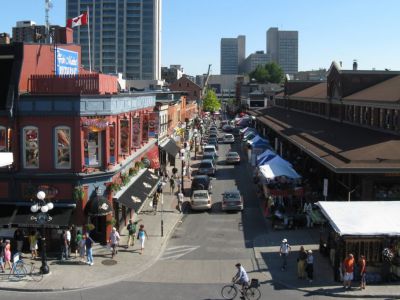
ByWard Market is Ottawa’s lively heart and soul, a place where history, culture, and just about everything edible meet in a perfect downtown mashup. Founded back in 1826 by Lt-Col. John By (yes, the same guy who masterminded the Rideau Canal), this market started as a practical spot where horse-drawn wagons unloaded fresh goods. Fun fact: Colonel By made sure the streets were wide enough for those wagons, so no one got stuck, a detail that still shapes the area today.
Fast forward almost two centuries, ByWard Market has transformed into a buzzing hotspot that attracts locals and tourists in droves. With over 260 stalls run by farmers and artisans, plus more than 500 businesses, this place is a shopper’s and foodie’s paradise. From fresh produce and handmade crafts to chic boutiques and lively bars, there’s something for everyone. And yes, street performers add that extra dash of flair – you might catch a magician, a musician, or even a juggler while wandering through.
Did you know ByWard was once a blue-collar neighborhood filled with hardworking lumbermen and canal workers? Today, it’s the city’s go-to place for nightclubs, gourmet restaurants, and yes, some seriously Instagrammable spots.
If you’re visiting, don’t miss the chance to try Ottawa’s iconic beaver tails (fried dough pastries topped with all kinds of sweet goodies). Be warned: they’re dangerously delicious and perfect for indulging your sweet tooth.
Tip: Aim for weekday mornings if you want to explore without bumping elbows, but if you love the buzz, summer weekends are where the real action happens.
Fast forward almost two centuries, ByWard Market has transformed into a buzzing hotspot that attracts locals and tourists in droves. With over 260 stalls run by farmers and artisans, plus more than 500 businesses, this place is a shopper’s and foodie’s paradise. From fresh produce and handmade crafts to chic boutiques and lively bars, there’s something for everyone. And yes, street performers add that extra dash of flair – you might catch a magician, a musician, or even a juggler while wandering through.
Did you know ByWard was once a blue-collar neighborhood filled with hardworking lumbermen and canal workers? Today, it’s the city’s go-to place for nightclubs, gourmet restaurants, and yes, some seriously Instagrammable spots.
If you’re visiting, don’t miss the chance to try Ottawa’s iconic beaver tails (fried dough pastries topped with all kinds of sweet goodies). Be warned: they’re dangerously delicious and perfect for indulging your sweet tooth.
Tip: Aim for weekday mornings if you want to explore without bumping elbows, but if you love the buzz, summer weekends are where the real action happens.

7) Notre-Dame Cathedral Basilica (must see)
Notre-Dame Cathedral Basilica is a true Ottawa treasure – a stunning blend of history, art, and faith right in the city’s heart. This basilica stands where Ottawa’s first Catholic chapel once welcomed parishioners back in the early 19th century, making it the oldest surviving church in the capital. Construction began in 1841, but here’s a fun twist: the original plan was a Neo-classical design, which got a major makeover mid-way when Father Telmon stepped in and switched things up to the now-iconic Neo-Gothic style. So, when you look closely, you’ll spot this unique architectural mashup – classical at the base and soaring Gothic elegance above.
Step inside, and you’ll be greeted by a riot of color and detail that outshines the church’s more modest exterior. The stained glass windows flood the space with vibrant light, telling biblical stories in jewel-like hues. You’ll also find countless statues scattered throughout, with the gold-plated Madonna statue flanked by twin spires standing out as a shining star – literally and figuratively.
Did you know? The basilica has hosted some of Canada’s most significant moments, including the funerals of Governor General Georges Vanier and Prime Minister Sir Wilfrid Laurier, making it a place of deep national importance beyond its spiritual role.
Visitors can explore the basilica freely, and guided tours in English and French are available at no cost, perfect if you want to dig into the stories behind the art and architecture. Don’t miss the marble pillars, though: they’re actually wood cleverly painted to look like marble, a neat detail that’s easy to overlook but adds to the basilica’s charm.
Tip: Check the tour schedule online before you go to catch a guided tour and learn all the hidden stories and secrets tucked inside this magnificent basilica.
Step inside, and you’ll be greeted by a riot of color and detail that outshines the church’s more modest exterior. The stained glass windows flood the space with vibrant light, telling biblical stories in jewel-like hues. You’ll also find countless statues scattered throughout, with the gold-plated Madonna statue flanked by twin spires standing out as a shining star – literally and figuratively.
Did you know? The basilica has hosted some of Canada’s most significant moments, including the funerals of Governor General Georges Vanier and Prime Minister Sir Wilfrid Laurier, making it a place of deep national importance beyond its spiritual role.
Visitors can explore the basilica freely, and guided tours in English and French are available at no cost, perfect if you want to dig into the stories behind the art and architecture. Don’t miss the marble pillars, though: they’re actually wood cleverly painted to look like marble, a neat detail that’s easy to overlook but adds to the basilica’s charm.
Tip: Check the tour schedule online before you go to catch a guided tour and learn all the hidden stories and secrets tucked inside this magnificent basilica.
8) National Gallery of Canada (must see)
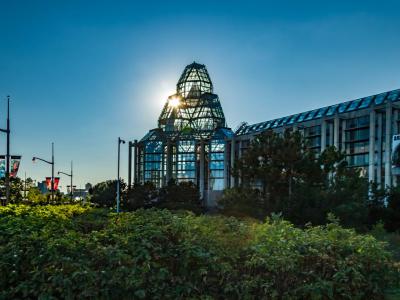
National Gallery of Canada is much more than just a building, it’s a vibrant hub of art, culture, and Canadian identity right on the banks of the Ottawa River. Designed by the visionary Moshe Safdie and completed in 1988, its bold, glass-and-granite architecture instantly catches your eye. That iconic giant spider sculpture, named Maman, standing guard at the entrance, is hard to miss – a perfect icebreaker and a popular photo spot for visitors.
Inside, the gallery boasts one of the most impressive art collections in the country, showcasing everything from Indigenous arts to contemporary Canadian works, alongside celebrated European masterpieces. Did you know it holds one of the largest collections of Tom Thomson and Group of Seven paintings? These artists famously captured Canada’s wild landscapes in vibrant colors and brushstrokes that practically make the wilderness come alive on canvas.
Beyond Canadian art, you’ll find stunning works by international masters like Monet, Renoir, and Matisse. The gallery also hosts rotating exhibitions, keeping things fresh and exciting for repeat visitors.
For those who want to take a break, the gallery’s café offers delicious food and drinks with spectacular views of the Ottawa River, ideal for soaking in the city’s vibe while reflecting on what you’ve seen.
Pro tips: visit on Thursday evenings after 5 pm for free admission, so you can enjoy world-class art without reaching for your wallet. Don’t miss the rooftop terrace with panoramic views of Parliament Hill and beyond, a perfect spot for photos and a little art-inspired daydreaming.
Inside, the gallery boasts one of the most impressive art collections in the country, showcasing everything from Indigenous arts to contemporary Canadian works, alongside celebrated European masterpieces. Did you know it holds one of the largest collections of Tom Thomson and Group of Seven paintings? These artists famously captured Canada’s wild landscapes in vibrant colors and brushstrokes that practically make the wilderness come alive on canvas.
Beyond Canadian art, you’ll find stunning works by international masters like Monet, Renoir, and Matisse. The gallery also hosts rotating exhibitions, keeping things fresh and exciting for repeat visitors.
For those who want to take a break, the gallery’s café offers delicious food and drinks with spectacular views of the Ottawa River, ideal for soaking in the city’s vibe while reflecting on what you’ve seen.
Pro tips: visit on Thursday evenings after 5 pm for free admission, so you can enjoy world-class art without reaching for your wallet. Don’t miss the rooftop terrace with panoramic views of Parliament Hill and beyond, a perfect spot for photos and a little art-inspired daydreaming.
9) Rideau Hall (must see)
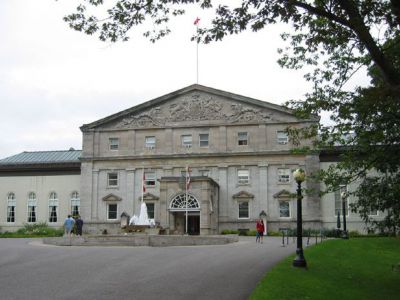
Rideau Hall, located in Ottawa, is the official residence of the Governor General of Canada. The main building, along with its 170 rooms and 24 outbuildings, exudes an understated elegance that sets it apart from other equally prestigious structures like Buckingham Palace or the White House. This characteristic gives it the ambiance of a private home. Rideau Hall serves as the venue for important events such as the oath-taking ceremonies of Canadian prime ministers and cabinet members, as well as various ceremonial and constitutional duties. It also offers guided tours to the general public, attracting nearly 200,000 visitors each year.
The history of Rideau Hall dates back to 1817 when Thomas McKay, a Scottish immigrant and a notable contractor overseeing the construction of the Rideau Canal, selected this site and constructed a stone residence. Over the years, the villa underwent several modifications and eventually became known as Rideau Hall. McKay and his family resided here until 1855.
In 1864, Queen Victoria chose Ottawa as the new capital of Canada. She leased Rideau Hall from the McKay family for an annual fee of $4,000. The purpose was to provide temporary accommodation for the viceroy until a government house could be built. A new structure was added to the villa, and Viscount Monck, the first Governor General of Canada, became its resident. Rideau Hall witnessed its first major post-World War II event when Dwight D. Eisenhower, the President of the United States at the time, attended a function there.
Today, Rideau Hall continues to be a venue for a wide range of events throughout the year. Foreign dignitaries visiting the residence plant a tree in its garden to commemorate their visit. During the summer months, the garden becomes a hub for parties hosted by the Governor General. Additionally, the Rideau Hall Cricket Association and the Ottawa Valley Cricket Council organize cricket matches, while various outdoor activities like skating, tennis, and toboggan runs take place throughout the year.
In recognition of its historical significance, Rideau Hall and its grounds were designated as a National Historic Site in 1977.
Why You Should Visit:
You can take a free escorted tour of the building and also catch the changing of guards, but the real gem is the grounds themselves – ideally maintained and beautiful to wander around.
Tip:
You may need a reservation to visit. Check on the website to have more information before you stop by.
If you're thinking of visiting during lunchtime, it's best to bring your own picnic.
The history of Rideau Hall dates back to 1817 when Thomas McKay, a Scottish immigrant and a notable contractor overseeing the construction of the Rideau Canal, selected this site and constructed a stone residence. Over the years, the villa underwent several modifications and eventually became known as Rideau Hall. McKay and his family resided here until 1855.
In 1864, Queen Victoria chose Ottawa as the new capital of Canada. She leased Rideau Hall from the McKay family for an annual fee of $4,000. The purpose was to provide temporary accommodation for the viceroy until a government house could be built. A new structure was added to the villa, and Viscount Monck, the first Governor General of Canada, became its resident. Rideau Hall witnessed its first major post-World War II event when Dwight D. Eisenhower, the President of the United States at the time, attended a function there.
Today, Rideau Hall continues to be a venue for a wide range of events throughout the year. Foreign dignitaries visiting the residence plant a tree in its garden to commemorate their visit. During the summer months, the garden becomes a hub for parties hosted by the Governor General. Additionally, the Rideau Hall Cricket Association and the Ottawa Valley Cricket Council organize cricket matches, while various outdoor activities like skating, tennis, and toboggan runs take place throughout the year.
In recognition of its historical significance, Rideau Hall and its grounds were designated as a National Historic Site in 1977.
Why You Should Visit:
You can take a free escorted tour of the building and also catch the changing of guards, but the real gem is the grounds themselves – ideally maintained and beautiful to wander around.
Tip:
You may need a reservation to visit. Check on the website to have more information before you stop by.
If you're thinking of visiting during lunchtime, it's best to bring your own picnic.
10) Canadian Museum of History (must see)
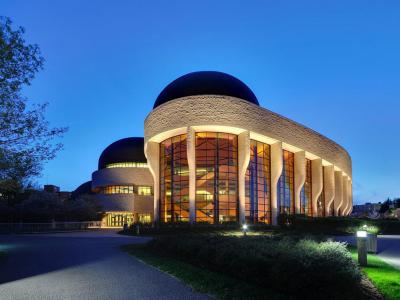
The Canadian Museum of History, formerly the Canadian Museum of Civilization, is the country's most popular and most visited museum. Located in the Hull sector of Gatineau, it is devoted entirely to collecting, studying, preserving, and displaying material objects that highlight the human history of Canada, as well as the cultural multeity of its people.
The Museum of Civilization is particularly famous for its permanent galleries reflecting 20,000 years of the history of mankind. The architecture and spectacular riverside setting of the museum also add to its appeal. There are special exhibitions on Canadian and other cultures and civilizations, both extinct and present. The museum is also a major research institution and one of North America's oldest cultural establishments with roots stretching as far back as 1856.
The Museum's permanent exposition comprises four galleries, such as the Grand Hall, the First Peoples Hall, the Canada Hall and Face to Face: The Canadian Personalities Hall. The Grand Hall is the Museum's architectural centerpiece and has a wall with a view of the Ottawa River and Parliament Hill. Opposite to it, on another wall, is a color photograph depicting a woods scene, considered to be the largest color photo in the world. The Museum's top floor is taken by the newest Face To Face exhibition. Opened on 29 June 2007, it celebrates personalities whose vision and deeds have made a noteworthy impact on Canada and its people. Among them are authors, artists, businesspeople, explorers, activists, military commanders and politicians.
In order to span 20,000 years of human history, the museum's space has been divided into three major zones, namely: "An Aboriginal Presence", "An Ancient Bond with the Land" and "Arrival of Strangers - The Last 500 Years". The latter zone examines the aboriginal history of Canada from the time of the first European encounter through today. Also presented here is the Quilt of Belongings, the world's largest piece of textile art, dedicated to Canada.
The Canadian Museum of Civilization is by far one of the main tourist destinations in Ottawa, receiving more than one million visitors per year. Culture has never been so fascinating!
Why You Should Visit:
One of Canada's best museums! The building's architecture & artifacts inside are amazing, and the views across the river are not to be missed.
Tip:
If you want to take a break and a breath of fresh air, a hand stamp will allow access throughout the whole day.
The Museum of Civilization is particularly famous for its permanent galleries reflecting 20,000 years of the history of mankind. The architecture and spectacular riverside setting of the museum also add to its appeal. There are special exhibitions on Canadian and other cultures and civilizations, both extinct and present. The museum is also a major research institution and one of North America's oldest cultural establishments with roots stretching as far back as 1856.
The Museum's permanent exposition comprises four galleries, such as the Grand Hall, the First Peoples Hall, the Canada Hall and Face to Face: The Canadian Personalities Hall. The Grand Hall is the Museum's architectural centerpiece and has a wall with a view of the Ottawa River and Parliament Hill. Opposite to it, on another wall, is a color photograph depicting a woods scene, considered to be the largest color photo in the world. The Museum's top floor is taken by the newest Face To Face exhibition. Opened on 29 June 2007, it celebrates personalities whose vision and deeds have made a noteworthy impact on Canada and its people. Among them are authors, artists, businesspeople, explorers, activists, military commanders and politicians.
In order to span 20,000 years of human history, the museum's space has been divided into three major zones, namely: "An Aboriginal Presence", "An Ancient Bond with the Land" and "Arrival of Strangers - The Last 500 Years". The latter zone examines the aboriginal history of Canada from the time of the first European encounter through today. Also presented here is the Quilt of Belongings, the world's largest piece of textile art, dedicated to Canada.
The Canadian Museum of Civilization is by far one of the main tourist destinations in Ottawa, receiving more than one million visitors per year. Culture has never been so fascinating!
Why You Should Visit:
One of Canada's best museums! The building's architecture & artifacts inside are amazing, and the views across the river are not to be missed.
Tip:
If you want to take a break and a breath of fresh air, a hand stamp will allow access throughout the whole day.
11) Canadian War Museum (must see)
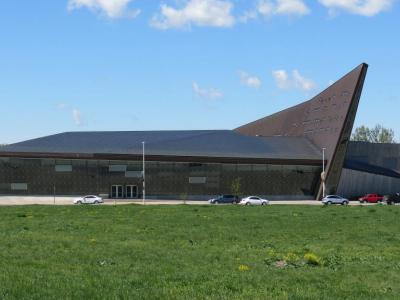
The Canadian War Museum is a national museum that documents Canada’s military history and its influence on the nation. The museum's exceptional exhibitions tell about Canada’s rich military past, spanning a period from centuries ago to the present day. Among other exhibits presented here are personal accounts of people who took part in action as well as those who waited for them back home, outlining Canada’s engagement in various wars, peacekeeping missions and other military conflicts.
Originated in 1880, the museum houses a collection of military artifacts in the possession of the Canadian federal government. The Canadian War Museum was officially established in 1942. It has its own modern conservation laboratories and storage facilities to preserve, repair and store the items of historical importance.
The Canadian War Museum has a vast permanent exhibition comprising several galleries and a number of smaller display spaces. Its four main exhibitions include “Battleground” which covers the pre-Confederation period covering military confrontation with Natives, the conflicts between the British and the French, and those between the British and the Americans; “For Crown and Country” deals with Canada’s early days wars up until 1931; “Forged in Fire” is dedicated to the Second World War and Canadian involvement therein; and “A Violent Peace” which covers the post World War Two period, including the Korean War, the Cold War, and recent peacekeeping operations.
For those interested in arms, LeBreton Gallery is a definite must-see, featuring a Voodoo jet, tanks, artillery, and a wide range of military vehicles. The Canadian War Museum also includes over 13,000 works of art from World War I to the present day. There is a boutique at the Museum which offers a variety of souvenirs and gift items for all tastes and budgets.
The museum also houses a Memorial Hall that contains the headstone of the Unknown Soldier from the First World War. On Remembrance Day, which falls on 11th November each year, the headstone is directly lit by the sun at 11 a.m.
In 2005, the museum was moved to its current location. Acknowledged for its modern architectural design, the building has won several awards. The Canadian War Museum is a completely new attraction and the one you must not skip on your trip to Ottawa.
Why You Should Visit:
Full of personal accounts and descriptions of various wars and battles. Overall, a more adult-oriented museum, but if you do have kids, you can walk through with them and have them try the more interactive and "reconstruction"-type sites to keep them amused.
Tip:
If you're not sure this is for you try visiting for free from 5-8 pm on a Thursday, but it won't be enough time!
The museum has a very good cafeteria-style restaurant and in good weather, you can picnic outside on the beautiful grounds that overlook the Ottawa river.
And if the weather is decent, be sure to make the trek to the lookout on the green roof.
Originated in 1880, the museum houses a collection of military artifacts in the possession of the Canadian federal government. The Canadian War Museum was officially established in 1942. It has its own modern conservation laboratories and storage facilities to preserve, repair and store the items of historical importance.
The Canadian War Museum has a vast permanent exhibition comprising several galleries and a number of smaller display spaces. Its four main exhibitions include “Battleground” which covers the pre-Confederation period covering military confrontation with Natives, the conflicts between the British and the French, and those between the British and the Americans; “For Crown and Country” deals with Canada’s early days wars up until 1931; “Forged in Fire” is dedicated to the Second World War and Canadian involvement therein; and “A Violent Peace” which covers the post World War Two period, including the Korean War, the Cold War, and recent peacekeeping operations.
For those interested in arms, LeBreton Gallery is a definite must-see, featuring a Voodoo jet, tanks, artillery, and a wide range of military vehicles. The Canadian War Museum also includes over 13,000 works of art from World War I to the present day. There is a boutique at the Museum which offers a variety of souvenirs and gift items for all tastes and budgets.
The museum also houses a Memorial Hall that contains the headstone of the Unknown Soldier from the First World War. On Remembrance Day, which falls on 11th November each year, the headstone is directly lit by the sun at 11 a.m.
In 2005, the museum was moved to its current location. Acknowledged for its modern architectural design, the building has won several awards. The Canadian War Museum is a completely new attraction and the one you must not skip on your trip to Ottawa.
Why You Should Visit:
Full of personal accounts and descriptions of various wars and battles. Overall, a more adult-oriented museum, but if you do have kids, you can walk through with them and have them try the more interactive and "reconstruction"-type sites to keep them amused.
Tip:
If you're not sure this is for you try visiting for free from 5-8 pm on a Thursday, but it won't be enough time!
The museum has a very good cafeteria-style restaurant and in good weather, you can picnic outside on the beautiful grounds that overlook the Ottawa river.
And if the weather is decent, be sure to make the trek to the lookout on the green roof.
12) Confederation Building
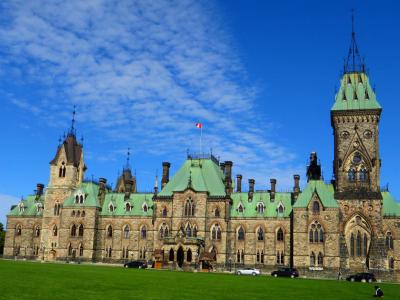
The Confederation Building, located in Ottawa just west of the Parliament Buildings at Bank and Wellington Streets, is an impressive gothic revival office building. It was skillfully designed by Richard Cotsman Wright and Thomas W. Fuller and is commonly regarded as a significant part of Parliament Hill.
The area where the Confederation Building and the Supreme Court of Canada now stand was once occupied by residential homes and businesses. These properties were acquired by the government through expropriation to make way for the construction of new federal buildings.
Construction of the Confederation Building commenced on July 1, 1927, with the laying of the cornerstone by Lord Willingdon, the Governor General, as part of Canada's Diamond Jubilee celebrations. It was completed in 1931.
Initially, the building accommodated employees from various government departments, with the Department of Agriculture being the largest occupant. Presently, it serves as the workplace for civil servants as well as several Members of Parliament (MPs) and ministers. Numerous MPs from the Conservative, Liberal, and NDP parties have their offices in the Confederation Building, including some junior cabinet members.
The area where the Confederation Building and the Supreme Court of Canada now stand was once occupied by residential homes and businesses. These properties were acquired by the government through expropriation to make way for the construction of new federal buildings.
Construction of the Confederation Building commenced on July 1, 1927, with the laying of the cornerstone by Lord Willingdon, the Governor General, as part of Canada's Diamond Jubilee celebrations. It was completed in 1931.
Initially, the building accommodated employees from various government departments, with the Department of Agriculture being the largest occupant. Presently, it serves as the workplace for civil servants as well as several Members of Parliament (MPs) and ministers. Numerous MPs from the Conservative, Liberal, and NDP parties have their offices in the Confederation Building, including some junior cabinet members.
13) Library of Parliament
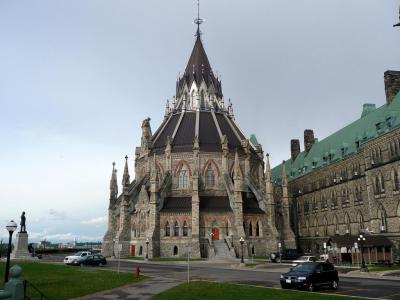
The Library of Parliament is the main information and research hub for the Parliament of Canada, situated at the rear of Parliament Hill's Centre Block in Ottawa. Designed by Thomas Fuller and Chilion Jones, the library building draws inspiration from the British Museum Reading Room. Despite undergoing several renovations since its creation in 1876, its original form and decor have been mostly preserved. It is now an iconic Canadian landmark and is depicted on the front of the ten-dollar bill.
The library walls have 16 flying buttresses and are made of double-wythe masonry. They include a core of hydraulic lime rubble fill, with an inner layer of dressed stone and an outer layer of rustic Nepean sandstone. The windows and edges are decorated with stone trim and carvings depicting floral patterns and frieze in the Victorian High Gothic style. The roof, originally timber, and slate, has been rebuilt with steel framing and copper covering. It has three tiers and a cupola on top.
The reading room features a vaulted ceiling and intricately carved white pine paneling with diverse textures, flowers, masks, and mythical creatures. The galleries showcase coats of arms from seven provinces in 1876, along with the Dominion of Canada's emblem. In the center stands a white marble statue of Queen Victoria, sculpted by Marshall Wood in 1871.
The library houses 650,000 items and has a staff of 300. While primarily for parliamentary use, it publishes research accessible to the public. The main branch on Parliament Hill is the central hub of a larger complex with branch libraries and reading rooms in other parliamentary buildings.
The library walls have 16 flying buttresses and are made of double-wythe masonry. They include a core of hydraulic lime rubble fill, with an inner layer of dressed stone and an outer layer of rustic Nepean sandstone. The windows and edges are decorated with stone trim and carvings depicting floral patterns and frieze in the Victorian High Gothic style. The roof, originally timber, and slate, has been rebuilt with steel framing and copper covering. It has three tiers and a cupola on top.
The reading room features a vaulted ceiling and intricately carved white pine paneling with diverse textures, flowers, masks, and mythical creatures. The galleries showcase coats of arms from seven provinces in 1876, along with the Dominion of Canada's emblem. In the center stands a white marble statue of Queen Victoria, sculpted by Marshall Wood in 1871.
The library houses 650,000 items and has a staff of 300. While primarily for parliamentary use, it publishes research accessible to the public. The main branch on Parliament Hill is the central hub of a larger complex with branch libraries and reading rooms in other parliamentary buildings.
