Custom Walk in Singapore, Singapore by donyaddelf_448bb created on 2025-07-27
Guide Location: Singapore » Singapore
Guide Type: Custom Walk
# of Sights: 5
Tour Duration: 2 Hour(s)
Travel Distance: 4.3 Km or 2.7 Miles
Share Key: RK6VP
Guide Type: Custom Walk
# of Sights: 5
Tour Duration: 2 Hour(s)
Travel Distance: 4.3 Km or 2.7 Miles
Share Key: RK6VP
How It Works
Please retrieve this walk in the GPSmyCity app. Once done, the app will guide you from one tour stop to the next as if you had a personal tour guide. If you created the walk on this website or come to the page via a link, please follow the instructions below to retrieve the walk in the app.
Retrieve This Walk in App
Step 1. Download the app "GPSmyCity: Walks in 1K+ Cities" on Apple App Store or Google Play Store.



Step 2. In the GPSmyCity app, download(or launch) the guide "Singapore Map and Walking Tours".
Step 3. Tap the menu button located at upper right corner of the "Walks" screen and select "Retrieve custom walk". Enter the share key: RK6VP
1) Chinatown (must see)
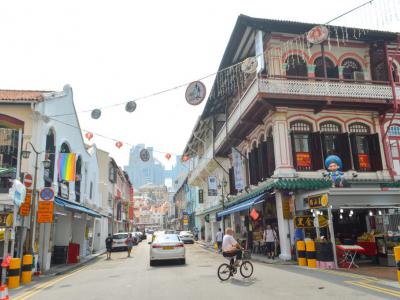
Once a hub for Chinese immigrants in Singapore, today's Chinatown seamlessly blends the past with the present. This cherished district boasts a harmonious coexistence of historical temples and medicinal halls alongside award-winning bars and restaurants.
A day spent exploring this lively area, which encompasses Tanjong Pagar, Bukit Pasoh, Kreta Ayer, and Telok Ayer neighborhoods, promises a variety of experiences. Whether you're delving into centuries-old temples or immersing yourself in the trendy atmosphere of hip watering holes, Chinatown offers a constant stream of fresh encounters.
For culture enthusiasts eager to dive into Singapore's diverse multi-ethnic culture, Chinatown stands as an unparalleled destination. Remarkably, this district is the only Chinatown globally to feature a Buddhist temple, a mosque, and a Hindu temple all within a single street.
Start your exploration of Singapore's religious traditions at the Buddha Tooth Relic Temple & Museum, featuring a mandala-inspired interior symbolizing universal connectivity. Discover hidden gems like a rooftop pagoda garden and a vegetarian food court within the temple compound.
From the Buddha Tooth Relic Temple & Museum, take a brief stroll down South Bridge Road and keep an eye out for the Sri Mariamman Temple, Singapore's oldest Hindu temple. Although the temple's patron deity statue is unveiled only on special occasions, its interior boasts a treasure trove of murals and shrines dedicated to deities like Shiva and Durga.
Whether you prefer traditional or fusion cuisine, Chinatown offers diverse food options. Michelin-starred restaurants like Cure, Meta, and Euphoria are found in its four neighborhoods. For hearty hawker fare, check out Amoy Street Food Centre, Maxwell Food Centre, or Chinatown Complex Food Centre.
In addition to its rich culture and traditions, Chinatown is a vibrant neighborhood with bustling bars where you can socialize over a drink. Many of these establishments have earned accolades on the list of Asia's 50 Best Bars and include renowned spots like Jigger & Pony, known for its modern take on classic cocktails, the innovative Tipping Club, and charming speakeasies such as Sago House.
A day spent exploring this lively area, which encompasses Tanjong Pagar, Bukit Pasoh, Kreta Ayer, and Telok Ayer neighborhoods, promises a variety of experiences. Whether you're delving into centuries-old temples or immersing yourself in the trendy atmosphere of hip watering holes, Chinatown offers a constant stream of fresh encounters.
For culture enthusiasts eager to dive into Singapore's diverse multi-ethnic culture, Chinatown stands as an unparalleled destination. Remarkably, this district is the only Chinatown globally to feature a Buddhist temple, a mosque, and a Hindu temple all within a single street.
Start your exploration of Singapore's religious traditions at the Buddha Tooth Relic Temple & Museum, featuring a mandala-inspired interior symbolizing universal connectivity. Discover hidden gems like a rooftop pagoda garden and a vegetarian food court within the temple compound.
From the Buddha Tooth Relic Temple & Museum, take a brief stroll down South Bridge Road and keep an eye out for the Sri Mariamman Temple, Singapore's oldest Hindu temple. Although the temple's patron deity statue is unveiled only on special occasions, its interior boasts a treasure trove of murals and shrines dedicated to deities like Shiva and Durga.
Whether you prefer traditional or fusion cuisine, Chinatown offers diverse food options. Michelin-starred restaurants like Cure, Meta, and Euphoria are found in its four neighborhoods. For hearty hawker fare, check out Amoy Street Food Centre, Maxwell Food Centre, or Chinatown Complex Food Centre.
In addition to its rich culture and traditions, Chinatown is a vibrant neighborhood with bustling bars where you can socialize over a drink. Many of these establishments have earned accolades on the list of Asia's 50 Best Bars and include renowned spots like Jigger & Pony, known for its modern take on classic cocktails, the innovative Tipping Club, and charming speakeasies such as Sago House.
2) Smith Street (Chinatown Food Street) (must see)
Smith Street in Singapore’s Chinatown may look like a simple food haven today, but its story starts back in the 1840s, when the British were busy drawing straight lines on maps and calling it urban planning. Into this neat little grid came waves of Chinese migrants—people who built trades, set up shops, and basically turned the place into a buzzing, elbow-to-elbow micro-city. The street was eventually named after Sir Cecil Clementi Smith, a colonial governor remembered for calming down secret societies and trying to keep Chinatown from turning into a late-night action movie.
By the late 19th and early 20th centuries, Smith Street was at full volume. Traditional shophouses packed the road, filled with clan associations, herbal pharmacies, workshops, and eateries so small you could order your food without standing up. Outside, hawkers stirred noodles, grilled satay, and ladled desserts from carts that rattled from dawn to midnight. It was lively, it was messy, and it was absolutely essential to Singapore’s early food scene. The air was thick with steam, spices, and the constant soundtrack of people trying to fit daily life into very narrow spaces.
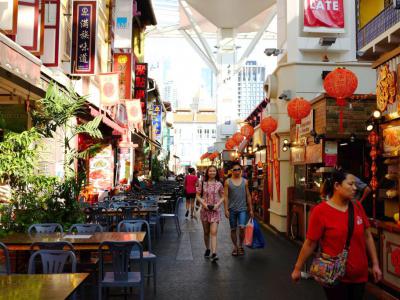
After World War II, the government stepped in with new hygiene rules, and many hawkers were moved into proper centres. Modernisation in the 1970s smoothed some of Chinatown’s edges, and Smith Street went from chaotic hotspot to quiet side street. But the early 2000s flipped the script again. As part of a heritage revival, the street was reborn as “Chinatown Food Street,” a pedestrian-friendly space covered with a sleek glass canopy and lined with stalls serving classics like char kway teow, satay, and chicken rice—basically, a greatest-hits album of Singaporean comfort food.
Today, Smith Street blends the old and the new with charming ease. Historic shophouses frame a mix of restaurants, tea shops, and snack stands offering everything from local sweets to adventurous bites like durian. It’s also the only English-named street in Chinatown, a fun reminder of its colonial roots.
Anyone coming here for souvenirs, supper, or just a slow wander under the canopy lights, will find Smith Street serving up a lively slice of Singapore’s evolving culinary heritage—one steaming plate at a time...
By the late 19th and early 20th centuries, Smith Street was at full volume. Traditional shophouses packed the road, filled with clan associations, herbal pharmacies, workshops, and eateries so small you could order your food without standing up. Outside, hawkers stirred noodles, grilled satay, and ladled desserts from carts that rattled from dawn to midnight. It was lively, it was messy, and it was absolutely essential to Singapore’s early food scene. The air was thick with steam, spices, and the constant soundtrack of people trying to fit daily life into very narrow spaces.
After World War II, the government stepped in with new hygiene rules, and many hawkers were moved into proper centres. Modernisation in the 1970s smoothed some of Chinatown’s edges, and Smith Street went from chaotic hotspot to quiet side street. But the early 2000s flipped the script again. As part of a heritage revival, the street was reborn as “Chinatown Food Street,” a pedestrian-friendly space covered with a sleek glass canopy and lined with stalls serving classics like char kway teow, satay, and chicken rice—basically, a greatest-hits album of Singaporean comfort food.
Today, Smith Street blends the old and the new with charming ease. Historic shophouses frame a mix of restaurants, tea shops, and snack stands offering everything from local sweets to adventurous bites like durian. It’s also the only English-named street in Chinatown, a fun reminder of its colonial roots.
Anyone coming here for souvenirs, supper, or just a slow wander under the canopy lights, will find Smith Street serving up a lively slice of Singapore’s evolving culinary heritage—one steaming plate at a time...
3) Clarke Quay (must see)
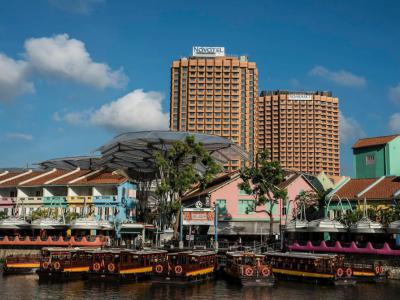
Clarke Quay is a historic riverside area in Singapore, situated in the Singapore River Planning Area. It can be found upstream from the mouth of the Singapore River and Boat Quay.
The name Clarke Quay is derived from Sir Andrew Clarke, who served as Singapore's second Governor and Governor of the Straits Settlements from 1873 to 1875. He played a pivotal role in establishing Singapore as the primary port for the Malay states of Perak, Selangor, and Sungei Ujong.
Starting in the early 1800s, Clarke Quay functioned as a dock for loading and unloading goods destined for the warehouses and commercial establishments along the Singapore River. As port activities gradually shifted to Keppel Harbour and other locations starting in the mid-1800s, coupled with a cleanup effort of the river in the early 1980s, Clarke Quay declined in importance. However, in 1989, it was designated as a heritage conservation area and subsequently transformed into a commercial and entertainment hub.
Upon its reopening in November 1993, Clarke Quay was marketed as a family-friendly attraction featuring over 170 retail stores, 17 dining establishments, and an adventure ride incorporating elements from Singapore's history.
To evoke a sense of nostalgia, the streets were adorned with 80 gaslights that were manually lit every evening. Additional historical elements included river cruises and tongkangs, which were preserved as floating dining platforms. Visitors could enjoy wandering minstrels, street performances, and even performances on Read Bridge, occasionally used as a stage for buskers, similar to the Teochew storytellers of the past.
Over the years, Clarke Quay has attracted notable tenants and introduced various attractions. In 1994, a popular Sunday flea market started, offering second-hand items, curios, and antiques. That year, Singapore's first virtual reality ride, Reality Rocket, was launched. In 1995, the famous Satay Club from the 1940s relocated to Clarke Quay after leaving its previous location at the Esplanade, which was being developed for the arts. After redevelopment, Clarke Quay became a venue for events like Mid-Autumn by the River, the Singapore Food Festival, and the Singapore Million Dollar Duck Race. This revitalization turned Clarke Quay into a bustling destination.
Tip:
Take your pick of Asian: Clarke Quay has Chinese, Indian and Malay (Indonesian) restaurants, as well as Japanese, Vietnamese, and Thai. Western choices include an Aussie seafood house, British and Irish pubs, a steakhouse, a Spanish tapas bar, German and Cuban restaurants, as well as more downscale taco joints, chicken wing joints, etc. Also lots of serious bars and other nightlife.
The name Clarke Quay is derived from Sir Andrew Clarke, who served as Singapore's second Governor and Governor of the Straits Settlements from 1873 to 1875. He played a pivotal role in establishing Singapore as the primary port for the Malay states of Perak, Selangor, and Sungei Ujong.
Starting in the early 1800s, Clarke Quay functioned as a dock for loading and unloading goods destined for the warehouses and commercial establishments along the Singapore River. As port activities gradually shifted to Keppel Harbour and other locations starting in the mid-1800s, coupled with a cleanup effort of the river in the early 1980s, Clarke Quay declined in importance. However, in 1989, it was designated as a heritage conservation area and subsequently transformed into a commercial and entertainment hub.
Upon its reopening in November 1993, Clarke Quay was marketed as a family-friendly attraction featuring over 170 retail stores, 17 dining establishments, and an adventure ride incorporating elements from Singapore's history.
To evoke a sense of nostalgia, the streets were adorned with 80 gaslights that were manually lit every evening. Additional historical elements included river cruises and tongkangs, which were preserved as floating dining platforms. Visitors could enjoy wandering minstrels, street performances, and even performances on Read Bridge, occasionally used as a stage for buskers, similar to the Teochew storytellers of the past.
Over the years, Clarke Quay has attracted notable tenants and introduced various attractions. In 1994, a popular Sunday flea market started, offering second-hand items, curios, and antiques. That year, Singapore's first virtual reality ride, Reality Rocket, was launched. In 1995, the famous Satay Club from the 1940s relocated to Clarke Quay after leaving its previous location at the Esplanade, which was being developed for the arts. After redevelopment, Clarke Quay became a venue for events like Mid-Autumn by the River, the Singapore Food Festival, and the Singapore Million Dollar Duck Race. This revitalization turned Clarke Quay into a bustling destination.
Tip:
Take your pick of Asian: Clarke Quay has Chinese, Indian and Malay (Indonesian) restaurants, as well as Japanese, Vietnamese, and Thai. Western choices include an Aussie seafood house, British and Irish pubs, a steakhouse, a Spanish tapas bar, German and Cuban restaurants, as well as more downscale taco joints, chicken wing joints, etc. Also lots of serious bars and other nightlife.
4) Marina Bay (must see)
Roll into Marina Bay, and you quickly realise you’ve stepped into Singapore’s favourite showroom—an entire 360-hectare stage built on reclaimed land and polished into what many now call the city’s “new downtown.” Surrounded by the Downtown Core, Marina East, Marina South, and Straits View, the bay feels like the point where Singapore looked at the sea and probably thought, “Why not have a bit more land here?” and then went ahead and made it happen.
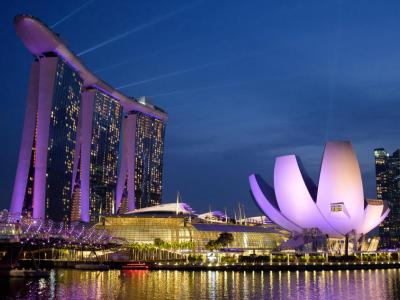
Here, the skyline performs graciously. Marina Bay Sands leans in with its iconic three-tower silhouette, Marina Bay Financial Centre and Asia Square compete for the title of “Most Serious Business Address,” and The Sail@Marina Bay stretches upward like it’s trying to catch a breeze that doesn’t exist. Marina One rounds out the cast with lush greenery tucked between its futuristic curves. The Urban Redevelopment Authority treats this whole district like its prized project, imagining Marina Bay as a 24-hour playground where you can work all day, enjoy dinner with a view, and still squeeze in a late-night stroll without ever leaving the neighbourhood.
And if you think the place only looks dramatic, wait until you hear it. Since 2008, the Formula One Singapore Grand Prix has turned the streets around the bay into a glowing, high-speed racetrack. The Float@Marina Bay—built in 2007—has hosted everything from National Day Parades and New Year’s Eve countdowns to fireworks festivals and the Opening and Closing Ceremonies of the first-ever Youth Olympic Games in 2010. It’s basically the city’s open-air living room, only with better lighting and a much larger guest list.
For something gentler but just as striking, the annual i Light Marina Bay festival transforms the waterfront with glowing, eco-friendly art installations. It’s a reminder that even in the middle of all the steel and glass, Singapore still enjoys a moment of creative play.
In other words, Marina Bay is where Singapore is showing off, and doing it very well...
Here, the skyline performs graciously. Marina Bay Sands leans in with its iconic three-tower silhouette, Marina Bay Financial Centre and Asia Square compete for the title of “Most Serious Business Address,” and The Sail@Marina Bay stretches upward like it’s trying to catch a breeze that doesn’t exist. Marina One rounds out the cast with lush greenery tucked between its futuristic curves. The Urban Redevelopment Authority treats this whole district like its prized project, imagining Marina Bay as a 24-hour playground where you can work all day, enjoy dinner with a view, and still squeeze in a late-night stroll without ever leaving the neighbourhood.
And if you think the place only looks dramatic, wait until you hear it. Since 2008, the Formula One Singapore Grand Prix has turned the streets around the bay into a glowing, high-speed racetrack. The Float@Marina Bay—built in 2007—has hosted everything from National Day Parades and New Year’s Eve countdowns to fireworks festivals and the Opening and Closing Ceremonies of the first-ever Youth Olympic Games in 2010. It’s basically the city’s open-air living room, only with better lighting and a much larger guest list.
For something gentler but just as striking, the annual i Light Marina Bay festival transforms the waterfront with glowing, eco-friendly art installations. It’s a reminder that even in the middle of all the steel and glass, Singapore still enjoys a moment of creative play.
In other words, Marina Bay is where Singapore is showing off, and doing it very well...
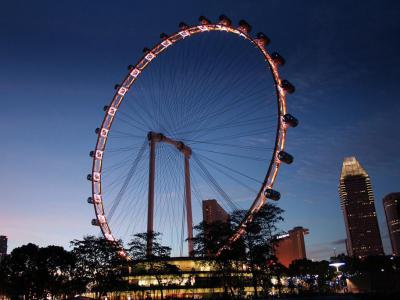
5) Singapore Flyer (must see)
If you're interested in getting a fantastic panoramic view of Singapore, especially the bay area, consider taking a ride on the Singapore Flyer on a clear day. This impressive Ferris wheel stands at a towering height of 165 meters, and it used to be the world's tallest until the Las Vegas "High Roller" surpassed it in 2014 by just 2.6 meters (9 feet). Similar to the "High Roller," the Singapore Flyer revolves slowly, taking about half an hour to complete a full rotation. This gives you ample time to enjoy the breathtaking views and capture numerous photos before descending back to a lush rainforest-covered park below.
The Singapore Flyer consists of 28 cabins, each capable of accommodating 28 passengers. However, during off-peak times, you might find it relatively empty, allowing for a more private experience. If you're worried about acrophobia, rest assured that the capsules are designed to make you feel secure, and the ride is exceptionally smooth, minimizing any sensation of height or rotation. Furthermore, the cabins are equipped with air-conditioning and panoramic screens that provide informative details about the various landmarks and surroundings.
For the best experience, consider visiting the Flyer on weekdays or just before or after sunset to enjoy the city's illuminated beauty at night. They offer various packages, including the signature Singapore Sling Flight, where you can savor drinks while taking in the incredible views for an added touch of style and luxury.
Tip:
The best time for having a Flyer ride is on weekdays as well as before or just after sunset to see the city at night.
The Singapore Flyer consists of 28 cabins, each capable of accommodating 28 passengers. However, during off-peak times, you might find it relatively empty, allowing for a more private experience. If you're worried about acrophobia, rest assured that the capsules are designed to make you feel secure, and the ride is exceptionally smooth, minimizing any sensation of height or rotation. Furthermore, the cabins are equipped with air-conditioning and panoramic screens that provide informative details about the various landmarks and surroundings.
For the best experience, consider visiting the Flyer on weekdays or just before or after sunset to enjoy the city's illuminated beauty at night. They offer various packages, including the signature Singapore Sling Flight, where you can savor drinks while taking in the incredible views for an added touch of style and luxury.
Tip:
The best time for having a Flyer ride is on weekdays as well as before or just after sunset to see the city at night.
