Custom Walk in Antwerp, Belgium by tugcenurcoskunn_cd9e8 created on 2025-08-03
Guide Location: Belgium » Antwerp
Guide Type: Custom Walk
# of Sights: 10
Tour Duration: 2 Hour(s)
Travel Distance: 4.4 Km or 2.7 Miles
Share Key: SAPFQ
Guide Type: Custom Walk
# of Sights: 10
Tour Duration: 2 Hour(s)
Travel Distance: 4.4 Km or 2.7 Miles
Share Key: SAPFQ
How It Works
Please retrieve this walk in the GPSmyCity app. Once done, the app will guide you from one tour stop to the next as if you had a personal tour guide. If you created the walk on this website or come to the page via a link, please follow the instructions below to retrieve the walk in the app.
Retrieve This Walk in App
Step 1. Download the app "GPSmyCity: Walks in 1K+ Cities" on Apple App Store or Google Play Store.



Step 2. In the GPSmyCity app, download(or launch) the guide "Antwerp Map and Walking Tours".
Step 3. Tap the menu button located at upper right corner of the "Walks" screen and select "Retrieve custom walk". Enter the share key: SAPFQ
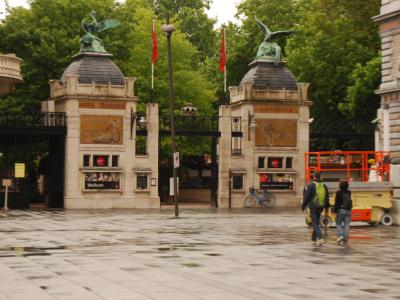
1) Antwerp Zoo (must see)
Established in 1843, the Antwerp Zoo is one of the oldest zoos in the world and is home to the Centre for Research and Conservation (CRC) along with the many animals and their various exhibits. Open all seven days of the week, the Zoo is located right next to Antwerp Centraal Railway Station at the Astrid Square.
The Zoo that started off in a small area of about 4 acres occupies over 26 acres of land today and is home to almost 950 different species of animals. From penguins to sea lions, from zebras to macaws and toucans and from commonly occurring apes to the near threatened okapis, the Zoo has them all. For some period, the Zoo also housed dolphins but the infrastructure demands could not be accommodated by a Zoo that was right in the center of the city.
From its inception, the Zoo has promoted wildlife preservation and through its recreational and educational exhibits pitches the importance of conservation to its 1.5 million visitors every year. The Zoo participates in the European Endangered Species Programme and has helped in the breeding of okapis, peafowls, tamarins and otters to name a few.
The Antwerp Zoo deserves at least half a day’s attention and once you are there, we are sure you will stay for more. But do not forget to pick up the schedule of the feeding times for these natural wonders at the entrance to see them interact with the Zoo staff.
The Zoo that started off in a small area of about 4 acres occupies over 26 acres of land today and is home to almost 950 different species of animals. From penguins to sea lions, from zebras to macaws and toucans and from commonly occurring apes to the near threatened okapis, the Zoo has them all. For some period, the Zoo also housed dolphins but the infrastructure demands could not be accommodated by a Zoo that was right in the center of the city.
From its inception, the Zoo has promoted wildlife preservation and through its recreational and educational exhibits pitches the importance of conservation to its 1.5 million visitors every year. The Zoo participates in the European Endangered Species Programme and has helped in the breeding of okapis, peafowls, tamarins and otters to name a few.
The Antwerp Zoo deserves at least half a day’s attention and once you are there, we are sure you will stay for more. But do not forget to pick up the schedule of the feeding times for these natural wonders at the entrance to see them interact with the Zoo staff.
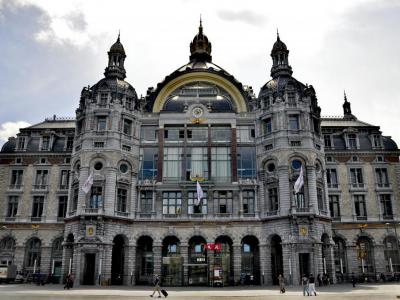
2) Antwerpen-Centraal (Antwerp Central Station) (must see)
Antwerp is a perfect blend of old and new, renowned for its great effort in preserving historic buildings. One such building is the Antwerp Central Station, aka Middenstatie (Middle station). The latter name – now an antiquated expression in Dutch – is seen on the plaque fixed on the north wall of the Station.
A key landmark in the city, this mighty edifice is one of the finest examples of railway architecture in Belgium. It's been repeatedly voted among the world’s most impressive railway stations, including number four in 2009 by the U.S. Newsweek magazine, and number one in 2014 by the British-American magazine Mashable.
The original stone-clad structure, with a steel platform covering, was designed by Louis Delacenserie. It was built between 1895 and 1905 as a replacement for the first terminus of the Brussels-Mechelen-Antwerp railway.
Because of its unique architecture, historians still struggle to attribute the Antwerpen-Centraal to any particular style. The eclectic mix features a Neo-Gothic front, a massive dome over the iron-glass waiting hall, for which the building has been colloquially referred to as the "spoorwegkathedraal" ("railroad cathedral"), and a modern multilevel platform system. Another notable element, the viaduct leading into the Station, was designed by local architect, Jan Van Asperen.
During WWII, the train hall sustained severe damage by V-2 rockets, which is still visible today due to a lasting wave-distortion in the roof.
Recently, the Station was completely renovated, and in 2007 had an underground tunnel opened. Today it operates 14 railways tracts at four different terminals and plays a vital role in connecting various parts of Belgium.
If you're an architecture buff or railway enthusiast, having the Antwerpen-Centraal on your list of things to see is a must! But even if you're neither of these, we still recommend visiting it, just for the spectacle.
A key landmark in the city, this mighty edifice is one of the finest examples of railway architecture in Belgium. It's been repeatedly voted among the world’s most impressive railway stations, including number four in 2009 by the U.S. Newsweek magazine, and number one in 2014 by the British-American magazine Mashable.
The original stone-clad structure, with a steel platform covering, was designed by Louis Delacenserie. It was built between 1895 and 1905 as a replacement for the first terminus of the Brussels-Mechelen-Antwerp railway.
Because of its unique architecture, historians still struggle to attribute the Antwerpen-Centraal to any particular style. The eclectic mix features a Neo-Gothic front, a massive dome over the iron-glass waiting hall, for which the building has been colloquially referred to as the "spoorwegkathedraal" ("railroad cathedral"), and a modern multilevel platform system. Another notable element, the viaduct leading into the Station, was designed by local architect, Jan Van Asperen.
During WWII, the train hall sustained severe damage by V-2 rockets, which is still visible today due to a lasting wave-distortion in the roof.
Recently, the Station was completely renovated, and in 2007 had an underground tunnel opened. Today it operates 14 railways tracts at four different terminals and plays a vital role in connecting various parts of Belgium.
If you're an architecture buff or railway enthusiast, having the Antwerpen-Centraal on your list of things to see is a must! But even if you're neither of these, we still recommend visiting it, just for the spectacle.
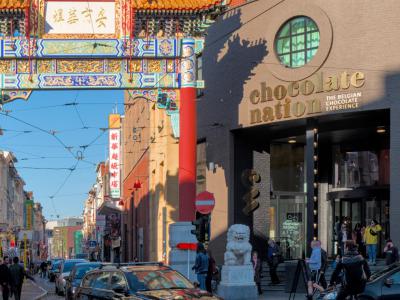
3) Chocolate Nation Museum (must see)
The Chocolate Nation museum recounts the proud history of Belgian chocolate, from day one to the present. The innovative display – 14 themed rooms, 4,000 square meters of space – offers an extensive and informative journey, from the cocoa plantations in the equatorial jungle to the world's largest cocoa storage in the Port of Antwerp.
A giant, moving fantasy machine shows how Belgian chocolate is made and what inspires its worldwide adoration. The museum has ateliers, rooms for workshops, and its own Bean To Bar Laboratory where visitors can see chocolatiers at work or even partake in a workshop, learning to make chocolate themselves.
There are multiple sampling opportunities along the way, where you can taste many different kinds of chocolate to your heart's content – great fun for those with a sweet tooth! The museum also has its own restaurant, Octave, where you can enjoy typical Belgian dishes with a twist, combining classic flavors with contemporary influences.
A trip to Antwerp is not complete without a visit to Chocolate Nation – undoubtedly Belgium’s most delectable attraction! Especially not to be missed by chocolate lovers!
Why You Should Visit:
A unique insight into Belgian chocolate traditions and innovations; packed with experiences and tales of chocolate brands and chocolatiers.
Tip:
The ticket prices include an audio guide and various chocolate tastings.
A giant, moving fantasy machine shows how Belgian chocolate is made and what inspires its worldwide adoration. The museum has ateliers, rooms for workshops, and its own Bean To Bar Laboratory where visitors can see chocolatiers at work or even partake in a workshop, learning to make chocolate themselves.
There are multiple sampling opportunities along the way, where you can taste many different kinds of chocolate to your heart's content – great fun for those with a sweet tooth! The museum also has its own restaurant, Octave, where you can enjoy typical Belgian dishes with a twist, combining classic flavors with contemporary influences.
A trip to Antwerp is not complete without a visit to Chocolate Nation – undoubtedly Belgium’s most delectable attraction! Especially not to be missed by chocolate lovers!
Why You Should Visit:
A unique insight into Belgian chocolate traditions and innovations; packed with experiences and tales of chocolate brands and chocolatiers.
Tip:
The ticket prices include an audio guide and various chocolate tastings.
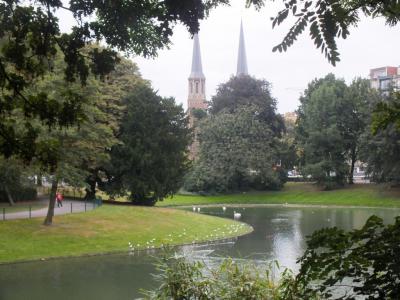
4) Stadspark (City Park)
The Stadspark is an English styled park laid out over 35 acres of land not very far from Antwerp Centraal Station. This triangular park located between Rubenslei, Van Eycklei and Quinten Matsijslei is the only park located in the city center of Antwerp. Constructed in the late 1860s by architect E. Van Cuyck, the Park is a conversion of an old Spanish fortification.
A pond in the Park adds to the scenery while also playing host to some common water birds. A white pedestrian bridge was constructed over the pond which makes it even more picturesque. Various statues decorate the Park along with war memorials. A World War II bunker has remained a part of the Park since it was created. Today, the Park is a destination for joggers, rollerbladers and elderly walkers. You can often see rabbits around the Park who are more than willing to jog (or hop) along with you. However, the Park is too centrally located and cannot manage to take you completely away from the traffic noises arising from the city.
The Park is filled with different kinds of trees, some of which are not even native to the land. Open all times of the day, you can visit the park anytime you prefer although a day light visit is recommended. Once here, you can always go back to shopping areas which are located just outside the Park.
A pond in the Park adds to the scenery while also playing host to some common water birds. A white pedestrian bridge was constructed over the pond which makes it even more picturesque. Various statues decorate the Park along with war memorials. A World War II bunker has remained a part of the Park since it was created. Today, the Park is a destination for joggers, rollerbladers and elderly walkers. You can often see rabbits around the Park who are more than willing to jog (or hop) along with you. However, the Park is too centrally located and cannot manage to take you completely away from the traffic noises arising from the city.
The Park is filled with different kinds of trees, some of which are not even native to the land. Open all times of the day, you can visit the park anytime you prefer although a day light visit is recommended. Once here, you can always go back to shopping areas which are located just outside the Park.
5) Meir Shopping Street (must see)
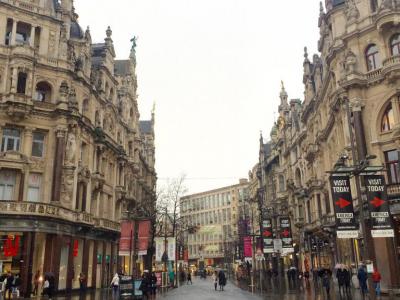
Meir is a famous shopping destination for the city of Antwerp and, along with the New Street in Brussels, one of the most important shopping areas in Belgium. The Meir shopping district encompasses the streets surrounding Our Lady’s Cathedral all the way to the Central Station. Once used to store wet wood for furniture, the area has come a long way to be recognized as one of the prime areas for shopping in the country. Once being a small street on the outskirts of the city, today Meir is an integral part of the city center.
With the opening of the Stadsfeestzaal Shopping Centre in 2007, the Meir has become the most expensive shopping destination in the economic union of Benelux. The area is home to all major shopping brands and attracts over 200,000 visitors from neighboring states and other European countries.
Along with being a shopping capital, the Meir has also seen the richness of architecture and the lavishness of the rich. It is home to some exquisite buildings such as ‘Osterrieth House’ at number 85 and the Royal Residence of the Belgian Kings, both built in the old Rococo style by architect Van Baurscheit. Whether for a shopping experience or just visiting to catch a glimpse of the past, Meir is a place that all must visit.
With the opening of the Stadsfeestzaal Shopping Centre in 2007, the Meir has become the most expensive shopping destination in the economic union of Benelux. The area is home to all major shopping brands and attracts over 200,000 visitors from neighboring states and other European countries.
Along with being a shopping capital, the Meir has also seen the richness of architecture and the lavishness of the rich. It is home to some exquisite buildings such as ‘Osterrieth House’ at number 85 and the Royal Residence of the Belgian Kings, both built in the old Rococo style by architect Van Baurscheit. Whether for a shopping experience or just visiting to catch a glimpse of the past, Meir is a place that all must visit.
6) Rubenshuis (Rubens House) (must see)
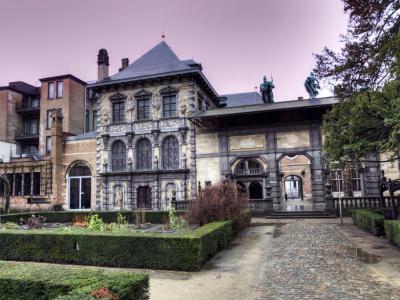
Known for his Counter Reformation portraits, landscapes and paintings, Sir Peter Paul Rubens was a Baroque painter, book illustrator and a diplomat during the early 1600s. The Rubens House is a city of Antwerp-owned and curated building that Rubens designed himself and spent most of his lifetime in.
Located on Wapper Street, Rubens purchased this house in 1610 and added a gallery, porch and a large studio in Greco-Roman classic styles and a hint of Italian Renaissance to the structure. Within the walls of this house, Rubens and his students, such as Anthony Van Dyck and Jacob Jordaens, created most of their works. Rubens’ work is categorized by various stages of productivity of his own life. However, all of Rubens’ work that is on display in the House today came back only after great efforts were put in by the people of Antwerp once it was decided to make the building into a monument in 1937.
The Rubens House is home to paintings such as Saint Claire of Assisi, The Annunciation and Adam and Eve made by the great painter himself in addition to the works of other contemporaries of his time. The House also displays various objects of art from the 17th century giving visitor a peek at the lavish lifestyles of those times. The Renaissance Garden which was renovated in 1993 takes inspiration from Rubens’ paintings and should not be missed.
Located on Wapper Street, Rubens purchased this house in 1610 and added a gallery, porch and a large studio in Greco-Roman classic styles and a hint of Italian Renaissance to the structure. Within the walls of this house, Rubens and his students, such as Anthony Van Dyck and Jacob Jordaens, created most of their works. Rubens’ work is categorized by various stages of productivity of his own life. However, all of Rubens’ work that is on display in the House today came back only after great efforts were put in by the people of Antwerp once it was decided to make the building into a monument in 1937.
The Rubens House is home to paintings such as Saint Claire of Assisi, The Annunciation and Adam and Eve made by the great painter himself in addition to the works of other contemporaries of his time. The House also displays various objects of art from the 17th century giving visitor a peek at the lavish lifestyles of those times. The Renaissance Garden which was renovated in 1993 takes inspiration from Rubens’ paintings and should not be missed.
7) Plantin-Moretus Museum (must see)
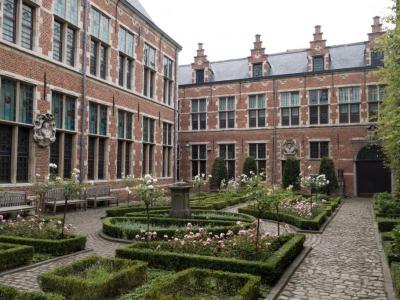
One of the most fascinating museums one can encounter in Antwerp is the Plantin-Moretus Museum. Home to one of the most prolific printing presses of the 16th and 17th century, the Platin–Moretus Museum is a must visit in Antwerp.
Founded by Christoffel Plantin, a Frenchman who from being a mere bookbinder became the most noted publisher and printer of the Renaissance period, the printing press was one of the key factors in establishing Antwerp as one of Europe’s leading cities with regard to the spread of typography and inventions in printing technology. Plantin’s son-in-law, Jan Moretus, played a vital role in bringing newer technologies and inventions to the press after the death of Plantin.
After running successfully for over two centuries the company was sold to the city of Antwerp in 1876. The Museum is located in the former residence and printing establishment of the Platin–Moretus family. Its location is listed as a World Heritage Site by UNESCO.
The Museum houses some of the world’s oldest surviving printing presses and some extraordinary tools, dyes and matrices that were in use. The most prized possession of the Museum remains the extensive library and antique books that are a century or two old. Also noteworthy are the rich and elaborate interiors and the architecture of the building that speak of the opulence of the Platin-Moretus family.
Founded by Christoffel Plantin, a Frenchman who from being a mere bookbinder became the most noted publisher and printer of the Renaissance period, the printing press was one of the key factors in establishing Antwerp as one of Europe’s leading cities with regard to the spread of typography and inventions in printing technology. Plantin’s son-in-law, Jan Moretus, played a vital role in bringing newer technologies and inventions to the press after the death of Plantin.
After running successfully for over two centuries the company was sold to the city of Antwerp in 1876. The Museum is located in the former residence and printing establishment of the Platin–Moretus family. Its location is listed as a World Heritage Site by UNESCO.
The Museum houses some of the world’s oldest surviving printing presses and some extraordinary tools, dyes and matrices that were in use. The most prized possession of the Museum remains the extensive library and antique books that are a century or two old. Also noteworthy are the rich and elaborate interiors and the architecture of the building that speak of the opulence of the Platin-Moretus family.
8) Cathedral of Our Lady (must see)
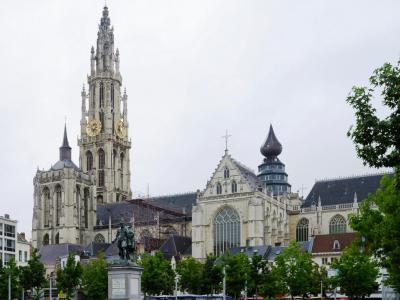
Overlooking the city of Antwerp since the 14th century is the beautiful Cathedral of Our Lady, which till date dominates the city’s skyline. Built by architects Jan and Pieter Appelmans, the Cathedral boasts a magnificent Gothic structure with hints of Baroque style complementing the interiors of the building.
Whether you are a history buff or an admirer of architecture, the Cathedral of Our Lady is one structure that has something to offer every visitor. The structure stands as the epitome of the perfect combination of artistic architecture, breathtaking interiors and a dramatic past making it a tantalizing site to visit.
Although the construction of the structure began in 1352, it took more than a century to complete the entire construction. The Cathedral that stands today rests on the same site where once stood a small chapel dedicated to Our Lady. The chapel traced its history to early 10th century and it was subsequently followed by the construction of a Romanesque Church.
The Gothic Cathedral that took its place was considered one of the most magnificent structures of its time and one of the largest cathedrals in the whole of Benelux. However despite all its glories, the Cathedral of Our Lady has faced a very turbulent past. From natural fires to raids, plunders and assault by iconoclasts, the structure has born tremendous damage over the years. But it has stood the test of time and stands proudly today in the city of Antwerp.
Whether you are a history buff or an admirer of architecture, the Cathedral of Our Lady is one structure that has something to offer every visitor. The structure stands as the epitome of the perfect combination of artistic architecture, breathtaking interiors and a dramatic past making it a tantalizing site to visit.
Although the construction of the structure began in 1352, it took more than a century to complete the entire construction. The Cathedral that stands today rests on the same site where once stood a small chapel dedicated to Our Lady. The chapel traced its history to early 10th century and it was subsequently followed by the construction of a Romanesque Church.
The Gothic Cathedral that took its place was considered one of the most magnificent structures of its time and one of the largest cathedrals in the whole of Benelux. However despite all its glories, the Cathedral of Our Lady has faced a very turbulent past. From natural fires to raids, plunders and assault by iconoclasts, the structure has born tremendous damage over the years. But it has stood the test of time and stands proudly today in the city of Antwerp.
9) Grote Markt (Great Market Square) (must see)
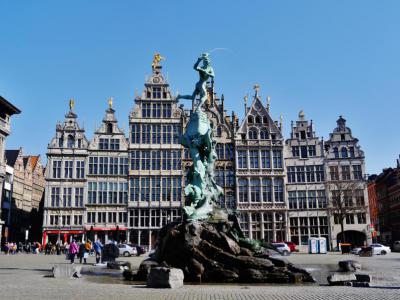
Right in the heart of the city, the Great Market Square is one of the favorite locations for locals as well as tourists. Filled with cafés and restaurant, the Great Market Square is a popular destination if you want to just kick back, bask in the sun with a chilled glass of beer or stroll around lazily admiring the architecture of the city. Dominated by the elegant and grant Renaissance style City Hall on one side and a row of guild houses and old patrician houses on the other, the Great Market Square is a magnet for those who love studying city architecture.
The center of the square holds the magnificent fountain that bears the well sculpted statue of Silvius Brabo, the local mythical hero. As legend has it, the water way was once governed by a giant who demanded a high toll from those who wanted to enter the city. Those failing to meet the requirements, were punished by having their hand cut off. It was Brabo, who fought the giant and cut off his hand and threw it in the Scheldt river.
One of the best ways to enjoy a perfect day in Antwerp is to sit in an open terrace restaurant amidst the elegantly constructed buildings of the Great Market Square, have an authentic Belgian meal on the table and admire the city as it moves past you.
The center of the square holds the magnificent fountain that bears the well sculpted statue of Silvius Brabo, the local mythical hero. As legend has it, the water way was once governed by a giant who demanded a high toll from those who wanted to enter the city. Those failing to meet the requirements, were punished by having their hand cut off. It was Brabo, who fought the giant and cut off his hand and threw it in the Scheldt river.
One of the best ways to enjoy a perfect day in Antwerp is to sit in an open terrace restaurant amidst the elegantly constructed buildings of the Great Market Square, have an authentic Belgian meal on the table and admire the city as it moves past you.
10) Museum aan de Stroom (Museum by the Stream) (must see)
The Museum aan de Stroom (Museum by the Stream), abbreviated as MAS, is prominently situated along the river Scheldt in Antwerp's Eilandje district. Officially opened to the public on May 17, 2011, the MAS is Antwerp's largest museum and stands as a significant cultural landmark. The decision to construct the museum was made by the Antwerp city council in 1998, and construction began with the laying of the first brick on September 14, 2006.
Designed by Neutelings Riedijk Architects, the museum's architecture is a striking example of the postmodern Art Deco style, characterized by its 60-meter-high structure made of Indian red sandstone and curved glass panels. This design not only provides a visual landmark but also serves as a symbolic gateway connecting Antwerp to global cultures.
The MAS is built on the historical site of the Hanzehuis, where international merchants once resided and worked before it was destroyed by a fire in the 19th century. Today, the museum boasts a collection of 470,000 objects, although the majority are held in storage. A highlight of the museum is the "visible store," the first visitors' gallery, which displays about 180,000 items, allowing public access to a vast array of the collection.
The core mission of the MAS is to explore and celebrate Antwerp's extensive maritime heritage and its rich connections with global trade and culture. The museum's collections include maritime artifacts that illustrate the city’s pivotal role in international trade, as well as diverse artworks and cultural items from Europe, Africa, America, Asia, and Oceania.
The MAS is also known for its dynamic thematic exhibitions that bridge local and global histories, cultures, and artistic expressions. It emphasizes educational outreach and audience engagement through innovative uses of new media and immersive presentations. Notably, the museum has received international acclaim for its "MAS IN YOUNG HANDS" initiative, which empowers young people from diverse backgrounds to participate as event organizers and curators, further enriching the museum's community involvement and educational impact.
Designed by Neutelings Riedijk Architects, the museum's architecture is a striking example of the postmodern Art Deco style, characterized by its 60-meter-high structure made of Indian red sandstone and curved glass panels. This design not only provides a visual landmark but also serves as a symbolic gateway connecting Antwerp to global cultures.
The MAS is built on the historical site of the Hanzehuis, where international merchants once resided and worked before it was destroyed by a fire in the 19th century. Today, the museum boasts a collection of 470,000 objects, although the majority are held in storage. A highlight of the museum is the "visible store," the first visitors' gallery, which displays about 180,000 items, allowing public access to a vast array of the collection.
The core mission of the MAS is to explore and celebrate Antwerp's extensive maritime heritage and its rich connections with global trade and culture. The museum's collections include maritime artifacts that illustrate the city’s pivotal role in international trade, as well as diverse artworks and cultural items from Europe, Africa, America, Asia, and Oceania.
The MAS is also known for its dynamic thematic exhibitions that bridge local and global histories, cultures, and artistic expressions. It emphasizes educational outreach and audience engagement through innovative uses of new media and immersive presentations. Notably, the museum has received international acclaim for its "MAS IN YOUNG HANDS" initiative, which empowers young people from diverse backgrounds to participate as event organizers and curators, further enriching the museum's community involvement and educational impact.
