Custom Walk in Cannes, France by spk226_6384f created on 2025-08-06
Guide Location: France » Cannes
Guide Type: Custom Walk
# of Sights: 12
Tour Duration: 3 Hour(s)
Travel Distance: 5.6 Km or 3.5 Miles
Share Key: DDKCP
Guide Type: Custom Walk
# of Sights: 12
Tour Duration: 3 Hour(s)
Travel Distance: 5.6 Km or 3.5 Miles
Share Key: DDKCP
How It Works
Please retrieve this walk in the GPSmyCity app. Once done, the app will guide you from one tour stop to the next as if you had a personal tour guide. If you created the walk on this website or come to the page via a link, please follow the instructions below to retrieve the walk in the app.
Retrieve This Walk in App
Step 1. Download the app "GPSmyCity: Walks in 1K+ Cities" on Apple App Store or Google Play Store.



Step 2. In the GPSmyCity app, download(or launch) the guide "Cannes Map and Walking Tours".
Step 3. Tap the menu button located at upper right corner of the "Walks" screen and select "Retrieve custom walk". Enter the share key: DDKCP
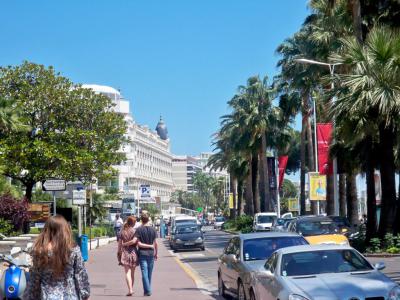
1) Boulevard de la Croisette (Croisette Boulevard) (must see)
This vital road runs right along the Cannes seaside and features fine dining, swanky hotels, and expensive shops. The internationally known Cannes Film Festival is held here at the Palace of Festivals and Congresses convention center.
The drop-dead gorgeous location on France's legendary Rivieria began its life as a boulevard in 1857. The boulevard is two kilometers (1.24 miles) long. It's protected as part of French cultural heritage and is one of France's most visited and celebrated spots.
The street is bursting with iconic locations and good eats. The Carlton Beach Club is the place to go for a swanky lunch. Alfred Hitchcock filmed part of To Catch a Thief here. You can wander through the gorgeous hotel and then enjoy lunch on the beach.
The beach has many public access points, and if you need to break up your shopping and dining outing, you can bring a towel and enjoy sunbathing, swimming, and people-watching.
Why You Should Visit:
Croisette Boulevard is the place to see and be seen. Locals love to promenade along this street, and tourists love to see the sights, enjoy the fresh sea air, and admire the grand establishments, history, and culture of Cannes.
Tips:
Take a side trip walk to Le Suquet, which sits above the boulevard. From here, you can look down on the action and grab a few postcard-worthy pictures of Croisette Boulevard and the sparkling Riveria.
The drop-dead gorgeous location on France's legendary Rivieria began its life as a boulevard in 1857. The boulevard is two kilometers (1.24 miles) long. It's protected as part of French cultural heritage and is one of France's most visited and celebrated spots.
The street is bursting with iconic locations and good eats. The Carlton Beach Club is the place to go for a swanky lunch. Alfred Hitchcock filmed part of To Catch a Thief here. You can wander through the gorgeous hotel and then enjoy lunch on the beach.
The beach has many public access points, and if you need to break up your shopping and dining outing, you can bring a towel and enjoy sunbathing, swimming, and people-watching.
Why You Should Visit:
Croisette Boulevard is the place to see and be seen. Locals love to promenade along this street, and tourists love to see the sights, enjoy the fresh sea air, and admire the grand establishments, history, and culture of Cannes.
Tips:
Take a side trip walk to Le Suquet, which sits above the boulevard. From here, you can look down on the action and grab a few postcard-worthy pictures of Croisette Boulevard and the sparkling Riveria.
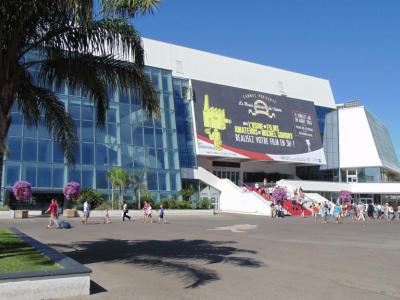
2) Palais des Festivals et des Congrès (Palace of Festivals and Congresses) (must see)
The Palace of Festivals and Congresses was built to host the Cannes Film Festival. This first building was constructed in 1949. However, the Film Festival continued to grow, and businesses were looking for a larger meeting center to hold conventions, so a new Palace was built. The new Palace of Festivals and Congresses opened in 1982 and was further expanded in 1999.
The palace continues to host the Cannes Film Festival, which draws celebrities, movie stars, producers, and fans from all over the world. The convention center has 18 auditoriums and has 35,000 square meters of space available for exhibitions.
The palace hosts cultural events such as Summer in Cannes and Going Out in Cannes. Popular festivals held here include Jazz at Domergue, the Festival of Russian Art, and the Cannes Shopping Festival. The convention center has continuous offerings, and visitors might catch a theatre show, dance event, concert, opera, or a magic show.
The palace continues to host the Cannes Film Festival, which draws celebrities, movie stars, producers, and fans from all over the world. The convention center has 18 auditoriums and has 35,000 square meters of space available for exhibitions.
The palace hosts cultural events such as Summer in Cannes and Going Out in Cannes. Popular festivals held here include Jazz at Domergue, the Festival of Russian Art, and the Cannes Shopping Festival. The convention center has continuous offerings, and visitors might catch a theatre show, dance event, concert, opera, or a magic show.
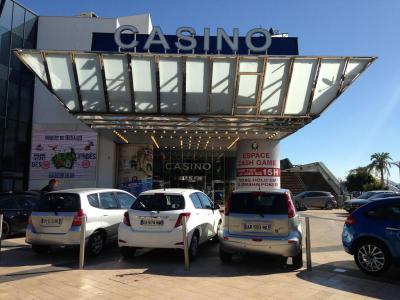
3) Casino Barriere Le Croisette
The Casino Barrière Le Croisette in Cannes is a grand establishment that combines modernity with the timeless charm of the Mediterranean. Situated across from the famous Palace of Festivals and Congresses (Palais des Festivals et des Congrès), it covers an impressive 3,000 square meters area, making it the largest casino in the region. Its exterior, a mix of concrete and glass, exudes a contemporary feel that starkly contrasts with its lavish interior. Upon entering, guests are welcomed by an extravagant showcase featuring a large aquarium, golden statues, and intricate wall carvings inspired by Greek mythology, leading them into the heart of the casino's gaming realm.
The gaming area blends tradition with innovation. The Poker Room, Black Jack tables, and English Roulette tables are surrounded by vibrant changing lights, enhancing their modern design. The slot machine section, topped with a mezzanine restaurant offering breathtaking views of the historic Suquet Quarter and the port, reflects the casino's dedication to providing an unmatched gaming experience. In 1987, the casino made history by introducing Slot Machines in France, and today it boasts a collection of 245 machines regularly updated, alongside Video Poker Machines and electronic English Roulette Stations.
Beyond gaming, the Casino Barrière Le Croisette is a hub of entertainment. It hosts a range of shows from French favorites to pop, rock, magic shows, musicals, cabarets, and dinner shows. The Café Croisette buzzes with a festive atmosphere that spreads throughout the casino, offering live performances that can be enjoyed at your table or on the dance floor.
The gaming area blends tradition with innovation. The Poker Room, Black Jack tables, and English Roulette tables are surrounded by vibrant changing lights, enhancing their modern design. The slot machine section, topped with a mezzanine restaurant offering breathtaking views of the historic Suquet Quarter and the port, reflects the casino's dedication to providing an unmatched gaming experience. In 1987, the casino made history by introducing Slot Machines in France, and today it boasts a collection of 245 machines regularly updated, alongside Video Poker Machines and electronic English Roulette Stations.
Beyond gaming, the Casino Barrière Le Croisette is a hub of entertainment. It hosts a range of shows from French favorites to pop, rock, magic shows, musicals, cabarets, and dinner shows. The Café Croisette buzzes with a festive atmosphere that spreads throughout the casino, offering live performances that can be enjoyed at your table or on the dance floor.
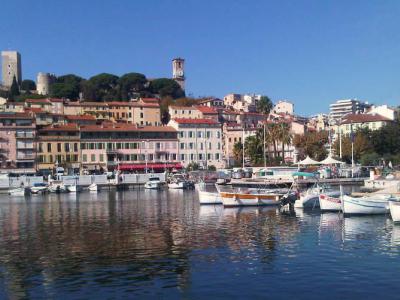
4) Vieux Port (Old Port)
The Old Port of Cannes offers both a historical site and a modern delight. You'll see classic sailboats at anchor and modern yachts hosting celebrities. Visitors can wander through the marina and admire the luxury yachts.
The port has been an important part of Cannes' history. It was used as a fishing village and a port of call between the Lerins islands millennia ago. First, ancient Italians occupied this area, and then the Romans. As the primary source of transportation was shipping, the port was constantly in use, bringing settlers and providing the economic heart of the area.
The Cannes Ferris Wheel is set up each summer, and visitors can enjoy a relaxing ride while taking in spectacular views.
The Laubeuf and du Large seawalls were renovated in 2018 and re-christened as the Joséphine Baker jetty. Baker was an inspiring artist from the World War II era.
This lovely jetty offers families and walkers a fantastic way to enjoy a 360-degree view of the incomparable Bay of Cannes. Visitors can also see the Lérins Islands. This jetty is accessible so guests with reduced mobility can enjoy this special place.
The Old Port hosts the Yachting Festival each year, which turns this area into an even busier and more vibrant destination. Sparkling new mega yachts, electric boats, and multihulls are displayed in this one-of-a-kind location.
The port has been an important part of Cannes' history. It was used as a fishing village and a port of call between the Lerins islands millennia ago. First, ancient Italians occupied this area, and then the Romans. As the primary source of transportation was shipping, the port was constantly in use, bringing settlers and providing the economic heart of the area.
The Cannes Ferris Wheel is set up each summer, and visitors can enjoy a relaxing ride while taking in spectacular views.
The Laubeuf and du Large seawalls were renovated in 2018 and re-christened as the Joséphine Baker jetty. Baker was an inspiring artist from the World War II era.
This lovely jetty offers families and walkers a fantastic way to enjoy a 360-degree view of the incomparable Bay of Cannes. Visitors can also see the Lérins Islands. This jetty is accessible so guests with reduced mobility can enjoy this special place.
The Old Port hosts the Yachting Festival each year, which turns this area into an even busier and more vibrant destination. Sparkling new mega yachts, electric boats, and multihulls are displayed in this one-of-a-kind location.
5) Cannes City Hall
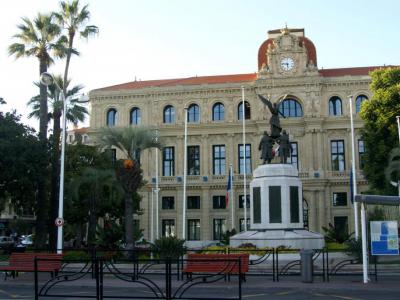
The neoclassic-style building that houses the City Hall of Cannes looks more like a palace than a City Hall.
The first communal house existed in the area as far back as 1515. However, that original building fell into disrepair after the French Revolution. The current building was completed in 1876. Also known as the Hôtel de Ville, the building was designed by architect Louis Durand.
The majestic building features 16 caryatids and sculpted blazons that embellish the facade. Doric and Ionic columns add to the grandeur of City Hall. An iconic dome with two clocks tops the building.
The building is located right at the port in the old part of Cannes. In front of it, along Pantiero promenade, is the Memorial of the Fallen. This monument to the First World War was erected in 1927 and was created by sculptor Albert Cheuret.
The view of the monument and the city hall behind it is one of the most photographed scenes in Cannes. The stately and sedate monument frames the grand city hall beautifully.
The first communal house existed in the area as far back as 1515. However, that original building fell into disrepair after the French Revolution. The current building was completed in 1876. Also known as the Hôtel de Ville, the building was designed by architect Louis Durand.
The majestic building features 16 caryatids and sculpted blazons that embellish the facade. Doric and Ionic columns add to the grandeur of City Hall. An iconic dome with two clocks tops the building.
The building is located right at the port in the old part of Cannes. In front of it, along Pantiero promenade, is the Memorial of the Fallen. This monument to the First World War was erected in 1927 and was created by sculptor Albert Cheuret.
The view of the monument and the city hall behind it is one of the most photographed scenes in Cannes. The stately and sedate monument frames the grand city hall beautifully.
6) Quai Saint-Pierre
Quai Saint-Pierre in Cannes presents a picturesque blend of history, culture, and modernity, located in the charming neighborhood of Suquet. This vibrant road begins its journey at the intersection of Bernard Cornut-Gentille square, where the local bus station can be found adorned with walls that pay homage to cinematic history. It stretches from the Pantiero promenade, situated at the base of the town hall's west facade, and extends along the west side of the Old Port.
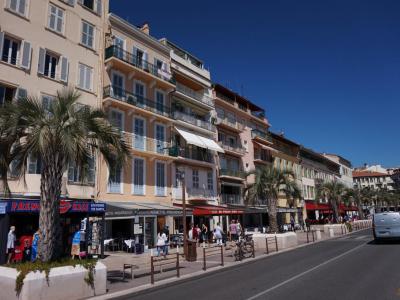
As Quai Saint-Pierre meanders along the harbor, it concludes at the crossroads of Quai Max Laubeuf, which proceeds southward along the port, Rue du Port descending from Suquet to the north, and Boulevard du Midi-Jean-Hibert. The latter starts near the Radisson Blu hotel and traces the coastline towards Croix-des-Gardes to the west. The quay is nestled at the foot of the Suquet hill, with its three- and four-story buildings boasting Italian-style architecture, leaning against the hillside.
The quay is a lively hub of activity, offering a line of restaurants whose terraces spill onto a generously sized sidewalk promenade. This promenade is adorned with palm trees and provides a delightful view of the Old Port, delineated by a two-lane road and complemented by a spacious sidewalk. The Old Port itself, constructed in the 19th century and listed in the general inventory of cultural heritage, has evolved from its traditional maritime roots to accommodate the yachts of the international pleasure festival, reflecting Cannes' status as a global cultural and recreational destination.
As Quai Saint-Pierre meanders along the harbor, it concludes at the crossroads of Quai Max Laubeuf, which proceeds southward along the port, Rue du Port descending from Suquet to the north, and Boulevard du Midi-Jean-Hibert. The latter starts near the Radisson Blu hotel and traces the coastline towards Croix-des-Gardes to the west. The quay is nestled at the foot of the Suquet hill, with its three- and four-story buildings boasting Italian-style architecture, leaning against the hillside.
The quay is a lively hub of activity, offering a line of restaurants whose terraces spill onto a generously sized sidewalk promenade. This promenade is adorned with palm trees and provides a delightful view of the Old Port, delineated by a two-lane road and complemented by a spacious sidewalk. The Old Port itself, constructed in the 19th century and listed in the general inventory of cultural heritage, has evolved from its traditional maritime roots to accommodate the yachts of the international pleasure festival, reflecting Cannes' status as a global cultural and recreational destination.
7) Les Murs Peints (Painted Wall) (must see)
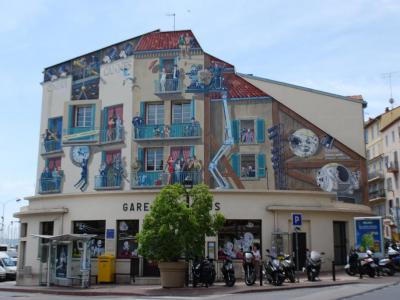
The Painted Walls of Cannes offers visitors a unique way to see depictions of their favorite movie stars and movie scenes. Since Cannes began hosting the Cannes Film Festival in 1949, Cannes has been synonymous with movie star glamour. Since 2002, artists have painted various murals to celebrate Cannes' cinema connection. Today, there are 15 different mural frescoes to view.
These inspired murals encourage visitors to stroll through Cannes, searching for the next mural. The Painted Walls offer a unique combination of a free outdoor art gallery and a treasure hunt.
As you stroll through the city, you'll find murals depicting Buster Keaton, James Dean, and Marilyn Monroe. One mural depicts Pulp Fiction and another mural shows The Piano Lesson.
One of the most prominent murals features depictions of 100 years of movie stars. This impressive mural is next to the bus station near City Hall. This artwork celebrates cinematic greats such as Charlie Chaplin, Alfred Hitchcock, Micky Mouse, and even memorable characters like Superman, Batman, and R2-D2.
These inspired murals encourage visitors to stroll through Cannes, searching for the next mural. The Painted Walls offer a unique combination of a free outdoor art gallery and a treasure hunt.
As you stroll through the city, you'll find murals depicting Buster Keaton, James Dean, and Marilyn Monroe. One mural depicts Pulp Fiction and another mural shows The Piano Lesson.
One of the most prominent murals features depictions of 100 years of movie stars. This impressive mural is next to the bus station near City Hall. This artwork celebrates cinematic greats such as Charlie Chaplin, Alfred Hitchcock, Micky Mouse, and even memorable characters like Superman, Batman, and R2-D2.
8) Notre Dame d'Esperance (Our Lady of Hope Church) (must see)
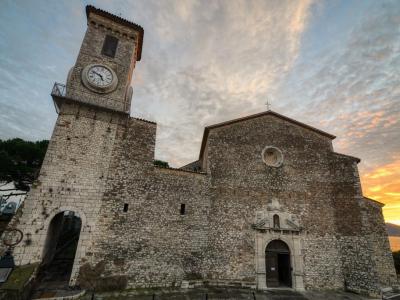
Construction on this historic church began in 1521. After over a hundred years of work, it was completed in 1627 and dedicated to Our Lady of Hope in 1645.
The church's location at the top of Suquet Hill offers beautiful views of the city below.
The church is Gothic, while the porch is Renaissance-style. Our Lady of Hope Church has several chapels, including a chapel dedicated to the patron of Cannes, Saint Nicolas. In the Saint-Pierre chapel, visitors will find an elaborate carved wooden altar.
A beautiful 16th-century gilded wood statue of Our Lady of Hope stands above the high altar. A central stained glass window represents the Annunciation.
Visitors will find a rare Burgundy sculpture dating to the 14th century in the chapel baptismal font. A 15th-century statue represents Saint Anne. The grand Italian organ dates to 1857 and enthralls the faithful with its beautiful tones.
The bell tower features Romanesque architecture. Its five bells were all cast in 1921. Near the entrance to the church, visitors will find a gorgeous small garden, perfect for quiet contemplation.
Why You Should Visit:
Our Lady of Hope Church offers beautiful architecture and a picturesque setting. Looking down to the Riveria, the view is stunning.
Tips:
The climb up the church is steep, so be prepared. In July, the church is a venue for Suquet Music Nights, a magical event featuring classical music, piano players, and singers.
The church's location at the top of Suquet Hill offers beautiful views of the city below.
The church is Gothic, while the porch is Renaissance-style. Our Lady of Hope Church has several chapels, including a chapel dedicated to the patron of Cannes, Saint Nicolas. In the Saint-Pierre chapel, visitors will find an elaborate carved wooden altar.
A beautiful 16th-century gilded wood statue of Our Lady of Hope stands above the high altar. A central stained glass window represents the Annunciation.
Visitors will find a rare Burgundy sculpture dating to the 14th century in the chapel baptismal font. A 15th-century statue represents Saint Anne. The grand Italian organ dates to 1857 and enthralls the faithful with its beautiful tones.
The bell tower features Romanesque architecture. Its five bells were all cast in 1921. Near the entrance to the church, visitors will find a gorgeous small garden, perfect for quiet contemplation.
Why You Should Visit:
Our Lady of Hope Church offers beautiful architecture and a picturesque setting. Looking down to the Riveria, the view is stunning.
Tips:
The climb up the church is steep, so be prepared. In July, the church is a venue for Suquet Music Nights, a magical event featuring classical music, piano players, and singers.
9) Villa Rothschild
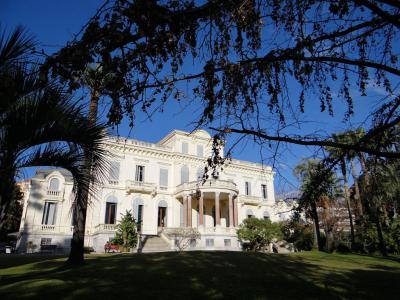
The Villa Rothschild in Cannes, constructed in 1881 on the site of the former Villa Marie-Thérèse, is a historic mansion commissioned by Betty de Rothschild, the widow of James Mayer de Rothschild. It marked a significant event as it was the first time a member of the Rothschild family undertook to build an estate in Southwestern France. The villa was designed by local architect Charles Baron and is notable for its Neo-classical style, sprawling over five stories with 40 rooms, including 28 bedrooms. One of its unique features is the wood-sculpted wall boards at the back entrance, which were originally from the Hôtel Talleyrand in Paris.
The surrounding park, inspired by the Château de Ferrières' park, further adds to the villa's grandeur, blending architectural finesse with the natural beauty of its gardens. Betty de Rothschild lived there until she died in 1886, after which the villa passed through generations of the Rothschild family, from her oldest son Alphonse James de Rothschild to his son Édouard Alphonse James de Rothschild, before being sold to the city of Cannes in 1952.
Since 1991, the Villa Rothschild has been recognized as an official historical monument, underscoring its cultural and historical importance. In a move to repurpose this historic estate for public benefit, it was transformed into a media library, now commercially known as "Médiathèque Noailles." This transition from a private mansion to a public cultural center reflects the city's dedication to preserving its heritage while adapting to contemporary needs.
The surrounding park, inspired by the Château de Ferrières' park, further adds to the villa's grandeur, blending architectural finesse with the natural beauty of its gardens. Betty de Rothschild lived there until she died in 1886, after which the villa passed through generations of the Rothschild family, from her oldest son Alphonse James de Rothschild to his son Édouard Alphonse James de Rothschild, before being sold to the city of Cannes in 1952.
Since 1991, the Villa Rothschild has been recognized as an official historical monument, underscoring its cultural and historical importance. In a move to repurpose this historic estate for public benefit, it was transformed into a media library, now commercially known as "Médiathèque Noailles." This transition from a private mansion to a public cultural center reflects the city's dedication to preserving its heritage while adapting to contemporary needs.
10) Le Suquet
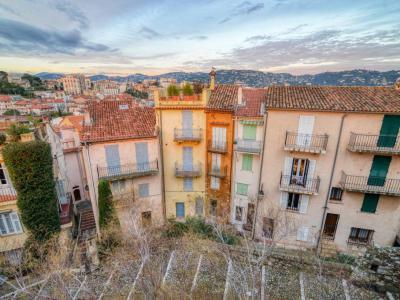
Le Suquet, the historic heart of Cannes, embodies the charm and history of this renowned Riviera destination. Serving as the city's neighborhood, Le Suquet attracts visitors with its cobblestone streets, notably the bustling Saint Antoine Street, lined with local eateries showcasing Cannes' authentic flavors. Dominating the district are a striking clock tower and church perched atop a hill, providing sweeping views of the Bay of Cannes, epitomizing the essence of the French Riviera.
Originally a fishing community, Le Suquet's architecture reflects Cannes' past, with buildings and streets dating back centuries, offering a glimpse into its storied history. Now a vibrant culinary hub, particularly around Saint Antoine Street (Rue Saint Antoine) and Suque Street (Rue du Suquet), the area boasts a variety of restaurants serving seafood, French, and Mediterranean cuisine, just a short walk from the beach.
Enhancing its appeal, much of Le Suquet is pedestrianized, offering a tranquil retreat from modern life and attracting tourists seeking its charm. The Forville Market (Marché Forville), situated at the foot of Le Suquet, hosts a lively market in the mornings, showcasing fresh produce and local goods, adding to the area's cultural tapestry.
For history buffs, Le Suquet offers attractions like the Castre Museum (Musée de la Castre), housed in a medieval fortress, featuring an extensive collection of art and historical artifacts. Adventurous visitors can climb the 109 steps to the bell tower of the Chapel of Sainte-Anne for panoramic views, while the Our Lady of Hope Church (Église Notre-Dame d'Espérance), dating back to the 15th century, offers magnificent vistas of the harbor.
A stroll through Le Suquet's charming lanes evokes a bygone era, with centuries-old houses, boutique shops, and an open-air market contributing to Cannes' historical and cultural identity. This picturesque quarter blends history, culture, and gastronomy, making it a must-visit destination for anyone exploring Cannes.
Originally a fishing community, Le Suquet's architecture reflects Cannes' past, with buildings and streets dating back centuries, offering a glimpse into its storied history. Now a vibrant culinary hub, particularly around Saint Antoine Street (Rue Saint Antoine) and Suque Street (Rue du Suquet), the area boasts a variety of restaurants serving seafood, French, and Mediterranean cuisine, just a short walk from the beach.
Enhancing its appeal, much of Le Suquet is pedestrianized, offering a tranquil retreat from modern life and attracting tourists seeking its charm. The Forville Market (Marché Forville), situated at the foot of Le Suquet, hosts a lively market in the mornings, showcasing fresh produce and local goods, adding to the area's cultural tapestry.
For history buffs, Le Suquet offers attractions like the Castre Museum (Musée de la Castre), housed in a medieval fortress, featuring an extensive collection of art and historical artifacts. Adventurous visitors can climb the 109 steps to the bell tower of the Chapel of Sainte-Anne for panoramic views, while the Our Lady of Hope Church (Église Notre-Dame d'Espérance), dating back to the 15th century, offers magnificent vistas of the harbor.
A stroll through Le Suquet's charming lanes evokes a bygone era, with centuries-old houses, boutique shops, and an open-air market contributing to Cannes' historical and cultural identity. This picturesque quarter blends history, culture, and gastronomy, making it a must-visit destination for anyone exploring Cannes.
11) Rue Meynadier (Meynadier Street) (must see)
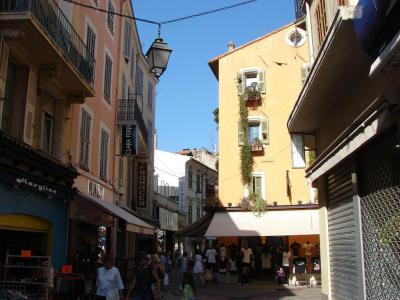
Meynadier Street was first laid out in the 18th century. Today, the 18th-century houses have been transformed into shops, boutiques, and restaurants. This narrow pedestrian-only street is a destination for specialty gourmet food boutiques.
Walking down Meynadier Street is a mouthwatering stroll. Stop by the Jean Luc Pelé shop for authentic and tasty macarons. Visitors will find delicious candies in one shop and incomparable cheeses in another shop.
Find exotic and unique spices, dried fruits, and butchers. Shop for chocolate or endless varieties of nougat. Many of the shops offer samples so you can choose from your favorites.
Since this is the French Riveria, you'll also find an array of wine shops. Meynadier Street also has cafes where you can enjoy coffee and deserts while people watching.
If you're looking for souvenirs, boutique clothing, or trendy sandals, you'll find them here. As a bonus, the narrow street is shaded, so it is a pleasant place to walk and soak in Cannes food and shopping culture.
Walking down Meynadier Street is a mouthwatering stroll. Stop by the Jean Luc Pelé shop for authentic and tasty macarons. Visitors will find delicious candies in one shop and incomparable cheeses in another shop.
Find exotic and unique spices, dried fruits, and butchers. Shop for chocolate or endless varieties of nougat. Many of the shops offer samples so you can choose from your favorites.
Since this is the French Riveria, you'll also find an array of wine shops. Meynadier Street also has cafes where you can enjoy coffee and deserts while people watching.
If you're looking for souvenirs, boutique clothing, or trendy sandals, you'll find them here. As a bonus, the narrow street is shaded, so it is a pleasant place to walk and soak in Cannes food and shopping culture.

12) Rue d'Antibes (Antibes Street) (must see)
Antibes Street is a delightful shopping destination. While you stroll, take time to admire the beautiful architecture along the street-many of the buildings here date to the 19th century.
Antibes Street used to link Toulon to Antibes. Today, it's a popular place to promenade and shop. It is 1.2 kilometers (3/4 mile) long and runs parallel to Croisette Boulevard. In comparison to Croisette Boulevard, the shops on Antibes Street tend to be more affordable.
The popular Gray d'Albion shopping center is located along Antibes. Don't miss Ladurée, one of France's favorite bakeries. Here you will find towers of inviting and scrumptious macaroons.
There are also shops featuring jewelry, fashion wear, shoes, and cosmetics. Shoppers will find brands such as Swatch and Zara as well as independent boutiques.
Antibes Street used to link Toulon to Antibes. Today, it's a popular place to promenade and shop. It is 1.2 kilometers (3/4 mile) long and runs parallel to Croisette Boulevard. In comparison to Croisette Boulevard, the shops on Antibes Street tend to be more affordable.
The popular Gray d'Albion shopping center is located along Antibes. Don't miss Ladurée, one of France's favorite bakeries. Here you will find towers of inviting and scrumptious macaroons.
There are also shops featuring jewelry, fashion wear, shoes, and cosmetics. Shoppers will find brands such as Swatch and Zara as well as independent boutiques.
