Custom Walk in Aarhus, Denmark by mail_75ccd created on 2025-09-12
Guide Location: Denmark » Aarhus
Guide Type: Custom Walk
# of Sights: 8
Tour Duration: 3 Hour(s)
Travel Distance: 5.7 Km or 3.5 Miles
Share Key: MKQMM
Guide Type: Custom Walk
# of Sights: 8
Tour Duration: 3 Hour(s)
Travel Distance: 5.7 Km or 3.5 Miles
Share Key: MKQMM
How It Works
Please retrieve this walk in the GPSmyCity app. Once done, the app will guide you from one tour stop to the next as if you had a personal tour guide. If you created the walk on this website or come to the page via a link, please follow the instructions below to retrieve the walk in the app.
Retrieve This Walk in App
Step 1. Download the app "GPSmyCity: Walks in 1K+ Cities" on Apple App Store or Google Play Store.



Step 2. In the GPSmyCity app, download(or launch) the guide "Aarhus Map and Walking Tours".
Step 3. Tap the menu button located at upper right corner of the "Walks" screen and select "Retrieve custom walk". Enter the share key: MKQMM
1) Salling Rooftop
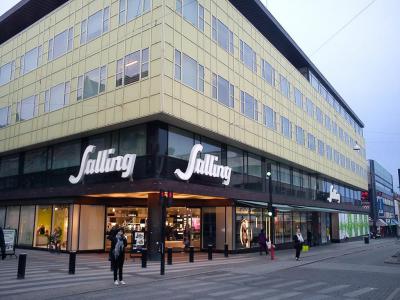
Salling is a department store in Aarhus. Customers can purchase clothing, household goods, beauty supplies, shoes, toys and more. However, many of the visitors to Salling arrive not to shop but to see the spectacular rooftop.
The Salling Rooftop is located atop the department store. It has a glass roof with a 360-degree, panoramic view of the city. The interior of the rooftop offers regular special events and entertainment. It is a popular dining spot and a place to get a cocktail or cup of coffee.
Along with the Salling Rooftop, Salling is now offering the Rooftop Garden. The garden is a combination of trees, plants and works of art.
The Salling Skywalk extends out from the Rooftop. It is a glass walkway that is 88 feet above street level. Both the Rooftop and the Skywalk are open from 10 AM to 6 PM on weekends and from 10 AM to 8 PM on weekends.
The Salling Rooftop is located atop the department store. It has a glass roof with a 360-degree, panoramic view of the city. The interior of the rooftop offers regular special events and entertainment. It is a popular dining spot and a place to get a cocktail or cup of coffee.
Along with the Salling Rooftop, Salling is now offering the Rooftop Garden. The garden is a combination of trees, plants and works of art.
The Salling Skywalk extends out from the Rooftop. It is a glass walkway that is 88 feet above street level. Both the Rooftop and the Skywalk are open from 10 AM to 6 PM on weekends and from 10 AM to 8 PM on weekends.
2) Aarhus Cathedral (must see)
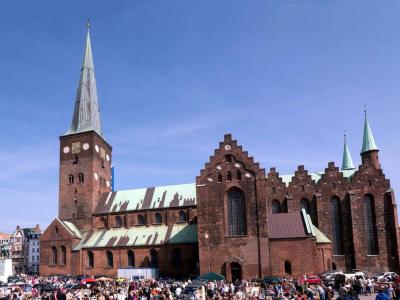
Aarhus Cathedral is a Church of Denmark cathedral that was previously a part of the Roman Catholic church. The Gothic and Romanesque cathedral was completed in 1300 and dedicated to Saint Clement, the patron saint of sailors.
Construction of the church started around 1190. It was built around Saint Clement's church, a timber church built in 1102. The Romanesque architectural style included half-rounded arches, a flat timber ceiling and four chapels.
The cathedral suffered great damage in 1330 when a fire burned much of Aarhus. It was abandoned until 1449 when it was renovated and enlarged. The new design of the church used Gothic vaulting with high windows and a lengthened nave. It is now both the tallest and longest church in Denmark at 305 feet long and 315 feet high. The current, 314-foot tower was built in 1931.
There are more frescoes in Aarhus Cathedral than in any church in the country. They were painted between 1470 and 1520. Likewise, the painting of Saint Christopher and Saint Clement are the tallest in Denmark. The cathedral's one stained glass window was created by Emanuel Vigeland in 1926. At almost 46-feet tall, it is the largest stained glass window in Denmark.
Construction of the church started around 1190. It was built around Saint Clement's church, a timber church built in 1102. The Romanesque architectural style included half-rounded arches, a flat timber ceiling and four chapels.
The cathedral suffered great damage in 1330 when a fire burned much of Aarhus. It was abandoned until 1449 when it was renovated and enlarged. The new design of the church used Gothic vaulting with high windows and a lengthened nave. It is now both the tallest and longest church in Denmark at 305 feet long and 315 feet high. The current, 314-foot tower was built in 1931.
There are more frescoes in Aarhus Cathedral than in any church in the country. They were painted between 1470 and 1520. Likewise, the painting of Saint Christopher and Saint Clement are the tallest in Denmark. The cathedral's one stained glass window was created by Emanuel Vigeland in 1926. At almost 46-feet tall, it is the largest stained glass window in Denmark.
3) Latinerkvarteret (Latin Quarter)
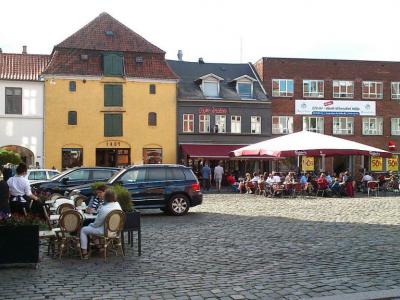
Latin Quarter is a neighborhood in the inner city of Aarhus. It is the oldest part of the city with a history that dates to the 14th century. The oldest houses and buildings in the Latin Quarter were built in the 16th century. One of these is Juuls Gard, which is one of the oldest buildings in the city.
Latin Quarter includes the main square of Pustervig Torv and several streets around the square. The name of the neighborhood was chosen in the 1990s due to the area's resemblance to Paris's Latin Quarter.
The quarter has a large number of shops, cafes and restaurants. It is also known for its active nightlife and entertainment venues. There are a number of small stages throughout the Latin Quarter where live music plays in the evening. Visitors will also find a number of galleries, studios and public art displays.
Latin Quarter includes the main square of Pustervig Torv and several streets around the square. The name of the neighborhood was chosen in the 1990s due to the area's resemblance to Paris's Latin Quarter.
The quarter has a large number of shops, cafes and restaurants. It is also known for its active nightlife and entertainment venues. There are a number of small stages throughout the Latin Quarter where live music plays in the evening. Visitors will also find a number of galleries, studios and public art displays.
4) Møllestien (The Mill Path) (must see)
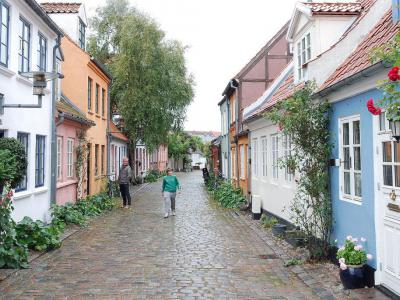
The Mill Path is a historic street in Aarhus. It is a cobblestone street with buildings constructed between 1870 and 1885. However, the street itself has been used in Aarhus since the 13th century.
The name "Mill Path" refers to the Aarhus Mill, which was first mentioned in 1289. The mill was located where the former Aarhus Main Library now stands at the western end of the street.
Sadly, the beautiful homes built in the late 19th century mostly fell into disrepair by 1925. The healthy soil that created an excellent basis for farmland because marshy and tenants were unable to maintain upkeep of the homes. Most of the street remained uninhabitable through 1960 when a renovation plan for the street was put together.
Students and artists moved into the neighborhood during the late 20th century. They painted many of the homes in bright colors, giving it the charm that is seen today. Renovations on the street led to many buildings being removed and replaced with modern structures. What is left is interesting architecture that is a favorite among the visitors to Aarhus.
The name "Mill Path" refers to the Aarhus Mill, which was first mentioned in 1289. The mill was located where the former Aarhus Main Library now stands at the western end of the street.
Sadly, the beautiful homes built in the late 19th century mostly fell into disrepair by 1925. The healthy soil that created an excellent basis for farmland because marshy and tenants were unable to maintain upkeep of the homes. Most of the street remained uninhabitable through 1960 when a renovation plan for the street was put together.
Students and artists moved into the neighborhood during the late 20th century. They painted many of the homes in bright colors, giving it the charm that is seen today. Renovations on the street led to many buildings being removed and replaced with modern structures. What is left is interesting architecture that is a favorite among the visitors to Aarhus.
5) Aarhus Botanical Gardens
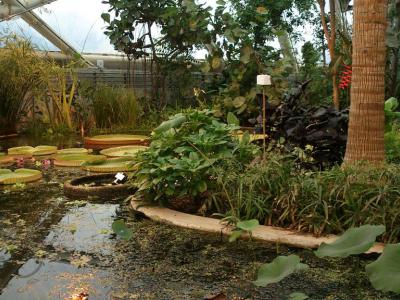
The Aarhus Botanical Gardens, nestled just west of Den Gamle By-the Urban Museum in central Aarhus, offers a verdant retreat open year-round. Established in 1873 initially for experimental cultivation of fruit trees and beneficial plants, the Gardens have evolved into The Garden Society of Jutland. This transformation marked a dedication to enhancing private gardens with robust and worthy plant varieties, underscoring a deep-rooted commitment to horticulture and ecological preservation.
Visitors to the Gardens can explore a rich tapestry of native Danish flora arranged according to their natural habitats. This organized display not only educates about regional botany but also showcases the diversity within Denmark's landscapes. Moreover, a special section dedicated to medicinal plants offers insights into the traditional and contemporary uses of various herbs.
Adding an international dimension, the central rockery presents a collection of mountain plants from around the globe, creating a striking contrast with the local species. This global aspect highlights the botanical variety and adaptability of alpine flora.
The Botanical Gardens are thoughtfully designed with visitor comfort in mind. Scattered throughout the area are tables and benches, some equipped with metal plates for disposable grills, making it a perfect spot for picnics. Environmentally conscious facilities ensure that visitors can grill and dine amidst nature without harming it.
The presence of the Hessel Brook adds a dynamic water element to the serene landscape. This brook, a continuation of the Aarhus and Egaa Streams, carves through the garden, enhancing its picturesque setting and providing a soothing backdrop.
With theme beds, bogs, beech woods, and dunes, the Gardens offer a comprehensive glimpse into various ecological systems and plant arrangements. Each visit can be both a tranquil retreat and an educational journey, reflecting the Garden’s historical mission and its ongoing contribution to botanical knowledge and environmental stewardship in Aarhus.
Visitors to the Gardens can explore a rich tapestry of native Danish flora arranged according to their natural habitats. This organized display not only educates about regional botany but also showcases the diversity within Denmark's landscapes. Moreover, a special section dedicated to medicinal plants offers insights into the traditional and contemporary uses of various herbs.
Adding an international dimension, the central rockery presents a collection of mountain plants from around the globe, creating a striking contrast with the local species. This global aspect highlights the botanical variety and adaptability of alpine flora.
The Botanical Gardens are thoughtfully designed with visitor comfort in mind. Scattered throughout the area are tables and benches, some equipped with metal plates for disposable grills, making it a perfect spot for picnics. Environmentally conscious facilities ensure that visitors can grill and dine amidst nature without harming it.
The presence of the Hessel Brook adds a dynamic water element to the serene landscape. This brook, a continuation of the Aarhus and Egaa Streams, carves through the garden, enhancing its picturesque setting and providing a soothing backdrop.
With theme beds, bogs, beech woods, and dunes, the Gardens offer a comprehensive glimpse into various ecological systems and plant arrangements. Each visit can be both a tranquil retreat and an educational journey, reflecting the Garden’s historical mission and its ongoing contribution to botanical knowledge and environmental stewardship in Aarhus.
6) Den Gamle By (Old Town Open-Air Museum) (must see)
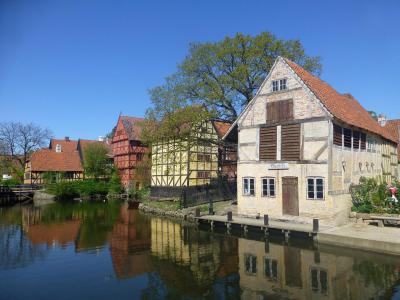
The Old Town Open-Air Museum in Aarhus was the world's first open-air museum of its kind when it opened in 1914. It focuses on the culture of the town with more than 75 historical buildings decorated in historical style and displaying exhibits of permanent and revolving themes.
The buildings in the Old Town Open-Air Museum cover a wide swath of time. Some were constructed in 1550 while others weren't built until the late-19th century. The buildings were brought in from all over the country and placed in the botanical gardens for the purpose of opening this museum.
Buildings located in the open-air museum include workshops, grocers, shops, historical gardens, a post office, a customs office, a school and a theatre. Museum staff work in historic roles like merchants and blacksmiths.
There are five permanent exhibits in the museum. These include the Danish Clock Museum, the Toy Museum, the Textile Museum, a pottery exhibit and a silverware exhibit. Old Town Open-Air Museum also offers a bakery, a bookstore, diners and cafes.
The buildings in the Old Town Open-Air Museum cover a wide swath of time. Some were constructed in 1550 while others weren't built until the late-19th century. The buildings were brought in from all over the country and placed in the botanical gardens for the purpose of opening this museum.
Buildings located in the open-air museum include workshops, grocers, shops, historical gardens, a post office, a customs office, a school and a theatre. Museum staff work in historic roles like merchants and blacksmiths.
There are five permanent exhibits in the museum. These include the Danish Clock Museum, the Toy Museum, the Textile Museum, a pottery exhibit and a silverware exhibit. Old Town Open-Air Museum also offers a bakery, a bookstore, diners and cafes.
7) ARos Aarhus Kunstmuseum (ARoS Aarhus Art Mseum) (must see)
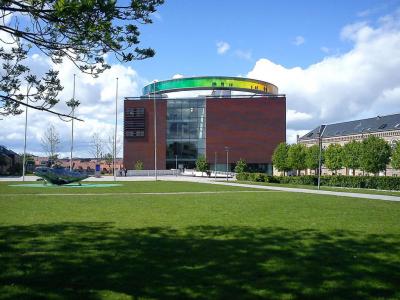
ARoS Aarhus Art Museum was first established in 1859. A new building was constructed in 2004 to provide space to the various exhibitions. The 10-story tall building was designed by architects Schmidt Hammer Lassen in a Modern architectural style. ARoS Aarhus Art Museum is now one of the largest art museums in Northern Europe.
The museum offers permanent and changing exhibitions. It also has a gift shop, a cafe and a restaurant. One of the most popular features of ARoS Aarhus Art Museum is the skywalk. Your Rainbow, crafted by Olafur Eliasson, offers a 360-degree view. It allows patrons to walk through the art installation and become part of the rainbow.
The permanent exhibit at ARoS Aarhus Art Museum includes art from the Danish Golden Age as well as from artists like Andy Warhol and Roy Lichtenstein. Revolving exhibits feature art, architecture and historical artifacts.
The museum offers permanent and changing exhibitions. It also has a gift shop, a cafe and a restaurant. One of the most popular features of ARoS Aarhus Art Museum is the skywalk. Your Rainbow, crafted by Olafur Eliasson, offers a 360-degree view. It allows patrons to walk through the art installation and become part of the rainbow.
The permanent exhibit at ARoS Aarhus Art Museum includes art from the Danish Golden Age as well as from artists like Andy Warhol and Roy Lichtenstein. Revolving exhibits feature art, architecture and historical artifacts.
8) Ishuset (The Ice House)
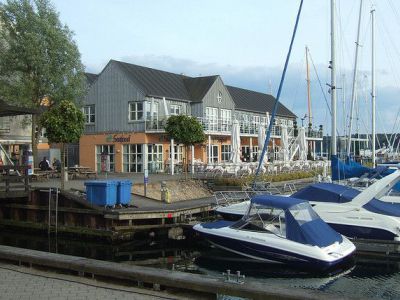
The Ice House (Ishuset) in Aarhus offers a delightful experience for ice cream enthusiasts. Located in the scenic Marselisborg Port, the Ice House is renowned not only for its wide selection of ice creams but also for the beautiful view it provides of Aarhus Harbor. This makes it an essential visit for anyone in the city.
Opening annually at Easter and closing in the winter, the Ice House showcases an impressive range of ice cream flavors. With 68 types including favorites like amarena, bambina, and caramel, the parlor ensures a rich variety to suit all tastes. On any given day, patrons can choose from up to 28 different flavors, all made in-house.
What sets Ishuset apart is its commitment to traditional methods of ice cream making. The ice cream is crafted on-site using old-fashioned techniques. The base is made primarily from organic whole milk which is pasteurized and matured to achieve the best possible consistency and result in the finished product. This process highlights their dedication to quality and the Italian-inspired approach to their craft.
Since its inception in 2005, the Ice House has become a beloved spot for locals and tourists, serving as a refreshing destination at Marselisborg Harbour. The ice cream parlor prides itself on using seasonal fruits and berries, a practice they refer to as "ICE CREAM WITH ATTITUDES." This not only enhances the flavor of their offerings but also aligns with sustainable practices by utilizing seasonal produce.
Opening annually at Easter and closing in the winter, the Ice House showcases an impressive range of ice cream flavors. With 68 types including favorites like amarena, bambina, and caramel, the parlor ensures a rich variety to suit all tastes. On any given day, patrons can choose from up to 28 different flavors, all made in-house.
What sets Ishuset apart is its commitment to traditional methods of ice cream making. The ice cream is crafted on-site using old-fashioned techniques. The base is made primarily from organic whole milk which is pasteurized and matured to achieve the best possible consistency and result in the finished product. This process highlights their dedication to quality and the Italian-inspired approach to their craft.
Since its inception in 2005, the Ice House has become a beloved spot for locals and tourists, serving as a refreshing destination at Marselisborg Harbour. The ice cream parlor prides itself on using seasonal fruits and berries, a practice they refer to as "ICE CREAM WITH ATTITUDES." This not only enhances the flavor of their offerings but also aligns with sustainable practices by utilizing seasonal produce.
