Custom Walk in Portland, Maine by pdinno_4bab3 created on 2025-10-03
Guide Location: USA » Portland
Guide Type: Custom Walk
# of Sights: 12
Tour Duration: 3 Hour(s)
Travel Distance: 6.9 Km or 4.3 Miles
Share Key: 6QUQR
Guide Type: Custom Walk
# of Sights: 12
Tour Duration: 3 Hour(s)
Travel Distance: 6.9 Km or 4.3 Miles
Share Key: 6QUQR
How It Works
Please retrieve this walk in the GPSmyCity app. Once done, the app will guide you from one tour stop to the next as if you had a personal tour guide. If you created the walk on this website or come to the page via a link, please follow the instructions below to retrieve the walk in the app.
Retrieve This Walk in App
Step 1. Download the app "GPSmyCity: Walks in 1K+ Cities" on Apple App Store or Google Play Store.



Step 2. In the GPSmyCity app, download(or launch) the guide "Portland Map and Walking Tours".
Step 3. Tap the menu button located at upper right corner of the "Walks" screen and select "Retrieve custom walk". Enter the share key: 6QUQR
1) DiMillo Marina
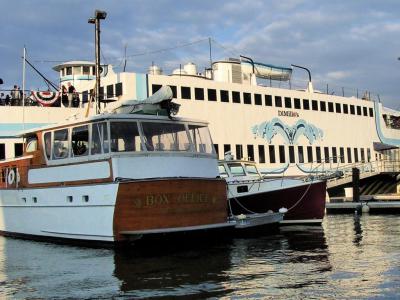
Welcome to DiMillo Marina, the crown jewel of the local waterfront-where boaters find their haven and visitors get the perfect mix of luxury and laid-back charm. This marina is the gateway to an unforgettable waterfront experience.
Resting on the edge of Portland Harbor, DiMillo Marina boasts spectacular views of Casco Bay, with its islands dotting the horizon. It’s the ideal spot to kick off your Portland adventure, with easy access to all the sights, sounds, and tastes of the city. Think historic charm meets coastal beauty-what’s not to love?
Not only does the marina offer top-notch facilities, but it also caters to boaters big and small, with 125 slips for transient and seasonal docking. Whether you’re cruising in on a sleek yacht or a modest dinghy, every slip comes with Wi-Fi, electricity, and water hookups. And if your boat’s been a little too much at sea, DiMillo’s full-service boatyard has you covered-from engine fixes to hull repairs, and everything in between.
Explore Portland’s eclectic shops, dine in charming restaurants, or wander the cobblestone streets of the Old Port. It’s all just a short stroll away, making DiMillo Marina the ultimate spot for both boating fanatics and land lovers alike.
Resting on the edge of Portland Harbor, DiMillo Marina boasts spectacular views of Casco Bay, with its islands dotting the horizon. It’s the ideal spot to kick off your Portland adventure, with easy access to all the sights, sounds, and tastes of the city. Think historic charm meets coastal beauty-what’s not to love?
Not only does the marina offer top-notch facilities, but it also caters to boaters big and small, with 125 slips for transient and seasonal docking. Whether you’re cruising in on a sleek yacht or a modest dinghy, every slip comes with Wi-Fi, electricity, and water hookups. And if your boat’s been a little too much at sea, DiMillo’s full-service boatyard has you covered-from engine fixes to hull repairs, and everything in between.
Explore Portland’s eclectic shops, dine in charming restaurants, or wander the cobblestone streets of the Old Port. It’s all just a short stroll away, making DiMillo Marina the ultimate spot for both boating fanatics and land lovers alike.
2) United States Custom House
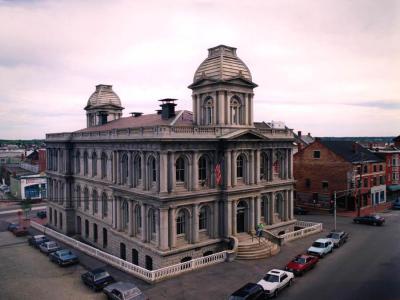
The United States Custom House is basically Portland’s granite love letter to maritime trade. Built between 1867 and 1872, it rose from the ashes of the Great Fire with one clear mission: keep the booming harbor in check and the customs business running like clockwork.
Crafted from rugged New Hampshire granite and topped with a slate roof tough enough to laugh at sparks, the Custom House was fireproof by design-a cautious nod to the inferno of 1866. Its I-shaped layout and three sturdy stories give it the kind of presence that says, “business first, beauty second”-though it manages to pull off both with ease.
The style is part Renaissance Revival, part Second Empire, and all confidence. Two square towers capped with slightly sloping roofs crown the building like a pair of granite crowns, flanked by Corinthian pilasters that add a touch of theatrical drama. Venetian-style arched windows soften the heavy granite walls, each topped by its own shallow pediment, like architectural eyebrows raised just high enough to impress.
But the Custom House is more than an elegant façade-it’s a symbol. This was the gatekeeper of Portland’s economy, where the Atlantic world funneled into ledgers, tariffs, and fortunes. Today, listed on the National Register of Historic Places, it’s still one of the city’s sharpest dressers. Granite, symmetry, and just enough French swagger-it’s ready to collect tariffs, throw a party, or simply remind you that Portland’s pride was once measured in tall ship masts.
Crafted from rugged New Hampshire granite and topped with a slate roof tough enough to laugh at sparks, the Custom House was fireproof by design-a cautious nod to the inferno of 1866. Its I-shaped layout and three sturdy stories give it the kind of presence that says, “business first, beauty second”-though it manages to pull off both with ease.
The style is part Renaissance Revival, part Second Empire, and all confidence. Two square towers capped with slightly sloping roofs crown the building like a pair of granite crowns, flanked by Corinthian pilasters that add a touch of theatrical drama. Venetian-style arched windows soften the heavy granite walls, each topped by its own shallow pediment, like architectural eyebrows raised just high enough to impress.
But the Custom House is more than an elegant façade-it’s a symbol. This was the gatekeeper of Portland’s economy, where the Atlantic world funneled into ledgers, tariffs, and fortunes. Today, listed on the National Register of Historic Places, it’s still one of the city’s sharpest dressers. Granite, symmetry, and just enough French swagger-it’s ready to collect tariffs, throw a party, or simply remind you that Portland’s pride was once measured in tall ship masts.
3) Casco Bay
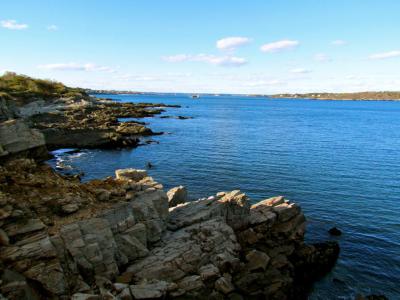
Casco Bay is a scenic inlet of the Gulf of Maine stretching from Cape Small in the east to Two Lights in Cape Elizabeth on the west. The city of Portland, Maine’s largest, lines the bay’s southern edge, with the bustling Port of Portland nestled within its waters.
Known for its many islands-often called the Calendar Islands due to the popular myth that there are as many islands as days in the year-Casco Bay actually contains between 136 and just over 200 islands.
Historic lighthouses such as Halfway Rock and the iconic Portland Head Light mark the bay’s entrances, guiding mariners into Portland Harbor, a busy working waterfront that welcomes cruise ships, cargo vessels, and oil tankers alike.
Beyond its maritime significance, Casco Bay and Portland offer rich cultural and culinary experiences. Portland has earned the title of “America’s Foodiest Small Town” thanks to its vibrant seafood scene and diverse ethnic cuisine, drawing food lovers from near and far.
The city also boasts a lively craft beer culture, with over 15 breweries crafting local favorites. Alongside its gastronomic appeal, Portland is a thriving arts hub, home to the Portland Museum of Art, which features works by internationally renowned and Maine-based American artists, as well as world-class performing arts organizations like the Portland Symphony Orchestra, Stage Theatre, and Portland Ballet.
Known for its many islands-often called the Calendar Islands due to the popular myth that there are as many islands as days in the year-Casco Bay actually contains between 136 and just over 200 islands.
Historic lighthouses such as Halfway Rock and the iconic Portland Head Light mark the bay’s entrances, guiding mariners into Portland Harbor, a busy working waterfront that welcomes cruise ships, cargo vessels, and oil tankers alike.
Beyond its maritime significance, Casco Bay and Portland offer rich cultural and culinary experiences. Portland has earned the title of “America’s Foodiest Small Town” thanks to its vibrant seafood scene and diverse ethnic cuisine, drawing food lovers from near and far.
The city also boasts a lively craft beer culture, with over 15 breweries crafting local favorites. Alongside its gastronomic appeal, Portland is a thriving arts hub, home to the Portland Museum of Art, which features works by internationally renowned and Maine-based American artists, as well as world-class performing arts organizations like the Portland Symphony Orchestra, Stage Theatre, and Portland Ballet.
4) Old Port and Wharf Street (must see)
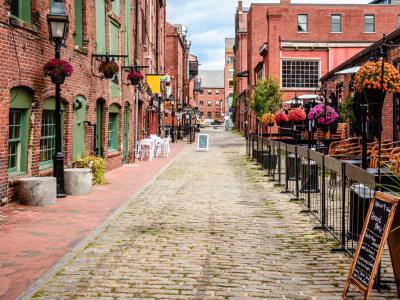
Imagine a neighborhood that feels like a living history exhibit-but one where you’re invited to sip craft beer and nibble lobster rolls along the way. That’s the Old Port Exchange, Portland’s beloved old-timer district defined by snaking cobblestones, 19th-century brick facades, and wooden piers where fishing boats still tie up.
Wander down Wharf Street and you’ll see why this strip has its own magnetic pull. Candlelit tables spill onto the cobbles, giving seafood feasts a glow that gold-plated floors could never match. Boutique shops line the street between rustic pubs, while galleries showcase local artists whose work is inspired by the city’s history, textures, and everyday rhythm. By evening, the Old Port hums with energy, as locals and out-of-towners converge on cozy taverns and rooftop lounges.
But there’s more to this historic quarter than nightlife. Post Office Park and Tommy’s Park offer leafy respites if you need to swap your bar stools for a bench. A quick jaunt down to Bell Buoy Park, found beside the Casco Bay Ferry Terminal, will reward you with sea breezes and ferryhorn fanfares. And don’t miss the tail-end of the Eastern Promenade Trail, which funnels right into the Old Port-you can stroll off your morning pastry seamlessly.
What makes the Old Port truly enchanting is its blend of old and new: centuries-old warehouses reborn as sleek restaurants, centuries-old stones that still feel alive under your steps, and a waterfront vibe so authentic you might taste the salt in the air.
Wander down Wharf Street and you’ll see why this strip has its own magnetic pull. Candlelit tables spill onto the cobbles, giving seafood feasts a glow that gold-plated floors could never match. Boutique shops line the street between rustic pubs, while galleries showcase local artists whose work is inspired by the city’s history, textures, and everyday rhythm. By evening, the Old Port hums with energy, as locals and out-of-towners converge on cozy taverns and rooftop lounges.
But there’s more to this historic quarter than nightlife. Post Office Park and Tommy’s Park offer leafy respites if you need to swap your bar stools for a bench. A quick jaunt down to Bell Buoy Park, found beside the Casco Bay Ferry Terminal, will reward you with sea breezes and ferryhorn fanfares. And don’t miss the tail-end of the Eastern Promenade Trail, which funnels right into the Old Port-you can stroll off your morning pastry seamlessly.
What makes the Old Port truly enchanting is its blend of old and new: centuries-old warehouses reborn as sleek restaurants, centuries-old stones that still feel alive under your steps, and a waterfront vibe so authentic you might taste the salt in the air.
5) Exchange Street
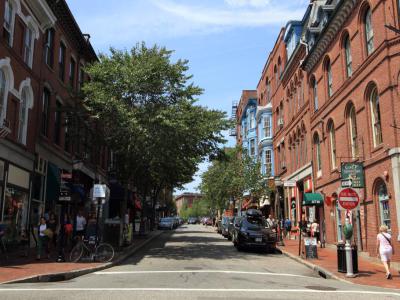
In Portland’s Old Port, Exchange Street has morphed from gritty printing press row into the neighborhood’s trendiest runway. By day, you’ll sidestep well-heeled shoppers ducking into sleek fashion boutiques, while local gems-think indie coffee spots (one even doubles as an Internet café)-brew community spirit by the cup. Since 2015, tiny dance slippers have joined the mix at Exchange Street Studio, where ballerinas pirouette above the cobblestones.
A century ago, this street was all about the press: hoisting ink-stained banners day and night. The Press Herald Building, born in 1923 at Congress Street’s corner, grew up in 1948 to house Maine’s paper of record. After a 2015 facelift, its newsprint past gave way to plush pillows and cocktails at the Press Hotel, proving that newspapers can enjoy a revamp.
Believe it or not, by the late ’60s, Exchange Street was flirting with dereliction. But gentrification swept in during the early ’70s, and now the Old Port pulses with life-film festivals, seafood shacks, and a soundtrack of clinking glasses.
Exchange Street has traded printing presses for espresso machines and shopfront windows-but it still knows how to keep the city talking.
A century ago, this street was all about the press: hoisting ink-stained banners day and night. The Press Herald Building, born in 1923 at Congress Street’s corner, grew up in 1948 to house Maine’s paper of record. After a 2015 facelift, its newsprint past gave way to plush pillows and cocktails at the Press Hotel, proving that newspapers can enjoy a revamp.
Believe it or not, by the late ’60s, Exchange Street was flirting with dereliction. But gentrification swept in during the early ’70s, and now the Old Port pulses with life-film festivals, seafood shacks, and a soundtrack of clinking glasses.
Exchange Street has traded printing presses for espresso machines and shopfront windows-but it still knows how to keep the city talking.
6) Monument Square
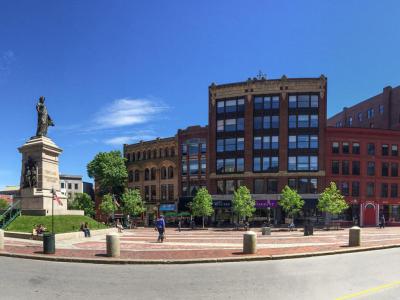
In the tangle of downtown Portland, Monument Square feels like the city’s living room-where East Bayside meets the Old Port’s salty breeze. Glance around and you’ll spot the Time & Temperature Building blinking updates, the stately Fidelity Trust Building, and the Portland Public Library’s main branch all lining up along Congress Street. Brave souls even call One Monument Square and One City Center their professional homes here.
Center stage, where old City Hall once huddled, stands the Soldiers and Sailors Monument, unveiled in 1891 to honor Maine’s Civil War heroes. Locals affectionately dub her “Our Lady of Victories”- a bronze warrior-woman draped in armor and robes, clutching a neatly furled flag in one hand and a mace and shield in the other. At her feet, trios of soldiers and sailors freeze in bronze display, forever caught between orders and the next battle.
Chisel in hand, sculptor Franklin Simmons breathed life into the figures while New York architect Richard Morris Hunt crafted the monument’s sturdy granite plinth. Portland’s own Francis H. Fassett first landscaped the grounds-though time has since sent those original flowerbeds to the history books. All things considered, Monument Square earned a spot on the National Register of Historic Places in 1998.
Pull up a bench, let the city swirl around you, and tip your hat to the legends immortalized in stone and bronze.
Center stage, where old City Hall once huddled, stands the Soldiers and Sailors Monument, unveiled in 1891 to honor Maine’s Civil War heroes. Locals affectionately dub her “Our Lady of Victories”- a bronze warrior-woman draped in armor and robes, clutching a neatly furled flag in one hand and a mace and shield in the other. At her feet, trios of soldiers and sailors freeze in bronze display, forever caught between orders and the next battle.
Chisel in hand, sculptor Franklin Simmons breathed life into the figures while New York architect Richard Morris Hunt crafted the monument’s sturdy granite plinth. Portland’s own Francis H. Fassett first landscaped the grounds-though time has since sent those original flowerbeds to the history books. All things considered, Monument Square earned a spot on the National Register of Historic Places in 1998.
Pull up a bench, let the city swirl around you, and tip your hat to the legends immortalized in stone and bronze.
7) Wadsworth-Longfellow House
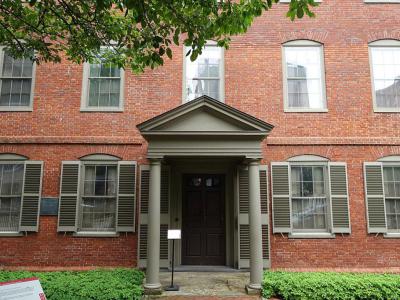
The Wadsworth–Longfellow House blends history, poetry, and over two centuries of Portland life in one address. Built between 1785 and 1786 by General Peleg Wadsworth-a Revolutionary War veteran with ten children to house-it was the city’s first all-brick residence and, remarkably, is still the oldest building standing on the peninsula. If Portland has a staying-power trophy, this place could claim it.
Originally a sturdy two-story home, it gained a third floor in the early 1800s with a Federal-style update. It also gained a future literary giant: Henry Wadsworth Longfellow. The poet moved in as an infant and spent the first 35 years of his life here, surrounded by the hum of early Portland life-a cast of family members, the warmth of fireplaces, and the kind of quiet corners any writer would remember.
After Longfellow’s time, his sister Anne Longfellow Pierce became the home’s last family resident. She guarded its Revolutionary-era spirit with care, right down to the furnishings. When she died in 1901, she left the property to the Maine Historical Society, ensuring its preservation for generations.
Today, walking through its rooms feels like leafing through chapters of American history and literary heritage at the same time. Original family belongings remain in place, the interiors reflect the era’s character, and the walls still seem to carry the energy of a young Henry at work. It’s more than an architectural relic-it’s a chance to step directly into the world that shaped one of America’s best-loved poets.
Originally a sturdy two-story home, it gained a third floor in the early 1800s with a Federal-style update. It also gained a future literary giant: Henry Wadsworth Longfellow. The poet moved in as an infant and spent the first 35 years of his life here, surrounded by the hum of early Portland life-a cast of family members, the warmth of fireplaces, and the kind of quiet corners any writer would remember.
After Longfellow’s time, his sister Anne Longfellow Pierce became the home’s last family resident. She guarded its Revolutionary-era spirit with care, right down to the furnishings. When she died in 1901, she left the property to the Maine Historical Society, ensuring its preservation for generations.
Today, walking through its rooms feels like leafing through chapters of American history and literary heritage at the same time. Original family belongings remain in place, the interiors reflect the era’s character, and the walls still seem to carry the energy of a young Henry at work. It’s more than an architectural relic-it’s a chance to step directly into the world that shaped one of America’s best-loved poets.
8) Porteous, Mitchell and Braun Company Building
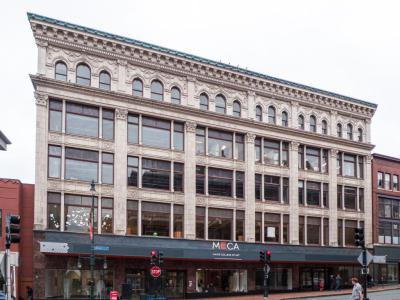
The Miller Building-better remembered by locals as the Porteous, Mitchell, and Braun Company Building-was once Portland’s temple of retail therapy, back when department stores were social events as much as shopping trips. Today it anchors the Arts District with a new purpose, housing the Maine College of Art, but its grand exterior still hints at the days of shopping bags, window displays, and Saturday crowds.
Built in 1904, it got a major glow-up in 1911 when George Burnham expanded it for the Porteous company. By 1953, it stretched all the way to Free Street, making it the city’s biggest department store. For decades, this was where you’d find everything from hats to homewares-until the store closed in 1991. Instead of the wrecking ball, the building got a second chance, restored and added to the National Register of Historic Places in 1996.
From the sidewalk, it’s hard to miss. Brick walls are trimmed with light-colored terra cotta, while big display windows line the ground floor. Above, tall vertical strips separate the upper windows, giving the building a sense of height and rhythm. The top floor changes it up with rounded windows and a decorative edge along the roofline-just enough flourish to catch your eye without going over the top.
These days, instead of cash registers and perfume counters, you’ll find easels, studios, and classrooms buzzing with creativity. The Miller Building has gone from Portland’s shopping hub to its creative heartbeat-a place that proves some addresses don’t fade from the spotlight, they just change their role.
Built in 1904, it got a major glow-up in 1911 when George Burnham expanded it for the Porteous company. By 1953, it stretched all the way to Free Street, making it the city’s biggest department store. For decades, this was where you’d find everything from hats to homewares-until the store closed in 1991. Instead of the wrecking ball, the building got a second chance, restored and added to the National Register of Historic Places in 1996.
From the sidewalk, it’s hard to miss. Brick walls are trimmed with light-colored terra cotta, while big display windows line the ground floor. Above, tall vertical strips separate the upper windows, giving the building a sense of height and rhythm. The top floor changes it up with rounded windows and a decorative edge along the roofline-just enough flourish to catch your eye without going over the top.
These days, instead of cash registers and perfume counters, you’ll find easels, studios, and classrooms buzzing with creativity. The Miller Building has gone from Portland’s shopping hub to its creative heartbeat-a place that proves some addresses don’t fade from the spotlight, they just change their role.
9) Charles Q. Clapp Block
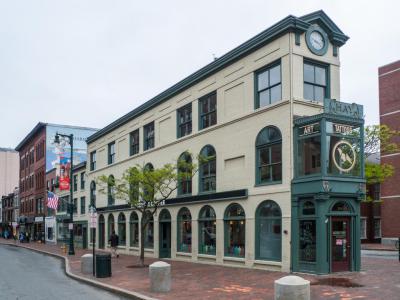
The Hay Building-better known to locals as the Charles Q. Clapp Building-is one of downtown Portland’s proud survivors. Built in 1826 by Charles Q. Clapp himself, it’s one of the city’s oldest commercial blocks, still holding its corner at the busy crossroads of Congress, High, and Free Streets. If buildings could talk, this one would probably remind its younger neighbors it was in business long before Portland even had streetcars.
The main section is three stories of pale brick with green trim, its first two floors framed by arched windows that give it a friendly, almost winking look. The third floor was added in 1922, topped with a tidy cornice that ties it all together. Sharing the block are two smaller companions-one a shorter three-story with square windows and a storefront, the other a 2½-story building with a recessed doorway and a decorative railing that’s more about looks than protection.
Originally a clean-lined Federal-style design, the building earned its lasting nickname thanks to Hay’s Pharmacy, which set up shop on the ground floor in 1841. The name stuck, even as the upper floors changed and the tenants came and went.
Now on the National Register of Historic Places, the Hay Building stands like a three-piece time capsule-part history lesson, part downtown anchor, and part reminder that Portland has been blending business and personality for nearly 200 years.
The main section is three stories of pale brick with green trim, its first two floors framed by arched windows that give it a friendly, almost winking look. The third floor was added in 1922, topped with a tidy cornice that ties it all together. Sharing the block are two smaller companions-one a shorter three-story with square windows and a storefront, the other a 2½-story building with a recessed doorway and a decorative railing that’s more about looks than protection.
Originally a clean-lined Federal-style design, the building earned its lasting nickname thanks to Hay’s Pharmacy, which set up shop on the ground floor in 1841. The name stuck, even as the upper floors changed and the tenants came and went.
Now on the National Register of Historic Places, the Hay Building stands like a three-piece time capsule-part history lesson, part downtown anchor, and part reminder that Portland has been blending business and personality for nearly 200 years.
10) Victoria Mansion (must see)
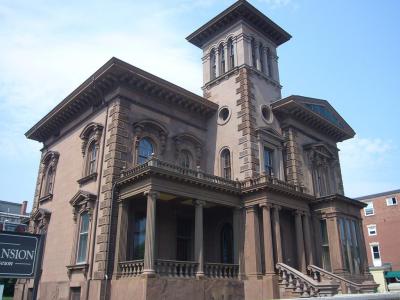
Victoria Mansion is the city’s very own architectural gem-a dazzling example of American residential design from the mid-19th century. Built in 1860 as a summer escape for Ruggles Sylvester Morse, a hotel magnate who struck it rich in New York, Boston, and New Orleans, this mansion oozes grandeur and history.
Designed by Henry Austin, this brownstone Italianate beauty got that cool, asymmetrical flair with a four-story tower, overhanging eaves, and verandas that practically beg you to relax with a cool drink. Inside, the mansion’s charm continues with intricate frescoes and three-dimensional wall art, all thanks to the talented Giuseppe Guidicini.
The mansion had a cozy family feel until 1928, when the last member of the Libby family left. After the economic hardships of the Great Depression and the disastrous 1938 Portland flood, the house faced potential demolition (seriously, a gas station was on the cards). But, thankfully, the mansion was rescued in 1941, and lovingly restored to honor its royal inspiration-Queen Victoria.
Now listed on the National Historic Register, Victoria Mansion is a museum that transports you straight back to the opulent 19th century. It's a true testament to Portland’s rich history and an absolute must-see for anyone who enjoys a bit of grandeur, with a side of history-and maybe royalty sprinkled in.
Designed by Henry Austin, this brownstone Italianate beauty got that cool, asymmetrical flair with a four-story tower, overhanging eaves, and verandas that practically beg you to relax with a cool drink. Inside, the mansion’s charm continues with intricate frescoes and three-dimensional wall art, all thanks to the talented Giuseppe Guidicini.
The mansion had a cozy family feel until 1928, when the last member of the Libby family left. After the economic hardships of the Great Depression and the disastrous 1938 Portland flood, the house faced potential demolition (seriously, a gas station was on the cards). But, thankfully, the mansion was rescued in 1941, and lovingly restored to honor its royal inspiration-Queen Victoria.
Now listed on the National Historic Register, Victoria Mansion is a museum that transports you straight back to the opulent 19th century. It's a true testament to Portland’s rich history and an absolute must-see for anyone who enjoys a bit of grandeur, with a side of history-and maybe royalty sprinkled in.

11) Eastern Promenade
The Eastern Promenade is a sprawling 68-acre public park and recreation area located on the eastern edge of the town's peninsula. Originally developed starting in 1836 and expanded through the early 20th century, the park was shaped by the renowned Olmsted Brothers landscape design firm, famed for their work on New York’s Central Park.
The Eastern Promenade is a scenic green space that provides sweeping views of Casco Bay and Portland Harbor. Deciduous trees are thoughtfully planted throughout the park to frame, rather than block, the stunning waterfront vistas. The walkway, which follows a former rail line, offers a peaceful escape from the urban core, winding along rocky shores and passing through Fort Allen Park, inviting visitors to enjoy a tranquil connection with nature.
Visitors to the Eastern Promenade can enjoy a variety of recreational amenities, including a popular 2.1-mile paved trail and East End Beach-the city’s only public beach.
The Maine Narrow Gauge Railroad Museum also calls the Promenade home, providing a charming tourist attraction. With picnic areas, playgrounds, boating ramps, and year-round events such as the annual Fourth of July celebration and outdoor concerts, the park balances active and passive recreation for visitors of all ages.
Its connections to other local trails invite extended exploration of Portland’s waterfront and neighborhoods. Leashed dogs are welcome, making the Promenade a beloved destination for locals and visitors alike seeking fresh air, natural beauty, and a vibrant community atmosphere.
The Eastern Promenade is a scenic green space that provides sweeping views of Casco Bay and Portland Harbor. Deciduous trees are thoughtfully planted throughout the park to frame, rather than block, the stunning waterfront vistas. The walkway, which follows a former rail line, offers a peaceful escape from the urban core, winding along rocky shores and passing through Fort Allen Park, inviting visitors to enjoy a tranquil connection with nature.
Visitors to the Eastern Promenade can enjoy a variety of recreational amenities, including a popular 2.1-mile paved trail and East End Beach-the city’s only public beach.
The Maine Narrow Gauge Railroad Museum also calls the Promenade home, providing a charming tourist attraction. With picnic areas, playgrounds, boating ramps, and year-round events such as the annual Fourth of July celebration and outdoor concerts, the park balances active and passive recreation for visitors of all ages.
Its connections to other local trails invite extended exploration of Portland’s waterfront and neighborhoods. Leashed dogs are welcome, making the Promenade a beloved destination for locals and visitors alike seeking fresh air, natural beauty, and a vibrant community atmosphere.
12) Portland Observatory
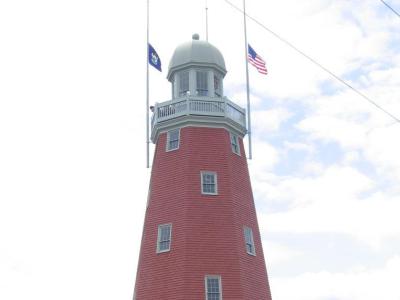
The Portland Observatory in Maine is a unique and historic maritime signal tower that has stood tall since 1807, making it the only surviving tower of its kind in the United States.
Originally built by Captain Lemuel Moody, the octagonal, seven-story structure was designed to communicate with incoming ships using both signal flags and a telescope. The observatory provided advanced warning to shipowners about approaching vessels, allowing them to prepare well before the ships reached port. The tower’s location on Munjoy Hill provided an unobstructed view of Portland Harbor, making it the perfect spot for the vital task of maritime signaling.
Standing 86 feet tall and designed with an innovative octagonal shape to withstand strong winds, the Portland Observatory is both an architectural and engineering marvel. Its heavy fieldstone base and white pine framing, reminiscent of ship masts, have kept it steady through many storms over the years.
The observatory was designated a National Historic Landmark and a National Civil Engineering Landmark in 2006, recognizing its significance in American maritime history.
Today, visitors can climb to the top of the observatory for breathtaking panoramic views of Portland and its harbor, while learning about its fascinating role in early American marine communication. The observatory, managed by Greater Portland Landmarks, serves as a museum and remains one of the most iconic historical structures in Portland.
Originally built by Captain Lemuel Moody, the octagonal, seven-story structure was designed to communicate with incoming ships using both signal flags and a telescope. The observatory provided advanced warning to shipowners about approaching vessels, allowing them to prepare well before the ships reached port. The tower’s location on Munjoy Hill provided an unobstructed view of Portland Harbor, making it the perfect spot for the vital task of maritime signaling.
Standing 86 feet tall and designed with an innovative octagonal shape to withstand strong winds, the Portland Observatory is both an architectural and engineering marvel. Its heavy fieldstone base and white pine framing, reminiscent of ship masts, have kept it steady through many storms over the years.
The observatory was designated a National Historic Landmark and a National Civil Engineering Landmark in 2006, recognizing its significance in American maritime history.
Today, visitors can climb to the top of the observatory for breathtaking panoramic views of Portland and its harbor, while learning about its fascinating role in early American marine communication. The observatory, managed by Greater Portland Landmarks, serves as a museum and remains one of the most iconic historical structures in Portland.
