Custom Walk in Syracuse, Italy by benoitboucher2853 created on 2025-10-07
Guide Location: Italy » Syracuse
Guide Type: Custom Walk
# of Sights: 9
Tour Duration: 3 Hour(s)
Travel Distance: 5.7 Km or 3.5 Miles
Share Key: YCJF6
Guide Type: Custom Walk
# of Sights: 9
Tour Duration: 3 Hour(s)
Travel Distance: 5.7 Km or 3.5 Miles
Share Key: YCJF6
How It Works
Please retrieve this walk in the GPSmyCity app. Once done, the app will guide you from one tour stop to the next as if you had a personal tour guide. If you created the walk on this website or come to the page via a link, please follow the instructions below to retrieve the walk in the app.
Retrieve This Walk in App
Step 1. Download the app "GPSmyCity: Walks in 1K+ Cities" on Apple App Store or Google Play Store.



Step 2. In the GPSmyCity app, download(or launch) the guide "Syracuse Map and Walking Tours".
Step 3. Tap the menu button located at upper right corner of the "Walks" screen and select "Retrieve custom walk". Enter the share key: YCJF6
1) Teatro Greco (Greek Theatre) (must see)
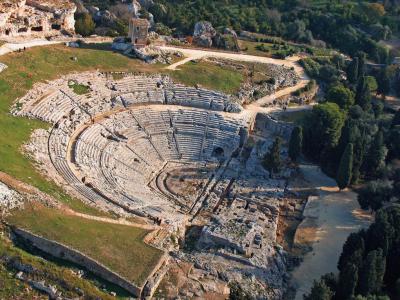
The Greek Theatre of Syracuse is one of the most impressive monuments in Syracuse and among the largest theatres ever built in the Greek world. Located within the Neapolis Archaeological Park, the theatre was first constructed in the 5th century BCE, when Syracuse was one of the most powerful Greek cities in the Mediterranean. During the 3rd century BCE, the structure was enlarged in the Hellenistic period, creating the vast theatre that visitors can explore today.
As you stand facing the monument, notice how the entire theatre is carved directly into the natural limestone hillside. The seating area, known as the cavea, forms a wide semicircle measuring about 138 meters in diameter and could hold around 15,000 spectators in antiquity. The rows of seats rise gradually up the slope and are divided by stairways into wedge-shaped sections that helped large crowds move easily through the theatre. Looking upward toward the higher rows gives a clear sense of the scale of the structure and how thousands of spectators once filled these stone seats during performances.
Take a moment to look along the seating rows and you may notice inscriptions carved directly into the stone benches. These markings likely identified specific seating sections or honored important individuals connected with the city. If you look down toward the lower part of the theatre, you can also see where the stage area once stood, where actors performed before the audience. The theatre played an important role in the cultural life of ancient Syracuse, and the famous playwright Aeschylus is known to have presented several of his tragedies here.
Although the theatre dates back more than two thousand years, it continues to be used for performances today. Each spring the monument becomes the stage for the Greek Theatre Festival of Syracuse, where ancient Greek tragedies and comedies are once again performed. Seeing modern performances take place within the same massive stone structure helps visitors imagine the powerful atmosphere that once filled the theatre when thousands of spectators gathered here in ancient times.
As you stand facing the monument, notice how the entire theatre is carved directly into the natural limestone hillside. The seating area, known as the cavea, forms a wide semicircle measuring about 138 meters in diameter and could hold around 15,000 spectators in antiquity. The rows of seats rise gradually up the slope and are divided by stairways into wedge-shaped sections that helped large crowds move easily through the theatre. Looking upward toward the higher rows gives a clear sense of the scale of the structure and how thousands of spectators once filled these stone seats during performances.
Take a moment to look along the seating rows and you may notice inscriptions carved directly into the stone benches. These markings likely identified specific seating sections or honored important individuals connected with the city. If you look down toward the lower part of the theatre, you can also see where the stage area once stood, where actors performed before the audience. The theatre played an important role in the cultural life of ancient Syracuse, and the famous playwright Aeschylus is known to have presented several of his tragedies here.
Although the theatre dates back more than two thousand years, it continues to be used for performances today. Each spring the monument becomes the stage for the Greek Theatre Festival of Syracuse, where ancient Greek tragedies and comedies are once again performed. Seeing modern performances take place within the same massive stone structure helps visitors imagine the powerful atmosphere that once filled the theatre when thousands of spectators gathered here in ancient times.
2) Anfiteatro Romano (Roman Amphitheater)
The Roman Amphitheater of Syracuse stands as a remarkable architectural creation from the early Roman Imperial era, signifying the historical significance and grandeur of ancient Syracuse. Unlike other buildings in Neapolis, this amphitheater's orientation diverges from the norm and is believed to follow the urban plan created during the late Classical age.
The road leading from the Acradina district, which reached Neapolis, extended to the amphitheater. This road was designed to enter Neapolis through a triumphal arch dating back to the Augustan era, which linked it to the Arch of Susa. Between the arch and the amphitheater, there was a grand monumental fountain supplied by a large, unidentified cistern. The amphitheater itself was fed by a large cistern located under the nearby Church of Saint Nicholas of the Rope Makers.
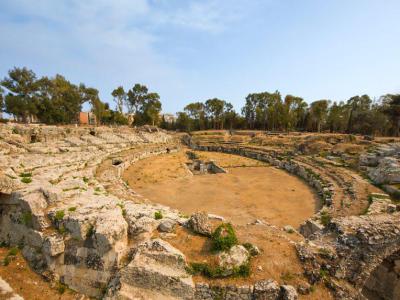
The amphitheater, which is largely excavated into the rock, utilized the slope of a rocky crag in the northeastern part of the construction. Unfortunately, little remains of the upper built section. Excavations led by the Duke of Serradifalco in 1839 brought this remarkable structure to light.
The monumental amphitheater boasts impressive dimensions, estimated to be approximately 140 meters in length and 119 meters in width. The monument features two entrances and is equipped with a complex system of stairs descending from the upper level on the exterior. The central arena features a large rectangular space that was originally covered. An underground passage connects this area with the southern end of the monument, aligning with the entrance corridor. These underground works were essential for the machinery used during the shows held at the amphitheater.
The auditorium around the arena is elevated and defined by a high podium. A covered corridor with openings for access to the gladiator and beast arena runs behind the podium. Above this, the first steps were reserved for individuals of high rank. The blocks of the parapet bear inscriptions that offer historical insights. Radiating from the annular ambulatory, a series of radial passages allowed access to the various sectors of the auditorium. The Roman Amphitheater of Syracuse represents not only a significant historical relic but also a testament to the entertainment and cultural practices of the ancient Roman world.
The road leading from the Acradina district, which reached Neapolis, extended to the amphitheater. This road was designed to enter Neapolis through a triumphal arch dating back to the Augustan era, which linked it to the Arch of Susa. Between the arch and the amphitheater, there was a grand monumental fountain supplied by a large, unidentified cistern. The amphitheater itself was fed by a large cistern located under the nearby Church of Saint Nicholas of the Rope Makers.
The amphitheater, which is largely excavated into the rock, utilized the slope of a rocky crag in the northeastern part of the construction. Unfortunately, little remains of the upper built section. Excavations led by the Duke of Serradifalco in 1839 brought this remarkable structure to light.
The monumental amphitheater boasts impressive dimensions, estimated to be approximately 140 meters in length and 119 meters in width. The monument features two entrances and is equipped with a complex system of stairs descending from the upper level on the exterior. The central arena features a large rectangular space that was originally covered. An underground passage connects this area with the southern end of the monument, aligning with the entrance corridor. These underground works were essential for the machinery used during the shows held at the amphitheater.
The auditorium around the arena is elevated and defined by a high podium. A covered corridor with openings for access to the gladiator and beast arena runs behind the podium. Above this, the first steps were reserved for individuals of high rank. The blocks of the parapet bear inscriptions that offer historical insights. Radiating from the annular ambulatory, a series of radial passages allowed access to the various sectors of the auditorium. The Roman Amphitheater of Syracuse represents not only a significant historical relic but also a testament to the entertainment and cultural practices of the ancient Roman world.
3) Orecchio di Dionisio (Ear of Dionysius) (must see)
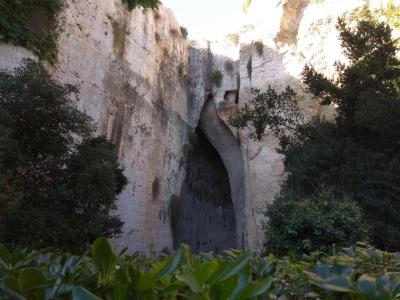
The Ear of Dionysius is one of the most intriguing natural formations within the Neapolis Archaeological Park in Syracuse. This dramatic limestone cave is famous for both its unusual shape and its remarkable acoustics. The cavern was originally created as part of an ancient stone quarry, where blocks of limestone were extracted for use in the construction of Greek Syracuse. Over time, the quarrying process produced the tall, curved chamber that visitors see today.
As you approach the cave entrance, the height of the rock walls becomes immediately noticeable. The cavern stretches roughly 65 meters in length and rises up to about 23 meters high, forming a narrow, curved interior that resembles the shape of a human ear. This distinctive form is what inspired the name “Ear of Dionysius,” a name that was popularized in the 17th century by the Italian painter Caravaggio, who visited Syracuse and reportedly thought the cave’s outline looked like an ear.
Once inside the cave, the acoustics become one of its most striking features. Even small sounds can echo dramatically through the tall chamber, traveling along the curved rock walls. This unusual acoustic effect led to a famous legend connected to Dionysius I of Syracuse, the powerful tyrant who ruled Syracuse in the 4th century BCE. According to the story, Dionysius supposedly used the cave as a prison and listened secretly from above to conversations of prisoners inside. While historians consider this tale more legend than fact, it helped give the cave its memorable name.
Standing inside the cavern, visitors can observe the towering limestone walls rising steeply overhead, while light enters from the opening above the entrance. The dramatic scale of the chamber makes it easy to understand how this space once formed part of the city’s ancient quarry system. Today the cave is one of the most visited landmarks in the archaeological park and is located close to other major monuments, including the Greek Theatre of Syracuse, allowing visitors to explore both the natural and historical features that shaped ancient Syracuse.
As you approach the cave entrance, the height of the rock walls becomes immediately noticeable. The cavern stretches roughly 65 meters in length and rises up to about 23 meters high, forming a narrow, curved interior that resembles the shape of a human ear. This distinctive form is what inspired the name “Ear of Dionysius,” a name that was popularized in the 17th century by the Italian painter Caravaggio, who visited Syracuse and reportedly thought the cave’s outline looked like an ear.
Once inside the cave, the acoustics become one of its most striking features. Even small sounds can echo dramatically through the tall chamber, traveling along the curved rock walls. This unusual acoustic effect led to a famous legend connected to Dionysius I of Syracuse, the powerful tyrant who ruled Syracuse in the 4th century BCE. According to the story, Dionysius supposedly used the cave as a prison and listened secretly from above to conversations of prisoners inside. While historians consider this tale more legend than fact, it helped give the cave its memorable name.
Standing inside the cavern, visitors can observe the towering limestone walls rising steeply overhead, while light enters from the opening above the entrance. The dramatic scale of the chamber makes it easy to understand how this space once formed part of the city’s ancient quarry system. Today the cave is one of the most visited landmarks in the archaeological park and is located close to other major monuments, including the Greek Theatre of Syracuse, allowing visitors to explore both the natural and historical features that shaped ancient Syracuse.
4) Church of San Giovanni Alle Catacombe
The Church of San Giovanni Alle Catacombe, located near the Archaeological Park Neapolis and the Madonna delle Lacrime’s Sanctuary, is an extraordinary basilica that hides subterranean treasures. This open-air church is home to the painted San Marciano’s Crypt and the San Giovanni’s Catacombs, both of which offer a unique and intriguing journey into the past of Syracuse.
The San Giovanni’s Catacombs are a network of underground tunnels, carved meticulously into the limestone rocks, creating a sacred labyrinth shrouded in silence. The catacombs have a relatively simple architectural layout. The main tunnel, known as the Decumanus Maximus, serves as the central passage, from which ten perpendicular minor tunnels, called Cardines, branch out. These minor tunnels lead to round chambers known as Rotonde, which originally served as cisterns for the ancient Greek aqueduct but were later converted into funeral chapels for prominent families.
Within these underground catacombs, one can encounter various burial types. Loculo, which refers to a rectangular niche covered by tiles or a slab of marble or stone with inscriptions, is common. Arcosolio, on the other hand, represents a more elaborate niche surrounded by an arch carved into the limestone rock. Forma denotes a space excavated on the floor of the tunnels, typically used when space or resources were limited.
One particular grave inside one of the minor tunnels stands out. It features a niche covered by a stone slab with three holes, evoking an ancient pagan ritual known as "Refrigerium" or "refreshment." During this funeral feast, offerings of wine, milk, and honey were poured through the holes to honor the departed, ensuring their transition to eternal life.
One of the most significant archaeological discoveries within these catacombs occurred in 1872 when the archaeologist Saverio Cavallari found the Sarcophagus of Adelfia in a Rotonda. This is considered one of the most important and ancient pieces of evidence related to early Christianity. It is dedicated to a lady, the wife of Count Valerio, a high imperial official. The sarcophagus features a marble bas-relief depicting the lady and her husband, with a rich decoration of biblical scenes. Notably, it includes the Nativity, considered "the oldest Manger scene in the world."
The catacombs' tunnel walls have yielded several inscriptions that offer valuable iconographic, historical, and social insights. For instance, the inscription of Euskia, discovered in 1894 by the archaeologist Paolo Orsi, represents the oldest evidence of devotion and worship to Santa Lucia in Syracuse.
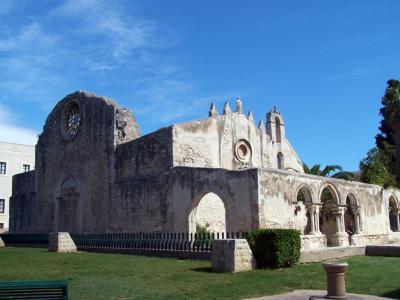
The Basilica named after San Giovanni Evangelista is a captivating architectural creation with a striking white limestone rose window and an elegant porch adorned with various decorations from different eras, creating a harmonious blend of styles. According to tradition, it was constructed in the 6th century by the Byzantines. The original church featured a large rectory and three wide naves, although only remnants of the original columns remain today.
The San Giovanni’s Catacombs are a network of underground tunnels, carved meticulously into the limestone rocks, creating a sacred labyrinth shrouded in silence. The catacombs have a relatively simple architectural layout. The main tunnel, known as the Decumanus Maximus, serves as the central passage, from which ten perpendicular minor tunnels, called Cardines, branch out. These minor tunnels lead to round chambers known as Rotonde, which originally served as cisterns for the ancient Greek aqueduct but were later converted into funeral chapels for prominent families.
Within these underground catacombs, one can encounter various burial types. Loculo, which refers to a rectangular niche covered by tiles or a slab of marble or stone with inscriptions, is common. Arcosolio, on the other hand, represents a more elaborate niche surrounded by an arch carved into the limestone rock. Forma denotes a space excavated on the floor of the tunnels, typically used when space or resources were limited.
One particular grave inside one of the minor tunnels stands out. It features a niche covered by a stone slab with three holes, evoking an ancient pagan ritual known as "Refrigerium" or "refreshment." During this funeral feast, offerings of wine, milk, and honey were poured through the holes to honor the departed, ensuring their transition to eternal life.
One of the most significant archaeological discoveries within these catacombs occurred in 1872 when the archaeologist Saverio Cavallari found the Sarcophagus of Adelfia in a Rotonda. This is considered one of the most important and ancient pieces of evidence related to early Christianity. It is dedicated to a lady, the wife of Count Valerio, a high imperial official. The sarcophagus features a marble bas-relief depicting the lady and her husband, with a rich decoration of biblical scenes. Notably, it includes the Nativity, considered "the oldest Manger scene in the world."
The catacombs' tunnel walls have yielded several inscriptions that offer valuable iconographic, historical, and social insights. For instance, the inscription of Euskia, discovered in 1894 by the archaeologist Paolo Orsi, represents the oldest evidence of devotion and worship to Santa Lucia in Syracuse.
The Basilica named after San Giovanni Evangelista is a captivating architectural creation with a striking white limestone rose window and an elegant porch adorned with various decorations from different eras, creating a harmonious blend of styles. According to tradition, it was constructed in the 6th century by the Byzantines. The original church featured a large rectory and three wide naves, although only remnants of the original columns remain today.
5) Fountain of Diana
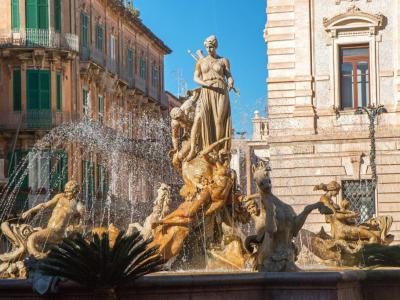
The Fountain of Diana, located in the picturesque Archimedes Square in Ortigia, is a splendid masterpiece that graces the heart of this historic city. Erected in a remarkably swift ten months in 1906, this fountain is a product of creativity and craftsmanship, brought to life by the talented sculptor Giulio Moschetti, with the collaboration of his son, Mario.
This magnificent fountain is a testament to artistic eclecticism, combining classical Greco-Roman elements with naturalism. It pays homage to one of Syracuse's most renowned myths, that of the Fountain of Arethusa. The mythical water source of Arethusa is ingeniously connected to this fountain, albeit through an artificial spring.
The centerpiece of the fountain is an imposing monolithic tub, adorned with masks and coats of arms on its four sides. Yet it is the figure at the pinnacle that commands attention. Standing on a cliff-like pedestal, Diana, or Artemis in Greek mythology, takes her place with a bow, quiver, and her trusty canine companion. The representation of Diana is said to have been modeled after a Syracusan woman.
At Diana's feet, the nymph Arethusa, a central figure in the myth, is portrayed at the very moment when the goddess Artemis is about to transform her into a spring. This transformation is meant to protect Arethusa from the ardent advances of Alpheus, who is depicted on the left, bewildered by the metamorphosis unfolding before his eyes.
Within the basin of the fountain, four sculptural groups add to the enchantment. A Triton, a mythological sea god, along with his partner cradle a baby in their arms as they ride a sea monster known as a pistrice, characterized by its snake-like tail. Two teenage Tritons, astride two seahorses, complete the scene. These mythical beings symbolize the sea, a fitting representation given that the narrative concludes in this elemental domain.
This magnificent fountain is a testament to artistic eclecticism, combining classical Greco-Roman elements with naturalism. It pays homage to one of Syracuse's most renowned myths, that of the Fountain of Arethusa. The mythical water source of Arethusa is ingeniously connected to this fountain, albeit through an artificial spring.
The centerpiece of the fountain is an imposing monolithic tub, adorned with masks and coats of arms on its four sides. Yet it is the figure at the pinnacle that commands attention. Standing on a cliff-like pedestal, Diana, or Artemis in Greek mythology, takes her place with a bow, quiver, and her trusty canine companion. The representation of Diana is said to have been modeled after a Syracusan woman.
At Diana's feet, the nymph Arethusa, a central figure in the myth, is portrayed at the very moment when the goddess Artemis is about to transform her into a spring. This transformation is meant to protect Arethusa from the ardent advances of Alpheus, who is depicted on the left, bewildered by the metamorphosis unfolding before his eyes.
Within the basin of the fountain, four sculptural groups add to the enchantment. A Triton, a mythological sea god, along with his partner cradle a baby in their arms as they ride a sea monster known as a pistrice, characterized by its snake-like tail. Two teenage Tritons, astride two seahorses, complete the scene. These mythical beings symbolize the sea, a fitting representation given that the narrative concludes in this elemental domain.
6) Cathedral of Syracuse (must see)
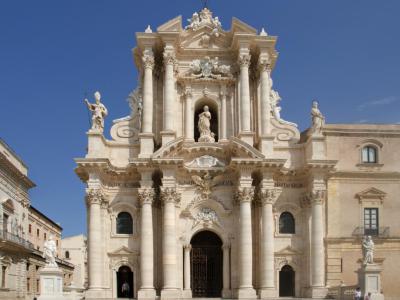
The Syracuse Cathedral stands at the center of Cathedral Square in the historic district of Ortigia, one of the most striking historic settings in Syracuse. The cathedral forms part of the UNESCO World Heritage Site, which recognizes the Baroque cities rebuilt after the destructive 1693 Sicily earthquake. What makes the building especially remarkable is that it incorporates the structure of an ancient Greek temple dedicated to Athena, constructed in the 5th century BCE during the height of Greek Syracuse.
From the square, look at the cathedral’s elegant Baroque façade, completed in the 18th century during the rebuilding of the city. At the top stands a statue of the Virgin Mary, while on the upper level you can see statues of Saint Marcian on the left and Saint Lucy on the right. At street level, framing the entrance, stand the figures of Saint Peter on the left and Saint Paul on the right. These sculptures were created by the Sicilian artist Ignazio Marabitti, and they form part of the carefully balanced design of the façade.
Once inside, the massive Doric columns of the ancient Temple of Athena immediately become the main highlight of the cathedral. These enormous stone columns still stand in their original positions along the sides of the building. When the temple was converted into a Christian church in the 7th century, the spaces between the columns were filled with masonry, transforming the open temple into a basilica while preserving its original structural framework. The same columns can also be seen outside along the northern wall on Minerva Street, where the large Doric column drums project from the later medieval walls.
Walking through the main nave, notice the marble floor decorated with geometric patterns. Parts of this floor date back to 1444, while other sections were added during renovations in the late eighteenth century. In the center of the nave a large arch frames a wooden crucifix from the twentieth century. At the far end stands the Baroque presbytery and high altar, which rests on a remarkable historical element: a table made from a large stone block taken from the entablature of the ancient Greek temple, which collapsed during the earthquake of 1693. Standing here, you are literally looking at pieces of the original temple that once stood on this site more than 2,400 years ago, reused as part of the modern day cathedral.
From the square, look at the cathedral’s elegant Baroque façade, completed in the 18th century during the rebuilding of the city. At the top stands a statue of the Virgin Mary, while on the upper level you can see statues of Saint Marcian on the left and Saint Lucy on the right. At street level, framing the entrance, stand the figures of Saint Peter on the left and Saint Paul on the right. These sculptures were created by the Sicilian artist Ignazio Marabitti, and they form part of the carefully balanced design of the façade.
Once inside, the massive Doric columns of the ancient Temple of Athena immediately become the main highlight of the cathedral. These enormous stone columns still stand in their original positions along the sides of the building. When the temple was converted into a Christian church in the 7th century, the spaces between the columns were filled with masonry, transforming the open temple into a basilica while preserving its original structural framework. The same columns can also be seen outside along the northern wall on Minerva Street, where the large Doric column drums project from the later medieval walls.
Walking through the main nave, notice the marble floor decorated with geometric patterns. Parts of this floor date back to 1444, while other sections were added during renovations in the late eighteenth century. In the center of the nave a large arch frames a wooden crucifix from the twentieth century. At the far end stands the Baroque presbytery and high altar, which rests on a remarkable historical element: a table made from a large stone block taken from the entablature of the ancient Greek temple, which collapsed during the earthquake of 1693. Standing here, you are literally looking at pieces of the original temple that once stood on this site more than 2,400 years ago, reused as part of the modern day cathedral.
7) La Piazza Duomo (Cathedral Square) (must see)
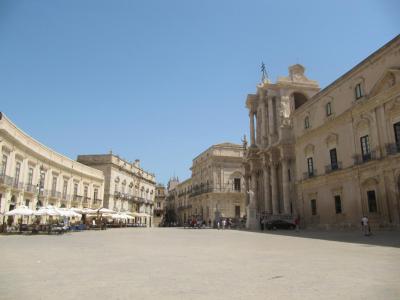
Cathedral Square is the historic heart of Ortigia, the island district that forms the oldest part of Syracuse. Surrounded by elegant historic buildings and important religious monuments, the square is widely considered one of the most beautiful public spaces in Sicily.
Much of its present appearance dates from the rebuilding that followed the devastating 1693 Sicily earthquake, when many cities in southeastern Sicily were reconstructed in the distinctive Sicilian Baroque architectural style. This style is recognizable for its dramatic façades, curved architectural lines, richly carved balconies, sculpted stone decorations, and elaborate window frames that give buildings a lively, almost theatrical appearance.
Along the northern side of the square, you may notice the elegant Beneventano del Bosco Palace, an aristocratic residence whose decorative balconies and refined stonework are characteristic examples of Sicilian Baroque design. The palace contributes to the harmonious architectural composition of the square and reflects the wealth and status of the noble families who once lived here.
On the eastern side of the square, the façade of Syracuse Cathedral becomes the most prominent landmark in the area. Built on the remains of a Greek temple dedicated to Athena from the 5th century BCE, the cathedral combines ancient Greek structure with later Baroque architecture. The open space of the square allows the building’s façade to be seen clearly from several points, making it the visual centerpiece of the square.
Toward the southern side of the cathedral, the Archbishop’s Palace forms part of the architectural ensemble that defines this side of the square. Nearby, along the southern edge of the square, stands the Saint Lucy Church at the Abbey, dedicated to Saint Lucy, the patron saint of Syracuse. Together, these buildings create a carefully balanced arrangement of churches and palaces that gives Cathedral Square its distinctive historic character.
Standing somewhere within the square, it is easy to notice the pale limestone paving and the warm-colored façades that surround the open space. The square has a gently curved shape that creates changing perspectives of the cathedral and the surrounding buildings as you move through it. During the day the sunlight reflects strongly off the pale stone, while in the evening the illuminated façades and nearby cafés create a lively yet relaxed atmosphere in the historic center of Syracuse.
Much of its present appearance dates from the rebuilding that followed the devastating 1693 Sicily earthquake, when many cities in southeastern Sicily were reconstructed in the distinctive Sicilian Baroque architectural style. This style is recognizable for its dramatic façades, curved architectural lines, richly carved balconies, sculpted stone decorations, and elaborate window frames that give buildings a lively, almost theatrical appearance.
Along the northern side of the square, you may notice the elegant Beneventano del Bosco Palace, an aristocratic residence whose decorative balconies and refined stonework are characteristic examples of Sicilian Baroque design. The palace contributes to the harmonious architectural composition of the square and reflects the wealth and status of the noble families who once lived here.
On the eastern side of the square, the façade of Syracuse Cathedral becomes the most prominent landmark in the area. Built on the remains of a Greek temple dedicated to Athena from the 5th century BCE, the cathedral combines ancient Greek structure with later Baroque architecture. The open space of the square allows the building’s façade to be seen clearly from several points, making it the visual centerpiece of the square.
Toward the southern side of the cathedral, the Archbishop’s Palace forms part of the architectural ensemble that defines this side of the square. Nearby, along the southern edge of the square, stands the Saint Lucy Church at the Abbey, dedicated to Saint Lucy, the patron saint of Syracuse. Together, these buildings create a carefully balanced arrangement of churches and palaces that gives Cathedral Square its distinctive historic character.
Standing somewhere within the square, it is easy to notice the pale limestone paving and the warm-colored façades that surround the open space. The square has a gently curved shape that creates changing perspectives of the cathedral and the surrounding buildings as you move through it. During the day the sunlight reflects strongly off the pale stone, while in the evening the illuminated façades and nearby cafés create a lively yet relaxed atmosphere in the historic center of Syracuse.

8) Fonte Aretusa (Fountain of Arethusa)
The Fountain of Arethusa is a natural spring located on the enchanting island of Ortigia, which forms the historical center of Syracuse. Steeped in Greek mythology and literary references, this freshwater spring holds a special place in the heart of the city.
According to ancient Greek mythology, the fountain is where the nymph Arethusa, the revered patron figure of ancient Syracuse, emerged to the earth's surface after fleeing from her undersea abode in Arcadia. This tale of her transformation is interwoven with the very essence of Syracuse's identity.
Throughout the annals of literature, the Fountain of Arethusa has made numerous appearances, leaving its mark on the works of celebrated writers. Notable references can be found in John Milton's pastoral elegy Lycidas and his masque Arcades. Alexander Pope mentioned it in his satirical masterpiece The Dunciad, while William Wordsworth's blank verse poem The Prelude also pays homage to this natural wonder.
The illustrious Virgil, in his 10th Eclogue, and Theocritus, in his pastoral poem Idylls, both acknowledged the fountain. In Virgil's poetic vision, the nymph Arethusa served as the muse for bucolic and pastoral poetry.
Even Herman Melville, the author of Moby-Dick, was captivated by the Fountain of Arethusa. In his writings, he alludes to the belief that the fountain's waters originated from the Holy Land, adding to its mystique.
The Fountain of Arethusa, along with the Ciane River south of Syracuse and the Fiume Freddo River in the province of Catania, holds the unique distinction of being one of the only places in Europe where papyrus plants flourish. This botanical rarity adds to the allure of the fountain's natural beauty.
Today, the Fountain of Arethusa stands as one of Syracuse's most visited and cherished sites. It represents not only a source of freshwater but also a connection to the city's ancient mythology and literary heritage. In the company of Saint Lucy, it symbolizes the city's motto, the City of Water and Light, resonating with the spirit of Syracuse and all those who visit this extraordinary place.
According to ancient Greek mythology, the fountain is where the nymph Arethusa, the revered patron figure of ancient Syracuse, emerged to the earth's surface after fleeing from her undersea abode in Arcadia. This tale of her transformation is interwoven with the very essence of Syracuse's identity.
Throughout the annals of literature, the Fountain of Arethusa has made numerous appearances, leaving its mark on the works of celebrated writers. Notable references can be found in John Milton's pastoral elegy Lycidas and his masque Arcades. Alexander Pope mentioned it in his satirical masterpiece The Dunciad, while William Wordsworth's blank verse poem The Prelude also pays homage to this natural wonder.
The illustrious Virgil, in his 10th Eclogue, and Theocritus, in his pastoral poem Idylls, both acknowledged the fountain. In Virgil's poetic vision, the nymph Arethusa served as the muse for bucolic and pastoral poetry.
Even Herman Melville, the author of Moby-Dick, was captivated by the Fountain of Arethusa. In his writings, he alludes to the belief that the fountain's waters originated from the Holy Land, adding to its mystique.
The Fountain of Arethusa, along with the Ciane River south of Syracuse and the Fiume Freddo River in the province of Catania, holds the unique distinction of being one of the only places in Europe where papyrus plants flourish. This botanical rarity adds to the allure of the fountain's natural beauty.
Today, the Fountain of Arethusa stands as one of Syracuse's most visited and cherished sites. It represents not only a source of freshwater but also a connection to the city's ancient mythology and literary heritage. In the company of Saint Lucy, it symbolizes the city's motto, the City of Water and Light, resonating with the spirit of Syracuse and all those who visit this extraordinary place.
9) Castello Maniace (Maniace Castle)
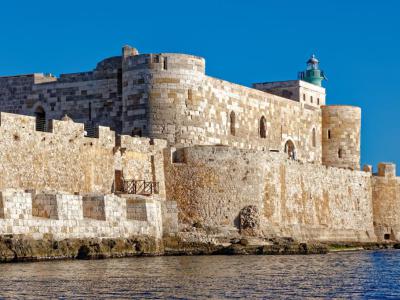
Maniace Castle, a magnificent citadel and fortress, stands as a remarkable testament to the region's rich history. Situated at the easternmost point of the Ortigia island promontory, this imposing fortress has played a pivotal role in the city's past and remains a captivating tourist attraction.
The castle owes its name to George Maniakes, a Byzantine general who laid siege to and captured Syracuse in 1038. The origins of this fortress can be traced back to that very moment. The castle was constructed under the reign of Emperor Frederick II between 1232 and 1240. Its design and construction are attributed to Frederick II's architect, Riccardo da Lentini.
Originally, the only way to enter the castle was across a bridge that spanned a moat, although the moat has since been filled. A distinguishing feature of the castle is its intricately adorned portal, which hints at the grandeur that awaits inside.
Throughout its storied history, Maniace Castle has served various purposes. In 1038, George Maniakes, who later became the Catepan of Italy, erected the first fortification on this site after capturing Syracuse from the Arabs on behalf of the Byzantine Emperor Michael IV. In 1288, King Peter III of Aragon and his family resided here.
During the tumultuous War of the Sicilian Vespers, the fortress assumed a central role in the defense of the city. In 1298, it withstood a relentless assault by an Angevin–Aragonese fleet, bravely defending Syracuse during the Angevin invasion of Sicily.
Throughout the centuries, Maniace Castle also served as a residence for numerous Queens of Sicily from 1305 to 1536. In the 15th century, it had a stint as a prison. Later, during the 16th century, it became part of the fortifications that safeguarded the harbor and the city itself.
The castle did not escape the ravages of time, and in 1704, a massive explosion caused considerable damage. Nevertheless, it was meticulously restored and adapted to accommodate the use of firearms. Today, Maniace Castle offers an open door to history, welcoming visitors to explore its centuries-old walls and gain insight into its many roles in Syracuse's past.
The castle owes its name to George Maniakes, a Byzantine general who laid siege to and captured Syracuse in 1038. The origins of this fortress can be traced back to that very moment. The castle was constructed under the reign of Emperor Frederick II between 1232 and 1240. Its design and construction are attributed to Frederick II's architect, Riccardo da Lentini.
Originally, the only way to enter the castle was across a bridge that spanned a moat, although the moat has since been filled. A distinguishing feature of the castle is its intricately adorned portal, which hints at the grandeur that awaits inside.
Throughout its storied history, Maniace Castle has served various purposes. In 1038, George Maniakes, who later became the Catepan of Italy, erected the first fortification on this site after capturing Syracuse from the Arabs on behalf of the Byzantine Emperor Michael IV. In 1288, King Peter III of Aragon and his family resided here.
During the tumultuous War of the Sicilian Vespers, the fortress assumed a central role in the defense of the city. In 1298, it withstood a relentless assault by an Angevin–Aragonese fleet, bravely defending Syracuse during the Angevin invasion of Sicily.
Throughout the centuries, Maniace Castle also served as a residence for numerous Queens of Sicily from 1305 to 1536. In the 15th century, it had a stint as a prison. Later, during the 16th century, it became part of the fortifications that safeguarded the harbor and the city itself.
The castle did not escape the ravages of time, and in 1704, a massive explosion caused considerable damage. Nevertheless, it was meticulously restored and adapted to accommodate the use of firearms. Today, Maniace Castle offers an open door to history, welcoming visitors to explore its centuries-old walls and gain insight into its many roles in Syracuse's past.
