Custom Walk in Xian, China by bobcatdudes_824c2 created on 2025-11-24
Guide Location: China » Xian
Guide Type: Custom Walk
# of Sights: 7
Tour Duration: 5 Hour(s)
Travel Distance: 14.6 Km or 9.1 Miles
Share Key: WLVFB
Guide Type: Custom Walk
# of Sights: 7
Tour Duration: 5 Hour(s)
Travel Distance: 14.6 Km or 9.1 Miles
Share Key: WLVFB
How It Works
Please retrieve this walk in the GPSmyCity app. Once done, the app will guide you from one tour stop to the next as if you had a personal tour guide. If you created the walk on this website or come to the page via a link, please follow the instructions below to retrieve the walk in the app.
Retrieve This Walk in App
Step 1. Download the app "GPSmyCity: Walks in 1K+ Cities" on Apple App Store or Google Play Store.



Step 2. In the GPSmyCity app, download(or launch) the guide "Xian Map and Walking Tours".
Step 3. Tap the menu button located at upper right corner of the "Walks" screen and select "Retrieve custom walk". Enter the share key: WLVFB
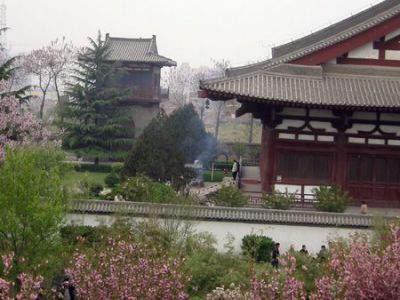
1) Green Dragon Temple
The Qinglong Si, also known as the Green Dragon Temple, dates back to the Tang Dynasty era, spanning from 618 to 907. This temple gained renown as a training hub for Buddhist monks and became a sought-after learning center for Japanese monks eager to study Buddhism. Its prominence in Japan is largely attributed to the Japanese monk Kukai, who studied there in 806 and played a pivotal role in popularizing Buddhism in Japan upon his return.
The original structure of the temple was destroyed, leading to the construction of a new one in 1963. Today, the temple, along with its gardens and halls, is a popular site, especially among Japanese tourists. They are particularly drawn to the cherry trees that blossom from March to May, varying slightly each year due to climatic changes.
In close proximity to the temple, there's a monument dedicated to Kukai, built recently, along with exhibition halls, remnants of Tang-era artifacts, and the picturesque cherry trees. The temple complex is divided into three main areas. The first includes a pond and a garden adorned with plum and cherry trees. The eastern section houses a memorial for Kukai, established in 1982 to mark the 1178th anniversary of his arrival in China.
The western part features a replica of the temple’s main hall, a collaborative project between Japan's Shingon Sect and the city of Xi'an, initiated in 1984. This hall was reconstructed to mirror the original Tang-era design, as determined by archaeological findings. The Shingon religion, founded by Kukai, continues to be a significant religious practice in Japan.
The original structure of the temple was destroyed, leading to the construction of a new one in 1963. Today, the temple, along with its gardens and halls, is a popular site, especially among Japanese tourists. They are particularly drawn to the cherry trees that blossom from March to May, varying slightly each year due to climatic changes.
In close proximity to the temple, there's a monument dedicated to Kukai, built recently, along with exhibition halls, remnants of Tang-era artifacts, and the picturesque cherry trees. The temple complex is divided into three main areas. The first includes a pond and a garden adorned with plum and cherry trees. The eastern section houses a memorial for Kukai, established in 1982 to mark the 1178th anniversary of his arrival in China.
The western part features a replica of the temple’s main hall, a collaborative project between Japan's Shingon Sect and the city of Xi'an, initiated in 1984. This hall was reconstructed to mirror the original Tang-era design, as determined by archaeological findings. The Shingon religion, founded by Kukai, continues to be a significant religious practice in Japan.
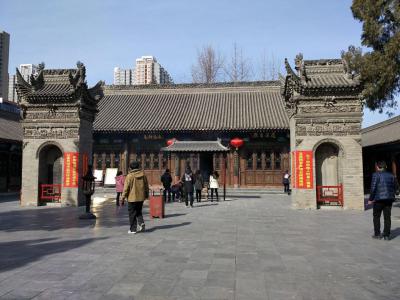
2) Baxian An Temple
Baxian An Temple, or "The Eight Immortals Temple", is situated on the outskirts of Xian. It is the biggest and most popular Taoist temple in the city. The Eight Immortals represent characters of Chinese mythology, especially esteemed by the Taoists. Each Immortal possesses a supernatural power that can either give life or annihilate evil.
The Ba Xian Temple covers an area of 73,000 square meters. It has five halls in the entrance dedicated to the Taoist Protector Deity, Wang Lingguan. The next section has two halls. The hall at the back has painted figures of the eight immortals, Han Zhongli, Zhang Guolao, Han Xiangzi, Tieguai Li, Cao Guojiu, Lv Dongbin, Lan Caihe and He Xiangu who are regarded as guardian angels. The third section has the main hall where sacrifices were made to important Taoist deities. Taoist monks still reside in the nearby monastery and perform rituals here even today.
The Ba Xian Temple covers an area of 73,000 square meters. It has five halls in the entrance dedicated to the Taoist Protector Deity, Wang Lingguan. The next section has two halls. The hall at the back has painted figures of the eight immortals, Han Zhongli, Zhang Guolao, Han Xiangzi, Tieguai Li, Cao Guojiu, Lv Dongbin, Lan Caihe and He Xiangu who are regarded as guardian angels. The third section has the main hall where sacrifices were made to important Taoist deities. Taoist monks still reside in the nearby monastery and perform rituals here even today.

3) Wang Ji Temple
Wang Ji Temple, located in the historic center of Xi'an, serves as a testament to the city's rich cultural and historical heritage. Among the numerous significant historical sites in Xi'an, Wang Ji Temple stands out as a well-known landmark. Despite its modest size, the temple holds immense beauty and historical significance. It was built in 705 and was the brainchild of Princess Taiping, a notable figure in Chinese history.
The temple's establishment was not merely an expression of devotion but also carried political significance during its heyday. It functioned as more than just a religious sanctuary; it was a hub for nurturing and developing political ideas and strategies. Wang Ji Temple's dedication to Empress Wu Zetian, Princess Taiping's mother, adds another layer to its historical importance. Empress Wu Zetian, a prominent figure in Chinese history, was renowned for her influential reign.
The name "Wang Ji Temple" itself is rich in cultural meaning, derived from the Classical Chinese phrase "wang ji," which translates to "unlimited gratitude." This name reflects the deep respect and reverence Princess Taiping held for her mother, symbolizing the enduring gratitude and honor she wished to bestow upon her. Today, Wang Ji Temple stands not only as a beautiful architectural masterpiece but also as a significant representation of Xi'an's historical and cultural tapestry.
The temple's establishment was not merely an expression of devotion but also carried political significance during its heyday. It functioned as more than just a religious sanctuary; it was a hub for nurturing and developing political ideas and strategies. Wang Ji Temple's dedication to Empress Wu Zetian, Princess Taiping's mother, adds another layer to its historical importance. Empress Wu Zetian, a prominent figure in Chinese history, was renowned for her influential reign.
The name "Wang Ji Temple" itself is rich in cultural meaning, derived from the Classical Chinese phrase "wang ji," which translates to "unlimited gratitude." This name reflects the deep respect and reverence Princess Taiping held for her mother, symbolizing the enduring gratitude and honor she wished to bestow upon her. Today, Wang Ji Temple stands not only as a beautiful architectural masterpiece but also as a significant representation of Xi'an's historical and cultural tapestry.
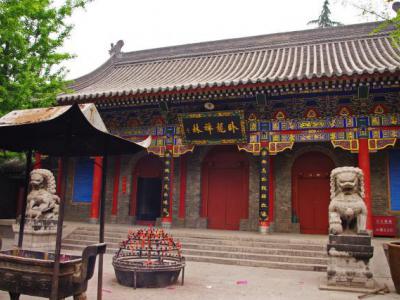
4) Wolong Temple (Sleeping Dragon Temple)
The Wolong Temple is a Chinese Buddhist temple located one block north of the Forest of Stone Steles Museum in Xian. Wo Long means Sleeping Dragon and the temple is also called the Sleeping Dragon Temple.
The Wolong Temple was built over 1800 years ago during the reign of Emperor Lingdi of the Han Dynasty between 168 and 189 AD according to the details recorded in a stone stele. It was called the Fu Ying Chan Yuan temple during the reign of the Sui Dynasty. During the reign of the Tang Dynasty, a painting of Guanyin, Bodhisattva associated with compassion, by artist Wu Doazi was installed here and the temple's name was changed to the Guanyin temple. It got its present name, Wolong Temple, between 976 and 997 when during the reign the emperor Taizong of the Song Dynasty. The name was that of a revered Buddhist monk who rested within the temple after his many travels.
In 1901, the Emperor Guagxu and the Empress Dowager Cixi fled to Xian after the Boxer Rebellion. They expanded the temple and ordered statues from Mongolia and Tibet. There is also a large bell cast in the year 1033. The recently restored Wolong Temple continues to be an active place of worship for Buddhists in Xian.
The Wolong Temple was built over 1800 years ago during the reign of Emperor Lingdi of the Han Dynasty between 168 and 189 AD according to the details recorded in a stone stele. It was called the Fu Ying Chan Yuan temple during the reign of the Sui Dynasty. During the reign of the Tang Dynasty, a painting of Guanyin, Bodhisattva associated with compassion, by artist Wu Doazi was installed here and the temple's name was changed to the Guanyin temple. It got its present name, Wolong Temple, between 976 and 997 when during the reign the emperor Taizong of the Song Dynasty. The name was that of a revered Buddhist monk who rested within the temple after his many travels.
In 1901, the Emperor Guagxu and the Empress Dowager Cixi fled to Xian after the Boxer Rebellion. They expanded the temple and ordered statues from Mongolia and Tibet. There is also a large bell cast in the year 1033. The recently restored Wolong Temple continues to be an active place of worship for Buddhists in Xian.
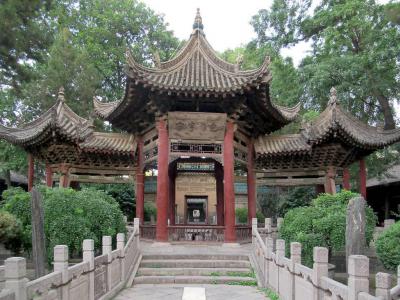
5) Great Mosque (must see)
The Great Mosque in Xian is the place of worship of the Muslim population. It is the oldest, largest and best preserved mosque in China.
The Great Mosque was built in Xian during the reign of the Tang Dynasty in 742 AD. Several additions were made to the original structure during the reigns of the Song, Yuan, Ming and Qing Dynasties. Xian is located at the beginning of the historic Silk Route and Muslim traders from other parts of Asia came here for purchasing silk and selling products from their respective countries.
The Great Mosque has a traditional Chinese design unlike those in Arabia and Persia. There are no minarets. The Mosque complex covers an area of 6000 square meters and has four courtyards. The first courtyard has a tile covered wooden arch constructed in the 17th century. There are chambers on either side with furniture dating back to the Ming and Qing Dynasties. The second courtyard has a stone arch and steles engraved with calligraphy. The main prayer hall with enough space to accommodate a thousand worshippers is found in the fourth courtyard. It is the only mosque open to visitors in China. Non Muslims are not permitted to visit the main prayer hall when prayer is in session.
The Great Mosque was built in Xian during the reign of the Tang Dynasty in 742 AD. Several additions were made to the original structure during the reigns of the Song, Yuan, Ming and Qing Dynasties. Xian is located at the beginning of the historic Silk Route and Muslim traders from other parts of Asia came here for purchasing silk and selling products from their respective countries.
The Great Mosque has a traditional Chinese design unlike those in Arabia and Persia. There are no minarets. The Mosque complex covers an area of 6000 square meters and has four courtyards. The first courtyard has a tile covered wooden arch constructed in the 17th century. There are chambers on either side with furniture dating back to the Ming and Qing Dynasties. The second courtyard has a stone arch and steles engraved with calligraphy. The main prayer hall with enough space to accommodate a thousand worshippers is found in the fourth courtyard. It is the only mosque open to visitors in China. Non Muslims are not permitted to visit the main prayer hall when prayer is in session.
6) City God Temple
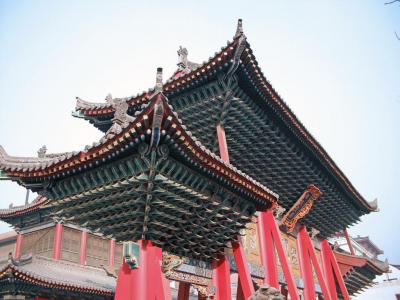
In many Chinese cities, there is a template dedicated the city god. The City God Temple in Xian is one of the largest city god temples in China. Located on West Avenue, just a short walk away from the Drum Tower, it is one of the only two remaining Taoist temples inside the walled old city.
The current temple was built in 1432 during the Ming Dynasty. Over time additional buildings were added to provide ancillary functions. Today the City God Temple complex includes an archway, the Pavilion of the God of Literature, the Gate of Etiquette, the Hall of Birth Year, the Hall of Fire God, and a number of other buildings.
The temple was damaged during World War II and again during the Cultural Revolution in 1960s. But it has since been beautifully restored. The temple is free to enter and you are free to wander around, but please be respectful to the worshipers there since it is an active temple.
The current temple was built in 1432 during the Ming Dynasty. Over time additional buildings were added to provide ancillary functions. Today the City God Temple complex includes an archway, the Pavilion of the God of Literature, the Gate of Etiquette, the Hall of Birth Year, the Hall of Fire God, and a number of other buildings.
The temple was damaged during World War II and again during the Cultural Revolution in 1960s. But it has since been beautifully restored. The temple is free to enter and you are free to wander around, but please be respectful to the worshipers there since it is an active temple.
7) Daxingshan Temple
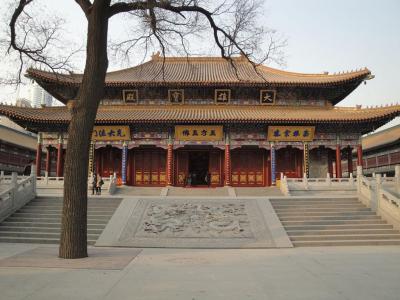
The Daxingshan Temple is one of the oldest Buddhist temples in China. The present structure is the result of large scale restorations in the 20th century.
The Daxingshan Temple was built during the reign of the Western Jin Dynasty. It gained importance during the reign of the Sui and Tang Dynasties when Buddhism was the state religion. Many Indian Buddhist monks came to the city to translate texts and to spread their religion among the locals. It became one of three temples in China dedicated solely to the translation of Buddhist texts. The teachings were passed on to the Mizong Buddhist sect and the temple became the birthplace of the sect. Most of the original buildings were destroyed between 841 and 845. The present structure was restored between 1955 and 1983.
The interiors of the Daxingshan Temple today have many Qing Dynasty features. There is a Mountain Gate, a Devaraja Hall flanked by the figures of the four heavenly kings, the Mahavira Hall, the Bell and Drum Towers and the Kwan Yin Palace. A wooden statue of Maitreya Buddha stands in the center of the Devaraja Hall. The Kwan Yin Palace has a sandalwood statue of Kwan Yin with a thousand hands. The temple is an active one and worshippers throng the building during Buddhist festivals. The area around the temple has been converted into a small tranquil park.
The Daxingshan Temple was built during the reign of the Western Jin Dynasty. It gained importance during the reign of the Sui and Tang Dynasties when Buddhism was the state religion. Many Indian Buddhist monks came to the city to translate texts and to spread their religion among the locals. It became one of three temples in China dedicated solely to the translation of Buddhist texts. The teachings were passed on to the Mizong Buddhist sect and the temple became the birthplace of the sect. Most of the original buildings were destroyed between 841 and 845. The present structure was restored between 1955 and 1983.
The interiors of the Daxingshan Temple today have many Qing Dynasty features. There is a Mountain Gate, a Devaraja Hall flanked by the figures of the four heavenly kings, the Mahavira Hall, the Bell and Drum Towers and the Kwan Yin Palace. A wooden statue of Maitreya Buddha stands in the center of the Devaraja Hall. The Kwan Yin Palace has a sandalwood statue of Kwan Yin with a thousand hands. The temple is an active one and worshippers throng the building during Buddhist festivals. The area around the temple has been converted into a small tranquil park.
